
Aglaonema Care Guide
Aglaonema commutatum
Also known as Chinese Evergreen
By Ellen Hermance · PlantCareAI Editorial
Aglaonema, or Chinese Evergreen, is one of the most adaptable and forgiving tropical houseplants available. With varieties ranging from dark green to silver, red, pink, and cream, it offers dramatic color without demanding much care. Native to the tropical forests of Asia, it tolerates low light, average humidity, and inconsistent watering better than almost any other decorative foliage plant, earning it a reputation as nearly indestructible.
Quick Care Reference
| Care Aspect | Requirement | Frequency |
|---|---|---|
| Watering | Top 2 inches dry | Every 7-10 days (summer), every 10-14 days (winter) |
| Light | Low to medium indirect | No direct sun; colored varieties need more light |
| Humidity | 40-50% | Average home humidity is fine |
| Fertilizer | Half-strength balanced | Monthly spring through fall |
| Repotting | When rootbound | Every 1-2 years |
Watering
Allow the top 2 inches of soil to dry between waterings. In spring and summer, water every 7 to 10 days. In fall and winter, extend to every 10 to 14 days. Aglaonema tolerates some drought but is sensitive to overwatering, which causes yellowing leaves and root rot. Use room-temperature water. Like dieffenbachia, it is sensitive to fluoride; filtered or rainwater is preferred for varieties with lighter or pinkish leaves.
Light Requirements
Aglaonema is one of the few houseplants that genuinely tolerates low light. Dark green varieties can survive in north-facing rooms or offices with only fluorescent light. However, bright-colored varieties (red, pink, orange) need at least medium indirect light to maintain their vivid coloration; in low light they revert toward greener tones. Avoid direct sunlight, which scorches the leaves. Medium indirect light produces the best balance of color and growth rate.
Humidity & Temperature
Average home humidity (40 to 50%) is adequate for aglaonema. It does not require high humidity. Brown leaf tips may indicate low humidity or fluoride sensitivity. Keep temperatures between 65 and 85°F (18 to 29°C). Aglaonema is sensitive to cold; temperatures below 55°F (13°C) cause brown patches and limp leaves. Never place near a cold draft or air conditioning vent.
Fertilizing
Feed monthly during the growing season (spring through fall) with a balanced liquid fertilizer diluted to half strength. Do not fertilize in winter. Aglaonema is a light feeder; once a month during the growing season is more than enough. Over-fertilizing causes leaf tip burn and root damage.
Propagation
Aglaonema propagates easily from stem cuttings or by division during repotting.
Stem cuttings
- Cut a 4 to 6 inch stem with several leaves
- Allow to callous for an hour
- Plant in moist potting mix
- Roots form in 4 to 6 weeks at 70-75°F (21-24°C)
Division
- Remove plant from pot
- Gently separate offsets or stems with their own root systems
- Pot each division in fresh mix and water lightly
Popular Varieties
Aglaonema 'Silver Bay'
Silver-green center with dark green margins; highly adaptable to low light.
Aglaonema 'Red Siam'
Vivid red-edged leaves on a green background. Needs more light for color.
Aglaonema 'Pink Dalmatian'
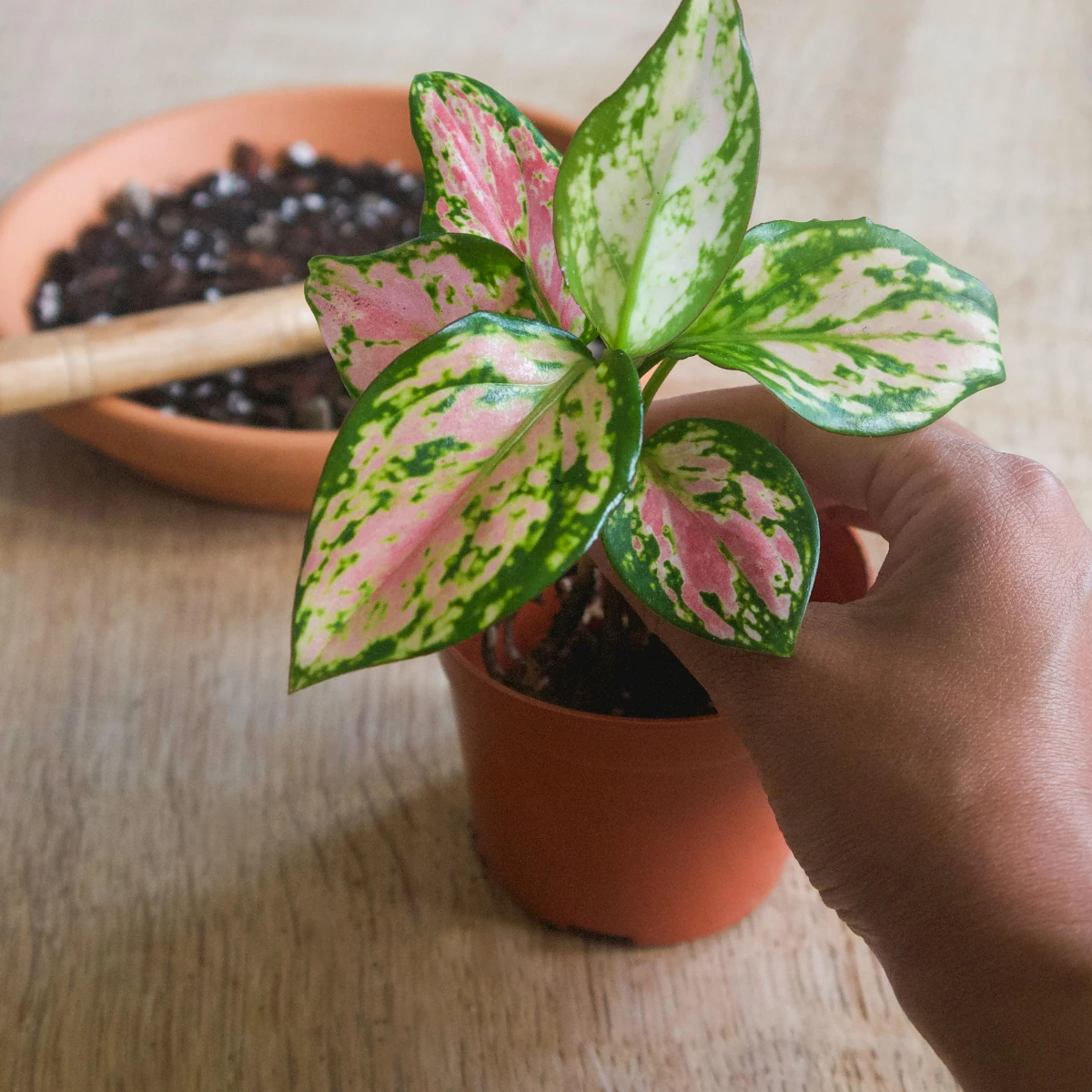
Green leaves with pink spots; very popular and widely available.
Seasonal Care Calendar
Spring
Mar – May
- Resume regular watering. Begin monthly fertilizing.
- Repot if needed. Increase light for colored varieties.
- Growing season in full swing. Water every 7 to 10 days.
Summer
Jun – Aug
- Continue summer care. Wipe leaves to remove dust.
- Maintain consistent watering. No direct sun exposure.
- Continue regular care. Begin reducing fertilizing toward end of month.
Fall
Sep – Nov
- Reduce fertilizing. Water every 10 days.
- Stop fertilizing. Reduce watering to every 10 to 14 days.
- Maintain warmth. Minimal care needed.
Winter
Dec – Feb
- Water every 10 to 14 days. No fertilizer. Keep away from cold drafts.
- Continue minimal care. Bright light helps maintain color in colored varieties.
- Water every 14 days. No fertilizer.
Troubleshooting
Yellow leaves
Why it happens: Overwatering, root rot, or cold exposure
What to do: Check soil; if wet, reduce watering and ensure drainage. If cold was the cause, move to a warmer spot. Remove yellowed leaves.
Ask the AI about this →Brown leaf tips
Why it happens: Low humidity, fluoride in tap water, or salt buildup
What to do: Switch to filtered water, increase humidity, and flush soil with plain water periodically.
Learn more: Brown Leaves on Houseplants → Ask the AI about this →Fading color
Why it happens: Insufficient light (for colored varieties)
What to do: Move colored aglaonema to medium indirect light. Dark green varieties are fine in low light.
Ask the AI about this →Drooping or limp stems
Why it happens: Cold damage, overwatering, or root rot
What to do: Move to a warm location. Check roots for rot. Reduce watering and ensure pot drains well.
Learn more: Drooping Leaves on Houseplants → Ask the AI about this →Not sure what's wrong?
Premium includes AI photo diagnosis, then walks you through the fix and checks back in until it's better.
See Premium →Track your Aglaonema with PlantCareAI
Add your Aglaonema and get a watering schedule tuned to this week's weather. Free for up to 3 plants.
Add your Aglaonema