
Alocasia Care Guide
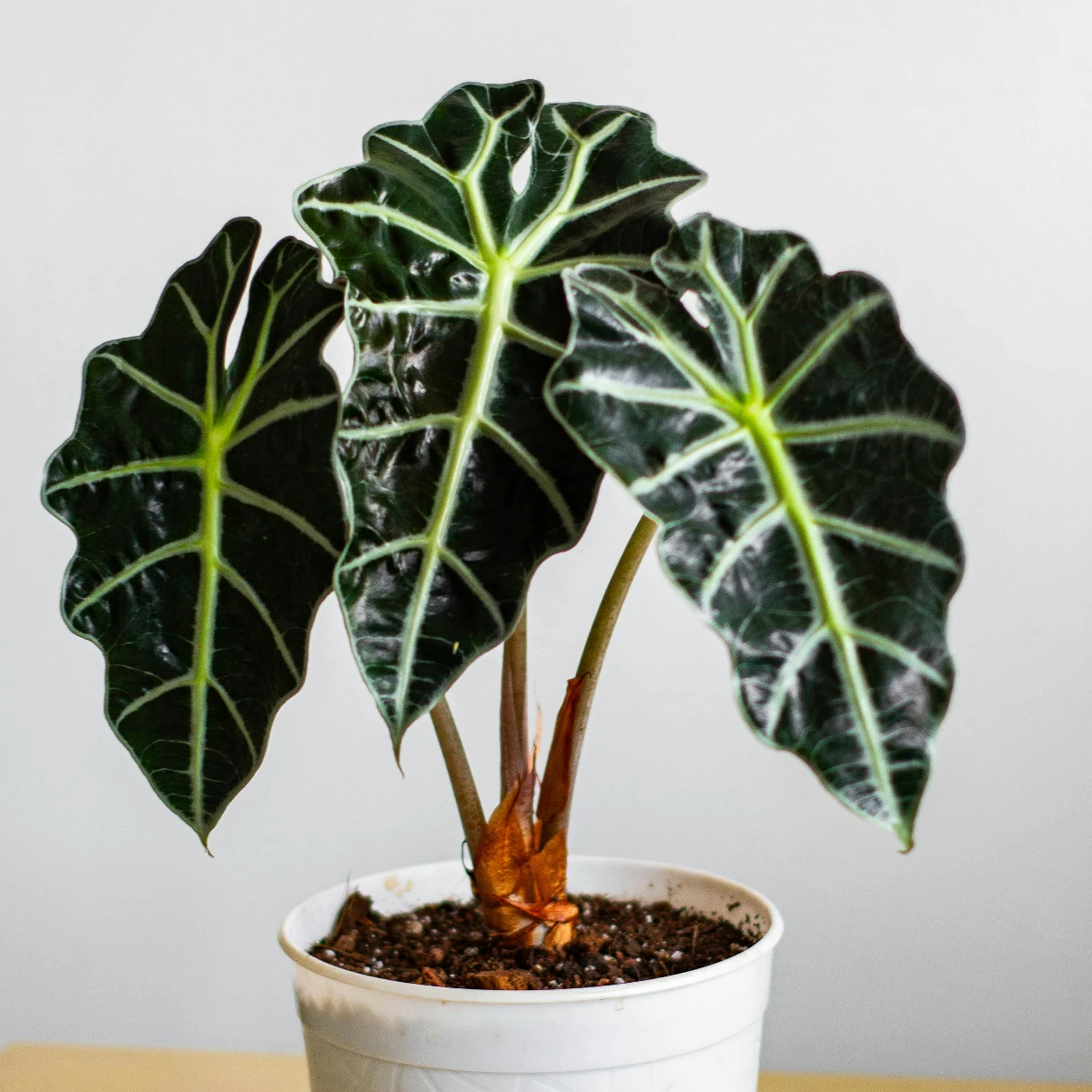
Alocasia amazonica
Also known as Elephant Ear, African Mask Plant
By Ellen Hermance · PlantCareAI Editorial
Alocasia, often called the Elephant Ear or African Mask Plant, is one of the most dramatic statement plants for indoor spaces. Its enormous, arrow-shaped leaves with prominent contrasting veins create an instant tropical focal point. Native to tropical Asia, alocasia demands high humidity, bright indirect light, and attentive watering; it is rewarding for experienced plant owners and a compelling challenge for enthusiastic beginners.
Quick Care Reference
| Care Aspect | Requirement | Frequency |
|---|---|---|
| Watering | Top inch dry (not more) | Weekly (summer), every 10-14 days (winter) |
| Light | Bright indirect | No direct sun; leaves scorch easily |
| Humidity | 60%+ (use humidifier) | Year-round |
| Fertilizer | Half-strength balanced | Every 2 weeks in spring/summer |
| Repotting | 1-2 inches larger pot | Every 1-2 years in spring |
Watering
Allow only the very top of the soil to dry before watering; alocasia prefers consistently moist but never waterlogged soil. Water every 7 days in spring and summer, reducing to every 10 to 14 days in fall and winter. Poor drainage and standing water cause root rot rapidly. Use room-temperature filtered water when possible, as alocasia is sensitive to chlorine and fluoride.
Light Requirements
Bright indirect light is essential for alocasia to produce large, healthy leaves. A position 2 to 4 feet from a south- or east-facing window is ideal. Direct sunlight scorches the thin leaves quickly. Insufficient light causes small leaves, slow growth, and increased susceptibility to disease. Unlike some other aroids, alocasia does not adapt well to low light; if the room is dim, supplement with a full-spectrum grow light.
Humidity & Temperature
Alocasia requires high humidity of 60% or above. In dry homes, this almost always means a humidifier placed nearby. Misting temporarily raises humidity but is not sufficient on its own. Low humidity causes brown leaf edges and drooping. Keep temperatures between 65 and 85°F (18 to 29°C) consistently. Cold drafts and temperatures below 60°F (16°C) trigger leaf drop and can push the plant into dormancy.
Fertilizing
Feed every 2 weeks during the growing season (spring through summer) with a balanced liquid fertilizer diluted to half strength. This supports the rapid growth alocasia is capable of. Reduce to monthly in early fall, then stop entirely in winter during dormancy. Resume feeding when new growth emerges in spring.
Propagation
Alocasia propagates by division of offsets (pups) that grow at the base of the plant. These are separated during repotting.
Offset division
- Remove plant from pot in spring
- Locate small offsets growing from the base with their own roots
- Gently separate from the main plant with a clean knife if needed
- Pot each offset in chunky aroid mix
- Keep in a warm, humid environment and water lightly until established
Popular Varieties
Alocasia amazonica 'Polly'
The most popular compact variety. Dark green wavy leaves with bright white veins.
Alocasia macrorrhizos
Giant taro with massive plain green leaves; can reach ceiling height indoors.
Alocasia zebrina
Striking zebra-patterned stems with large arrow-shaped green leaves.
Seasonal Care Calendar
Spring
Mar – May
- Resume regular watering and bi-weekly fertilizing as new leaves push through.
- Repot if needed. Separate offsets for propagation.
- Peak growing season. Water weekly. Feed every 2 weeks. Maximize humidity.
Summer
Jun – Aug
- Continue intensive care. New leaves may emerge rapidly in warm conditions.
- Continue summer care. Clean large leaves to prevent dust blocking light.
- Continue regular care. Reduce fertilizing to monthly at end of month.
Fall
Sep – Nov
- Reduce watering and fertilizing as growth slows.
- Stop fertilizing. Water every 10 to 14 days. Plant may begin dropping leaves.
- Reduce watering to every 2 weeks or less. Do not panic if leaves drop.
Winter
Dec – Feb
- Dormancy likely. Water very sparingly. No fertilizer. Maintain warmth and humidity.
- Watch for new leaf emergence as days lengthen. Resume light watering when growth appears.
- Dormancy care: water once every 3 to 4 weeks. Keep warm. No fertilizer.
Troubleshooting
Drooping leaves
Why it happens: Underwatering, low humidity, or temperature stress
What to do: Water thoroughly and increase humidity. Check temperature; if below 60°F (16°C), move to a warmer location.
Learn more: Drooping Leaves on Houseplants → Ask the AI about this →Yellow leaves
Why it happens: Overwatering, root rot, or natural leaf drop before dormancy
What to do: Check soil moisture. If consistently wet, reduce watering and repot if roots are rotted. One or two yellowing leaves before winter is normal.
Ask the AI about this →Brown leaf edges
Why it happens: Low humidity or underwatering
What to do: Increase humidity with a humidifier. Water more consistently; do not let soil dry fully.
Learn more: Brown Leaves on Houseplants → Ask the AI about this →All leaves drop suddenly
Why it happens: Cold shock, dormancy trigger, or severe root rot
What to do: Move to a warm location. Check the corm (base bulb) for firmness; if firm, the plant is likely dormant and will regrow in spring. If mushy, root rot has occurred.
Learn more: Root Rot in Houseplants → Ask the AI about this →Not sure what's wrong?
Premium includes AI photo diagnosis, then walks you through the fix and checks back in until it's better.
See Premium →Track your Alocasia with PlantCareAI
Add your Alocasia and get a watering schedule tuned to this week's weather. Free for up to 3 plants.
Add your Alocasia