
Anthurium Care Guide
Anthurium andraeanum
Also known as Flamingo Flower, Flamingo Plant, Laceleaf, Tailflower
By Ellen Hermance · PlantCareAI Editorial
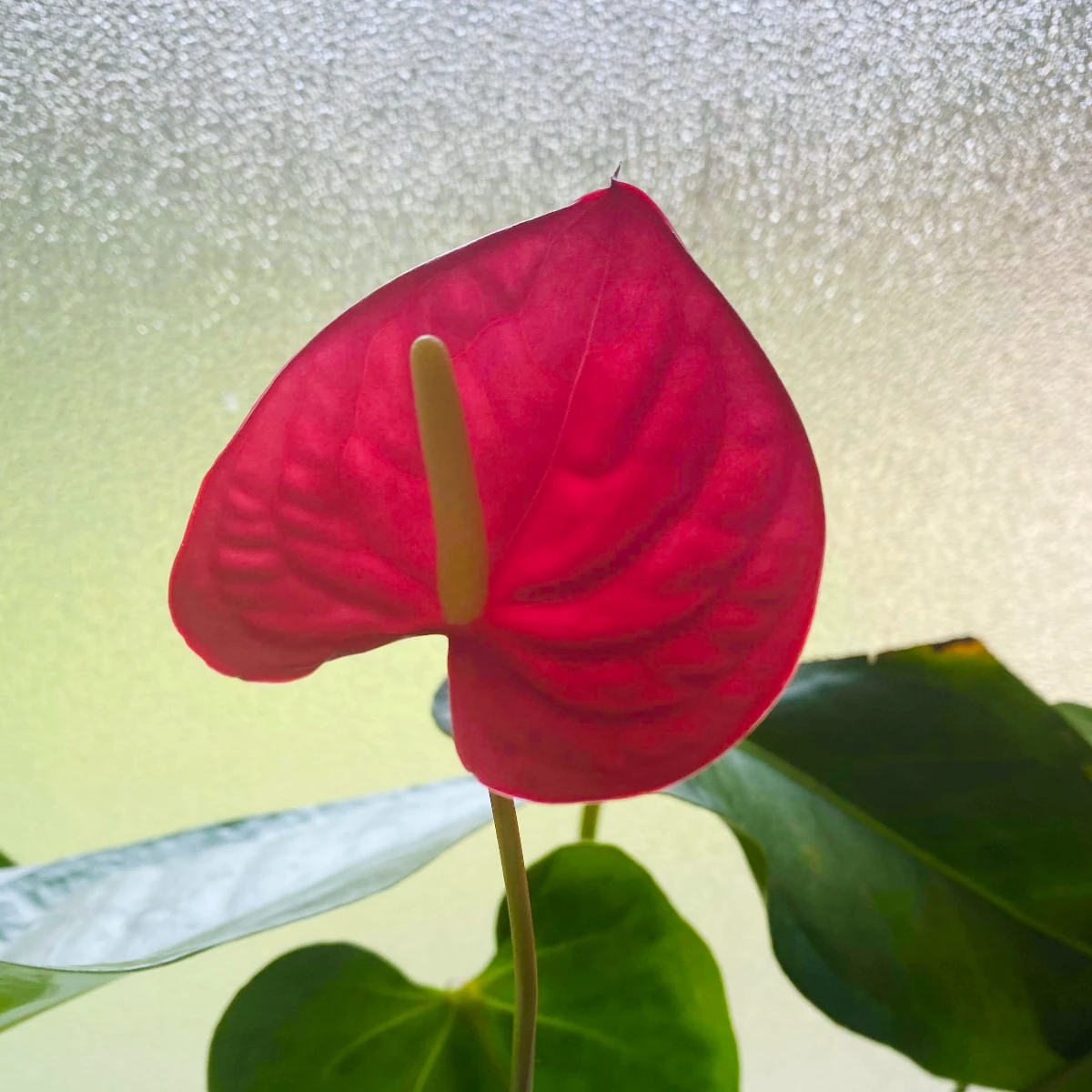
Anthurium is the tropical houseplant that blooms almost year-round, producing waxy, heart-shaped spathes in shades of red, pink, white, and coral. Native to the rainforests of Central and South America, it thrives in bright indirect light and high humidity. With the right conditions, anthurium is surprisingly easy to care for and one of the longest-blooming houseplants available.
Quick Care Reference
| Care Aspect | Requirement | Frequency |
|---|---|---|
| Watering | Top inch dry | Weekly (reduce in winter) |
| Light | Bright indirect | No direct sun |
| Humidity | 60%+ | Use a humidifier year-round |
| Fertilizer | High-phosphorus, quarter strength | Every 6-8 weeks in growing season |
| Repotting | Slightly rootbound is fine | Every 2 years in spring |
Watering
Water when the top inch of soil feels dry, typically once a week. Anthuriums like consistent moisture but are sensitive to overwatering; soggy soil leads to root rot quickly. Use room-temperature water and soak thoroughly until water drains freely. Empty the saucer after 30 minutes so roots never sit in standing water. Reduce watering slightly in winter when growth slows.
Light Requirements
Bright indirect light is ideal; 2 to 4 feet from a south- or east-facing window. Direct sunlight scorches the large waxy leaves, producing bleached yellow or brown patches. Low light causes growth to slow and bloom production to stop. To encourage flowering, provide the brightest indirect light possible. Anthuriums can adapt to medium light, but blooms will be sparse.
Humidity & Temperature
Anthurium thrives with humidity levels of 60% or higher. In dry indoor environments, a nearby humidifier makes a significant difference in plant health and bloom frequency. Misting is beneficial but ensure water does not pool inside the spathe or on the spadix, which can cause rot. Keep temperatures between 65 and 85°F (18 to 29°C). Temperatures below 55°F (13°C) cause cold damage and dramatically slow blooming.
Fertilizing
Feed every 6 to 8 weeks during the growing season (spring through fall) with a high-phosphorus liquid fertilizer diluted to quarter strength. High phosphorus promotes bloom production. Too much fertilizer, especially nitrogen, causes lush leaf growth at the expense of flowers. In winter, stop fertilizing entirely.
Propagation
Anthurium is propagated by division or stem cuttings, both of which are straightforward in spring.
Division
- Remove plant from pot and gently separate root clumps
- Each division should have several roots and at least 2 leaves
- Plant divisions in fresh aroid mix and water lightly
- Keep in a humid, warm spot until established (2 to 4 weeks)
Stem cuttings
- Cut a stem with at least 2 nodes and one aerial root
- Pot in moist chunky mix or sphagnum moss
- Maintain warmth (70-80°F / 21-27°C) and high humidity
- Roots establish in 4 to 6 weeks
Popular Varieties
Anthurium andreanum 'Red Champion'
Classic deep red spathes, the most widely available variety.
Anthurium andreanum 'White Gemini'
Crisp white spathes with a prominent yellow spadix.
Anthurium clarinervium
Velvety dark green leaves with striking white veins; grown for foliage rather than flowers.
Seasonal Care Calendar
Spring
Mar – May
- Resume regular watering. Begin fertilizing every 6 to 8 weeks.
- Repot if rootbound. Increase humidity as heating systems reduce moisture.
- Peak growing season begins. Maintain bright indirect light for blooms.
Summer
Jun – Aug
- Monitor soil moisture carefully in warmer conditions. Continue feeding.
- Highest bloom potential with bright light and consistent humidity.
- Continue summer care. Remove spent flowers at the base.
Fall
Sep – Nov
- Taper fertilizing. Plant may produce fewer new flowers.
- Stop fertilizing. Reduce watering slightly.
- Move away from cold windows. Existing blooms may last through month.
Winter
Dec – Feb
- Reduce watering. No fertilizer. Maintain warmth and humidity.
- Continue minimal care. Watch for scale insects on stems.
- Minimal care. Water every 10 days. No fertilizer.
Troubleshooting
Yellow leaves
Why it happens: Overwatering, insufficient light, or nutrient deficiency
What to do: Check soil; if soggy, reduce watering frequency and ensure good drainage. Move to brighter indirect light. Resume feeding in growing season.
Ask the AI about this →Brown leaf tips or edges
Why it happens: Low humidity, underwatering, or fertilizer salt buildup
What to do: Increase humidity, water more consistently, and flush soil with plain water every 3 months.
Learn more: Brown Leaves on Houseplants → Ask the AI about this →No flowers
Why it happens: Insufficient light, too much nitrogen fertilizer, or cool temperatures
What to do: Move to brighter indirect light. Switch to a high-phosphorus fertilizer. Ensure temperatures stay above 65°F (18°C).
Ask the AI about this →Black or brown spathe
Why it happens: Cold damage, overwatering, or physical injury
What to do: Remove damaged spathe at the base. Move plant away from cold drafts. Check watering frequency.
Ask the AI about this →Not sure what's wrong?
Premium includes AI photo diagnosis, then walks you through the fix and checks back in until it's better.
See Premium →Track your Anthurium with PlantCareAI
Add your Anthurium and get a watering schedule tuned to this week's weather. Free for up to 3 plants.
Add your Anthurium