
Bamboo Care Guide
Bambusoideae subfamily (true bamboo); Dracaena sanderiana (Lucky Bamboo)
By Ellen Hermance · PlantCareAI Editorial
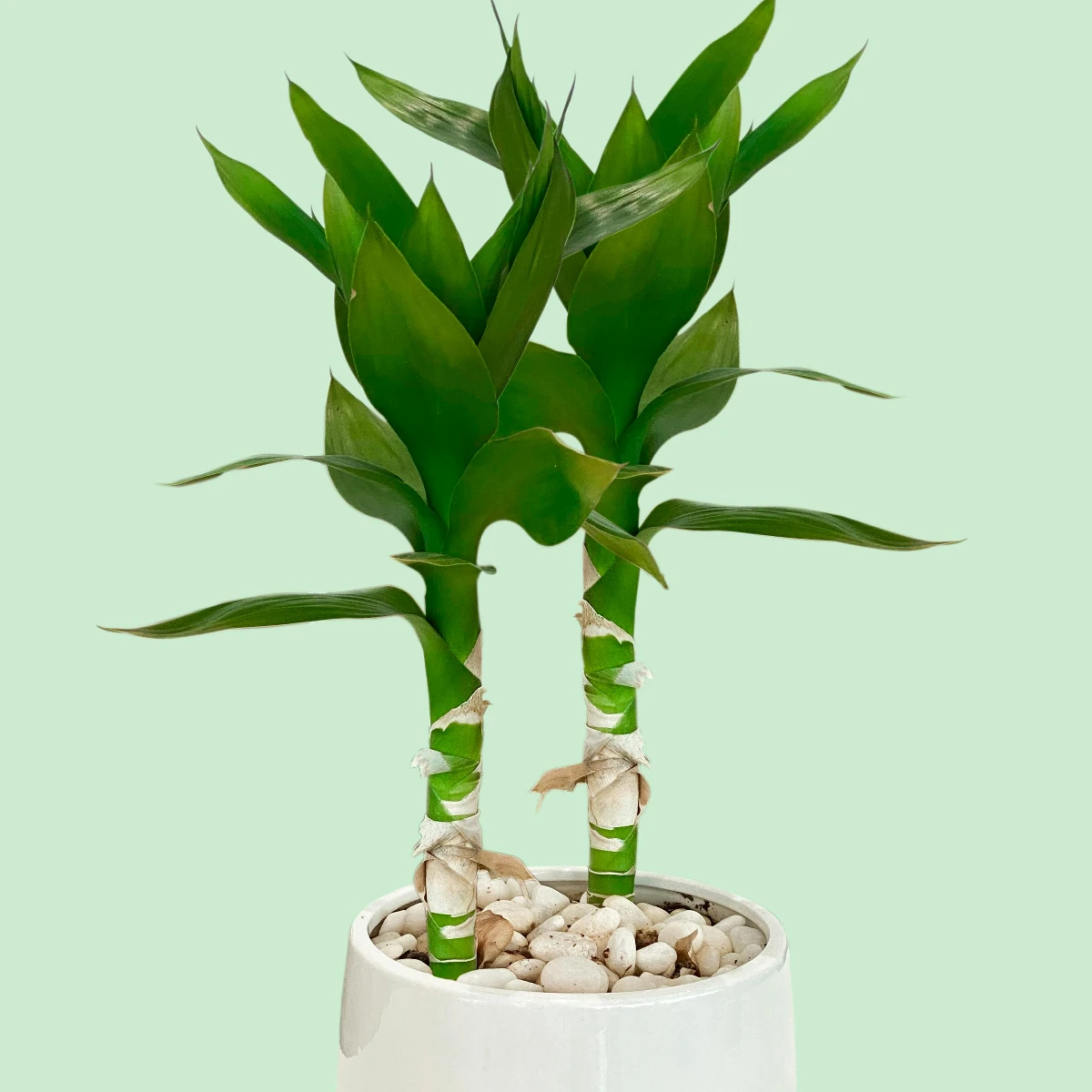
Bamboo as an indoor plant almost always means one of two very different plants: true bamboo (subfamily Bambusoideae, a giant grass) or lucky bamboo (Dracaena sanderiana, not bamboo at all). Each has completely different care needs. True bamboo is rarely grown indoors due to its size; lucky bamboo is one of the easiest and most forgiving indoor plants available.
Quick Care Reference
| Care Aspect | Requirement | Frequency |
|---|---|---|
| Light | Bright indirect (Lucky Bamboo); Full sun to part shade (True Bamboo) | Constant |
| Watering (Lucky Bamboo in water) | Change water completely every 1–2 weeks | Every 1–2 weeks |
| Watering (Lucky Bamboo in soil) | Keep soil consistently moist | Every 5–10 days |
| Watering (True Bamboo) | When top inch of soil is dry | Daily to every 2–3 days in summer |
| Fertilizing (Lucky Bamboo) | Heavily diluted liquid fertilizer | Every 2–4 months |
| Humidity | Medium to high (40–70%) | Year-round |
| Temperature | 65–90°F (18–32°C); avoid drafts and cold | Year-round |
Watering
Lucky bamboo: If grown in water, change it completely every 1–2 weeks using filtered or non-chlorinated water; fluoride and chlorine damage the leaves over time. If grown in soil, keep the soil consistently moist but not waterlogged. True bamboo: Needs consistently moist, well-draining soil. Water whenever the top inch of soil is dry. Bamboo in containers dries out faster than in the ground and may need daily watering in summer.
Light Requirements
Lucky bamboo tolerates low light but grows best in bright indirect light. Direct sun scorches the leaves. True bamboo needs more light; most species prefer full sun to part shade. Clumping bamboo varieties are better suited to container growing than running varieties, which spread aggressively.
Humidity & Temperature
Both types prefer higher humidity than the average home provides. Lucky bamboo tolerates normal indoor humidity well. True bamboo in containers benefits from regular misting or a humidity tray. Keep both away from heating vents.
Fertilizing
Lucky bamboo: Fertilize sparingly; a small amount of liquid fertilizer (1/10 the recommended dose) every 2–4 months. Over-fertilizing causes leaf tip burn and excessive, leggy growth. True bamboo: Apply a balanced slow-release fertilizer in spring and summer. Bamboo is a heavy feeder but excess nitrogen causes weak, hollow canes.
Propagation
Lucky bamboo propagates easily from stem cuttings. True bamboo propagates from culm cuttings or rhizome division.
Lucky bamboo stem cuttings: Cut a healthy stem just below a node, remove lower leaves, and place in filtered water. Roots develop in 2–4 weeks. Transfer to decorative vessel or pot in soil once roots are 2+ inches long.
True bamboo culm cuttings: Cut young culms into 12-inch sections with at least 2 nodes. Lay horizontally in moist potting mix with one node buried, or plant vertically. Keep moist. New shoots emerge in 4–8 weeks.
True bamboo rhizome division: Divide the root mass in spring. Each division needs healthy rhizome sections with buds. Replant immediately in well-prepared soil.
Popular Varieties
Dracaena sanderiana (Lucky Bamboo)
Also known as: Lucky Bamboo, Ribbon Dracaena, Belgian Evergreen
Not a true bamboo; a Dracaena species that resembles bamboo in its cane structure. Extremely adaptable, tolerates low light and grows in water or soil. The most common 'bamboo' sold as a houseplant.
Brown leaf tips almost always indicate fluoride in the water; switch to filtered or distilled water.
Bambusa ventricosa (Buddha Belly Bamboo)
Also known as: Buddha Belly Bamboo
A clumping bamboo with distinctive swollen internodes when grown in pots or with restricted water. More manageable than running bamboo and better suited to large containers.
The swollen 'belly' only develops under stress conditions (pot-bound or drought-stressed). Needs a very large container.
Fargesia spp. (Clumping Bamboo)
Also known as: Umbrella Bamboo, Arrow Bamboo
Cold-hardy clumping bamboos that are more manageable than running types. Suitable for large outdoor pots or containers in mild climates. Feathery appearance.
Clumping types don't spread invasively like running bamboo; much better for container growing.
Seasonal Care Calendar
Spring
March – May
- Repot lucky bamboo if roots are crowded
- Begin fertilizing true bamboo
- Check for and remove any dead canes
- Increase watering frequency as temperatures rise
Summer
June – August
- Change water in lucky bamboo vases weekly in heat
- Water true bamboo daily in hot weather
- Mist both types to maintain humidity
- Fertilize monthly (true bamboo) or lightly every 2 months (lucky bamboo)
Fall
September – November
- Reduce fertilizing
- Bring cold-sensitive bamboo containers inside
- Begin tapering watering frequency
- Check for mealybugs in lucky bamboo crevices
Winter
December – February
- Change lucky bamboo water every 2 weeks
- Minimize fertilizing for lucky bamboo
- Reduce true bamboo watering
- Ensure lucky bamboo is away from cold drafts and heating vents
Troubleshooting
Brown leaf tips on lucky bamboo
Why it happens: Fluoride and chlorine in tap water accumulate and cause tip burn over time. This is the most common lucky bamboo problem.
What to do: Switch to filtered water, distilled water, or rainwater. Fluoride damage is irreversible on existing leaves, but new growth in fluoride-free water will be normal. Trim brown tips at an angle to improve appearance.
Learn more: Tap Water vs Filtered Water for Plants → Ask the AI about this →Yellow leaves on lucky bamboo
Why it happens: Overwatering (in soil), too much direct sun, over-fertilizing, or temperature stress.
What to do: For water-grown lucky bamboo: change the water and clean the container. For soil-grown: check drainage and reduce watering. Move out of direct sun. If recently fertilized, flush the soil thoroughly with plain water.
Learn more: Why Are My Plant Leaves Turning Yellow? → Ask the AI about this →Green slime or algae in the lucky bamboo water
Why it happens: Algae grow when water-grown lucky bamboo is exposed to direct sunlight, which also promotes algae growth in the water.
What to do: Change the water completely and clean the container. Move to a location with bright indirect light rather than direct sun. Opaque containers prevent algae growth more effectively than clear glass.
Ask the AI about this →True bamboo leaves rolling or curling
Why it happens: Drought stress. Bamboo leaves curl to reduce water loss when the plant is under-watered or in low humidity.
What to do: Water immediately and thoroughly. Increase watering frequency. Check that the container has adequate drainage but isn't drying out too quickly. Consider moving to a less sunny or windy location.
Learn more: Underwatering vs Overwatering Plants → Ask the AI about this →Not sure what's wrong?
Premium includes AI photo diagnosis, then walks you through the fix and checks back in until it's better.
See Premium →Track your Bamboo with PlantCareAI
Add your Bamboo and get a watering schedule tuned to this week's weather. Free for up to 3 plants.
Add your Bamboo