
Begonias are one of the most diverse groups of houseplants, ranging from compact wax begonias that flower almost year-round to dramatic rex begonias grown for their swirling, jewel-toned foliage. With thousands of varieties, there is a begonia for nearly every indoor environment. Most begonias prefer bright indirect light, moderate humidity, and careful watering; they reward attention with color and blooms that few other houseplants can match.
Quick Care Reference
| Care Aspect | Requirement | Frequency |
|---|---|---|
| Watering | Top inch dry; base water only | Every 5-7 days (summer), every 10 days (winter) |
| Light | Bright indirect (some morning sun OK) | No harsh direct afternoon sun |
| Humidity | 50-60% (no misting) | Use pebble tray or humidifier |
| Fertilizer | Half-strength balanced or high-P | Every 2-4 weeks in growing season |
| Repotting | When rootbound | Every 1-2 years in spring |
Watering
Allow the top inch of soil to dry between waterings. Water at the base of the plant, not on the leaves; wet foliage invites fungal diseases like powdery mildew, which is common in begonias. In spring and summer, water every 5 to 7 days. In fall and winter, reduce to every 10 days. Begonias are susceptible to both overwatering (root rot) and underwatering (limp, wilting stems). Self-watering pots work very well for begonias.
Light Requirements
Most begonias prefer bright indirect light. Wax begonias (B. semperflorens) tolerate some direct morning sun and produce the most flowers with bright light. Rex begonias need bright indirect light but are burned easily by direct sun. Flowering decreases significantly in low light. East-facing windows are ideal for most varieties. If flowering drops off, move to a brighter location before considering other interventions.
Humidity & Temperature
Moderate humidity of 50 to 60% is ideal. Begonias are more susceptible to powdery mildew at high humidity combined with poor air circulation; do not mist the leaves. Instead, use a humidifier or pebble tray. Keep temperatures between 65 and 80°F (18 to 27°C). Temperatures below 55°F (13°C) cause cold damage and leaf drop.
Fertilizing
Feed every 2 to 4 weeks during the growing season (spring through fall) with a balanced or high-phosphorus fertilizer diluted to half strength. For flowering begonias, a high-phosphorus formula promotes bloom production. Do not fertilize in winter. Over-fertilizing causes lush growth with fewer flowers.
Propagation
Begonias are easy to propagate. Stem cuttings root readily, and rex begonias can be propagated from a single leaf section.
Stem cuttings
- Cut a 3 to 4 inch stem just below a node
- Remove lower leaves
- Dip in rooting hormone and plant in moist perlite or potting mix
- Roots form in 2 to 4 weeks
Leaf cuttings (rex begonia)
- Cut a healthy leaf and slice into 2-inch sections, each with a major vein
- Press sections cut-side down into moist mix
- Cover with plastic to retain humidity
- Small plantlets emerge from vein areas in 4 to 6 weeks
Popular Varieties
Begonia rex
Dramatic swirling foliage in silver, purple, red, and green. Grown primarily for leaves.
Begonia semperflorens (wax begonia)
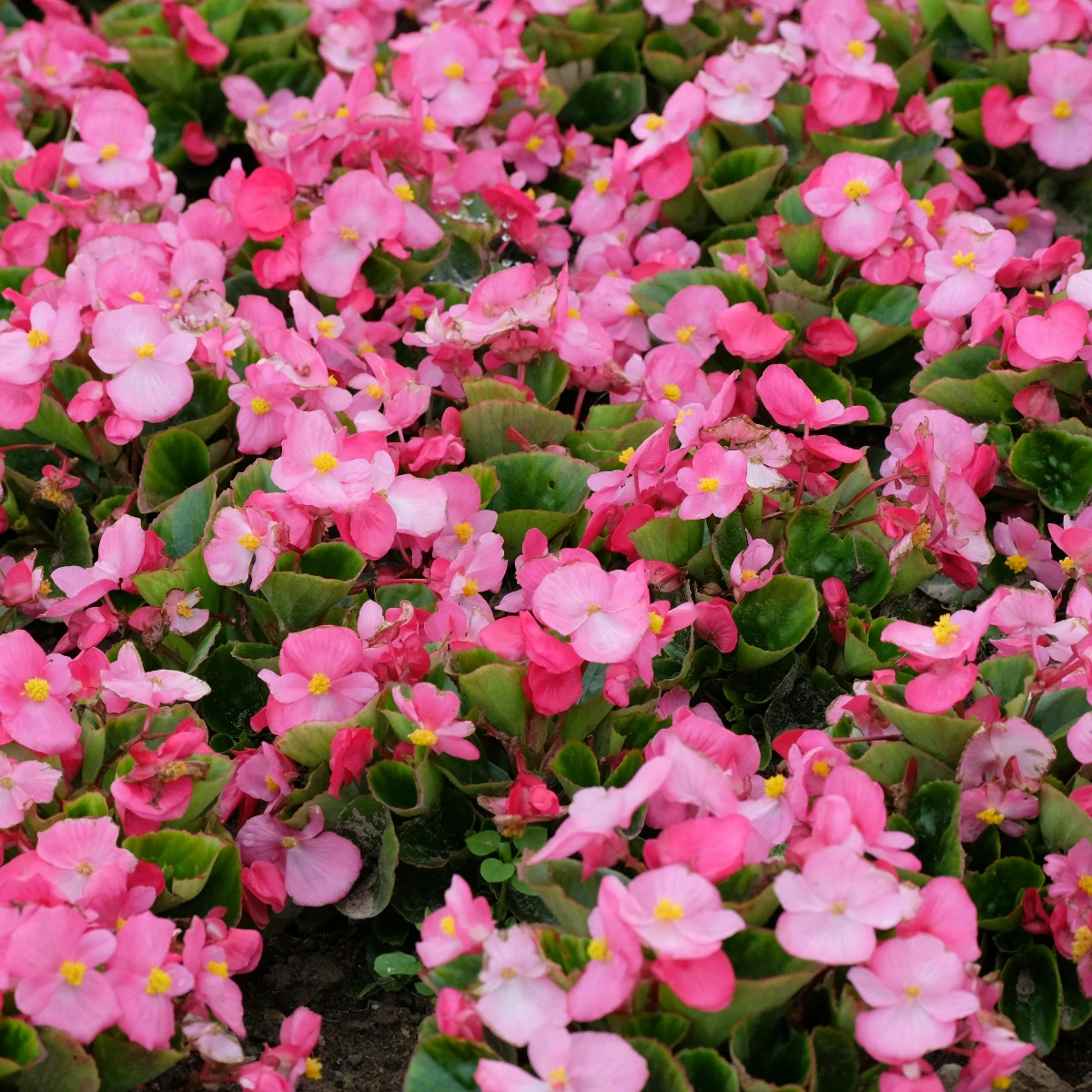
Compact flowering begonia in red, pink, or white. Nearly year-round bloomer.
Begonia maculata (polka dot begonia)
Angel wing leaves with silver spots. Striking and increasingly popular.
Seasonal Care Calendar
Spring
Mar – May
- Resume regular watering. Begin bi-weekly fertilizing.
- Pinch spent flowers on wax begonias. Take stem cuttings for propagation.
- Peak growing and flowering season. Maintain consistent moisture and feeding.
Summer
Jun – Aug
- Continue summer care. Check for fungus gnats in moist soil.
- Flowering begonias at peak. Keep away from harsh afternoon sun.
- Continue regular care. Taper fertilizing toward end of month.
Fall
Sep – Nov
- Reduce fertilizing. Begin watering every 10 days.
- Stop fertilizing. Reduce watering frequency.
- Minimal care. Maintain warmth above 55°F (13°C).
Winter
Dec – Feb
- Reduce watering. No fertilizer. Maintain warmth and humidity.
- Continue minimal care. Look for signs of powdery mildew in dry heated air.
- Water every 10 days. No fertilizer. Enjoy any remaining winter blooms.
Troubleshooting
White powdery coating on leaves
Why it happens: Powdery mildew (fungal)
What to do: Improve air circulation, avoid wetting leaves, and treat with a diluted neem oil spray or baking soda solution. Remove heavily affected leaves.
Ask the AI about this →Limp or wilting stems
Why it happens: Underwatering or overwatering
What to do: Check soil moisture. If dry, water thoroughly. If wet and stem bases are mushy, root rot has started; trim rotted sections and repot.
Learn more: Root Rot in Houseplants → Ask the AI about this →No flowers
Why it happens: Insufficient light or too much nitrogen
What to do: Move to brighter indirect light. Switch to a high-phosphorus fertilizer.
Ask the AI about this →Brown leaf edges
Why it happens: Low humidity or underwatering
What to do: Increase ambient humidity with a humidifier or pebble tray. Water more consistently.
Learn more: Brown Leaves on Houseplants → Ask the AI about this →Not sure what's wrong?
Premium includes AI photo diagnosis, then walks you through the fix and checks back in until it's better.
See Premium →Track your Begonia with PlantCareAI
Add your Begonia and get a watering schedule tuned to this week's weather. Free for up to 3 plants.
Add your Begonia