
Bird of Paradise Care Guide
Strelitzia reginae (common Bird of Paradise) / Strelitzia nicolai (White/Giant Bird of Paradise)
Also known as Strelitzia, Crane Flower
By Ellen Hermance · PlantCareAI Editorial
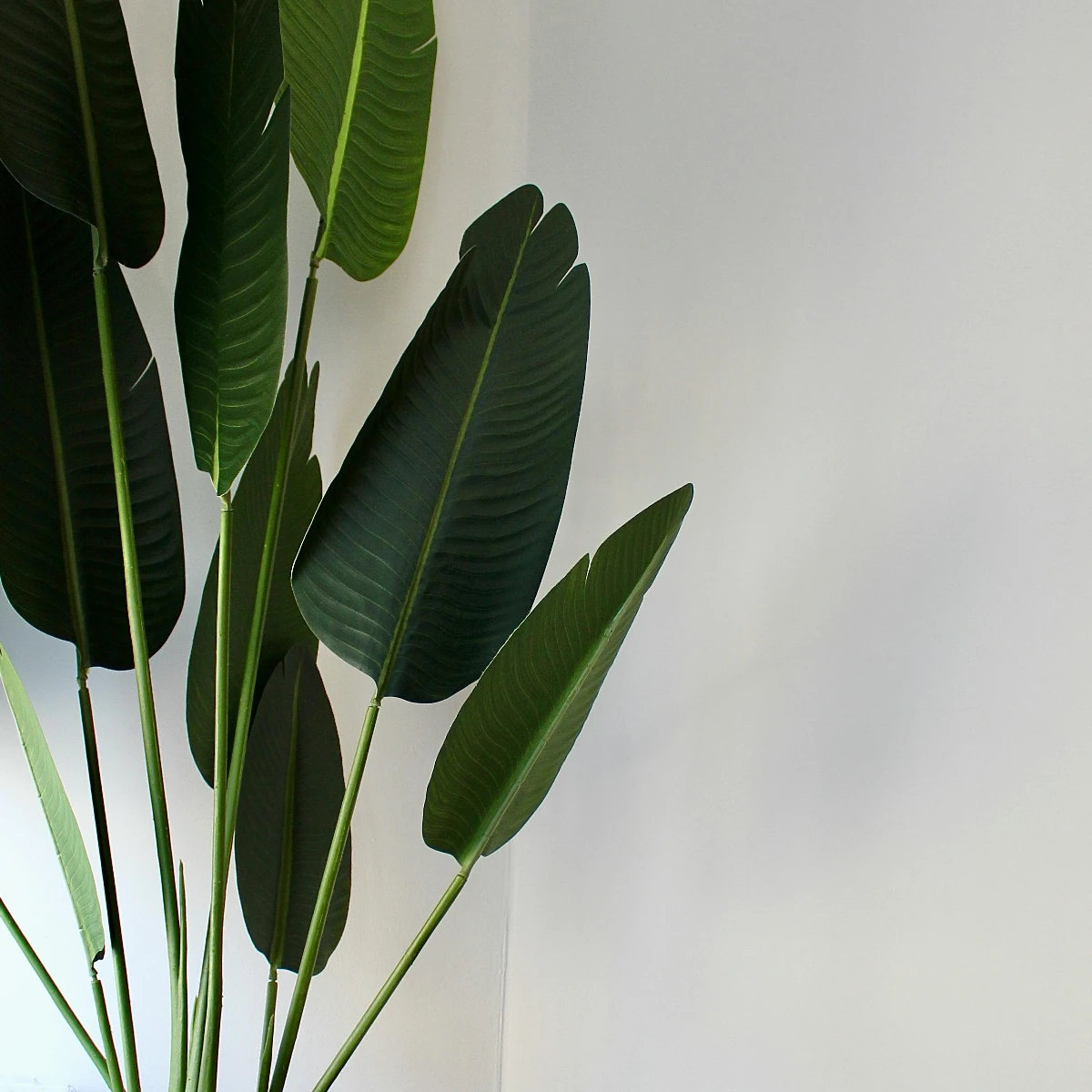
Bird of paradise plants are dramatic statement houseplants with large, paddle-shaped leaves that thrive in bright light. Strelitzia reginae is the classic orange-flowering species; Strelitzia nicolai is the giant variety with white flowers, grown primarily for its bold foliage indoors. Both need maximum light, infrequent watering, and patience; they're slow to establish but can live for decades.
Quick Care Reference
| Care Aspect | Requirement | Frequency |
|---|---|---|
| Light | Bright direct or indirect; minimum 4 hours direct | Constant |
| Watering | When top 2 inches of soil are dry | Every 1–2 weeks (summer), every 2–3 weeks (winter) |
| Soil | Well-draining with added perlite | Replace at repotting (every 2–3 years) |
| Fertilizing | Balanced liquid fertilizer | Monthly, spring–summer |
| Repotting | Prefers to be slightly root-bound; repot when significantly pot-bound | Every 2–3 years |
| Humidity | 40–60% | Year-round |
| Temperature | 60–85°F (15–30°C); protect from frost | Year-round |
Watering
Water when the top 2 inches of soil are dry; roughly every 1–2 weeks in summer and every 2–3 weeks in winter. Bird of paradise tolerates underwatering better than overwatering. Root rot is the main risk. Avoid using cold water; room-temperature water reduces cold shock to roots.
Light Requirements
Bird of paradise needs maximum light to thrive and flower indoors. A south- or west-facing window with direct sun for at least 4 hours is ideal. In lower light, the plant survives but grows slowly and will not flower. Outdoors, it thrives in full sun. If moving an established plant to a higher-light location, acclimatize gradually to prevent sunscald.
Humidity & Temperature
Bird of paradise prefers moderate humidity (40–60%) but adapts to typical indoor conditions. In very dry air, leaf edges may turn brown. Regular misting of the leaves or a nearby humidifier helps in winter when heating systems reduce humidity. Split leaves; a natural and desirable feature outdoors; are less likely to develop indoors.
Fertilizing
Fertilize monthly during the growing season (spring through summer) with a balanced liquid fertilizer at the recommended rate. Stop fertilizing in fall and winter. Bird of paradise is a hungry feeder and will grow notably faster with regular fertilizing in bright light.
Propagation
Bird of paradise propagates by division of the root clump or from seed. Division is the most reliable method for home growers.
Root division: In spring, remove the plant from its pot and carefully separate rooted offsets (suckers) from the main plant. Each division needs its own root system. Plant immediately in appropriate potting mix and keep in a warm, bright location. Expect some transplant shock and reduced growth for several weeks.
Seed: Soak seeds in warm water for 24–48 hours. Sow in moist seed-starting mix at 70–80°F (21–27°C). Germination takes 1–3 months. Seedlings are slow-growing and may take 5–10 years to flower.
Popular Varieties
Strelitzia reginae (Common Bird of Paradise)
Also known as: Orange Bird of Paradise, Crane Flower
The classic species with orange and blue flowers resembling a tropical bird in flight. Grows to 4–5 feet. Flowers when mature (3–5+ years) in adequate light. The most commonly grown species.
The most likely species to flower indoors when given sufficient direct sunlight.
Strelitzia nicolai (White Bird of Paradise)
Also known as: Giant Bird of Paradise, White Bird of Paradise
Much larger than reginae; can reach 8+ feet indoors. White and blue flowers on mature plants (rarely flowers indoors). Grown primarily for its dramatic, large paddle leaves. Popular statement plant.
Grows significantly larger than reginae; ensure you have ceiling height before purchasing.
Strelitzia juncea (Narrow-Leaf Bird of Paradise)
Also known as: Rush-Leaved Strelitzia
A unique variety with rush-like, cylindrical leaf stalks rather than paddle-shaped leaves. More compact than reginae. Same orange flowers. Unusual and architectural.
More drought-tolerant than other Strelitzia species due to its reduced leaf surface area.
Seasonal Care Calendar
Spring
March – May
- Resume monthly fertilizing
- Repot if significantly root-bound
- Increase watering as growth resumes
- Clean leaves to maximize light absorption
Summer
June – August
- Water every 1–2 weeks (check soil first)
- Fertilize monthly
- Move to maximum light if possible
- Mist leaves or use humidity tray in dry conditions
Fall
September – November
- Begin tapering fertilizing
- Reduce watering frequency
- Clean dust from leaves before lower winter light
- Check for spider mites in dry indoor conditions
Winter
December – February
- Water every 2–3 weeks (check soil first)
- No fertilizing
- Ensure maximum available light
- Keep away from cold drafts and heating vents
Troubleshooting
Leaves not splitting
Why it happens: Split leaves are a natural outdoor adaptation that allows wind to pass through. Indoors in calm air, leaves may not split; this is completely normal and not a sign of poor health.
What to do: No action needed. Splits will occur naturally over time on some leaves. Gently assisting a split along a natural crease line is safe if desired for aesthetics.
Ask the AI about this →Brown leaf edges and tips
Why it happens: Low humidity, underwatering, salt buildup from fertilizer or fluoridated water, or cold drafts.
What to do: Increase humidity with a humidifier or pebble tray. Water more consistently (don't let soil dry out completely). Flush soil with plain water monthly to remove salt buildup. Move away from cold drafts or heating vents.
Learn more: Tap Water vs Filtered Water for Plants → Ask the AI about this →Yellow leaves
Why it happens: Overwatering is the most common cause. Natural aging of lower leaves is also normal.
What to do: Check soil moisture; if it's wet, reduce watering frequency and ensure the pot has good drainage. If the yellowing is limited to the oldest lower leaves, it's natural aging. Remove yellowed leaves at the base with clean scissors.
Learn more: Am I Overwatering My Plant? → Ask the AI about this →Plant not flowering indoors
Why it happens: Bird of paradise rarely flowers indoors without direct sun for 4+ hours, nighttime temperature drops, and 3–5+ years of maturity in the same pot.
What to do: Move to the sunniest available location. Outdoors in summer gives the best chance of triggering flowers. Be patient; flowering indoors is possible but uncommon without near-ideal conditions.
Ask the AI about this →Drooping, wilting leaves
Why it happens: Usually underwatering or root rot (paradoxically causing the same symptoms).
What to do: Check soil moisture. If dry, water thoroughly. If wet, allow to dry completely and check roots for rot. Wilting + dry soil = underwater. Wilting + wet soil = possible root rot.
Learn more: Underwatering vs Overwatering Plants → Ask the AI about this →Not sure what's wrong?
Premium includes AI photo diagnosis, then walks you through the fix and checks back in until it's better.
See Premium →Track your Bird of Paradise with PlantCareAI
Add your Bird of Paradise and get a watering schedule tuned to this week's weather. Free for up to 3 plants.
Add your Bird of Paradise