
Dieffenbachia Care Guide
Dieffenbachia seguine
Also known as Dumb Cane
By Ellen Hermance · PlantCareAI Editorial
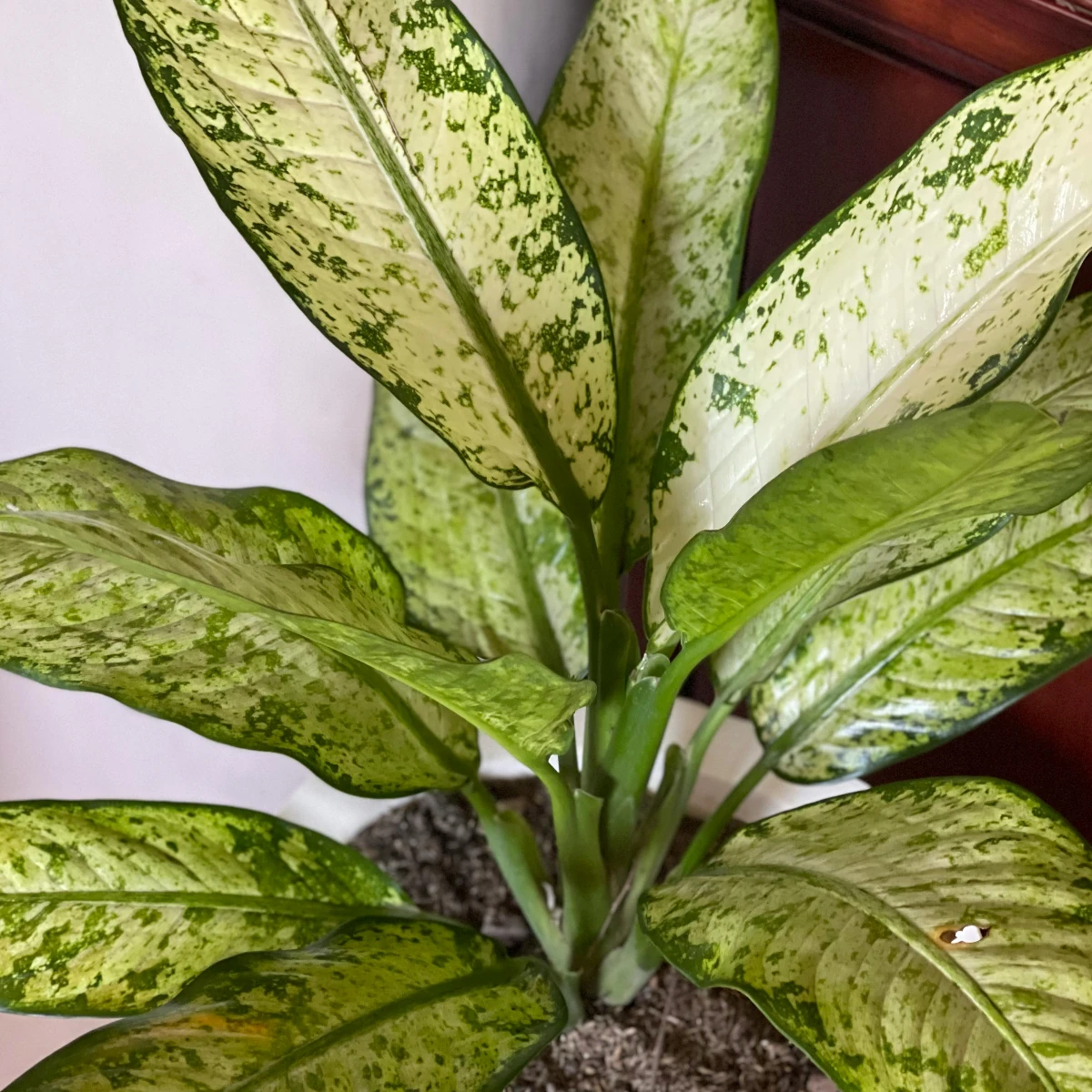
Dieffenbachia, commonly called Dumb Cane, is a bold tropical foliage plant with large, dramatically patterned leaves in shades of green, cream, and white. Native to Central and South America, it is one of the most tolerant large houseplants available, adapting well to low light, average humidity, and inconsistent watering. Its striking upright form and fast growth make it a popular choice for offices and living rooms.
Quick Care Reference
| Care Aspect | Requirement | Frequency |
|---|---|---|
| Watering | Top 1-2 inches dry | Weekly (summer), every 10-14 days (winter) |
| Light | Medium to bright indirect | Tolerates low light |
| Humidity | 40-50% | Average home humidity is fine |
| Fertilizer | Half-strength balanced | Monthly spring through fall |
| Repotting | When rootbound | Every 1-2 years in spring |
Watering
Water when the top 1 to 2 inches of soil feel dry, typically once a week in spring and summer. In fall and winter, allow the top 2 to 3 inches to dry before watering. Dieffenbachia is sensitive to overwatering; soggy soil causes yellow leaves and root rot rapidly. Use room-temperature water. Tap water with high fluoride content can cause brown leaf tips over time; filtered or distilled water is preferable.
Light Requirements
Dieffenbachia adapts to a wide range of light conditions, from bright indirect light to low indoor light. It grows fastest and maintains the most vivid variegation in medium to bright indirect light. In low light it survives but loses contrast in its leaf patterns and grows more slowly. Avoid harsh direct sun, which scorches the large leaves. A north- or east-facing window or a position a few feet from a south-facing window is ideal.
Humidity & Temperature
Average home humidity (40 to 50%) suits dieffenbachia well. It does not require high humidity but appreciates levels above 40%. Brown leaf tips are often a sign of low humidity or fluoride in tap water. Keep temperatures between 65 and 85°F (18 to 29°C). Avoid temperatures below 60°F (16°C) and protect from cold drafts, which cause brown, limp leaves.
Fertilizing
Feed monthly during the growing season (spring through fall) with a balanced liquid fertilizer diluted to half strength. Stop fertilizing in winter. Avoid high-fluoride fertilizers, which worsen tip burn. Do not over-fertilize; dieffenbachia is a moderate feeder and excessive nutrients cause salt buildup that burns roots.
Propagation
Dieffenbachia propagates from stem cane cuttings. Even a bare cane section with a dormant node will sprout.
Stem cuttings
- Cut a stem into 3 to 4 inch sections, each with at least one node
- Lay horizontal on moist potting mix, pressing the node lightly into soil
- Cover loosely with plastic to retain humidity
- New shoots emerge from nodes in 4 to 6 weeks at 70-75°F (21-24°C)
Tip cuttings
- Cut the growing tip with 4 to 6 inches of stem
- Remove lower leaves, leaving 2 to 3 at the tip
- Dip in rooting hormone and plant in moist mix
- Roots form in 3 to 5 weeks in warm conditions
Popular Varieties
Dieffenbachia 'Camille'
Creamy yellow center with green margins; one of the most popular compact varieties.
Dieffenbachia 'Tropic Snow'
Large leaves with white and pale green splashing. Grows quite tall.
Dieffenbachia 'Reflector'
Dark green leaves with irregular silver and cream variegation.
Seasonal Care Calendar
Spring
Mar – May
- Resume weekly watering. Begin monthly fertilizing.
- Repot if needed. New growth accelerates in longer days.
- Peak growing season. Water regularly and feed monthly.
Summer
Jun – Aug
- Continue summer care. Rotate plant for even growth.
- Water consistently. Wipe dust from leaves.
- Continue regular care. Taper fertilizing at end of month.
Fall
Sep – Nov
- Reduce fertilizing frequency. Begin watering every 10 days.
- Stop fertilizing. Reduce watering.
- Maintain warmth. Water every 10 to 14 days.
Winter
Dec – Feb
- Water every 10 to 14 days. No fertilizer. Maintain temperatures above 60°F (16°C).
- Continue minimal watering. Watch for mealybugs in leaf joints.
- Minimal care. Water every 14 days. No fertilizer.
Troubleshooting
Yellow leaves
Why it happens: Overwatering, root rot, or insufficient light
What to do: Check soil moisture. If consistently wet, reduce watering and ensure good drainage. Move to brighter indirect light.
Ask the AI about this →Brown leaf tips
Why it happens: Low humidity, fluoride in tap water, or salt buildup from fertilizer
What to do: Use filtered water, flush soil periodically, and increase ambient humidity.
Learn more: Brown Leaves on Houseplants → Ask the AI about this →Limp or drooping leaves
Why it happens: Underwatering, cold draft, or overwatering
What to do: Check soil moisture. Water thoroughly if dry. Move away from cold windows or vents.
Learn more: Drooping Leaves on Houseplants → Ask the AI about this →Pale or washed-out leaf color
Why it happens: Too much direct sun
What to do: Move to bright indirect light. Scorched areas will not recover but new growth will emerge healthy.
Ask the AI about this →Not sure what's wrong?
Premium includes AI photo diagnosis, then walks you through the fix and checks back in until it's better.
See Premium →Track your Dieffenbachia with PlantCareAI
Add your Dieffenbachia and get a watering schedule tuned to this week's weather. Free for up to 3 plants.
Add your Dieffenbachia