
Fittonia Care Guide
Fittonia albivenis
Also known as Nerve Plant, Mosaic Plant
By Ellen Hermance · PlantCareAI Editorial
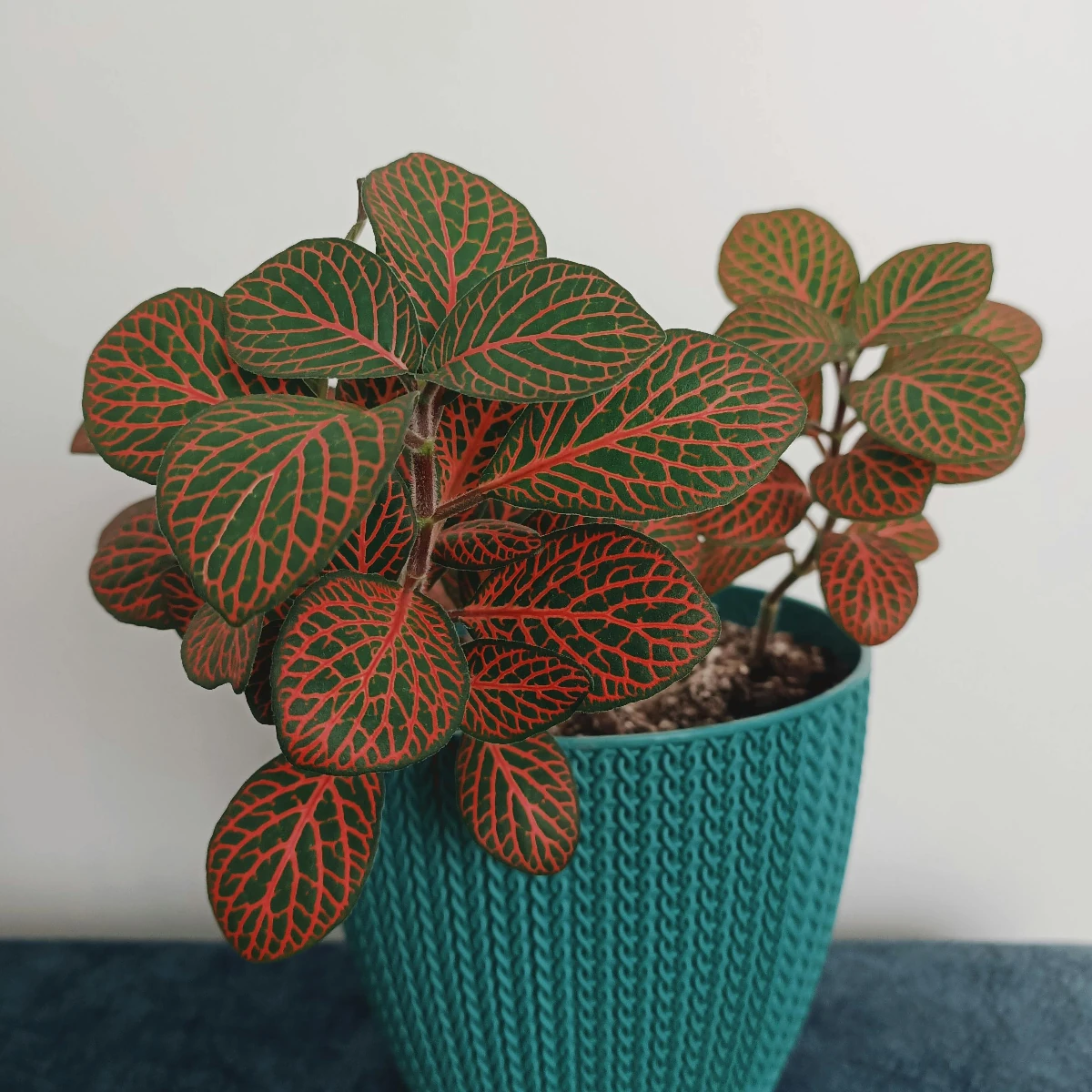
Fittonia, commonly called the Nerve Plant, is a low-growing tropical ground cover with striking mosaic-like leaf venation in white, red, or pink on a deep green background. Native to the tropical rainforests of Peru, it demands high humidity and consistent moisture but stays compact enough for terrariums, small pots, and dish gardens. Its dramatic wilting when thirsty and equally dramatic recovery after watering has earned it the nickname 'drama plant.'
Quick Care Reference
| Care Aspect | Requirement | Frequency |
|---|---|---|
| Watering | Top of soil barely dry | Every 3-5 days (summer), every 5-7 days (winter) |
| Light | Low to medium indirect | North-facing windows acceptable |
| Humidity | 60-80% (terrarium ideal) | Year-round high humidity essential |
| Fertilizer | Quarter-strength balanced | Monthly spring through fall |
| Repotting | When rootbound | Every 1-2 years |
Watering
Fittonia is very sensitive to drought. Water when the very top of the soil begins to feel dry, typically every 3 to 5 days in spring and summer. The plant wilts dramatically when dry but recovers within minutes after thorough watering. Do not let this dramatic wilt become a habit; repeated stress weakens the plant over time. Use room-temperature water and ensure pots have drainage. In fall and winter, water every 5 to 7 days.
Light Requirements
Fittonia thrives in low to medium indirect light. It is one of the few plants that can do well on a north-facing windowsill or in a shaded terrarium. Avoid direct sunlight, which quickly scorches the delicate leaves and bleaches the vivid vein patterns. Medium indirect light produces the most vibrant leaf coloration. In very low light, growth slows but the plant survives.
Humidity & Temperature
High humidity of 60 to 80% is essential. Fittonia is not well-suited to open rooms with average home humidity; it is ideally kept in a terrarium, cloche, or glass container where humidity is naturally elevated. Alternatively, a nearby humidifier set to 60% or above works well. Misting helps briefly but is insufficient alone. Keep temperatures between 65 and 80°F (18 to 27°C). Cold and drafts cause the delicate leaves to drop rapidly.
Fertilizing
Feed monthly during the growing season (spring through fall) with a balanced liquid fertilizer diluted to quarter strength. Fittonia is a light feeder and is easily damaged by over-fertilizing. Do not fertilize in winter. Flush the soil with plain water every 2 months to prevent salt buildup.
Propagation
Fittonia propagates easily from stem tip cuttings rooted in water or moist mix.
Stem tip cuttings
- Cut a 2 to 3 inch tip with 2 to 3 pairs of leaves
- Remove the lowest pair of leaves
- Root in water or moist perlite in a covered, humid environment
- Roots form in 2 to 4 weeks
- Pot in small containers with peat-based mix
Popular Varieties
Fittonia albivenis 'White Anne'
Deep green leaves with bright white vein network. Classic nerve plant.
Fittonia albivenis 'Red Star'
Compact variety with vivid pink-red veining. Highly decorative.
Fittonia albivenis 'Purple Vein'
Rare variety with pinkish-purple venation on dark green leaves.
Seasonal Care Calendar
Spring
Mar – May
- Resume watering every 3 to 5 days as growth picks up. Begin monthly fertilizing at quarter strength.
- Good month for repotting or adding new cuttings to a terrarium display.
- Peak growing season. Keep soil consistently moist and humidity high.
Summer
Jun – Aug
- Pinch back stems to keep bushy. Continue regular care.
- Watch for wilting if the terrarium is in a warm sunny spot; temperatures above 85°F (29°C) cause stress.
- Continue summer care. Take cuttings to propagate additional plants.
Fall
Sep – Nov
- Reduce fertilizing to every 6 to 8 weeks. Maintain high humidity.
- Stop fertilizing. Water every 4 to 5 days.
- Keep in warm, humid environment. Water every 5 days.
Winter
Dec – Feb
- Water every 5 to 7 days. No fertilizer. Keep in terrarium or high-humidity enclosure.
- Continue winter care. Watch for fungus gnats in moist enclosed environments.
- Minimal care. Water every 5 to 7 days. No fertilizer.
Troubleshooting
Dramatic wilting
Why it happens: Underwatering
What to do: Water immediately. The plant should perk up within 15 to 30 minutes. Repeated wilting weakens the plant; water more frequently.
Learn more: Drooping Leaves on Houseplants → Ask the AI about this →Yellowing lower leaves
Why it happens: Overwatering or root rot
What to do: Allow soil to dry slightly more between waterings. Ensure drainage holes are not blocked.
Learn more: Root Rot in Houseplants → Ask the AI about this →Brown crispy leaf edges
Why it happens: Low humidity
What to do: Move to a terrarium or cloche. Increase humidity with a nearby humidifier. Misting alone is insufficient.
Learn more: Brown Leaves on Houseplants → Ask the AI about this →Bleached or scorched patches
Why it happens: Direct sunlight
What to do: Move to shade or filtered indirect light immediately. Damaged areas will not recover but new growth will be healthy.
Ask the AI about this →Not sure what's wrong?
Premium includes AI photo diagnosis, then walks you through the fix and checks back in until it's better.
See Premium →Track your Fittonia with PlantCareAI
Add your Fittonia and get a watering schedule tuned to this week's weather. Free for up to 3 plants.
Add your Fittonia