
Hoya Care Guide
Hoya carnosa
Also known as Wax Plant, Porcelain Flower
By Ellen Hermance · PlantCareAI Editorial
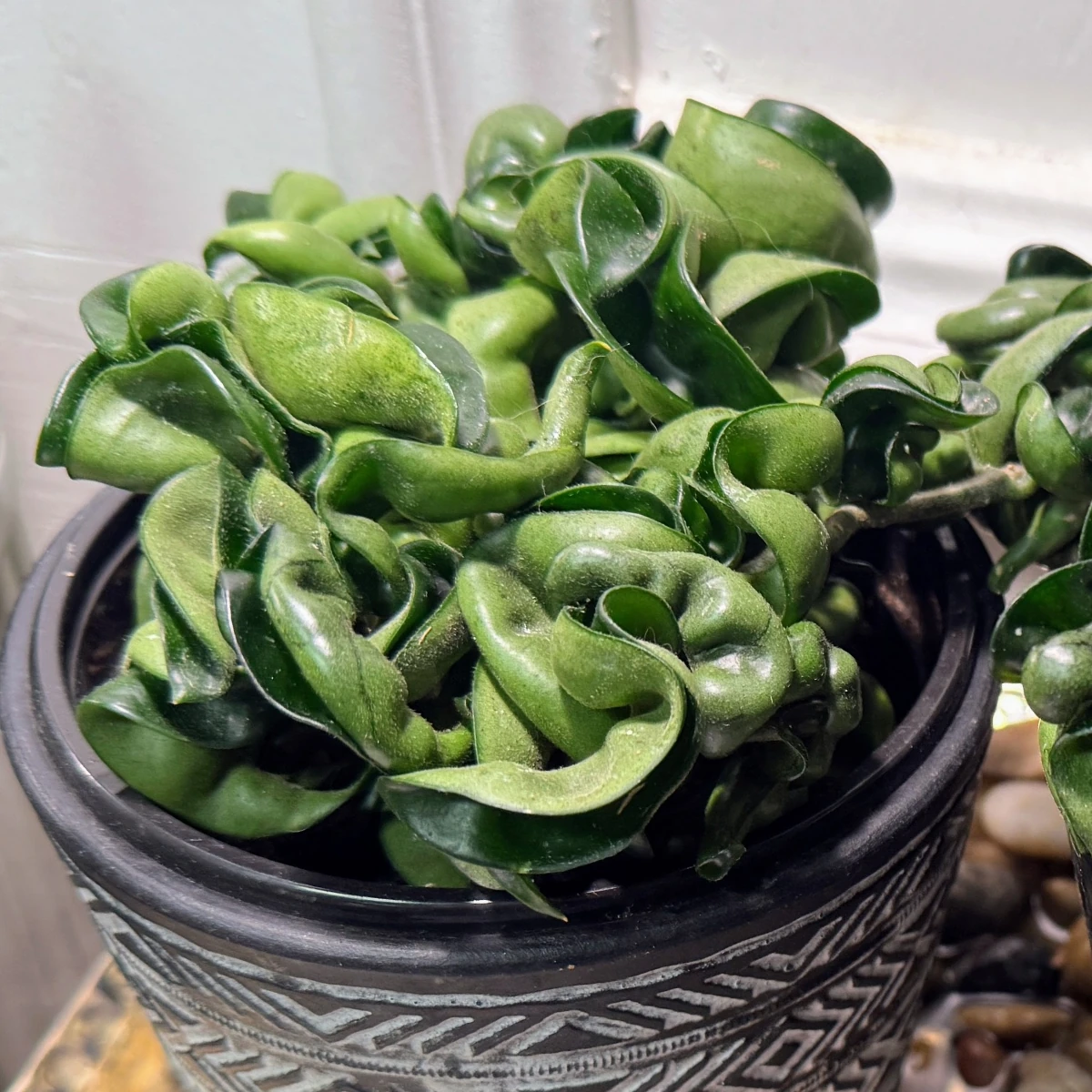
Hoya, also called the Wax Plant, is a beloved trailing succulent-like vine prized for its waxy leaves and fragrant clusters of star-shaped flowers. Native to South and Southeast Asia, hoyas are slow-growing but exceptionally long-lived, often becoming family heirlooms. They are remarkably tolerant of neglect, low humidity, and inconsistent watering, making them an ideal plant for beginners and collectors alike.
Quick Care Reference
| Care Aspect | Requirement | Frequency |
|---|---|---|
| Watering | Soil nearly dry | Every 1-2 weeks (summer), every 2-3 weeks (winter) |
| Light | Bright indirect + some morning sun | No harsh afternoon direct sun |
| Humidity | 40-50% (adaptable) | No misting needed |
| Fertilizer | Half-strength balanced or high-K | Monthly spring/summer only |
| Repotting | Slightly rootbound encourages blooming | Every 2-3 years or less |
Watering
Allow the soil to dry out almost completely between waterings. In spring and summer, water every 7 to 10 days. In fall and winter, reduce to every 2 to 3 weeks. Hoyas store water in their thick, waxy leaves, making them highly drought tolerant. Overwatering is the most common cause of hoya failure. When you do water, soak thoroughly and drain completely. Wrinkled or slightly soft leaves are a reliable signal that it is time to water.
Light Requirements
Hoyas prefer bright indirect light with some morning sun. An east-facing window is ideal. They can tolerate medium indirect light but will flower rarely if at all. A few hours of direct morning sun encourages the development of flower buds. Avoid intense afternoon direct sun, which can bleach leaves. Hoyas adapt well to grow lights, which can provide consistent bright light year-round.
Humidity & Temperature
Hoya is more adaptable to average home humidity (40 to 50%) than most tropical plants. It does not require high humidity to thrive, though it appreciates levels above 40%. Keep temperatures between 60 and 85°F (15 to 29°C). Hoyas tolerate cooler temperatures down to 50°F (10°C) but should not be exposed to frost. Avoid cold drafts, which can cause leaf drop.
Fertilizing
Feed monthly during the growing season (spring through summer) with a balanced or high-potassium liquid fertilizer diluted to half strength. A high-potassium formula encourages flowering. Stop fertilizing in fall and winter. Do not over-fertilize; too much nitrogen causes lush leafy growth at the expense of blooms.
Propagation
Hoya propagates easily from stem cuttings in water or soil, making it a great plant to share with friends.
Stem cuttings in water
- Cut a 4 to 6 inch stem with 2 to 3 leaf nodes
- Remove leaves from the bottom node
- Place in a jar of water in bright indirect light
- Change water every 3 to 5 days
- Plant in cactus mix once roots reach 1 inch
Stem cuttings in soil
- Cut a stem with at least 2 nodes
- Dip in rooting hormone (optional)
- Plant in moist cactus mix and keep in bright indirect light
- Water sparingly until roots are established (4 to 6 weeks)
Popular Varieties
Hoya carnosa 'Krimson Queen'
Variegated leaves with white and pink margins.
Hoya kerrii
Heart-shaped leaves; popular as a novelty single-leaf cutting.
Hoya pubicalyx
Faster-growing vine with dark leaves and fragrant deep red flowers.
Seasonal Care Calendar
Spring
Mar – May
- Resume watering every 1 to 2 weeks. Begin monthly fertilizing.
- Many hoyas begin flowering in spring. Do not move the plant once buds appear.
- Peak growing season. Water regularly and feed monthly.
Summer
Jun – Aug
- Continue summer care. Flowers typically last 1 to 2 weeks.
- Take stem cuttings to propagate. High temperatures may stress the plant if above 90°F (32°C).
- Continue regular watering. Do not remove old flower spurs.
Fall
Sep – Nov
- Taper fertilizing. Reduce watering frequency as growth slows.
- Stop fertilizing. Water every 2 weeks.
- Reduce watering to every 2 to 3 weeks. Cooler nights can encourage bud set.
Winter
Dec – Feb
- Water every 3 weeks or less. No fertilizer. Ensure bright light.
- Continue minimal care. Look for developing flower buds on peduncles.
- Minimal care. Water every 3 weeks or less. No fertilizer.
Troubleshooting
Yellow or mushy leaves
Why it happens: Overwatering or root rot
What to do: Remove rotted roots, let soil dry completely, and reduce watering frequency. Repot in fresh cactus mix if needed.
Learn more: Root Rot in Houseplants → Ask the AI about this →Wrinkled or shriveled leaves
Why it happens: Underwatering
What to do: Water thoroughly and allow plant to absorb moisture for 30 minutes before draining.
Ask the AI about this →No flowers
Why it happens: Insufficient light, too much nitrogen, or disturbed peduncles
What to do: Move to brighter location. Switch to high-potassium fertilizer. Never cut off old flower stalks.
Ask the AI about this →Leggy vines with small leaves
Why it happens: Low light
What to do: Move to a brighter window or add a grow light. Growth becomes more compact with adequate light.
Ask the AI about this →Not sure what's wrong?
Premium includes AI photo diagnosis, then walks you through the fix and checks back in until it's better.
See Premium →Track your Hoya with PlantCareAI
Add your Hoya and get a watering schedule tuned to this week's weather. Free for up to 3 plants.
Add your Hoya