
Money Tree Care Guide
Pachira aquatica
Also known as Pachira, Guiana Chestnut
By Ellen Hermance · PlantCareAI Editorial
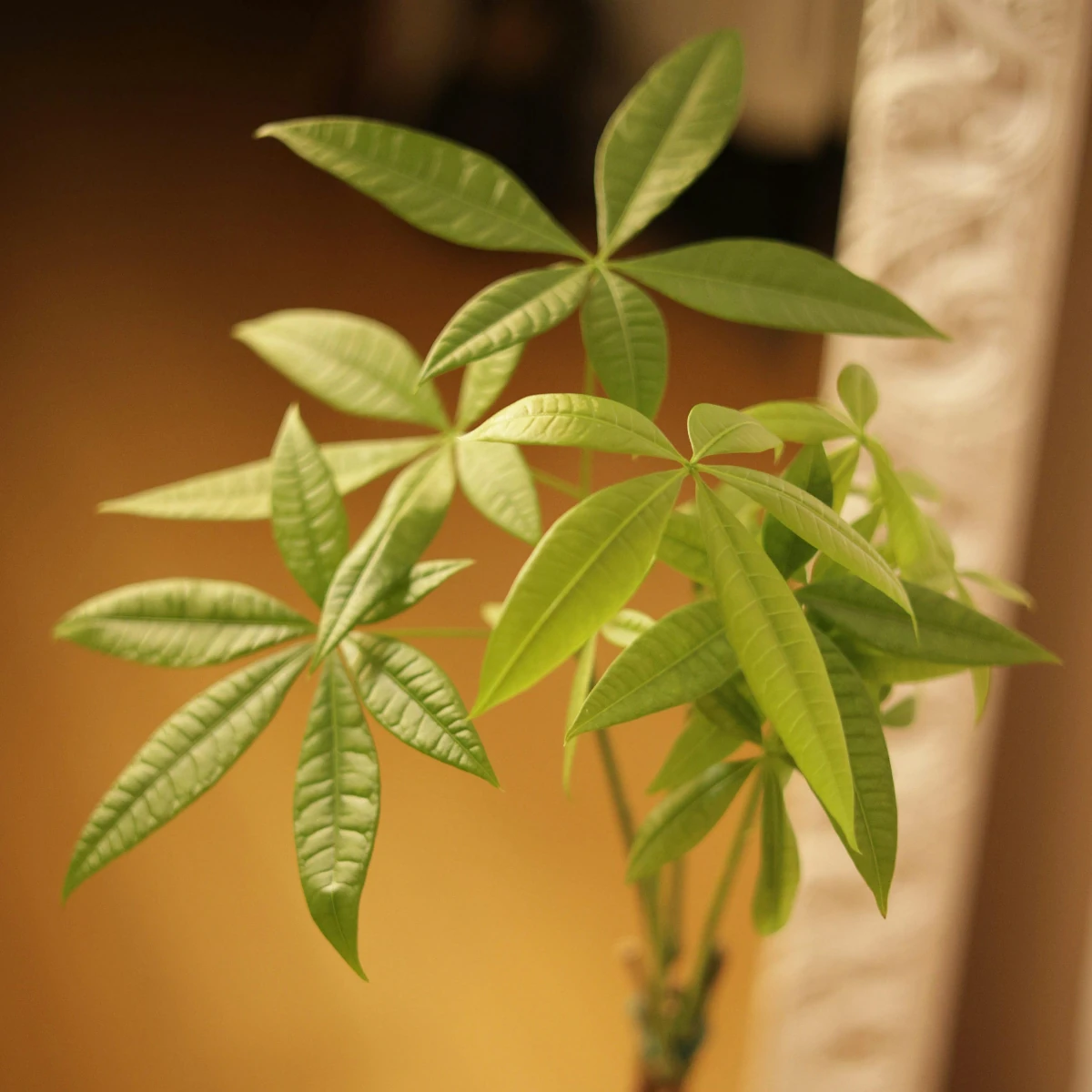
A tropical tree prized for its braided trunk and lush green palmate leaves, the money tree thrives in bright indirect light and needs infrequent watering.
Quick Care Reference
| Care Aspect | Requirement | Frequency |
|---|---|---|
| Light | Bright indirect light, tolerates lower light | |
| Water | Every 1-2 weeks (spring/summer), every 3-4 weeks (winter) | |
| Humidity | 40-60% preferred | |
| Temperature | 65-85°F (18-29°C) | |
| Fertilizer | Monthly, half-strength balanced, spring-summer only | |
| Soil | Well-draining potting mix with perlite | |
| Pot | Pot with drainage holes is essential | |
| Repotting | Every 2-3 years in spring |
Watering
Water thoroughly when the top 2-3 inches of soil feel dry, typically every 1-2 weeks in spring and summer and every 3-4 weeks in winter. Always empty the saucer after 30 minutes to prevent root rot. Money trees are more tolerant of underwatering than overwatering.
Light Requirements
Money trees do best in bright indirect light near a south or east-facing window. They tolerate lower light conditions better than many tropicals, but slow growth and pale leaves signal insufficient light. Avoid harsh direct afternoon sun, which scorches leaves.
Humidity & Temperature
Money trees prefer moderate to high humidity (40-60%). In dry climates or heated indoor spaces, run a humidifier nearby or place the pot on a pebble tray with water. Misting the leaves occasionally also helps, especially in winter.
Fertilizing
Feed monthly during spring and summer with a balanced liquid fertilizer diluted to half strength. Skip fertilizing in fall and winter when the plant is resting. Over-fertilizing causes salt buildup in soil, which damages roots.
Propagation
Money trees are most easily propagated from stem cuttings taken in spring or early summer. Cut a 4-6 inch stem section just below a leaf node, remove lower leaves, and place in water or moist potting mix. Roots typically develop in 4-6 weeks. Propagating by seed is possible but slow and rarely done at home.
Stem cuttings in water or moist potting mix
Popular Varieties
Standard Pachira aquatica
The classic money tree with braided trunk and deep green palmate leaves, widely available.
Pachira glabra
Closely related to Pachira aquatica, often sold under the same common name. Slightly smaller leaves with similar care needs.
Variegated Money Tree
A rarer form with cream and green variegation on the leaves. Requires more light to maintain color and grows more slowly.
Seasonal Care Calendar
Spring
March – May
- Resume monthly fertilizing.
- Repot if rootbound.
- Increase watering frequency as growth picks up..
Summer
June – August
- Continue monthly feeding.
- Monitor moisture more frequently in heat.
- Keep away from direct afternoon sun..
Fall
September – November
- Stop fertilizing.
- Gradually reduce watering frequency.
- Move away from cold windows..
Winter
December – February
- Water only every 3-4 weeks.
- No fertilizer.
- Maintain humidity with a pebble tray or humidifier..
Troubleshooting
Yellow leaves
Why it happens: Most often overwatering or root rot. Can also signal low light or cold drafts.
What to do: Check soil moisture and drainage. Allow soil to dry out more between waterings. If roots are mushy, repot in fresh well-draining soil.
Ask the AI about this →Brown crispy leaf edges
Why it happens: Low humidity, underwatering, or excessive direct sunlight.
What to do: Increase humidity with a pebble tray or humidifier. Ensure consistent watering. Move away from harsh afternoon sun.
Ask the AI about this →Drooping leaves
Why it happens: Underwatering is most common. Also can result from root rot or sudden temperature change.
What to do: Water thoroughly if soil is dry. If soil is wet, let it dry out and check roots for rot.
Ask the AI about this →Pale or washed-out leaves
Why it happens: Insufficient light.
What to do: Move to a brighter location with more indirect light. Avoid deep interior rooms.
Ask the AI about this →Leaf drop
Why it happens: Sudden environmental change, cold drafts, or overwatering.
What to do: Stabilize the plant's environment. Keep away from cold windows and vents. Adjust watering habits.
Ask the AI about this →Not sure what's wrong?
Premium includes AI photo diagnosis, then walks you through the fix and checks back in until it's better.
See Premium →Track your Money Tree with PlantCareAI
Add your Money Tree and get a watering schedule tuned to this week's weather. Free for up to 3 plants.
Add your Money Tree