
Oxalis Care Guide
Oxalis triangularis
Also known as Shamrock Plant, False Shamrock, Purple Shamrock
By Ellen Hermance · PlantCareAI Editorial
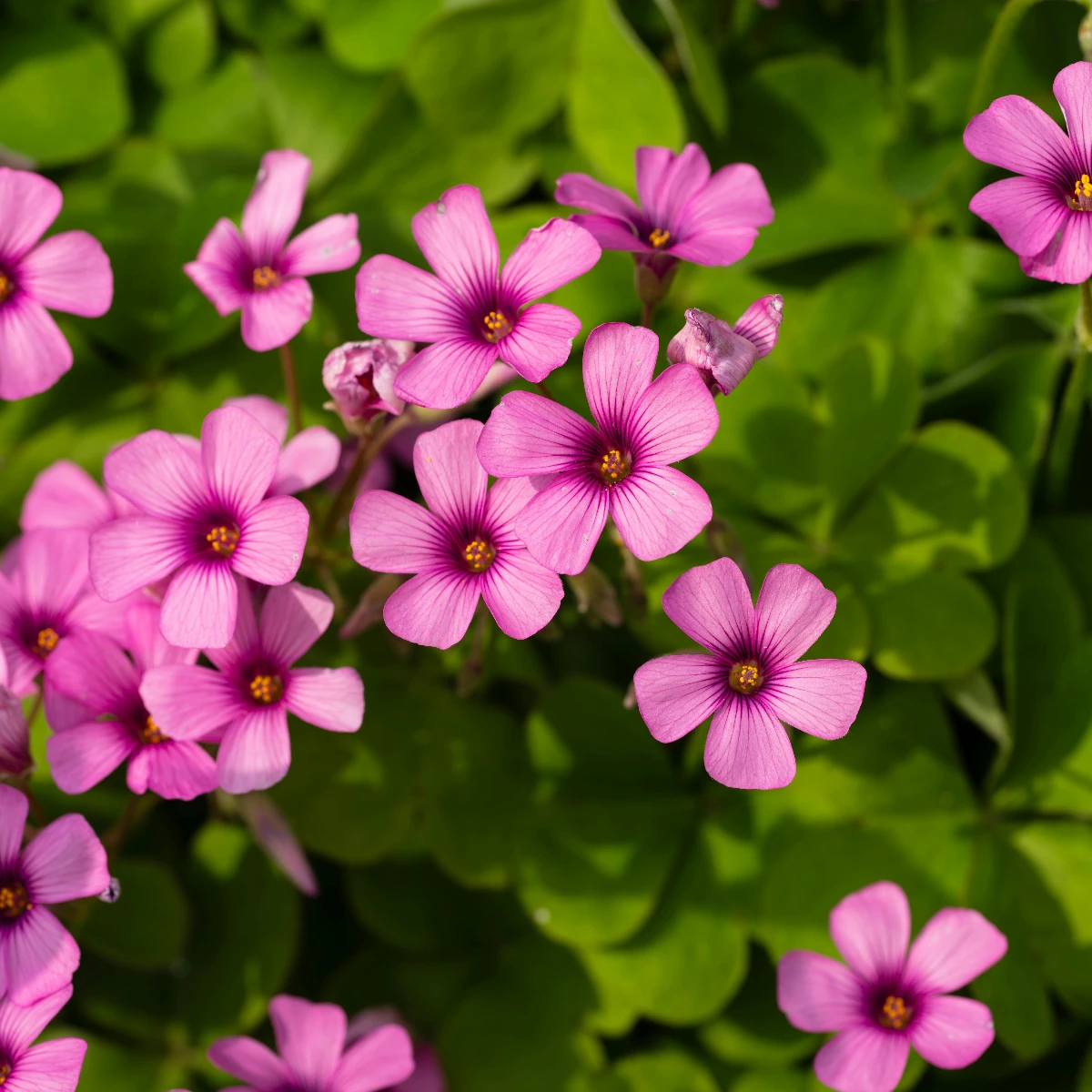
Oxalis triangularis, or Purple Shamrock, is a charming indoor plant with dramatic triangular leaves in deep purple or burgundy that fold downward at night and reopen in the morning. It produces delicate pink or white flowers nearly year-round in good light. Native to Brazil, it grows from small bulb-like corms, goes dormant periodically, and bounces back reliably. Its easy care, low space requirements, and photonastic leaf movements make it a favorite for plant lovers of all levels.
Quick Care Reference
| Care Aspect | Requirement | Frequency |
|---|---|---|
| Watering | Top inch dry (reduce during dormancy) | Weekly (active), every 3-4 weeks (dormant) |
| Light | Bright indirect or some morning direct sun | East or west window ideal |
| Humidity | 40-50% (adaptable) | No special humidity needed |
| Fertilizer | Half-strength balanced | Monthly during active growth only |
| Repotting | When rootbound | Every 1-2 years; divide corms at the same time |
Watering
Water when the top inch of soil feels dry, typically once a week in spring and summer. Reduce significantly when the plant enters dormancy; foliage will die back and the corms need minimal moisture to survive. Do not water a fully dormant plant more than once every 3 to 4 weeks. Once new growth emerges from the corms after dormancy, resume regular watering. Overwatering when active causes root rot; overwatering when dormant rots the corms.
Light Requirements
Oxalis thrives in bright indirect light and can tolerate several hours of direct morning sun. The vivid purple coloration is most intense in bright light; low light causes the leaves to turn more green-tinged and growth becomes sparse. An east- or west-facing window is ideal. If the plant is stretching toward the light with elongated stems, it needs a brighter position. Oxalis also grows well under grow lights.
Humidity & Temperature
Oxalis adapts well to average home humidity (40 to 50%) and does not require any special humidity management. It tolerates a wide range of temperatures from 60 to 80°F (15 to 27°C). Cooler temperatures in fall actually help trigger its natural dormancy cycle, which is a healthy part of its growth pattern.
Fertilizing
Feed monthly during the active growing season (spring through fall) with a balanced liquid fertilizer diluted to half strength. Stop fertilizing entirely when the plant begins to go dormant and foliage dies back. Resume feeding once new growth emerges after dormancy ends.
Propagation
Oxalis propagates by dividing the small corms (bulb-like structures) during repotting. Each corm can produce a new plant.
Corm division
- Remove plant from pot during dormancy or when repotting
- Gently separate the small corms from the main clump
- Plant corms 1 inch deep in fresh mix
- Water lightly and place in bright indirect light
- New growth emerges in 2 to 4 weeks
Popular Varieties
Oxalis triangularis 'Atropurpurea'
Deep purple-burgundy triangular leaves with dark pink flowers. The most common variety.
Oxalis triangularis 'Fanny'
Green leaves with dark purple center markings. More unusual look.
Oxalis regnellii
Bright green triangular leaves with white flowers. The classic green shamrock.
Seasonal Care Calendar
Spring
Mar – May
- Resume weekly watering and monthly fertilizing once growth is established.
- Rapid growth phase. Maintain bright indirect light for vivid purple coloration.
- Peak growing season. Flowers appear freely. Feed monthly.
Summer
Jun – Aug
- Continue regular care. May enter a brief mid-summer dormancy in very hot climates.
- Continue watering and feeding. Move away from harsh afternoon direct sun.
- Continue summer care. Begin tapering fertilizer at end of month.
Fall
Sep – Nov
- Reduce fertilizing. Cooler nights may trigger dormancy preparation.
- Stop fertilizing. Reduce watering as foliage begins to die back.
- Dormancy likely beginning. Water sparingly every 3 weeks.
Winter
Dec – Feb
- Plant may be dormant. Water once every 3 to 4 weeks. No fertilizer.
- Watch for new growth emerging from corms. Resume regular watering when shoots appear.
- Full dormancy. Water once every 3 to 4 weeks. Corms are alive.
Troubleshooting
All foliage dying back
Why it happens: Normal dormancy triggered by heat, light changes, or seasonal cues
What to do: Reduce watering to every 3 to 4 weeks. Do not discard the pot. New growth will emerge in 4 to 8 weeks.
Ask the AI about this →Green leaves instead of purple
Why it happens: Insufficient light
What to do: Move to a brighter location. Purple pigmentation returns in new growth with more light.
Ask the AI about this →Leggy, stretched growth
Why it happens: Low light
What to do: Move to bright indirect light or add a grow light. Prune leggy stems to encourage compact regrowth.
Ask the AI about this →Yellow leaves and mushy stems
Why it happens: Overwatering or root rot
What to do: Let soil dry, check roots, and repot in fresh dry mix if rotted. Reduce watering frequency significantly.
Learn more: Root Rot in Houseplants → Ask the AI about this →Not sure what's wrong?
Premium includes AI photo diagnosis, then walks you through the fix and checks back in until it's better.
See Premium →Track your Oxalis with PlantCareAI
Add your Oxalis and get a watering schedule tuned to this week's weather. Free for up to 3 plants.
Add your Oxalis