
Prayer Plant Care Guide
Maranta leuconeura
Also known as Maranta
By Ellen Hermance · PlantCareAI Editorial
The prayer plant folds its leaves upward at night like hands in prayer and thrives in medium indirect light with consistent moisture and high humidity.
Quick Care Reference
| Care Aspect | Requirement | Frequency |
|---|---|---|
| Light | Medium indirect light, no direct sun | |
| Water | Every 5-7 days (spring/summer), every 10-14 days (winter) | |
| Humidity | 50-70% preferred | |
| Temperature | 60-80°F (15-27°C) | |
| Fertilizer | Every 2-4 weeks at half strength, spring-summer only | |
| Soil | Moist, well-draining mix with peat or coco coir | |
| Pot | Drainage holes essential; terracotta helps prevent overwatering | |
| Repotting | Every 2-3 years in spring |
Watering
Prayer plants like consistently moist but never waterlogged soil. Water when the top inch feels barely dry, typically every 5-7 days in spring and summer and every 10-14 days in winter. Use room-temperature filtered or distilled water when possible, as prayer plants are sensitive to fluoride and chlorine in tap water.
Light Requirements
Prayer plants prefer medium indirect light. They do well in north or east-facing windows and tolerate lower light better than most houseplants. Avoid direct sun entirely, which bleaches and scorches the decorative leaf markings. Insufficient light causes the nyctinastic leaf movement (folding at night) to slow or stop.
Humidity & Temperature
Prayer plants are tropical and demand high humidity; ideally 50-70%. Brown leaf tips are the first sign of dry air. Use a humidifier nearby, place on a pebble tray, or group with other humidity-loving plants. Misting helps temporarily but can encourage fungal issues if leaves stay wet overnight.
Fertilizing
Feed every 2-4 weeks during spring and summer with a balanced liquid fertilizer at half strength. Reduce to once a month in fall and stop entirely in winter. Over-fertilizing causes brown leaf tips and salt buildup; always flush the soil thoroughly every few months.
Propagation
Prayer plants propagate readily from stem cuttings. Take a cutting with at least one node and two leaves, place in water or moist potting mix, and roots typically form within 3-5 weeks. Division is also easy at repotting time; gently separate the root ball into sections, each with healthy roots and stems.
Stem cuttings in water or moist potting mix
Division at repotting time
Popular Varieties
Erythroneura (Red Prayer Plant)
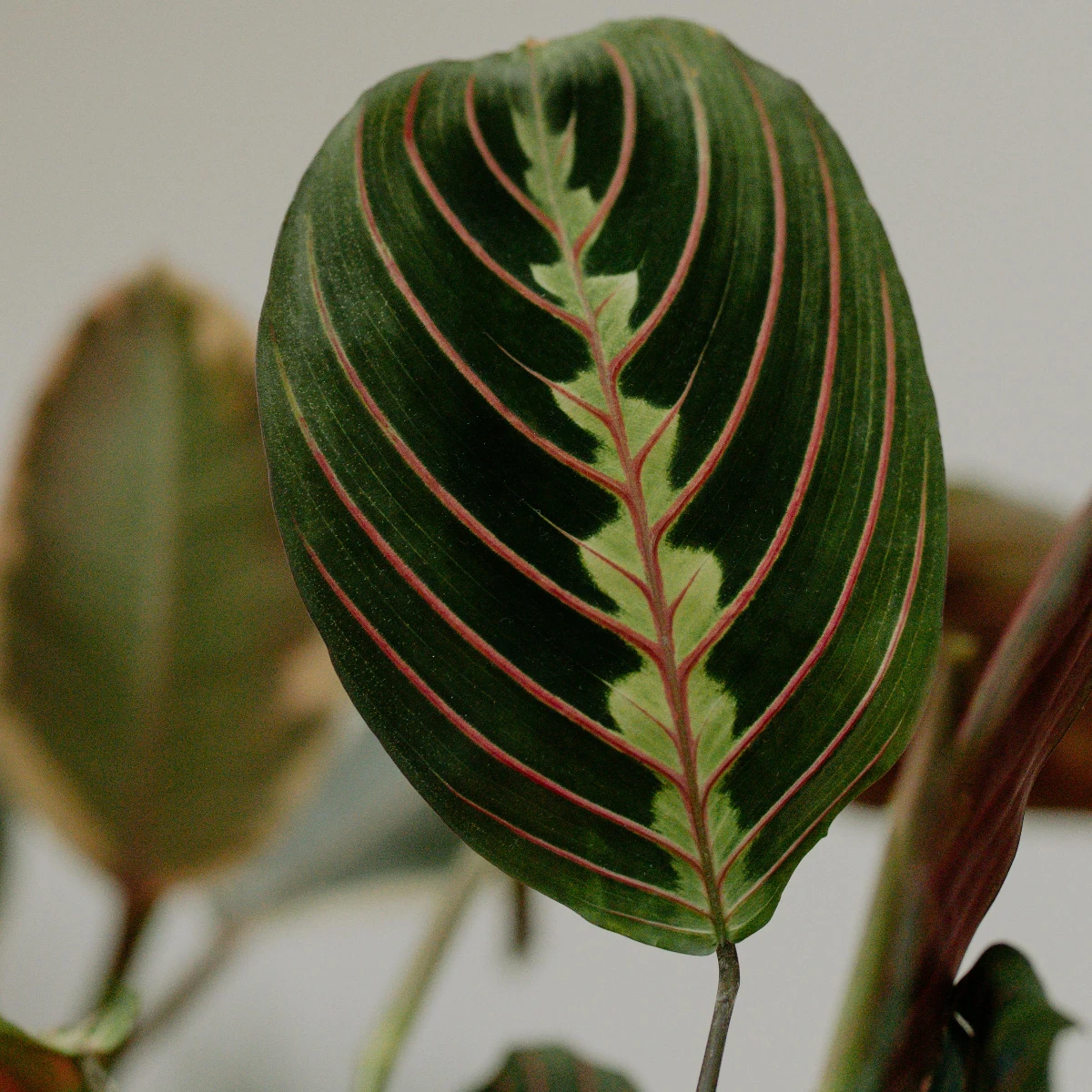
The most common variety, with olive-green leaves featuring red veins and purple undersides. A classic houseplant choice.
Kerchoveana (Rabbit's Foot)
Features pale green leaves with darker green patches arranged along the midrib, resembling rabbit tracks. Slightly easier to grow than Erythroneura.
Massangeana (Black Prayer Plant)
Has darker, almost black-green leaves with silver feathering along the midrib. Needs the same care as other Maranta varieties.
Seasonal Care Calendar
Spring
March – May
- Resume feeding every 2-4 weeks.
- Increase watering frequency as growth picks up.
- Repot if rootbound..
Summer
June – August
- Water more frequently.
- Watch for spider mites in hot, dry conditions.
- Maintain high humidity..
Fall
September – November
- Reduce feeding frequency.
- Slightly reduce watering.
- Watch for dropping temperatures near windows..
Winter
December – February
- Stop fertilizing.
- Water less frequently.
- Keep away from cold drafts.
- Boost humidity to counter heating system dryness..
Troubleshooting
Brown leaf tips
Why it happens: Low humidity, fluoride in tap water, or inconsistent watering.
What to do: Switch to filtered or distilled water. Raise humidity with a humidifier or pebble tray. Water more consistently.
Ask the AI about this →Faded or bleached leaf markings
Why it happens: Too much direct sunlight.
What to do: Move to a shadier location away from any direct sun exposure.
Ask the AI about this →Curling or drooping leaves
Why it happens: Underwatering or low humidity.
What to do: Water thoroughly and increase ambient humidity. If the soil is wet, the issue is likely root rot; check and repot if needed.
Ask the AI about this →Leaves no longer folding at night
Why it happens: Insufficient light during the day.
What to do: Move to a brighter location with more indirect light to restore the nyctinastic movement.
Ask the AI about this →Spider mites
Why it happens: Common in hot, dry conditions.
What to do: Wipe leaves with a damp cloth and spray with diluted neem oil or insecticidal soap. Increase humidity to deter future infestations.
Ask the AI about this →Not sure what's wrong?
Premium includes AI photo diagnosis, then walks you through the fix and checks back in until it's better.
See Premium →Track your Prayer Plant with PlantCareAI
Add your Prayer Plant and get a watering schedule tuned to this week's weather. Free for up to 3 plants.
Add your Prayer Plant