
Rosemary Care Guide
Salvia rosmarinus (formerly Rosmarinus officinalis)
By Ellen Hermance · PlantCareAI Editorial
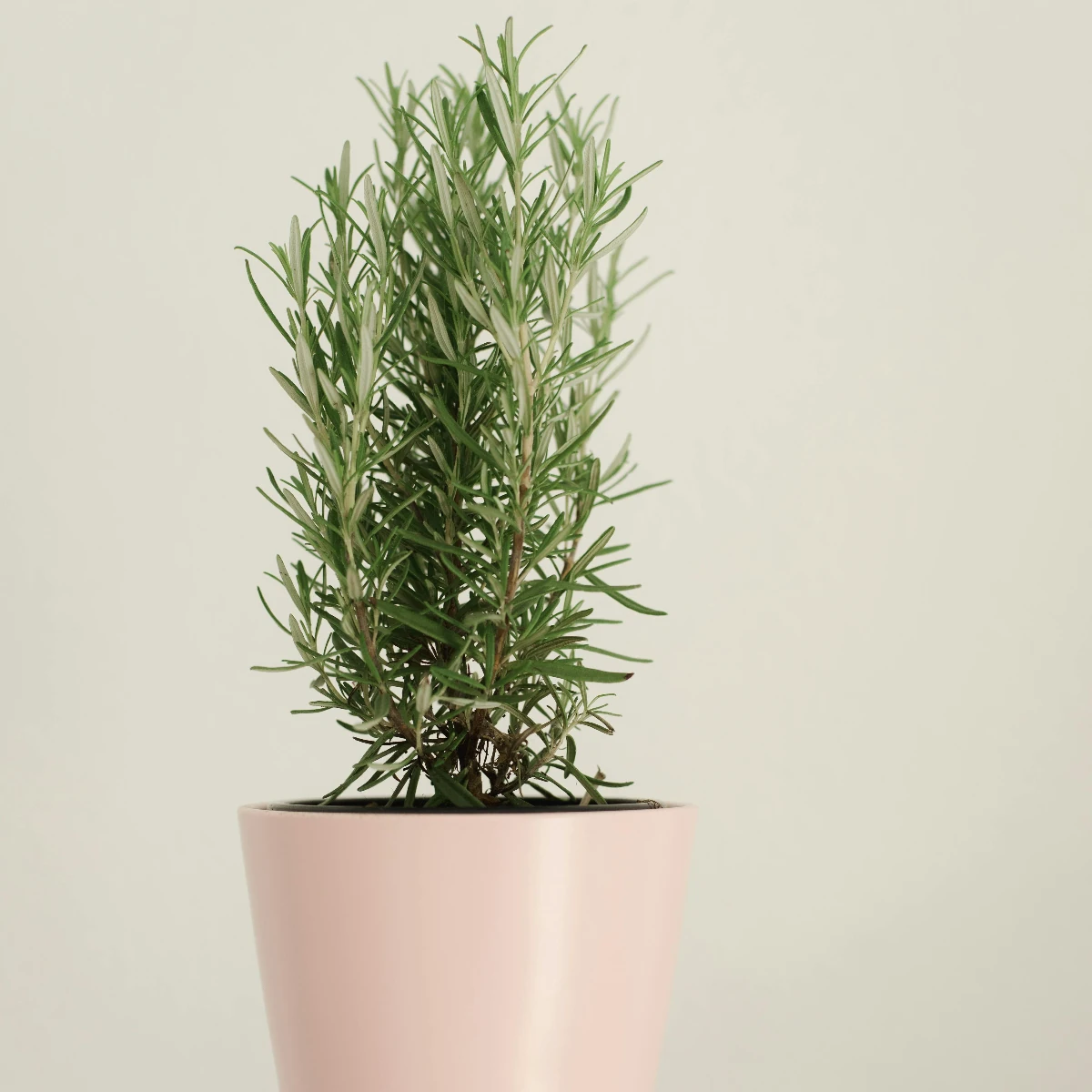
Rosemary is an aromatic evergreen herb native to the dry, sun-drenched coastal hills of the Mediterranean. Unlike the tropical houseplants in most indoor collections, it evolved in rocky, nutrient-poor soil with full sun and minimal rainfall; which translates to a houseplant with fundamentally different needs: maximum light, very little water, and dry air. Growing rosemary indoors successfully is mostly about resisting the urge to overwater and finding your sunniest window. Reward yourself with the culinary treasure growing on your windowsill, and enjoy the focus-enhancing aromatherapy benefits that research has linked to improved alertness and memory.
Quick Care Reference
| Care Aspect | Requirement | Frequency |
|---|---|---|
| Watering | When top 2-3 inches are fully dry | Every 7-10 days (summer), every 2-3 weeks (winter) |
| Light | Full sun, direct sunlight welcomed | 6+ hours daily; south-facing window ideal |
| Soil | Very well-draining, gritty mix | Repot every 2-3 years or when root-bound |
| Fertilizing | Balanced liquid, quarter strength | Monthly (spring–summer only) |
| Humidity | Low (30-50%); good air circulation essential | Avoid humidifiers and misting |
Watering
Rosemary is far more drought-tolerant than most houseplants; it comes from a climate with hot, dry summers and minimal rainfall. Water only when the top 2-3 inches of soil feel completely dry, which typically means every 7-10 days in summer and every 2-3 weeks in winter. Root rot caused by overwatering is by far the most common way rosemary dies indoors, so err on the side of underwatering. When you do water, soak thoroughly until water runs from the drainage holes, then let the soil dry out completely before the next watering. Always use a pot with drainage holes; rosemary sitting in soggy soil will decline rapidly. A terracotta pot is ideal because it breathes and helps soil dry more evenly. Tap water is generally fine for rosemary; it's not sensitive to water chemicals the way tropical foliage plants can be.
Light Requirements
Rosemary needs more direct sunlight than almost any other indoor plant. A south-facing window providing 6 or more hours of direct sunlight daily is ideal. An east- or west-facing window can work, but expect slower, leggier growth and potentially weaker flavor in the leaves. Unlike tropical houseplants that need protection from direct sun, rosemary craves it; the intense light concentrates the essential oils that give the herb its signature aroma and flavor. In winter, when days are short, rosemary may not get enough light indoors even at a south window. Supplementing with a grow light (16 hours of bright light daily) is the best way to keep it vigorous through the low-light months. Without adequate light, rosemary becomes leggy, loses fragrance, and becomes more susceptible to pests and disease.
Humidity & Temperature
Rosemary thrives in low to average humidity; 30-50%, which is typical of most indoor environments. Unlike tropical houseplants, rosemary does not benefit from misting, pebble trays, or humidifiers. High humidity is actually detrimental: it promotes powdery mildew, the most common disease problem for indoor rosemary. Good air circulation is essential; place the plant where it gets a gentle air flow, and avoid enclosed spaces or grouping it with tropical plants that need humidity. Keep temperatures between 55-80°F (13-27°C). Rosemary tolerates brief dips to 20°F (-7°C) outdoors when established, but indoor plants should be kept above 50°F (10°C). Keep it away from cold windowpanes in winter, which can damage the roots on the near side of the pot.
Fertilizing
Rosemary is a very light feeder; it evolved in nutrient-poor soils. Over-fertilizing actually weakens the plant and reduces the concentration of aromatic essential oils. Feed lightly once a month during spring and summer only, using a balanced liquid fertilizer at quarter strength (not half strength as with most houseplants). Stop fertilizing entirely from September through February. An organic option like diluted worm casting tea is gentle and appropriate. If you're growing rosemary primarily for cooking, minimal fertilizing produces the most flavorful, aromatic leaves. Heavy feeding produces lush but less flavorful, less fragrant growth.
Propagation
Rosemary propagates readily from stem cuttings taken from soft, green new growth; this is the most reliable and fastest method for creating new plants. Unlike ferns, which can only be divided, rosemary cuttings root easily in water or soil. Spring through early summer is the best time, when the plant is actively growing and cuttings root fastest.
Stem Cuttings in Water
- Cut 4-6 inch tips from soft, green (non-woody) stems using clean sharp scissors.
- Strip the leaves from the bottom 2 inches of each cutting.
- Place the stripped stems in a glass of room-temperature water, with the stripped section submerged and leaves above water.
- Change the water every 2-3 days to prevent bacterial buildup.
- Roots appear in 2-4 weeks. Once they reach 1-2 inches long, transfer to well-draining potting mix.
- Water lightly for the first 2 weeks as the plant adjusts from water to soil roots.
Stem Cuttings in Soil
- Take 4-6 inch tip cuttings from soft, green growth and strip the lower 2 inches of leaves.
- Optionally dip the cut end in rooting hormone powder to speed root development.
- Insert the cutting 2 inches deep in moist, well-draining potting mix; a 50/50 mix of perlite and coco coir works well.
- Cover loosely with a clear plastic bag or dome to maintain humidity around the cutting.
- Place in bright indirect light (direct sun may wilt the unrooted cutting) and keep the soil barely moist.
- Check for resistance after 3-5 weeks; a gentle tug that meets resistance means roots have formed. Remove the covering and transition to normal rosemary care.
Popular Varieties
Salvia rosmarinus (Common Rosemary)
Also known as: Upright Rosemary
The classic culinary variety with strongly aromatic, needle-like leaves on upright stems. Grown outdoors it can reach 4-6 feet; indoors it stays compact at 1-2 feet with regular trimming. The most widely available variety and the best all-around choice for indoor herb gardening. Produces small blue-purple flowers in spring.
Regular harvesting keeps the plant bushy and productive; trim 2-3 inches of tip growth whenever you need herbs.
Salvia rosmarinus 'Arp'
Also known as: Arp Rosemary
A cold-hardy variety selected for its ability to withstand temperatures as low as 10°F (-12°C); the most cold-tolerant rosemary cultivar. Upright growth habit with a slightly more open, airy structure than common rosemary. Has a mild, pleasant aroma and tolerates brief drafts from cold windows better than other varieties, making it forgiving for indoor growing.
Most forgiving of cold windowsills and brief temperature drops; a good choice for colder homes.
Salvia rosmarinus 'Prostratus'
Also known as: Prostrate Rosemary, Trailing Rosemary
A low-growing, spreading variety with a cascading habit that trails beautifully over the edges of pots and hanging baskets. Smaller, more delicate leaves than upright varieties. Highly ornamental; the trailing stems create an attractive display on windowsills. Same strong aroma and flavor as common rosemary.
The trailing habit makes it a beautiful visual choice; place in a hanging basket near your sunniest window.
Salvia rosmarinus 'Tuscan Blue'
Also known as: Tuscan Blue Rosemary
A vigorous, upright variety prized for its intensely aromatic, wide leaves and striking deep blue-purple flowers. One of the best culinary rosemary varieties; leaves have an exceptionally strong, rich fragrance. Grows more robustly than common rosemary with a bold, architectural presence.
Exceptionally aromatic; ideal for the desk or windowsill where you want maximum scent-based focus benefits.
Seasonal Care Calendar
Spring
March – May
- Begin monthly light fertilizing at quarter strength as new growth emerges
- Prune to shape and encourage bushy growth after new growth starts
- Take stem cuttings for propagation from soft new growth
- Repot if root-bound (every 2-3 years is typical)
Summer
June – August
- Water every 7-10 days when soil is fully dry
- Harvest generously; summer growth is most flavorful
- Continue monthly light fertilizing
- Watch for spider mites in hot, dry conditions
Fall
September – November
- Stop fertilizing by October
- Reduce watering frequency as growth slows
- Harvest and dry or freeze a supply before growth stops for winter
- Move to the sunniest window as days shorten
Winter
December – February
- Water very sparingly; every 2-3 weeks only
- Stop fertilizing completely
- Ensure maximum light; add grow light if south window is insufficient
- Watch for powdery mildew with lower ventilation in cold months
Troubleshooting
Wilting or root rot despite watering
Why it happens: Overwatering is by far the most common cause of rosemary death indoors. Rosemary's Mediterranean roots mean it has no tolerance for continuously wet soil. Root rot develops when the potting mix stays saturated; the roots decay, and the plant wilts even though the soil feels wet. Poor drainage (no drainage holes, compact soil, a pot that's too large) accelerates the problem.
What to do: Let the soil dry out completely. If the wilting is severe, unpot and inspect the roots: healthy roots are white and firm; rotted roots are brown and mushy. Trim all rotted roots with clean scissors, dust with cinnamon (a natural antifungal), and repot in fresh, very well-draining mix. Going forward, water only when the top 2-3 inches of soil are dry. Use a terracotta pot and a very gritty mix.
Learn more: Am I Overwatering My Plant? → Ask the AI about this →Powdery white coating on leaves
Why it happens: Powdery mildew is a fungal disease that thrives in conditions of high humidity combined with low air circulation; common in winter when windows are closed and heating dries the upper air but traps humidity lower down. It appears as a white, powdery coating on leaves, usually starting on the upper surfaces.
What to do: Improve air circulation immediately; move the plant to a spot with better airflow, or use a small fan nearby. Remove and dispose of heavily infected stems. Spray the plant with a diluted solution of baking soda (1 teaspoon per quart of water) or neem oil, coating all leaf surfaces. Avoid wetting the soil when spraying. Do not use a humidifier near rosemary.
Learn more: Plant Pest Identification Guide → Ask the AI about this →Dropping needles or bare stems
Why it happens: Needle drop has two main causes: overwatering (the most common) and insufficient light. When overwatered, rosemary drops leaves as a stress response as root health declines. In low light, the plant sheds older growth to redirect energy to the tips. A third, less common cause is a sudden cold snap or cold draft exposure.
What to do: Check watering first; let soil dry fully before the next watering. Then assess light: is the plant at a south-facing window with 6+ hours of direct sun? If not, move it or add a grow light. If the cause was cold exposure, move away from cold windows and the plant may recover in several weeks.
Learn more: Why Are My Plant Leaves Turning Yellow? → Ask the AI about this →Leggy growth with weak fragrance
Why it happens: Rosemary becomes leggy and loses its characteristic strong fragrance when it doesn't receive enough direct sunlight. The plant stretches toward the nearest light source, producing long, bare stems with sparse, flavorless leaves. The essential oils that give rosemary its distinctive aroma are only produced in quantity under high light conditions.
What to do: Move to your sunniest available window; south-facing with 6+ hours of direct sun is ideal. If this is not possible, supplement with a grow light positioned close to the plant (12-16 hours daily). Once the plant receives adequate light, new growth will be compact and fragrant. Prune leggy stems back by up to one-third to encourage bushy growth.
Learn more: Why Is My Plant Not Growing? → Ask the AI about this →How often should I water a rosemary plant?
Why it happens: Rosemary is drought-tolerant and native to the dry Mediterranean. It has no tolerance for continuously wet soil; overwatering is the number one cause of rosemary death indoors. Watering frequency depends on pot size, season, and how fast your soil dries out.
What to do: Water only when the top 2-3 inches of soil feel completely dry. In summer this typically means every 7-10 days; in winter, every 2-3 weeks. Always check the soil before watering rather than following a fixed schedule. When you do water, soak thoroughly until water runs from the drainage holes, then let the soil dry out completely before the next watering.
Ask the AI about this →How much sun does rosemary need indoors?
Why it happens: Rosemary is a full-sun Mediterranean herb that evolved in intense coastal sunlight. It needs more direct sun than almost any other houseplant; insufficient light is the second most common reason rosemary fails indoors, causing leggy growth, weak fragrance, and poor flavor.
What to do: Place rosemary in your sunniest window; south-facing with 6 or more hours of direct sunlight daily is ideal. East- or west-facing windows can work but expect slower, leggier growth. In winter when days are short, supplement with a grow light for 14-16 hours daily if your plant starts looking pale or straggly.
Ask the AI about this →How do I care for a rosemary plant indoors?
Why it happens: Most indoor rosemary failures share the same root causes: too much water, too little light, and poor drainage. Rosemary evolved in rocky, nutrient-poor Mediterranean soil with full sun and dry summers; its indoor care requirements are the opposite of most tropical houseplants.
What to do: Use a terracotta pot with drainage holes and a very well-draining mix (standard potting soil plus 30-40% perlite). Place in your sunniest south-facing window. Water only when the top 2-3 inches of soil are fully dry. Keep humidity low and air circulation good; avoid misting or placing near tropical plants. Fertilize lightly once a month in spring and summer only, at quarter strength. Harvest regularly to encourage bushy growth.
Ask the AI about this →Why is my rosemary losing needles or turning brown?
Why it happens: Needle drop and browning in rosemary are almost always caused by one of three problems: overwatering and root rot (brown needles with wet soil), underwatering or heat stress (dry, crispy needles with bone-dry soil), or insufficient light in winter causing the plant to weaken and drop interior foliage.
What to do: Check the soil moisture first. If soil is wet and needles are browning from the base up, suspect root rot; let the soil dry completely, and if severe, unpot and trim rotted roots before repotting in fresh, well-draining mix. If soil is dry and needles are crispy, water thoroughly and move to a brighter location. If the browning is on interior older needles in winter, this is often normal seasonal shedding; improve light and reduce watering frequency.
Ask the AI about this →Is rosemary really good for you?
Why it happens: Rosemary is a staple herb in some of the world's longest-lived communities. In Ikaria, Greece, households brew daily rosemary tea, traditionally used there to support healthy blood pressure. The plant's popularity in these households comes from centuries of daily use as much as any single studied compound.
What to do: Growing your own rosemary means fresh leaves whenever you want them, for tea, cooking, or just having on hand. See our full roundup of the plants Blue Zone gardens have in common for the other varieties worth growing alongside it.
Learn more: Plants for Longevity: What Blue Zone Gardens Grow → Ask the AI about this →Not sure what's wrong?
Premium includes AI photo diagnosis, then walks you through the fix and checks back in until it's better.
See Premium →Track your Rosemary with PlantCareAI
Add your Rosemary and get a watering schedule tuned to this week's weather. Free for up to 3 plants.
Add your Rosemary