
Rubber Plant Care Guide
Ficus elastica
Also known as Rubber Tree, Rubber Fig, Ficus elastica
By Ellen Hermance · PlantCareAI Editorial
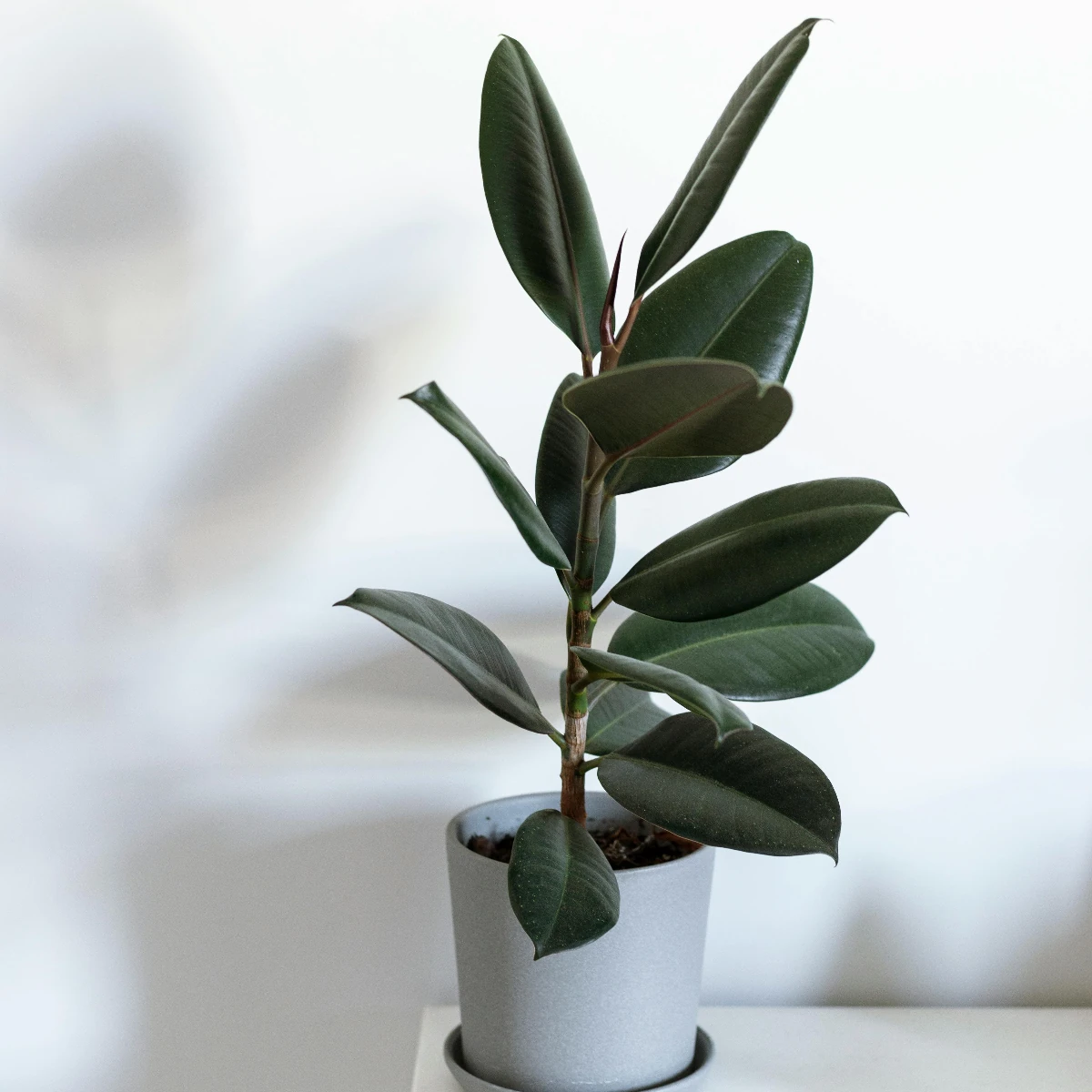
Rubber Plants are bold statement plants with thick, glossy leaves in deep green or dramatic burgundy. A close relative of the Fiddle Leaf Fig but significantly easier to care for, they offer the same impressive, tree-like presence without the fussy temperament. Available in several stunning color varieties, Rubber Plants can grow into impressive 6-8 foot indoor trees with proper care.
Quick Care Reference
| Care Aspect | Requirement | Frequency |
|---|---|---|
| Watering | When top 2″ dry | Every 1-2 weeks |
| Light | Bright indirect | 6+ hours daily |
| Humidity | Average home humidity | No special needs |
| Fertilizing | Balanced liquid fertilizer | Monthly (spring-summer) |
| Repotting | When root-bound | Every 1-2 years |
Watering
Water when the top 2 inches of soil are dry; push your finger down to check. Rubber plants prefer to dry out between waterings but don't like to stay bone-dry for extended periods. They'll droop their leaves dramatically when thirsty, which is a clear visual cue but shouldn't be relied on regularly. In summer, this typically means watering every 1-2 weeks. In winter, stretch to every 2-3 weeks as growth slows significantly. Water thoroughly until it runs from the drainage holes, then discard any standing water in the saucer. Rubber plants are susceptible to root rot from overwatering, so erring on the dry side is safer than keeping soil too moist.
Light Requirements
Rubber plants thrive in bright indirect light with 6 or more hours daily. Darker varieties (burgundy, black prince) are more tolerant of lower light conditions, while variegated types (tineke, ruby) absolutely need bright light to maintain their colorful patterns; in dim conditions, they'll gradually revert to solid green. Some direct morning sun is perfectly fine and even beneficial, but intense afternoon sun through a south or west window can scorch the leaves, leaving brown, crispy patches. If your rubber plant is growing slowly or losing lower leaves, it likely needs more light. Rotate the pot monthly for balanced, upright growth.
Humidity & Temperature
Average home humidity (40-50%) works well for rubber plants. They appreciate slightly higher humidity and will produce larger, glossier leaves in more humid environments, but they're not nearly as demanding as their Fiddle Leaf Fig cousins. Brown leaf edges may appear in very dry air (below 30%), especially during winter heating season. If needed, a light misting or nearby humidifier helps. Keep temperatures between 60-80°F (15-27°C) and avoid cold drafts from windows, doors, and AC vents. Rubber plants are sensitive to sudden temperature drops, which can trigger leaf drop.
Fertilizing
Feed monthly during spring and summer with a balanced liquid fertilizer at regular strength. Rubber plants are moderate feeders that grow actively during warm months and benefit from consistent nutrition. Reduce feeding to every 6-8 weeks in fall and stop entirely in winter when growth is dormant. Over-fertilizing causes salt buildup in the soil and brown leaf margins. If you see white crust on the soil surface, flush with plain water. Avoid fertilizing a stressed plant; address watering or light issues first, then resume feeding once the plant is stable.
Propagation
Rubber Plants can be propagated from stem tip cuttings or by air layering larger branches. Stem cuttings are simpler but work best with younger, flexible stems. Air layering is ideal for larger plants where you want to maintain height or create a new plant from a mature branch. The white latex sap that oozes from cuts is normal but can irritate skin; wear gloves.
Stem Cutting in Water
- Cut a 6-inch stem tip with 2-3 leaves using clean, sharp shears. Let the latex sap drain and dry for 30 minutes.
- Remove the bottom leaf to expose the node.
- Place in a jar of room-temperature water in bright indirect light.
- Change water weekly. The latex may cloud the water initially; this is normal.
- Roots appear in 3-6 weeks. Pot in well-draining soil when roots are 2-3 inches long.
Air Layering
- Choose a healthy section of stem and make an upward diagonal cut about one-third through.
- Prop the cut open with a toothpick and dust with rooting hormone.
- Wrap the area in damp sphagnum moss, secured with plastic wrap.
- Keep the moss moist for 4-8 weeks until roots grow through.
- Cut below the rooted section and pot in well-draining mix.
Popular Varieties
Ficus elastica 'Burgundy'
Also known as: Burgundy Rubber Plant
Deep, near-black burgundy leaves with a subtle dark red sheen. New leaves unfurl from a dramatic red sheath. The most popular colored variety and more forgiving of lower light than variegated types.
The dark color deepens with more light. Tolerates lower light than other varieties.
Ficus elastica 'Tineke'
Also known as: Variegated Rubber Plant
Stunning tricolor leaves with patches of green, cream, and pink. Each leaf has a unique pattern that becomes more pronounced with good light. New growth emerges with prominent pink tones.
Needs consistent bright light to maintain variegation. Cream sections burn faster in direct sun.
Ficus elastica 'Ruby'
Also known as: Ruby Rubber Plant
Similar to Tineke but with more vibrant pink and red variegation. The pink tones are especially intense on new growth and the leaf undersides. A showstopping variety for bright spaces.
Pink color fades in low light. Slightly slower growing than the standard green variety.
Seasonal Care Calendar
Spring
March – May
- Resume regular watering every 1-2 weeks
- Begin monthly fertilizing
- Prune to shape or encourage branching
- Repot if root-bound
Summer
June – August
- Water every 1-2 weeks when top 2 inches dry
- Continue monthly fertilizing
- Watch for scale insects on leaf undersides
- Take stem cuttings for propagation
Fall
September – November
- Reduce watering to every 2-3 weeks
- Reduce fertilizing, then stop by late fall
- Move away from cold drafty windows
- Clean leaves before shorter winter days
Winter
December – February
- Water every 2-3 weeks
- No fertilizer needed
- Keep away from cold drafts and heating vents
- Maximize light for variegated varieties
Troubleshooting
Dropping leaves
Why it happens: Rubber plants drop leaves as a stress response. The most common triggers are overwatering, cold drafts, sudden environmental changes (being moved), and seasonal light changes. Like their Fiddle Leaf Fig cousins, they're sensitive to being relocated. Under-watering and root rot are also possible causes.
What to do: Identify the stressor. If you just moved the plant, give it 2-3 weeks to adjust; some leaf drop is expected. Check watering (top 2 inches should dry between waterings). Ensure the plant isn't near cold drafts or heating vents. If leaf drop is severe, check roots for rot. A few lower leaves dropping over time is normal aging.
Learn more: Why Are My Plant Leaves Drooping? → Ask the AI about this →Yellow leaves
Why it happens: Overwatering is the most common cause of yellow leaves on rubber plants. The thick, fleshy leaves can handle some drought but react poorly to constantly wet soil. Lower leaves yellowing gradually is normal aging. Sudden widespread yellowing suggests a root problem or environmental stress.
What to do: Reduce watering frequency; let the top 2 inches of soil dry between waterings. Check that your pot has adequate drainage. If multiple leaves are yellowing at once, unpot and inspect the roots. Trim mushy, brown roots and repot in fresh well-draining mix. Yellow leaves won't recover; remove them cleanly.
Learn more: Why Are My Plant Leaves Turning Yellow? → Ask the AI about this →Leggy growth
Why it happens: A rubber plant that grows tall and thin with widely-spaced leaves isn't getting enough light. It's stretching toward the brightest available light source, investing energy in height rather than fullness. Without pruning, rubber plants naturally grow as a single tall stem rather than branching.
What to do: Move to a brighter location. Prune the top of the plant; cut just above a leaf node; to stimulate branching. You can also notch the bark above dormant buds to encourage side shoots without removing height. The pruned top makes an excellent cutting for propagation. Rotate quarterly for balanced growth.
Learn more: Why Is My Plant Not Growing? → Ask the AI about this →Sticky residue on leaves
Why it happens: Sticky leaves almost always indicate scale insects; small, flat brown bumps that attach to stems and leaf undersides and secrete a sticky honeydew. Scale is one of the most common pests on rubber plants and can be hard to spot because the insects don't move and look like natural bumps.
What to do: Wipe leaves and stems with a cotton ball dipped in rubbing alcohol to remove visible scale. Follow up with neem oil spray applied to all leaf surfaces every 7-10 days for 3 applications. For severe infestations, use an insecticidal soap. Check nearby plants for spread. The sticky residue washes off with soapy water.
Ask the AI about this →Loss of variegation (Tineke/Ruby)
Why it happens: Variegated rubber plants losing their pink, cream, and white patterns are not getting enough light. The plant produces more chlorophyll (green pigment) at the expense of decorative coloring to compensate for dim conditions. This is a gradual process; you'll notice new leaves emerge progressively greener.
What to do: Move immediately to brighter indirect light. Variegated rubber plants need more light than solid-colored varieties to maintain their patterns. Prune any fully reverted green stems if they appear, as they'll outcompete variegated growth. The existing green-reverted leaves won't regain variegation, but new growth in better light should show improved color.
Ask the AI about this →Spider mites on leaves
Why it happens: See our dedicated guide for detailed identification and treatment.
What to do: Read the full guide: How to Treat Spider Mites on Houseplants
Learn more: How to Treat Spider Mites on Houseplants → Ask the AI about this →Not sure what's wrong?
Premium includes AI photo diagnosis, then walks you through the fix and checks back in until it's better.
See Premium →Track your Rubber Plant with PlantCareAI
Add your Rubber Plant and get a watering schedule tuned to this week's weather. Free for up to 3 plants.
Add your Rubber Plant