
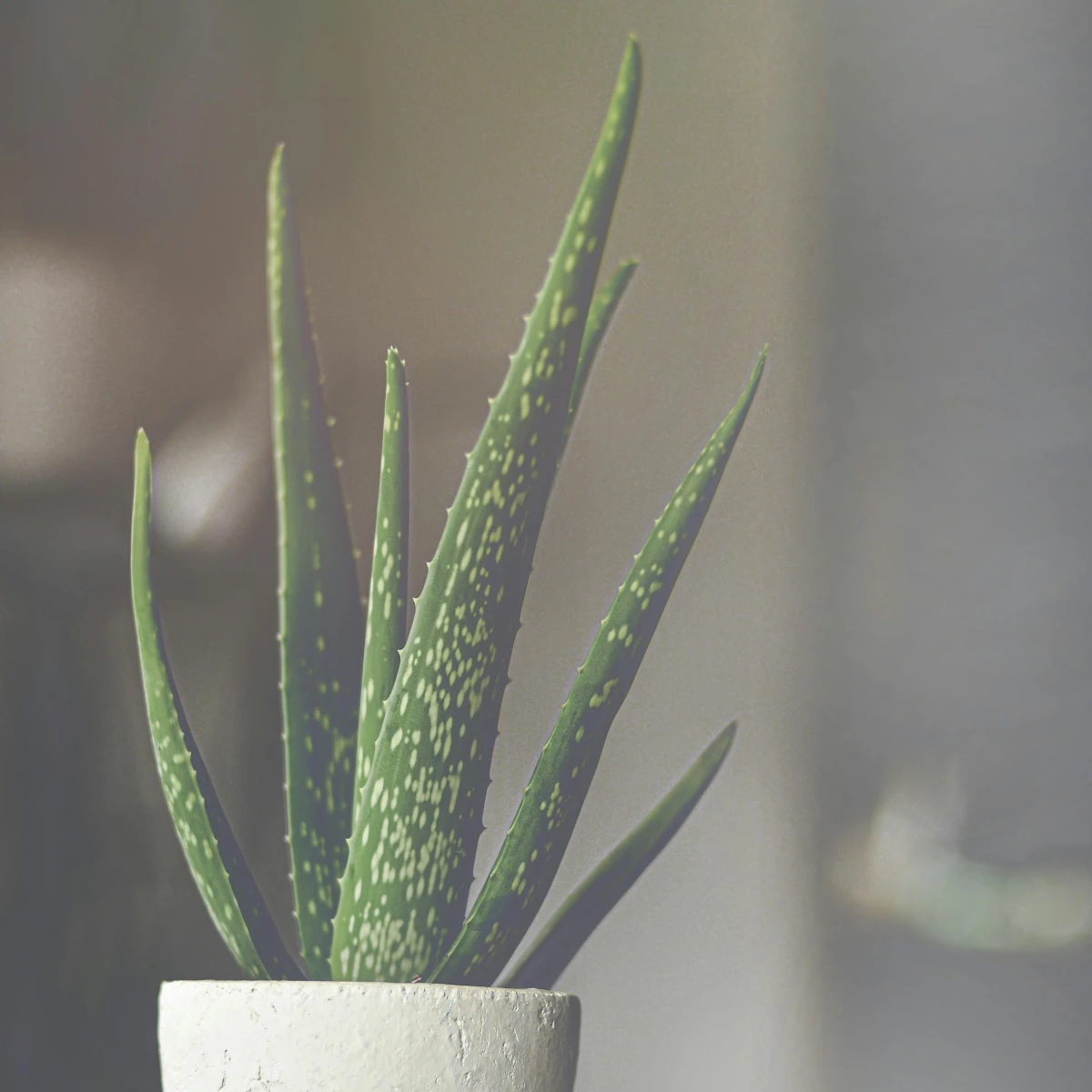
Aloe Vera is a succulent famous for its soothing, medicinal gel used for burns, skincare, and natural remedies. Native to the Arabian Peninsula, it's been cultivated for thousands of years. Beyond its healing properties, Aloe Vera is low-maintenance, drought-tolerant, and produces offsets (pups) you can share with friends; making it both practical and rewarding to grow.
Quick Care Reference
| Care Aspect | Requirement | Frequency |
|---|---|---|
| Watering | When soil completely dry | Every 2-3 weeks (summer), monthly (winter) |
| Light | Bright indirect to direct | 6+ hours daily |
| Humidity | Low; no extra needed | No misting needed |
| Fertilizing | Succulent fertilizer | 2-3 times per growing season |
| Repotting | When root-bound or crowded by pups | Every 2-3 years |
Watering
As a succulent, Aloe Vera stores water in its thick, fleshy leaves and needs infrequent watering. Water deeply only when the soil is completely dry; push your finger all the way down to check. In summer, this typically means every 2-3 weeks; in winter, once a month or less. Overwatering is the number one killer, causing mushy, translucent leaves and root rot. Always use a pot with drainage holes and discard standing water from saucers. Terra cotta pots are ideal because they wick excess moisture away from the roots. When you do water, soak thoroughly until water runs from the bottom, then let the soil dry completely before watering again. If leaves feel firm and plump, the plant doesn't need water yet.
Light Requirements
Aloe Vera loves bright light and can handle direct sun; especially gentle morning light from an east-facing window. South- and west-facing windows are ideal for indoor growing. In low light, aloe becomes leggy and pale, stretching toward the nearest light source with thin, floppy leaves. If moving an aloe from low light to direct sun, acclimate it gradually over 1-2 weeks to prevent sunburn (white or brown bleached patches). Outdoors, aloe thrives in partial sun but may need afternoon shade in hot climates. Aim for at least 6 hours of bright light daily for compact, healthy growth and vibrant color.
Humidity & Temperature
Aloe thrives in dry conditions and actively dislikes high humidity; making it the opposite of most tropical houseplants. No misting, no pebble trays, no humidifiers needed. It's perfectly suited for arid climates, air-conditioned offices, and dry winter rooms. Keep temperatures between 55-85°F (13-29°C). Aloe is not cold-hardy; even brief exposure to frost causes permanent cell damage that shows as water-soaked, mushy patches on the leaves. In winter, keep it away from cold windows. Aloe can spend summer outdoors in many climates but must come inside before the first frost.
Fertilizing
Aloe is a very light feeder that grows slowly regardless of nutrition. Fertilize just 2-3 times during the growing season (spring and summer) with a diluted succulent or cactus fertilizer. Over-fertilizing does more harm than good; it can cause salt buildup and brown leaf tips. Many aloe plants thrive for years without any supplemental fertilizer, especially if repotted every few years in fresh potting mix. For a gentle organic approach, a small amount of worm castings mixed into the soil during repotting provides slow-release nutrients.
Propagation
Aloe Vera propagates primarily through offsets (pups); baby plants that emerge from the base of the mother plant. Unlike some succulents, aloe leaf cuttings have a very low success rate, so pup division is by far the most reliable method. A healthy, mature aloe will produce multiple pups per year that you can separate and share.
Pup Division
- Wait until pups are 3-4 inches tall and have their own small root system.
- Remove the mother plant from its pot and gently brush away soil to expose the connection point.
- Use a clean, sharp knife to cut the pup away from the mother, keeping as many roots on the pup as possible.
- Let both the pup and the mother plant's cut surface dry for 24-48 hours to callous over.
- Plant the pup in its own small pot with cactus/succulent mix. Wait 5-7 days before watering.
Gel Harvesting (Bonus)
- Select a thick, mature outer leaf; these have the most gel.
- Cut the leaf at the base using a clean, sharp knife.
- Stand the leaf upright for 10-15 minutes to let yellow latex (aloin) drain out; this substance is irritating.
- Slice the leaf lengthwise and scoop out the clear gel with a spoon.
- Use fresh gel immediately or store in the refrigerator for up to a week. Freeze in ice cube trays for longer storage.
Popular Varieties
Aloe Vera (Standard)
Also known as: Medicinal Aloe
The classic variety grown for its healing gel. Green to gray-green leaves with subtle white spots when young. Can reach 2 feet tall with thick, plump leaves full of clear, soothing gel.
The only aloe species widely used for medicinal and cosmetic purposes.
Aloe 'Christmas Carol'
A compact, colorful hybrid with deep red-to-green leaves covered in prominent white teeth along the edges. Stays small (under 12 inches) and produces vibrant red-orange flowers. Purely ornamental.
Color deepens with more sun exposure; a natural stress response.
Aloe aristata
Also known as: Lace Aloe
A stemless, rosette-forming aloe with dark green leaves covered in white bumps. Smaller than standard aloe (6-8 inches) and more cold-tolerant. Produces orange-red flowers on tall stalks.
More shade-tolerant than standard Aloe Vera; good for lower light spots.
Seasonal Care Calendar
Spring
March – May
- Resume watering every 2-3 weeks
- Apply first fertilizer dose
- Separate pups for propagation
- Move outdoors gradually if desired
Summer
June – August
- Water every 2-3 weeks when fully dry
- Apply second fertilizer dose
- Harvest gel from mature outer leaves
- Watch for mealybugs in leaf crevices
Fall
September – November
- Reduce watering to monthly
- Apply final fertilizer dose in early fall
- Bring outdoor aloe inside before first frost
- Repot if crowded by pups
Winter
December – February
- Water monthly or less
- No fertilizer needed
- Keep away from cold windows and frost
- Ensure maximum available light
Troubleshooting
Mushy, translucent leaves
Why it happens: This is almost always overwatering or root rot. Aloe stores water in its leaves, and when roots sit in constantly wet soil, they rot and can no longer regulate moisture uptake. The leaves absorb excess water, become waterlogged, and turn mushy and translucent. Cold temperatures combined with wet soil accelerate the problem dramatically.
What to do: Stop watering and let the soil dry completely. Remove any fully mushy leaves at the base. If the rot is at the root level, unpot the plant, trim all brown/mushy roots, let the plant air-dry for 2-3 days, then repot in fresh, dry cactus mix. Don't water for at least a week after repotting. Switch to a terra cotta pot if you're not already using one.
Learn more: Am I Overwatering My Plant? → Ask the AI about this →Brown, crispy leaf tips
Why it happens: Brown tips on aloe usually indicate sunburn (too much sudden direct light) or underwatering (the plant has used up its water reserves). Occasionally, mineral buildup from hard tap water causes browning at the tips.
What to do: For sunburn, move to a spot with less intense light or acclimate gradually. For underwatering, soak the soil thoroughly and wait; the plant should plump up within a day or two. If using hard water, switch to filtered water. Trim off brown tips at an angle for cosmetic purposes; they won't heal.
Learn more: Why Are My Plant Leaves Turning Brown? → Ask the AI about this →Flat, thin, drooping leaves
Why it happens: Aloe leaves should be thick, plump, and upright. When they become flat, thin, and droop outward, the plant is either underwatered or not getting enough light. In low light, the plant stretches and thins its leaves to maximize surface area for photosynthesis.
What to do: Water thoroughly if the soil is completely dry. Move to a brighter location with 6+ hours of light. It can take several weeks for leaves to plump back up after a prolonged drought. If the plant is severely etiolated (stretched), it won't shrink back; but new growth will be more compact in better light.
Learn more: Why Are My Plant Leaves Drooping? → Ask the AI about this →Red or brown leaf coloring
Why it happens: Aloe leaves turning reddish-brown is a sun stress response. It happens when the plant receives very intense light, especially if moved suddenly from shade to full sun. While not harmful in moderation (some growers find it attractive), extreme reddening means the plant is getting more UV than it can handle.
What to do: If you want to keep the green color, move to a spot with less direct sun or add afternoon shade. If you recently moved the plant to more light, the color change is temporary while it acclimates. Aloe that has always been in bright conditions and shows red/bronze tones is usually healthy; it's a natural protective response.
Ask the AI about this →Leggy, stretched growth
Why it happens: An aloe that grows tall and spindly instead of compact is not getting enough light. It's stretching toward the nearest light source (etiolation), producing thin leaves spaced far apart on an elongated stem. This is especially common in winter or in north-facing rooms.
What to do: Move to the brightest available location; ideally a south- or west-facing window. Once an aloe has stretched, it won't compact back. You can let it continue growing (it'll be top-heavy), or cut the top rosette off, let it callous for a few days, and replant it. The stump may produce new pups.
Learn more: Why Is My Plant Not Growing? → Ask the AI about this →Propagation by offsets
Why it happens: See our dedicated guide for detailed identification and treatment.
What to do: Read the full guide: How to Propagate Houseplants
Learn more: How to Propagate Houseplants → Ask the AI about this →Not sure what's wrong?
Premium includes AI photo diagnosis, then walks you through the fix and checks back in until it's better.
See Premium →Track your Aloe Vera with PlantCareAI
Add your Aloe Vera and get a watering schedule tuned to this week's weather. Free for up to 3 plants.
Add your Aloe Vera