
Boston Fern Care Guide
Nephrolepis exaltata 'Bostoniensis'
Also known as Sword Fern
By Ellen Hermance · PlantCareAI Editorial
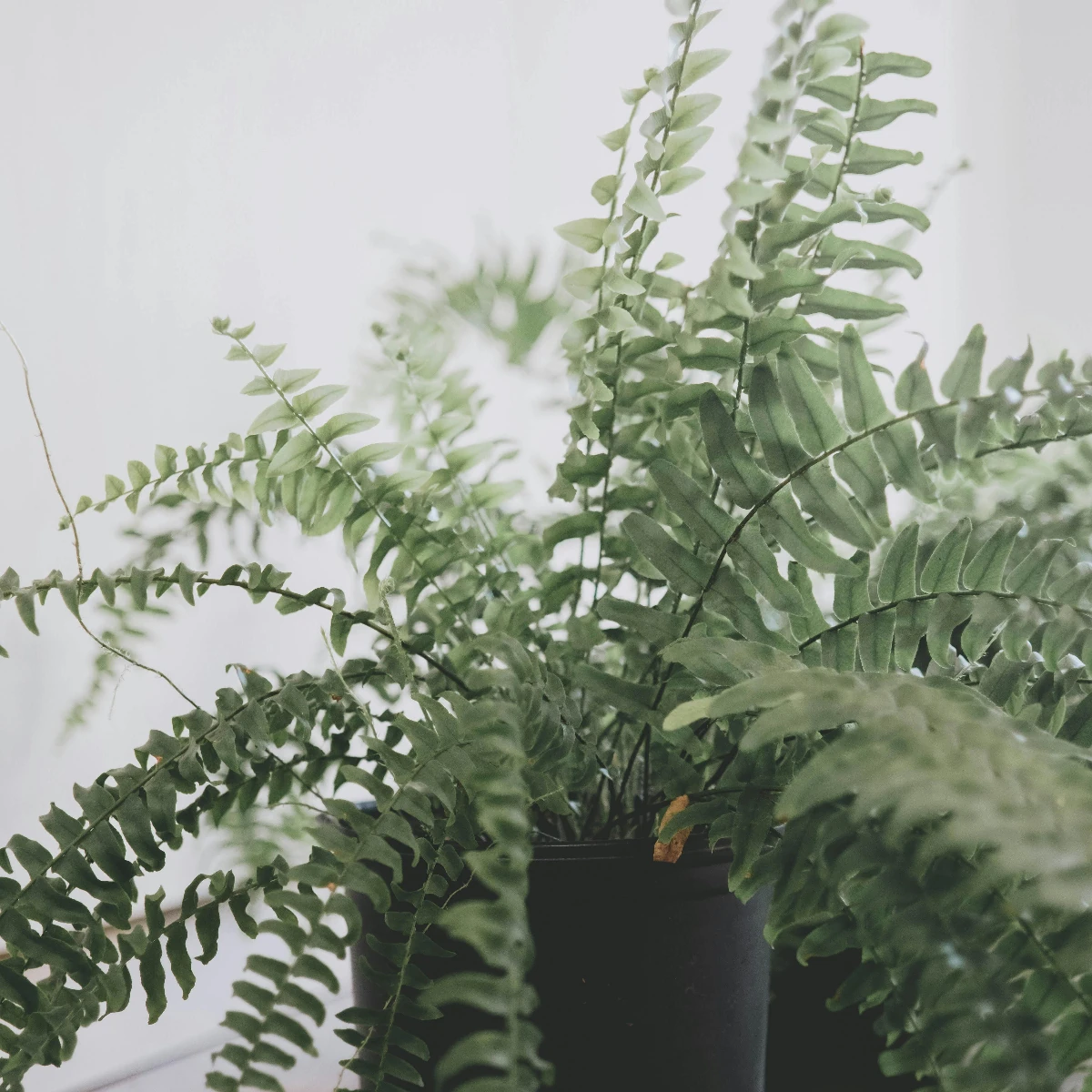
The Boston Fern is one of the most iconic and enduringly popular indoor ferns, prized for its arching, feathery fronds that spill dramatically from hanging baskets and elevated pots. Native to humid tropical and subtropical regions from Florida to Central and South America, it has been grown as a houseplant since the Victorian era. Beyond its classic beauty, Boston Ferns are celebrated for their air-purifying properties and the fractal geometry of their fronds; a repeating pattern of pinnate leaflets that scientists link to focus restoration and stress reduction through Attention Restoration Theory. If you can provide consistent humidity and moisture, the Boston Fern rewards with lush, cascading growth year-round.
Quick Care Reference
| Care Aspect | Requirement | Frequency |
|---|---|---|
| Watering | Keep consistently moist (water when top ½" dry) | Every 2-3 days (summer), 5-7 days (winter) |
| Light | Bright indirect (no direct sun) | 4-6 hours daily |
| Humidity | 50-80%+ ideal | Run humidifier daily; mist as supplement |
| Fertilizing | Balanced liquid, half strength | Monthly (March–September) |
| Temperature | 60-75°F (15-24°C) | Away from cold drafts and heating vents |
Watering
Boston Ferns need consistently moist soil; they should never dry out completely. Water when the top half-inch of soil feels slightly dry, not after the top inch or two as with most tropical houseplants. In spring and summer, this typically means watering every 2-3 days. In winter, every 5-7 days is usually sufficient. Both underwatering and overwatering are harmful, but the consequences differ: underwatering causes rapid frond browning and shedding, while overwatering leads to slow root rot. A helpful test is to lift the pot; a Boston Fern that needs water will feel noticeably lighter. When you water, soak thoroughly until it drains from the bottom, then empty the saucer after 15 minutes. Boston Ferns are sensitive to fluoride and chlorine in tap water, which can cause brown leaf tips over time. Use room-temperature filtered, distilled, or rainwater when possible, or let tap water sit uncovered overnight.
Light Requirements
Boston Ferns thrive in bright, indirect light; the dappled light of a bright room without direct sun is ideal. An east-facing window (morning light) or a spot a few feet from a north-facing window works well. They can adapt to medium indirect light but will grow more slowly. Direct sunlight, especially in summer, will quickly scorch the delicate fronds and cause browning. In their native habitat, Boston Ferns grow in the filtered light beneath forest canopies, never exposed to intense direct sun. If fronds are turning yellow-green rather than rich green, the plant likely needs more light. In winter, shorter days can stress the plant; supplementing with a grow light helps maintain vitality through the low-light months.
Humidity & Temperature
Humidity is the single most critical factor for Boston Fern health indoors, and the most common reason they fail. Boston Ferns need consistently high humidity; ideally 50-80%. Most homes, especially during winter when heating systems run, have humidity levels of 30-40%, far below what ferns prefer. The classic sign of insufficient humidity is brown, crispy frond tips that spread inward as fronds dry from the edges. The most effective solution is a humidifier placed near the plant. Pebble trays (a tray filled with pebbles and water, pot sitting above the water line) provide a local humidity boost. Daily misting with room-temperature distilled water helps temporarily. Grouping the fern with other moisture-loving plants creates a beneficial microclimate. Bathrooms and kitchens with windows can be excellent locations due to ambient humidity from showers and cooking. Keep temperatures between 60-75°F (15-24°C) and avoid cold drafts; ferns suffer below 50°F (10°C) and are permanently damaged by temperatures near freezing.
Fertilizing
Boston Ferns are moderate feeders during the growing season. Apply a balanced liquid fertilizer at half strength once a month from spring through early fall (March to September). A 10-10-10 or 20-20-20 formula works well. Stop fertilizing completely from October through February when growth naturally slows. Over-fertilizing is worse than not feeding: excess salts accumulate in the soil, damaging roots and causing browning frond tips. If white crusty deposits appear on the soil surface, flush the pot thoroughly with plain water to remove salt buildup. A gentle organic alternative is diluted worm casting tea or fish emulsion, which releases nutrients slowly without burn risk. Always water the plant before applying liquid fertilizer to protect roots.
Propagation
Boston Ferns cannot be propagated from leaf or frond cuttings; unlike many houseplants, individual fronds do not carry the material needed to produce a new plant. The only reliable method is division: separating the plant into two or more sections at the root mass. This is best done during repotting in spring, when the plant is about to enter active growth and will recover most quickly.
Root Division
- Water the fern thoroughly 24 hours before dividing to hydrate roots and make the soil more workable.
- Remove the plant from its pot and gently shake off excess soil from the root ball.
- Identify natural clumping sections in the root mass; look for separate clusters of fronds with their own root systems.
- Use your hands to gently pull sections apart, or cut through the root mass with clean sharp scissors if tightly bound.
- Ensure each division has a generous portion of healthy roots and several fronds.
- Pot each division in fresh, peat-based potting mix at the same depth as before.
- Water gently, place in high humidity with bright indirect light, and avoid fertilizing for 4-6 weeks while roots re-establish.
Runners
- Boston Ferns occasionally produce horizontal runners (stolons) that trail along the soil surface.
- When a runner develops a small plantlet at its tip, pin the plantlet to moist soil in an adjacent pot using a bobby pin or U-shaped wire.
- Keep the soil moist and the runner attached to the mother plant for 4-6 weeks.
- Once the plantlet has established roots (gently tug; resistance means it's rooted), sever the runner from the mother plant.
- Continue growing the new plant in humid, bright indirect light.
Popular Varieties
Nephrolepis exaltata 'Bostoniensis'
Also known as: Classic Boston Fern
The original and most widely available variety. Features long, arching fronds of 2-3 feet with wavy, pinnate leaflets that create a full, flowing appearance. The classic choice for hanging baskets and pedestal pots where fronds can trail gracefully. Produces the signature fractal frond geometry most associated with focus restoration and stress relief.
The standard against which all other Boston Ferns are measured; full, lush, and dramatic when given sufficient humidity.
Nephrolepis exaltata 'Dallas'
Also known as: Dallas Fern
A more compact version of the classic Boston Fern with shorter, tidier fronds reaching 1-2 feet. The key difference: Dallas Fern is significantly more tolerant of low humidity and drier indoor conditions, making it much easier to maintain in a typical home. An excellent choice for beginners who want the Boston Fern aesthetic without strict humidity requirements.
The most forgiving Boston Fern variety; better humidity tolerance makes it far easier to keep happy in typical home conditions.
Nephrolepis obliterata
Also known as: Kimberly Queen Fern, Australian Sword Fern
A different species with upright, sword-like fronds rather than arching ones. The tidier, more erect growth habit makes it much less messy; it sheds fewer leaflets and maintains a neater silhouette. Slightly more tolerant of drier air than classic Boston Ferns. A popular choice for those who love ferns but dislike the constant cleanup of dropping fronds.
Much tidier than classic Boston Ferns; upright fronds shed far fewer leaflets, making it easier to maintain on shelves and surfaces.
Nephrolepis exaltata 'Fluffy Ruffles'
Also known as: Fluffy Ruffles Fern, Ruffled Boston Fern
A compact variety with heavily ruffled and crimped fronds that create a denser, more textured appearance than standard Boston Ferns. The ruffled leaflets produce especially intricate visual complexity; the fractal geometry is even more pronounced in this variety. More compact growth makes it suitable for smaller spaces and tabletops.
The ruffled frond texture amplifies the fractal visual complexity that makes ferns so effective at engaging soft fascination and restoring directed attention.
Seasonal Care Calendar
Spring
March – May
- Resume regular watering as new frond growth appears
- Begin monthly fertilizing at half strength
- Repot or divide root-bound plants; best time for division
- Move to a brighter window as days lengthen
Summer
June – August
- Water frequently; every 2-3 days in heat
- Monitor humidity, especially if running air conditioning
- Continue monthly fertilizing
- Watch for scale insects (common in summer on stressed plants)
Fall
September – November
- Gradually reduce watering frequency as growth slows
- Give last fertilizer dose in early October
- Start running humidifier as heating season begins
- Remove any dying or brown fronds with clean scissors
Winter
December – February
- Water every 5-7 days, keeping soil slightly moist
- Stop fertilizing completely
- Run humidifier consistently; heating dramatically drops humidity
- Expect some frond shedding; winter dormancy is normal
Troubleshooting
Brown, crispy frond tips
Why it happens: The most common Boston Fern complaint, caused primarily by insufficient humidity. Indoor humidity below 40% causes the delicate frond margins to dry out rapidly. Tap water chemicals (chlorine and fluoride) compound the problem over time, as does inconsistent watering, cold drafts near windows, and proximity to heating vents.
What to do: Increase humidity with a humidifier (most effective), pebble tray, or daily misting with distilled water. Switch to filtered or rainwater for watering. Trim brown frond tips with clean scissors following the natural frond shape; they won't heal, but trimming keeps the plant looking tidy. Ensure consistent watering and move away from vents and cold windows.
Learn more: Why Are My Plant Leaves Turning Brown? → Ask the AI about this →Yellowing fronds
Why it happens: Natural aging causes the oldest lower fronds to yellow and drop gradually; this is normal if it affects a few base fronds while the plant produces new growth. More widespread yellowing usually indicates overwatering (waterlogged roots can't absorb nutrients), cold temperatures or drafts, or nutrient deficiency in plants not fertilized during the growing season.
What to do: Check soil moisture: if consistently soggy, reduce watering frequency and ensure the pot drains freely. Trim naturally aging lower fronds. Move away from cold drafts and ensure temperature stays above 60°F (16°C). If the plant hasn't been fertilized in months during the growing season, begin monthly feeding at half strength.
Learn more: Why Are My Plant Leaves Turning Yellow? → Ask the AI about this →Excessive frond shedding
Why it happens: Some frond shedding is normal seasonal behavior; Boston Ferns naturally drop older fronds in winter as growth slows, and after repotting or moving. Excessive shedding in the growing season indicates stress: most often low humidity, irregular watering (letting it dry out then drenching), cold temperatures, or repotting shock.
What to do: Winter shedding is expected and usually resolves in spring. If shedding is happening in the growing season, check humidity (run a humidifier), review watering consistency (never let soil dry completely), and ensure temperatures stay above 60°F (16°C). Avoid moving the plant frequently; Boston Ferns dislike environmental changes.
Learn more: Why Is My Plant Not Growing? → Ask the AI about this →Drooping, limp fronds
Why it happens: Drooping fronds typically indicate underwatering; the fern loses water from its fronds faster than the roots can supply it. Overwatering causing root rot produces the same limp appearance but with soggy soil. Extreme heat or direct sun exposure can also cause temporary wilting.
What to do: Check soil moisture first. If dry, water thoroughly; fronds should perk up within a few hours. If the soil is wet and the plant is wilting, root rot may be present: unpot, remove mushy brown roots, repot in fresh well-draining mix, and water less frequently. Boston Ferns recover from underwatering much more readily than from root rot.
Learn more: Am I Overwatering My Plant? → Ask the AI about this →Scale insects or mealybugs
Why it happens: Brown, immobile bumps along stems and frond ribs are scale insects. White cottony masses in leaf axils or stem joints are mealybugs. Both are more common on plants under stress (especially from low humidity) and can be difficult to spot until an infestation is well established.
What to do: Dab individual pests with a cotton swab dipped in 70% rubbing alcohol for light infestations. For larger infestations, remove heavily affected fronds and treat the entire plant with diluted neem oil solution, repeating every 7-10 days for 3-4 weeks to catch newly hatched pests. Quarantine the affected plant immediately to prevent spread to other houseplants.
Learn more: Plant Pest Identification Guide → Ask the AI about this →Not sure what's wrong?
Premium includes AI photo diagnosis, then walks you through the fix and checks back in until it's better.
See Premium →Track your Boston Fern with PlantCareAI
Add your Boston Fern and get a watering schedule tuned to this week's weather. Free for up to 3 plants.
Add your Boston Fern