
Cactus Care Guide
Various genera (Cactaceae family)
Also known as Bunny Ears, Bunny Ears Cactus, Opuntia microdasys
By Ellen Hermance · PlantCareAI Editorial
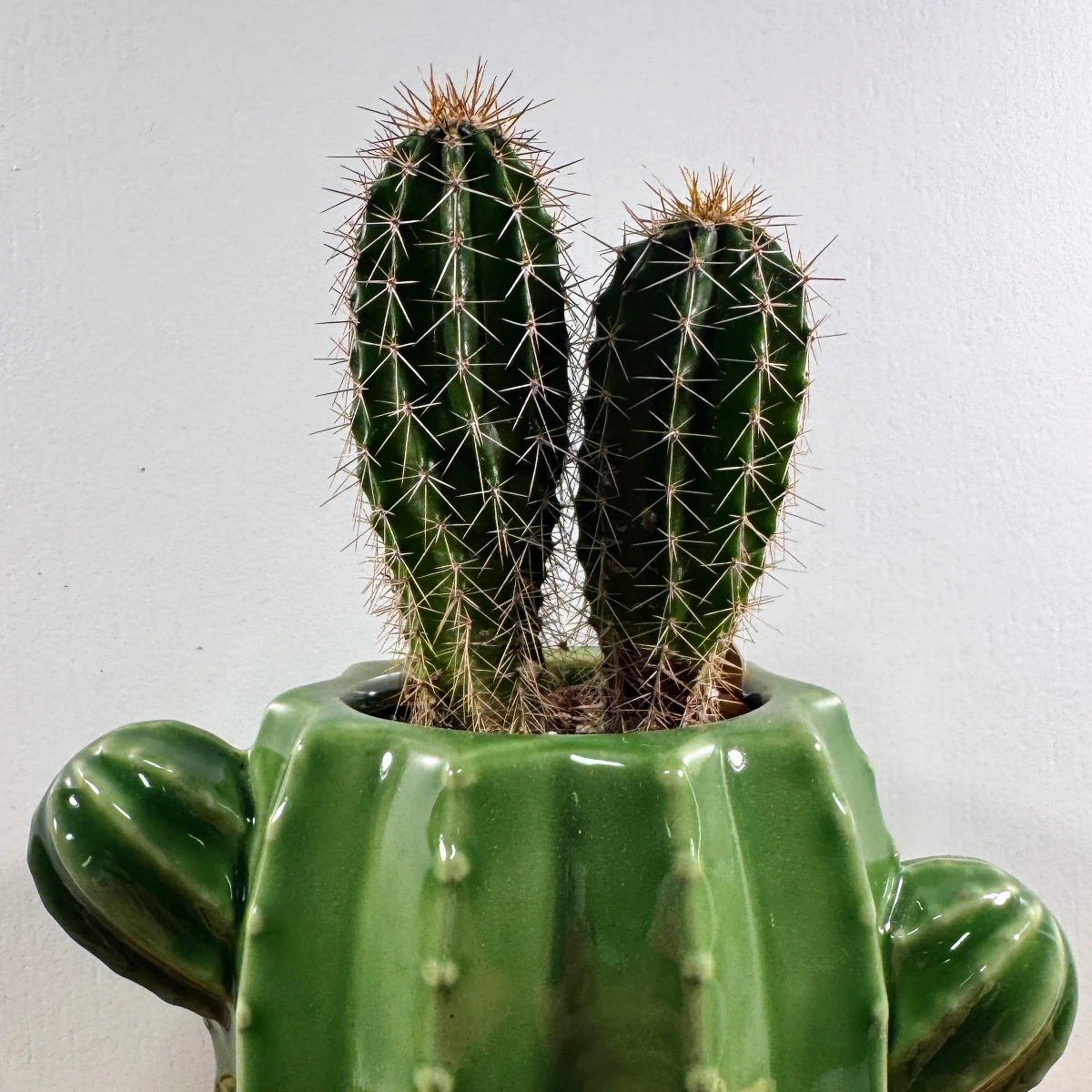
Cacti are among the most resilient houseplants you can grow. They thrive on neglect, need minimal watering, and tolerate bright sunny spots that would scorch most other plants. Understanding the key differences between types; columnar, globular, and pad-forming; helps you match each cactus to the right care routine.
Quick Care Reference
| Care Aspect | Requirement | Frequency |
|---|---|---|
| Light | Full sun to bright indirect (4–6+ hours direct) | Constant |
| Watering | Thoroughly when soil is completely dry | Every 2–4 weeks (summer), 4–8 weeks (winter) |
| Soil | Fast-draining cactus mix + perlite | Replace at repotting (every 2–4 years) |
| Fertilizing | Dilute low-nitrogen cactus fertilizer | Monthly, spring–summer only |
| Repotting | One size up, when roots fill pot | Every 2–4 years |
| Temperature | 60–90°F (15–32°C) growing season; 50–60°F (10–16°C) winter rest | Seasonal adjustment |
| Humidity | Low; under 50% | Maintain year-round |
Watering
Cacti store water in their stems and tolerate drought far better than overwatering. Water thoroughly, then let the soil dry out completely before watering again. In summer, this may mean watering every 2 weeks; in winter, once a month or less. The number one mistake with cacti is watering on a schedule rather than checking soil moisture first.
Light Requirements
Most cacti need at least 4–6 hours of direct sunlight daily. A south- or west-facing window is ideal indoors. Without adequate light, cacti etiolate; they stretch toward the light source, becoming pale, elongated, and weakened. If your window provides filtered light, a grow light positioned 6–12 inches above the cactus can supplement.
Humidity & Temperature
Cacti are adapted to arid environments and prefer low humidity (under 50%). They handle typical indoor humidity well. Avoid misting and keep away from humid rooms like bathrooms. Good air circulation helps prevent fungal issues.
Fertilizing
Fertilize once a month during the growing season (spring through summer) with a low-nitrogen cactus fertilizer or a balanced fertilizer diluted to half strength. Do not fertilize in fall and winter when the plant is resting. Over-fertilizing causes soft, weak growth.
Propagation
Cacti propagate readily from offsets (pups), cuttings, or seeds. Offset propagation is the easiest and most reliable method for beginners.
Offsets (pups): Many cacti produce small offsets at their base. Wait until the pup is at least one-third the size of the parent. Remove with a clean knife, allow the cut end to callous for 3–7 days, then plant in dry cactus mix. Do not water for 1–2 weeks to encourage root development.
Stem cuttings (columnar cacti): Use a clean, sterilized knife. Allow the cut end to callous for 1–2 weeks in a dry, shaded spot. Plant in dry cactus mix. Begin light watering after 3–4 weeks.
Pad cuttings (Opuntia): Remove a pad at the joint, allow to callous for 1 week, then plant upright in cactus mix.
Seed: Slow but rewarding. Sow cactus seeds in moist cactus mix in a warm (70–80°F / 21–27°C), bright location. Germination takes 1–3 weeks. Seedlings are tiny and fragile for the first year.
Popular Varieties
Echinopsis (Easter Cactus / Hedgehog Cactus)
Also known as: Hedgehog Cactus, Sea Urchin Cactus
Globular to columnar cacti known for spectacular, large, trumpet-shaped flowers in spring. Relatively easy to care for and more tolerant of indirect light than desert cacti.
Needs a cool, dry rest period in winter (50–55°F / 10–13°C) to trigger spring blooming.
Ferocactus (Barrel Cactus)
Also known as: Barrel Cactus
Spherical to cylindrical cacti with prominent ribs and dramatic spines. Long-lived and slow-growing. Produces colorful flowers at the crown in summer.
One of the most drought-tolerant cacti; can go 2–3 months without water in winter.
Cereus (Column Cactus)
Also known as: Peruvian Apple Cactus, Column Cactus
Tall, branching columnar cacti that are among the fastest-growing cactus species. Architectural and striking. Night-blooming flowers on mature plants.
Fast-growing relative to other cacti; can add several inches per year in good light.
Opuntia (Prickly Pear)
Also known as: Prickly Pear, Paddle Cactus
Pad-forming cacti with flat segments. Extremely hardy. Produces edible fruit (tunas) and flowers. Note: glochids (tiny barbed spines) are difficult to remove from skin.
Handle with extra care; glochids detach easily and are harder to remove than larger spines.
Mammillaria (Pincushion Cactus)
Also known as: Pincushion Cactus, Nipple Cactus
Small, globular cacti that produce a ring of small flowers around the crown. One of the most popular and easy-to-grow cactus genera. Great for windowsills.
Often the first cactus to bloom for new growers; blooms readily without a strict winter rest.
Seasonal Care Calendar
Spring
March – May
- Resume regular watering as temperatures rise
- Begin monthly fertilizing
- Repot if root-bound (before summer heat)
- Watch for signs of etiolation from low winter light
Summer
June – August
- Water every 2–3 weeks or when soil is completely dry
- Continue monthly fertilizing
- Protect from extreme heat over 95°F (35°C)
- Check for mealybugs and scale insects
Fall
September – November
- Begin tapering watering frequency
- Stop fertilizing by October
- Move outdoor cacti inside before first frost
- Reduce temperature if possible for winter rest
Winter
December – February
- Water sparingly; once every 4–8 weeks or less
- No fertilizing
- Keep cool (50–60°F/10–16°C) if possible to promote spring blooming
- Check for root rot if any leaves/stem feel soft
Troubleshooting
Soft, mushy stem at the base
Why it happens: Root rot from overwatering is the most common cactus killer. When soil stays wet too long, roots die and the rot spreads upward into the stem.
What to do: If caught early, remove the plant from its pot, cut away all soft/dark tissue with a sterile knife, allow the cut to callous for 3–7 days in a dry location, then replant in fresh dry cactus mix. Do not water for 2–3 weeks. If the rot has reached the growing tip, the plant cannot be saved.
Learn more: Am I Overwatering My Plant? → Ask the AI about this →Elongated, pale, leaning growth (etiolation)
Why it happens: Insufficient light. The cactus is stretching toward the nearest light source. Once etiolated, the growth cannot be reversed; only new growth in adequate light will be normal.
What to do: Move to the brightest location available (south- or west-facing window). If indoor light is insufficient, add a full-spectrum grow light positioned 6–12 inches above the cactus. The stretched portion will remain, but new growth at the tip will be compact and normal.
Ask the AI about this →White cottony patches on the stem or in crevices
Why it happens: Mealybugs; sap-sucking insects that hide in the crevices between cactus ribs and spines. They leave a white waxy residue and can spread to other plants.
What to do: Dab individual mealybugs with a cotton swab soaked in 70% isopropyl alcohol. For larger infestations, spray the entire cactus with diluted neem oil or insecticidal soap. Isolate affected plants immediately.
Learn more: How to Get Rid of Mealybugs → Ask the AI about this →Brown, scab-like patches on the skin
Why it happens: Corky scab (edema) from inconsistent watering, or sunscald from sudden exposure to intense direct sun after a period of lower light.
What to do: For edema: improve drainage and allow soil to dry more completely between waterings. For sunscald: acclimatize the cactus gradually to higher light intensity over 2–3 weeks rather than moving it directly to full sun.
Ask the AI about this →Cactus not blooming despite good care
Why it happens: Most cacti need a winter rest period; cooler temperatures (50–60°F/10–16°C) and reduced watering for 6–8 weeks; to trigger spring flowering.
What to do: If your cactus lives in a consistently warm room year-round, it may never bloom. Move it to a cooler location (unheated room, near a drafty window) in winter, reduce watering to once every 6–8 weeks, and stop fertilizing. Resume normal care in spring.
Ask the AI about this →Not sure what's wrong?
Premium includes AI photo diagnosis, then walks you through the fix and checks back in until it's better.
See Premium →Track your Cactus with PlantCareAI
Add your Cactus and get a watering schedule tuned to this week's weather. Free for up to 3 plants.
Add your Cactus