
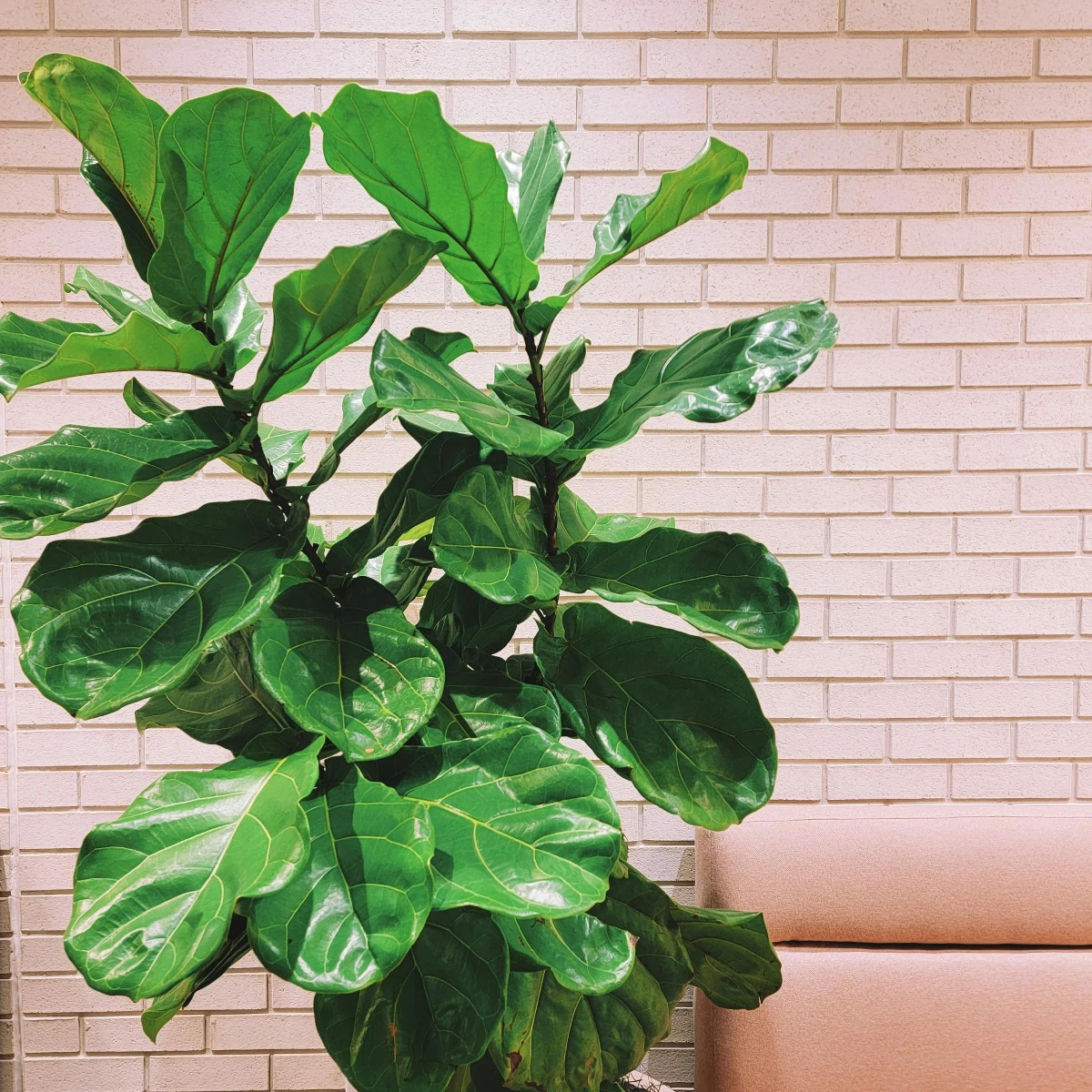
The Fiddle Leaf Fig is a showstopping statement plant with large, violin-shaped leaves that can grow up to 15 inches long. Native to the tropical rainforests of West Africa, it's more demanding than some houseplants; but its dramatic architectural foliage has made it one of the most sought-after indoor trees. With consistent care and the right conditions, a Fiddle Leaf Fig rewards you with stunning growth.
Quick Care Reference
| Care Aspect | Requirement | Frequency |
|---|---|---|
| Watering | When top 2″ dry | Weekly |
| Light | Bright indirect, 6+ hrs | Daily, consistent location |
| Humidity | 30-65% | Mist if edges brown |
| Fertilizing | FLF or balanced 3-1-2 fertilizer | Monthly (spring-summer) |
| Repotting | When root-bound | Every 1-2 years |
Watering
Water when the top 2 inches of soil are dry; use your finger or a moisture meter to check. Fiddle Leaf Figs prefer consistent moisture but absolutely hate soggy soil. Water thoroughly until it drains from the bottom, then empty the saucer completely. Inconsistent watering; swinging between bone dry and soaking wet; is the top cause of problems, leading to brown spots, leaf drop, and root issues. Try to water on a regular schedule (most homes: once a week in summer, every 10-14 days in winter). The amount of water matters as much as frequency: for a plant in a 12-inch pot, aim for about 2 cups. Room-temperature water is gentler on roots than cold tap water. If you notice brown spots spreading from the edges of lower leaves, you may be overwatering.
Light Requirements
Fiddle Leaf Figs need abundant bright, indirect light; ideally 6 or more hours daily. South- or west-facing windows are perfect, though you may need to filter intense afternoon sun with a sheer curtain. East-facing windows also work well and provide gentler morning light. Low light causes leggy growth, smaller leaves, and eventual leaf drop as the plant sheds foliage it can't sustain. Once you've found a good spot, avoid moving the plant frequently; Fiddle Leaf Figs are notoriously sensitive to environmental changes and may drop leaves in protest after being relocated. Rotate the pot a quarter turn each month to prevent the plant from leaning toward the light.
Humidity & Temperature
Aim for 30-65% humidity. Average home humidity (40-50%) is usually fine for Fiddle Leaf Figs, making them less demanding than some tropicals in this regard. However, dry winter air from central heating can cause brown, crispy leaf edges. If you notice browning, mist the leaves occasionally, place a humidifier nearby, or group the plant with other tropicals to create a humid microclimate. Keep temperatures between 60-80°F (15-27°C) and avoid placement near heating vents, AC units, or drafty windows. Fiddle Leaf Figs are particularly sensitive to cold drafts, which can trigger sudden leaf drop. Temperatures below 55°F can cause permanent damage.
Fertilizing
Feed monthly from spring through summer with a liquid fertilizer formulated specifically for Fiddle Leaf Figs or a balanced formula with a 3-1-2 NPK ratio (like 9-3-6). These plants are moderate feeders during active growth and respond well to consistent nutrition. Reduce to every other month in fall and stop entirely in winter when growth slows. Never fertilize a stressed plant; if your FLF is dropping leaves or showing signs of root rot, address those problems first. Over-fertilizing causes salt buildup that damages roots and shows as brown leaf margins. If you see white crust on the soil surface, flush the pot thoroughly with plain water.
Propagation
Fiddle Leaf Figs can be propagated from stem cuttings, though the process is slower than with plants like Pothos. Stem tip cuttings with at least one leaf and node root most reliably. Air layering is also effective for larger branches. Patience is key; rooting can take 6-8 weeks.
Stem Cutting in Water
- Cut a 6-inch stem tip with 2-3 leaves, cutting just below a node.
- Remove the bottom leaf so the node will be submerged.
- Place in a jar of room-temperature water in bright indirect light.
- Change the water every 5-7 days to prevent bacterial buildup.
- Roots appear in 4-8 weeks. Pot in soil when roots are 2-3 inches long.
Air Layering
- Choose a healthy section of stem and make a small upward diagonal cut about one-third through the stem.
- Prop the cut open with a toothpick and dust with rooting hormone.
- Wrap the area in damp sphagnum moss, secured with plastic wrap.
- Keep the moss moist over 6-8 weeks until roots grow through.
- Cut below the rooted section and pot in well-draining mix.
Seasonal Care Calendar
Spring
March – May
- Resume weekly watering
- Begin monthly fertilizing
- Repot if root-bound (go up only 2 inches in pot size)
- Prune to shape or encourage branching
Summer
June – August
- Water weekly, checking soil moisture first
- Continue monthly fertilizing
- Watch for spider mites and mealybugs
- Rotate monthly for even growth
Fall
September – November
- Reduce watering to every 10-14 days
- Fertilize every other month, then stop
- Move away from cold drafty windows
- Clean leaves before shorter winter days
Winter
December – February
- Water every 10-14 days
- No fertilizer needed
- Add humidity near heating vents
- Avoid moving the plant during this sensitive period
Troubleshooting
Brown spots on leaves
Why it happens: Brown spots are the most common Fiddle Leaf Fig complaint, and diagnosing the type matters. Dark brown spots with yellow halos are bacterial leaf spot, caused by overwatering and poor air circulation. Brown spots spreading inward from leaf edges suggest root rot. Dry, light-brown patches indicate sunburn from direct light.
What to do: For bacterial spots, remove affected leaves, reduce watering, and improve air circulation. For root rot, unpot the plant, trim mushy roots, and repot in fresh well-draining mix. For sunburn, move the plant back from direct sun or add a sheer curtain. Always ensure your pot drains well.
Learn more: Why Are My Plant Leaves Turning Brown? → Ask the AI about this →Dropping leaves
Why it happens: Fiddle Leaf Figs drop leaves as a stress response. Common triggers include: being moved to a new location, sudden temperature changes from drafts or heating vents, inconsistent watering (drought followed by flooding), under- or overwatering, and seasonal light changes in winter. Even bringing a new FLF home from the store can trigger a few dropped leaves.
What to do: Identify and address the stressor. If you just moved the plant, give it 2-3 weeks to acclimate; some leaf drop is normal during adjustment. Check watering consistency and ensure the temperature is stable (no drafts). If leaves drop from the bottom only and the plant looks healthy otherwise, it may just be natural aging. Significant or sudden leaf loss warrants checking the roots for rot.
Learn more: Why Are My Plant Leaves Drooping? → Ask the AI about this →Yellowing leaves
Why it happens: Yellow leaves on a Fiddle Leaf Fig usually indicate overwatering. The roots sit in wet soil, can't absorb oxygen, and begin to rot. The plant signals distress by turning leaves yellow, starting from the lower/inner leaves. Less commonly, yellowing can indicate underwatering, nutrient deficiency (especially nitrogen), or insufficient light.
What to do: Check soil moisture before watering; it should be dry 2 inches down. If the soil is wet and leaves are yellowing, let it dry out completely before watering again. Examine roots for signs of rot. If the plant hasn't been fertilized in months, start a monthly feeding schedule during the growing season.
Learn more: Why Are My Plant Leaves Turning Yellow? → Ask the AI about this →Leggy growth with small leaves
Why it happens: A Fiddle Leaf Fig that grows tall and thin with small, widely-spaced leaves isn't getting enough light. The plant stretches toward the nearest light source (etiolation), investing energy in stem length rather than leaf size. This is especially common in rooms with north-facing windows or plants placed far from windows.
What to do: Move the plant closer to a bright window. If growth is very leggy, prune the top of the trunk; this encourages the plant to branch out rather than grow straight up. Notching (making small cuts above dormant buds on the trunk) can also stimulate branching without removing height. Rotate quarterly for balanced growth.
Learn more: Why Is My Plant Not Growing? → Ask the AI about this →Red or brown spots on new leaves
Why it happens: Small reddish-brown spots on brand-new, unfurling leaves are edema; caused by the plant absorbing water faster than it can transpire. This is perfectly normal and not a disease. The spots appear as tiny red dots concentrated on new growth.
What to do: No action needed. This is normal new growth behavior, not a problem. The spots will fade as the leaf matures and hardens off. If red spots appear on mature leaves instead of new growth, investigate other causes like bacterial infection.
Ask the AI about this →Spider mites on leaves
Why it happens: See our dedicated guide for detailed identification and treatment.
What to do: Read the full guide: How to Treat Spider Mites on Houseplants
Learn more: How to Treat Spider Mites on Houseplants → Ask the AI about this →Not sure what's wrong?
Premium includes AI photo diagnosis, then walks you through the fix and checks back in until it's better.
See Premium →Track your Fiddle Leaf Fig with PlantCareAI
Add your Fiddle Leaf Fig and get a watering schedule tuned to this week's weather. Free for up to 3 plants.
Add your Fiddle Leaf Fig