
Orchid Care Guide
Phalaenopsis (Moth Orchid)
Also known as Phalaenopsis, Moth Orchid
By Ellen Hermance · PlantCareAI Editorial
Phalaenopsis orchids are the most popular houseplant orchid, prized for their long-lasting blooms that can persist for 2–3 months. Despite their exotic reputation, moth orchids are surprisingly adaptable to typical home conditions. The key to success is understanding that they're epiphytes; in nature they grow on tree branches, not in soil; which changes everything about how you water, pot, and feed them.
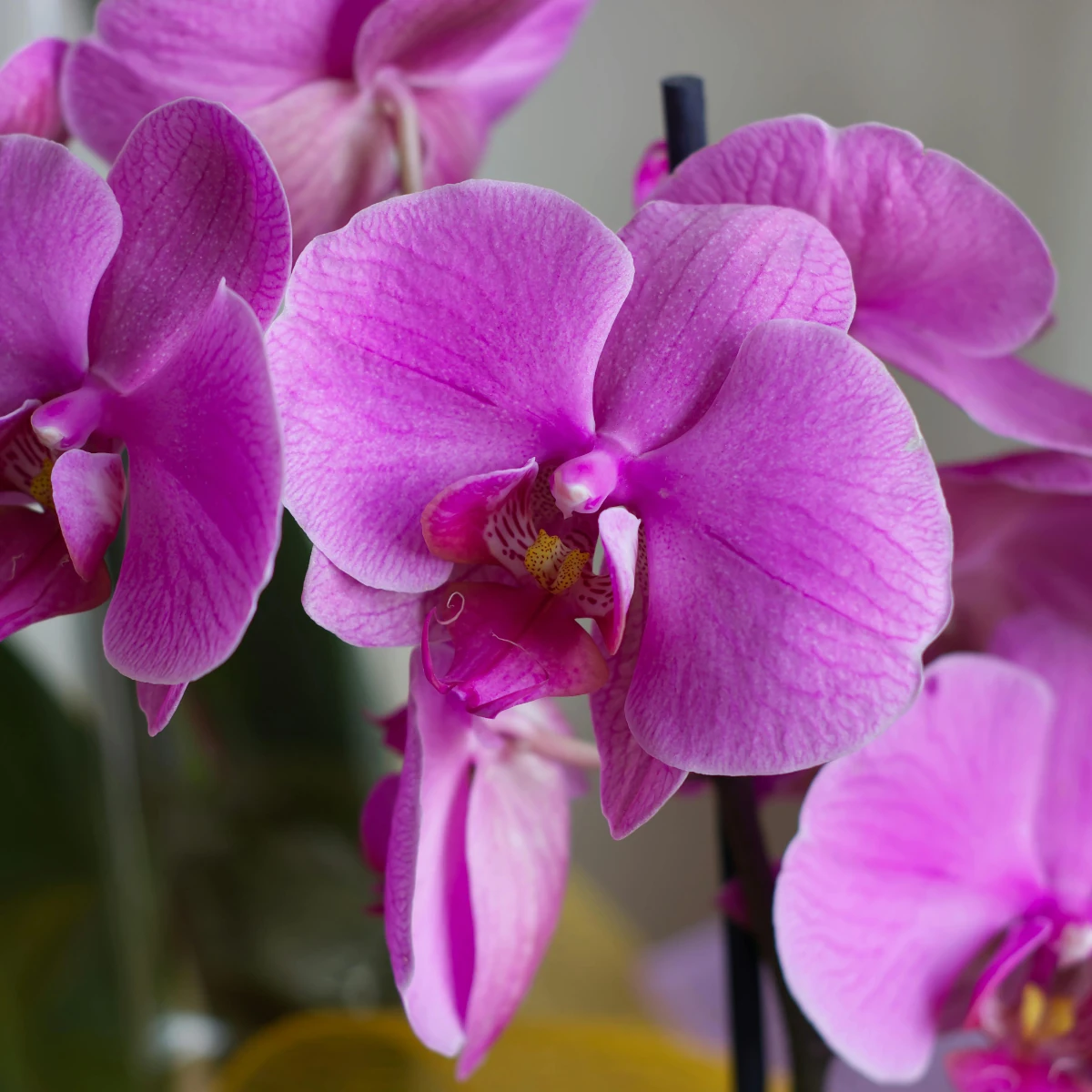
Quick Care Reference
| Care Aspect | Requirement | Frequency |
|---|---|---|
| Watering | When bark is nearly dry | Every 7-10 days (summer), 10-14 days (winter) |
| Light | Bright indirect, no direct afternoon sun | East window ideal |
| Humidity | 50-70% | Use pebble tray or humidifier |
| Fertilizing | 1/4 strength balanced, bloom booster for spikes | Every other watering (spring-fall) |
| Repotting | Fresh bark mix, clear pot with holes | Every 1-2 years after blooming |
| Temperature | 65-80°F day, 55-65°F night for reblooming | Cool nights in fall trigger spikes |
Watering
Orchid watering is where most beginners go wrong. Phalaenopsis orchids should never sit in standing water, and their potting medium (bark mix) behaves completely differently from regular soil. Water when the bark is nearly dry; typically every 7-10 days in summer and every 10-14 days in winter. The best method is to bring the pot to the sink and run room-temperature water through the bark for 15-20 seconds, letting it drain completely through the holes in the pot. Never let the roots sit in water in a decorative outer pot; drain the cachepot after watering. Orchid roots are excellent indicators of hydration: plump, green or silvery-green roots are healthy and hydrated; white or silver roots are dry and ready for water; brown or mushy roots indicate overwatering and rot. If your orchid is potted in sphagnum moss instead of bark, water less frequently; moss retains much more moisture and takes longer to dry. In summer, you can also soak the entire pot in a bowl of room-temperature water for 10-15 minutes, then drain thoroughly. Always water in the morning so any moisture on leaves or in the crown evaporates before nightfall; water pooling in the crown overnight can cause crown rot, which is often fatal.
Light Requirements
Phalaenopsis orchids thrive in bright indirect light; think of the dappled shade they receive on tree branches in tropical forests. An east-facing window is ideal, providing gentle morning sun without the intense afternoon heat. A north-facing window can work if it's unobstructed, though blooming may be less reliable. South or west-facing windows work well if filtered through a sheer curtain; direct afternoon sun will scorch orchid leaves, causing sunburn that appears as bleached white or brown dry patches. Healthy orchid leaves should be a medium olive green. Dark green leaves indicate insufficient light; the plant is producing extra chlorophyll to compensate, and it likely won't rebloom. Reddish or yellowish-green leaves with a slight purple tinge suggest the light is just right, even slightly on the bright side. Orchids need a shift to slightly cooler nighttime temperatures (around a 10-15°F drop) in fall to trigger a new bloom spike. Placing them near a window where they experience natural temperature fluctuation helps. If your orchid grows leaves but refuses to bloom, insufficient light or lack of temperature differential is almost always the reason.
Humidity & Temperature
Phalaenopsis orchids prefer humidity between 50-70%, which is higher than most homes provide, especially during winter heating season. Low humidity causes bud blast (flower buds drying up and falling off before opening), leaf tip browning, and generally lackluster growth. A humidity tray; a shallow tray filled with pebbles and water, with the pot resting on top of the pebbles above the water line; is the easiest targeted solution. Grouping orchids together also raises local humidity through shared transpiration. Running a humidifier in the room during winter benefits both you and your orchids. Avoid misting Phalaenopsis directly; water that collects in the leaf joints and crown can cause bacterial or fungal rot, especially in cool conditions. Temperature-wise, Phalaenopsis orchids are comfortable in the same range as humans: 65-80°F (18-27°C) during the day, with a nighttime drop to 60-65°F (15-18°C). This natural temperature fluctuation, especially a period of cooler nights (55-60°F) in fall, is the key trigger for initiating a new bloom spike. Orchids are sensitive to cold drafts and sudden temperature changes; keep them away from exterior doors, AC vents, and heating registers.
Fertilizing
The classic orchid feeding advice is 'weakly, weekly'; use a balanced liquid fertilizer (such as 20-20-20 or an orchid-specific formula) diluted to one-quarter strength and apply with every other watering during the growing season (spring through early fall). Always water first with plain water, then follow with fertilizer solution; fertilizing dry roots causes burns. During active growth and bloom spike development, consistent light feeding makes a meaningful difference in flower count and spike strength. Switch to a bloom-booster formula (higher phosphorus, like 10-30-20) when you see a spike emerging to support flower development. Stop fertilizing entirely for 6-8 weeks in mid-winter when growth is minimal. After the orchid finishes blooming, resume regular balanced feeding to support leaf growth and root development, which builds energy reserves for the next bloom cycle. Flush the bark thoroughly with plain water once a month to wash out accumulated fertilizer salts, which can burn roots. If you see white crusty deposits on the bark or pot rim, that's salt buildup; flush immediately. Over-fertilizing is worse than under-fertilizing for orchids; leaf tip browning and root damage are common signs of too much fertilizer.
Propagation
Phalaenopsis orchids don't propagate like typical houseplants; you can't take a stem cutting and root it. Instead, they occasionally produce keikis (baby plants) on bloom spikes or at the base of the plant. Keikis are genetic clones that develop their own roots and leaves while still attached to the mother plant. Division is possible with sympodial orchids but Phalaenopsis is monopodial (single stem), so keikis are the primary method. Some growers use keiki paste (a cytokinin hormone) applied to nodes on spent bloom spikes to encourage keiki production, though success isn't guaranteed.
Keiki (Baby Plant) Separation
- Wait until the keiki has at least 2-3 leaves and roots that are 2-3 inches long; this takes 6-12 months
- Using a sterile blade, cut the spike about 1 inch on each side of where the keiki is attached
- Dust the cut ends with cinnamon (a natural antifungal) on both the keiki and mother plant
- Plant the keiki in a small pot with fine-grade orchid bark, keeping it snug
- Keep humidity high (70%+) and water lightly until new root growth is established
Keiki Paste Method (Hormone-Induced)
- After blooming, locate a node on the spent spike (small bumps covered by triangular bracts)
- Carefully peel back the bract covering the node with a sterile blade to expose the green node
- Apply a small dab of keiki paste (cytokinin hormone) directly to the exposed node
- Keep the plant in bright indirect light and maintain humidity above 60%
- Watch for growth at the node over the next 4-8 weeks; it may produce a keiki or a secondary spike
Popular Varieties
Standard Phalaenopsis
Also known as: Moth Orchid
The classic grocery-store orchid with large, round flowers on arching spikes. Available in white, pink, purple, yellow, and spotted patterns. Blooms can last 2-3 months.
The easiest orchid for beginners. Can rebloom reliably from the same spike if cut above a node.
Mini Phalaenopsis
Also known as: Miniature Moth Orchid
Compact versions with smaller flowers and shorter spikes. Perfect for windowsills and small spaces. Often bloom more frequently than full-size varieties.
Roots dry out faster due to smaller pots; check moisture more frequently.
Oncidium
Also known as: Dancing Lady Orchid
Produces cascading sprays of small yellow, brown, or red flowers that resemble dancing figures. More tolerant of bright light than Phalaenopsis.
Needs a distinct dry rest period after blooming to trigger the next bloom cycle.
Dendrobium
Also known as: Bamboo Orchid
Tall, cane-like stems produce clusters of flowers from nodes along the stem. Many species need a cool, dry winter rest to bloom.
Don't remove old leafless canes; they store energy and may produce flowers or keikis.
Cattleya
Also known as: Corsage Orchid
Large, fragrant, showstopping flowers in vivid colors. The classic 'corsage orchid' used in formal arrangements. Needs more light than Phalaenopsis.
Requires a 2-4 week cool, dry rest in fall to initiate blooming. Highly fragrant varieties available.
Seasonal Care Calendar
Spring
March – May
- Resume regular fertilizing at quarter strength every other watering
- Repot if bark is decomposed or plant hasn't been repotted in 2+ years
- Watch for new leaf growth starting; increase watering slightly
- Move to brighter spot if leaves are dark green (insufficient light)
Summer
June – August
- Water more frequently as bark dries faster in heat
- Continue regular fertilizing; this is peak growth season
- Protect from direct afternoon sun through south/west windows
- Maintain humidity above 50% if running AC heavily
- Monitor for pests; mealybugs and scale love orchids
Fall
September – November
- Expose to cooler nighttime temperatures (55-60°F) for 2-4 weeks to trigger blooming
- Reduce fertilizing; switch to bloom booster when spike appears
- Watch for bloom spike emerging from base of leaves
- Reduce watering slightly as growth slows
Winter
December – February
- Enjoy blooms! Most Phalaenopsis bloom in winter through spring
- Stop fertilizing during active blooming
- Increase humidity; heating systems dry the air
- Water less frequently (every 10-14 days typically)
- Keep away from cold windowpanes and drafts
Troubleshooting
Bud blast (flower buds dropping before opening)
Why it happens: Bud blast is heartbreaking; you watch the spike develop beautiful buds, then they yellow and fall off unopened. The most common causes are sudden environmental changes: a cold or hot draft, rapid temperature swings, low humidity below 40%, fumes from ripening fruit (ethylene gas), or moving the plant while buds are developing. Even rotating the pot can cause buds to drop if they've oriented themselves toward a light source.
What to do: Once buds have blasted, they won't recover; focus on preventing it next time. Keep the orchid in a stable location once buds form; no moving, no rotating. Maintain humidity above 50% with a tray or humidifier. Keep away from heating/AC vents and fruit bowls. If your home is drafty, create a microclimate by grouping plants together or placing a humidity tray nearby.
Learn more: Why Are My Plant Leaves Drooping? → Ask the AI about this →Mushy, brown, or black roots (root rot)
Why it happens: Orchid root rot comes from overwatering, poor drainage, or decomposed bark that retains too much moisture. Phalaenopsis roots are adapted to dry out between waterings; in nature, they're exposed to air on tree branches. When roots stay constantly wet in soggy bark or standing water in a cachepot, they suffocate and rot. Decomposed bark (crumbly, dark, soil-like) breaks down over 1-2 years and no longer provides the air gaps roots need.
What to do: Unpot the orchid and remove all old bark. Cut away any brown, mushy, or hollow roots with sterile scissors; healthy roots are firm, plump, and white, green, or silvery. Dust cut ends with cinnamon. Repot in fresh orchid bark mix in a clean pot with drainage holes. Clear pots are ideal so you can monitor root health. Don't water for 3-5 days after repotting to let cuts heal. Going forward, always let bark dry nearly completely between waterings.
Learn more: How to Treat Root Rot → Ask the AI about this →Orchid won't rebloom
Why it happens: A healthy Phalaenopsis that grows leaves but refuses to bloom is almost always lacking one of two things: sufficient light or a cool nighttime temperature trigger. Dark green leaves are a telltale sign of too little light; the plant diverts energy to chlorophyll production rather than flower spikes. Without a period of cooler nights (55-60°F for 2-4 weeks in fall), many orchids won't initiate bloom spikes at all. Over-fertilizing with nitrogen-heavy formulas also promotes leaf growth at the expense of flowers.
What to do: Move to a brighter spot; leaves should be medium olive green with a slight yellowish or reddish tinge, not dark green. In fall (September-October), place the orchid near a window where it experiences natural nighttime cooling to 55-60°F for 2-4 weeks. This temperature drop is the primary bloom trigger. Switch to a bloom-booster fertilizer (high phosphorus) when you see a spike starting. Patience is key; a new bloom spike takes 2-3 months from initiation to first flower opening.
Learn more: Why Is My Plant Not Growing? → Ask the AI about this →Wrinkled, leathery leaves
Why it happens: Wrinkled or puckered orchid leaves indicate dehydration; but the cause isn't always underwatering. If the roots are healthy but the bark is very dry, the plant needs water. However, wrinkled leaves with mushy or dead roots mean the plant can't absorb water because the root system is damaged (usually from prior overwatering). It's a cruel irony: root rot from too much water leads to a dehydrated plant that looks like it needs more water.
What to do: Check the roots first. If roots are firm and silvery/white, the plant is simply thirsty; water thoroughly. If roots are mushy or hollow, you have root rot; trim dead roots, repot in fresh bark, and wait for new roots before watering regularly. For orchids with severely damaged root systems, place in a clear plastic bag with damp (not wet) sphagnum moss to create a high-humidity recovery environment. New roots may take 4-8 weeks to emerge.
Learn more: Am I Overwatering My Plant? → Ask the AI about this →Yellowing leaves (multiple at once)
Why it happens: A single lower leaf turning yellow is normal aging; orchids drop their oldest leaf periodically. But multiple leaves yellowing simultaneously indicates a problem: overwatering and root rot (most common), too much direct sun, cold exposure, or over-fertilizing. Root rot prevents nutrient uptake, causing leaves to yellow from the bottom up as the plant cannibalizes older foliage.
What to do: Check roots immediately; mushy brown roots confirm root rot. Trim damaged roots, repot in fresh bark, and reduce watering. If roots are healthy, evaluate light (too much direct sun causes yellow patches), temperature (cold drafts cause sudden yellowing), and feeding schedule (too much fertilizer causes salt burn). Resume normal care once you've addressed the cause; new leaves will emerge healthy while damaged leaves won't recover.
Learn more: Why Are My Plant Leaves Turning Yellow? → Ask the AI about this →Not sure what's wrong?
Premium includes AI photo diagnosis, then walks you through the fix and checks back in until it's better.
See Premium →Track your Orchid with PlantCareAI
Add your Orchid and get a watering schedule tuned to this week's weather. Free for up to 3 plants.
Add your Orchid