
Peace Lily Care Guide
Spathiphyllum
Also known as Closet Plant
By Ellen Hermance · PlantCareAI Editorial
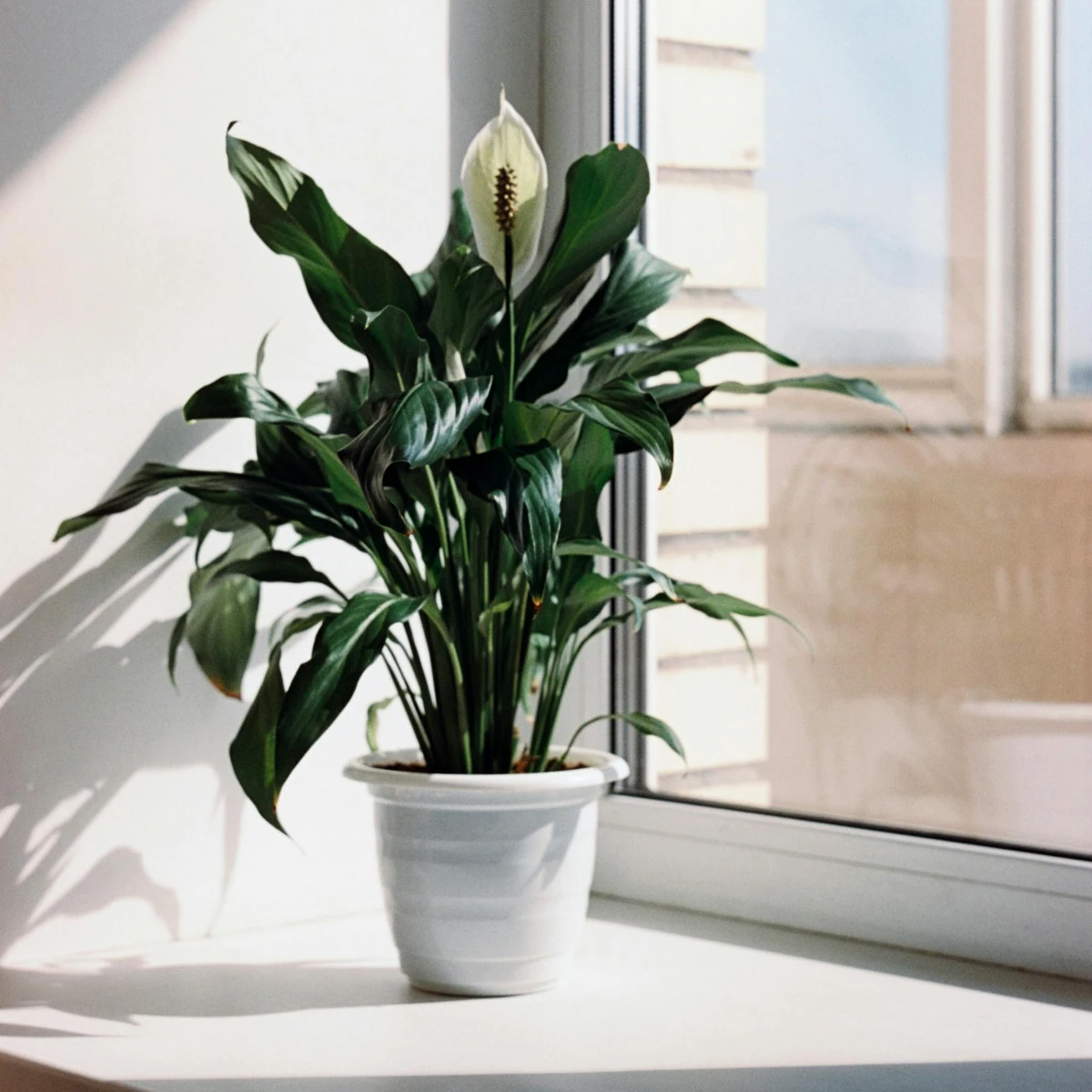
Peace Lilies are elegant flowering plants that thrive in low light; a rare combination in the houseplant world. Their graceful white spathes (often mistaken for petals) and glossy dark green foliage make them popular for homes and offices alike. As one of NASA's top air-purifying plants, they remove common indoor toxins while adding a touch of tropical elegance to any room.
Quick Care Reference
| Care Aspect | Requirement | Frequency |
|---|---|---|
| Watering | When top 1″ dry, use filtered water | Weekly |
| Light | Low to medium indirect | Tolerates low light |
| Humidity | 50%+ ideal | Mist or use pebble tray |
| Fertilizing | Balanced liquid, half strength | Monthly (spring-summer) |
| Repotting | When root-bound (blooms more) | Every 1-2 years |
Watering
Peace Lilies like consistent moisture but not soggy soil. Water when the top inch feels dry; they prefer the soil to stay lightly moist rather than cycling between wet and dry. They'll dramatically droop when thirsty, which is a helpful built-in reminder, but try not to let them wilt regularly as repeated wilting stresses the plant and shortens its lifespan. Use filtered or distilled water if possible; Peace Lilies are notably sensitive to chlorine, fluoride, and other chemicals in tap water, which cause brown leaf tips over time. If you must use tap water, let it sit uncovered for 24 hours to allow chlorine to dissipate. Water thoroughly until it drains from the bottom, then empty the saucer.
Light Requirements
Peace Lilies are famous for tolerating low light conditions that would kill most flowering plants, making them perfect for offices, bathrooms, and north-facing windows. They can survive in as little as 50 foot-candles of light (a dimly lit room). However, there's a trade-off: Peace Lilies bloom much more readily with brighter indirect light. If your plant produces lush foliage but no flowers, try moving it to a spot with medium indirect light. Direct sun scorches their thin leaves quickly, leaving brown, papery patches. East-facing windows provide ideal morning light without the intensity of afternoon sun.
Humidity & Temperature
As tropical understory plants from Central American and Southeast Asian rainforests, Peace Lilies love humidity above 50%. They tolerate average home humidity (30-40%) but truly thrive in more humid environments. Brown, crispy leaf tips; the most common Peace Lily complaint; are almost always caused by low humidity or chemicals in tap water. Increase humidity with a pebble tray, grouping with other plants, or running a humidifier nearby. Bathrooms with natural light are ideal locations. Keep temperatures between 65-85°F (18-29°C) and avoid cold drafts; Peace Lilies are sensitive to temperatures below 55°F and can show cold damage as blackened leaves.
Fertilizing
Feed monthly during spring and summer with a balanced liquid fertilizer at half strength. Peace Lilies are light feeders and quite sensitive to over-fertilizing, which manifests as brown leaf tips and edges; a problem that's easily confused with humidity issues. When in doubt, skip a feeding rather than add extra. No fertilizer is needed from fall through winter. If you notice white crusty salt deposits on the soil surface, flush the pot several times with plain water. Some growers prefer to fertilize at quarter-strength with every watering during the growing season instead of full-strength monthly.
Propagation
Peace Lilies propagate by division; splitting the root ball into separate plants. Unlike many houseplants, they cannot be propagated from leaf or stem cuttings. The good news is that mature Peace Lilies naturally form multiple crowns (clusters of leaves growing from separate root sections), making division straightforward. Spring is the best time to divide.
Root Division
- Water the plant a day before dividing to reduce transplant shock.
- Remove the plant from its pot and gently shake off excess soil.
- Identify separate crowns; clusters of leaves with their own root systems.
- Carefully pull or cut the crowns apart, ensuring each division has at least 3-4 leaves and a healthy root section.
- Pot each division in fresh, well-draining mix and water gently. Keep in warm, humid conditions for 2-3 weeks while roots establish.
Seasonal Care Calendar
Spring
March – May
- Resume weekly watering
- Begin monthly fertilizing
- Divide overcrowded plants
- Watch for new flower spathes emerging
Summer
June – August
- Water weekly, keeping soil lightly moist
- Continue monthly fertilizing
- Remove spent flower stalks at the base
- Mist regularly in dry air-conditioned rooms
Fall
September – November
- Reduce watering slightly as growth slows
- Stop fertilizing by late fall
- Move away from cold drafty windows
- Clean leaves to maximize light in shorter days
Winter
December – February
- Water when top inch is dry (less frequent)
- No fertilizer needed
- Increase humidity near heating vents
- Move to brightest available spot for winter
Troubleshooting
Brown leaf tips
Why it happens: The most common Peace Lily issue. Brown, crispy tips are caused by low humidity, chemicals in tap water (fluoride and chlorine), or over-fertilizing. Peace Lilies are more sensitive to water quality than most houseplants. All three causes produce similar symptoms, so you may need to address them one at a time.
What to do: Switch to filtered, distilled, or rainwater. If using tap water, let it sit uncovered for 24 hours before use. Increase humidity with a humidifier or pebble tray. If you've been fertilizing heavily, flush the soil with plain water and reduce to half-strength. Trim brown tips at an angle; they won't heal but new growth should be healthy.
Learn more: Why Are My Plant Leaves Turning Brown? → Ask the AI about this →Drooping leaves
Why it happens: Peace Lilies are famous for their dramatic droop when thirsty; the entire plant will wilt visibly. This is usually a simple underwatering issue and recovers quickly. However, drooping can also indicate overwatering and root rot if the soil is wet, or cold shock from exposure to low temperatures.
What to do: If the soil is dry, water thoroughly and the plant should perk up within 2-4 hours. If the soil is already wet and the plant is drooping, you may have root rot; check the roots for mushiness. For cold shock, move to a warmer location and wait for recovery. Avoid letting the plant wilt repeatedly, as each drought episode stresses the plant.
Learn more: Why Are My Plant Leaves Drooping? → Ask the AI about this →Yellow leaves
Why it happens: Yellow leaves can indicate overwatering (most common), underwatering, natural aging, or too much direct light. Bottom leaves yellowing gradually is normal as the plant redirects energy to new growth. Multiple leaves yellowing at once, especially from the center of the plant, is a warning sign of overwatering or root rot.
What to do: Check the soil moisture. If wet, reduce watering frequency and ensure drainage is adequate. If dry, water more consistently. Remove yellow leaves; they won't recover. If many leaves are yellowing, unpot and inspect roots for rot. Trim mushy roots and repot in fresh soil.
Learn more: Why Are My Plant Leaves Turning Yellow? → Ask the AI about this →No flowers
Why it happens: Peace Lilies need adequate light to bloom; they'll produce lush foliage in low light but may never flower. Young plants (under 1 year) may not be mature enough. Over-potting in too-large a container redirects energy to root growth instead of flowering. Insufficient nutrients during the growing season also reduce bloom frequency.
What to do: Move to brighter indirect light (not direct sun). Ensure you're fertilizing monthly in spring and summer. Keep the plant slightly root-bound; Peace Lilies bloom more when their roots are a bit crowded. Be patient with young plants; maturity is a factor. Some commercial growers use gibberellic acid to force blooms, so a newly purchased flowering plant may take a season to bloom again naturally.
Ask the AI about this →Self-watering systems for peace lilies
Why it happens: See our dedicated guide for detailed identification and treatment.
What to do: Read the full guide: Self-Watering Systems for Indoor Plants
Learn more: Self-Watering Systems for Indoor Plants → Ask the AI about this →Not sure what's wrong?
Premium includes AI photo diagnosis, then walks you through the fix and checks back in until it's better.
See Premium →Track your Peace Lily with PlantCareAI
Add your Peace Lily and get a watering schedule tuned to this week's weather. Free for up to 3 plants.
Add your Peace Lily