
Philodendron Care Guide
Philodendron spp.
Also known as Sweetheart Plant, Heartleaf Philodendron
By Ellen Hermance · PlantCareAI Editorial
Philodendrons are a diverse genus of over 400 tropical species, ranging from compact vining heartleaf types to dramatic self-heading varieties with massive split leaves. Native to Central and South American rainforests, they're among the easiest tropical plants to grow indoors; fast-growing, forgiving, and available in an incredible range of leaf shapes and colors.
Quick Care Reference
| Care Aspect | Requirement | Frequency |
|---|---|---|
| Watering | When top 1″ dry | Weekly |
| Light | Medium to bright indirect | 4-6 hours daily |
| Humidity | 50%+ ideal | Mist if edges brown |
| Fertilizing | Balanced liquid fertilizer | Monthly (spring-summer) |
| Repotting | When root-bound | Every 1-2 years |
Watering
Water when the top inch of soil is dry. Philodendrons like consistent moisture but are forgiving of occasional missed waterings; more so than many other tropical plants. Vining types (heartleaf, brasil) are more drought-tolerant than self-heading types (birkin, hope), which have larger leaves that lose moisture faster. When you water, soak thoroughly until water drains from the bottom, then discard any standing water. Avoid letting the soil stay soggy, which causes root rot. In summer, you'll typically water weekly; in winter, every 10-14 days as growth slows. Drooping, soft leaves usually signal it's time to water.
Light Requirements
Most philodendrons prefer medium to bright indirect light, though they tolerate lower light better than many houseplants. In dim conditions, they'll survive but grow leggy with smaller leaves and lose any variegation. Variegated types like Brasil and Birkin need brighter light to maintain their colorful patterns; in low light, they'll gradually revert toward solid green. Self-heading varieties with large leaves (hope, xanadu) can handle slightly lower light than vining types. Direct sun burns the leaves of all philodendrons, causing brown, papery patches. An east-facing window or a spot a few feet from a south window is ideal for most varieties.
Humidity & Temperature
Philodendrons appreciate humidity above 50% but adapt well to average home conditions (30-40%). Higher humidity promotes noticeably larger leaves and faster growth, especially for the large-leaved self-heading varieties. Brown, crispy leaf edges are a telltale sign of dry air. You can boost humidity by grouping tropical plants together, using a pebble tray, or running a humidifier. Bathrooms with natural light are excellent philodendron locations. Keep temperatures between 65-85°F (18-29°C) and avoid cold drafts; most philodendrons show cold stress below 55°F.
Fertilizing
Feed monthly during spring and summer with a balanced liquid fertilizer at regular or half strength. Philodendrons are moderate feeders that respond well to consistent nutrition; you'll notice faster growth and larger leaves during the fertilized growing season. Reduce to every 6-8 weeks in fall and stop in winter. Over-fertilizing causes salt buildup that shows as brown leaf tips. If you see white crust on the soil surface, flush thoroughly with plain water. Slow-release granules applied once in spring are a good low-maintenance alternative to monthly liquid feeding.
Propagation
Vining philodendrons are among the easiest houseplants to propagate; they root quickly from stem cuttings in water or soil. Self-heading types are trickier and usually propagated by division or air layering. The key for vining types is to cut just below a node (the bump on the stem where leaves and aerial roots emerge), as that's where new roots will grow.
Stem Cutting in Water (Vining Types)
- Cut a 4-6 inch vine segment just below a node, with at least 2-3 leaves.
- Remove the bottom leaf to expose the node.
- Place in a jar of room-temperature water with the node submerged.
- Set in bright indirect light and change water every 5-7 days.
- Roots appear in 1-2 weeks. Pot in soil when roots are 2-3 inches long.
Stem Cutting in Soil (Vining Types)
- Take a cutting with 2-3 nodes, removing the bottom leaves.
- Dip the cut end in rooting hormone (optional).
- Plant in moist, well-draining potting mix with at least one node buried.
- Keep soil consistently moist and in warm, bright indirect light.
- Roots establish in 2-4 weeks. Tug gently to check; resistance means success.
Division (Self-Heading Types)
- Remove the plant from its pot when it has multiple growth points.
- Gently separate the root ball into sections, each with leaves and roots.
- Plant each division in its own pot with fresh potting mix.
- Water lightly and keep in warm, humid conditions for 2-3 weeks.
Popular Varieties
Heartleaf Philodendron
Also known as: Philodendron hederaceum
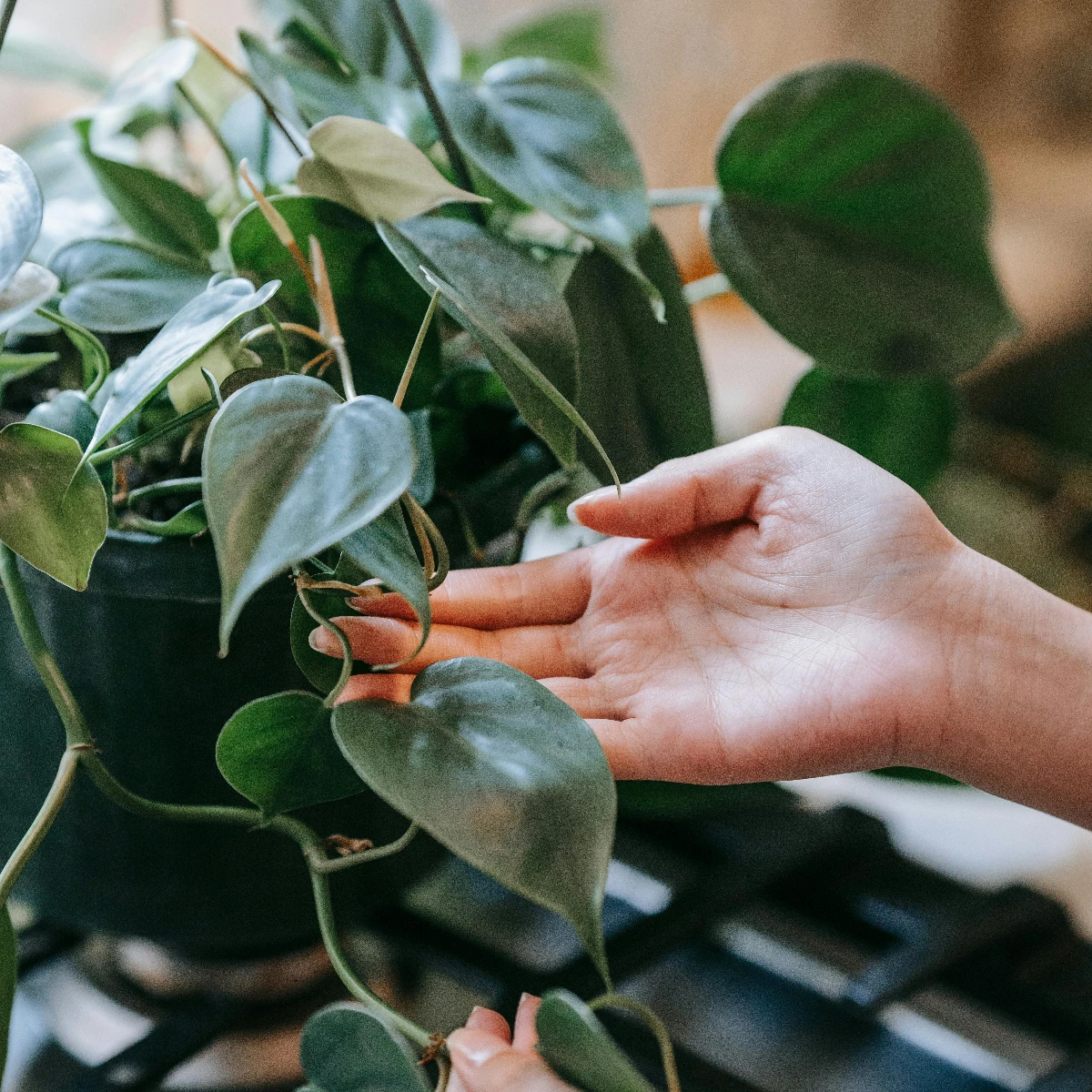
The classic vining philodendron with small, heart-shaped dark green leaves on trailing stems. Extremely hardy and fast-growing. One of the most popular houseplants for hanging baskets, shelves, and trellises.
The most forgiving philodendron; tolerates low light and irregular watering.
Philodendron Brasil
A variegated sport of the heartleaf philodendron with stunning lime-green and dark green striped leaves. Each leaf has a unique pattern. Same easy vining habit as the heartleaf but with much more visual impact.
Needs good light to maintain variegation; reverts to solid green in low light.
Philodendron Birkin
A compact, self-heading variety with dark green leaves featuring striking cream-white pinstripe variegation. Each new leaf unfurls with more pronounced stripes. Grows upright rather than trailing, making it perfect for desktops and shelves.
Occasionally produces a reverted leaf or sport; these are normal genetic quirks.
Seasonal Care Calendar
Spring
March – May
- Resume weekly watering
- Begin monthly fertilizing
- Take stem cuttings for propagation
- Repot if root-bound
Summer
June – August
- Water weekly, more often in heat
- Continue monthly fertilizing
- Train vines on moss poles or trellises
- Watch for mealybugs and spider mites
Fall
September – November
- Reduce watering to every 10-14 days
- Fertilize every 6-8 weeks, then stop
- Prune leggy growth for bushier shape
- Move away from cold windows
Winter
December – February
- Water every 10-14 days
- No fertilizer needed
- Increase humidity near heating vents
- Clean leaves to maximize light absorption
Troubleshooting
Yellow leaves
Why it happens: Overwatering is the most common cause. When roots sit in wet soil, they can't absorb oxygen and begin to rot, sending stress signals to the leaves. Underwatering, natural aging of older leaves, and nutrient deficiency can also cause yellowing. On vining types, the oldest leaves closest to the soil naturally yellow and drop.
What to do: Check soil moisture; let the top inch dry between waterings. Ensure drainage holes aren't blocked. If multiple leaves yellow suddenly, inspect roots for rot (brown, mushy roots). Remove affected roots, repot in fresh soil, and water less frequently. A few bottom leaves yellowing over time is normal aging.
Learn more: Why Are My Plant Leaves Turning Yellow? → Ask the AI about this →Leggy growth with small leaves
Why it happens: Insufficient light causes philodendrons to stretch toward the nearest light source, producing long internodes (the space between leaves) and progressively smaller leaves. This is especially noticeable in vining types, which can produce long bare stems with tiny leaves at the tips.
What to do: Move to a brighter location. Prune leggy vines back to a node; each cut point will produce new growth, creating a bushier plant. Use the pruned cuttings to propagate new plants. For climbing types, providing a moss pole in good light encourages larger leaf production.
Learn more: Why Is My Plant Not Growing? → Ask the AI about this →Brown, crispy leaf edges
Why it happens: Brown edges on philodendron leaves are most commonly caused by low humidity. The thin leaf margins lose moisture fastest, resulting in crispy brown borders. Inconsistent watering (letting the soil dry out too much between waterings) and salt buildup from fertilizer can contribute.
What to do: Increase humidity with a humidifier, pebble tray, or grouping plants together. Water more consistently; don't let the soil dry out completely. Flush the soil with plain water to remove salt buildup. Brown edges won't heal but new growth should be healthy once conditions improve.
Learn more: Why Are My Plant Leaves Turning Brown? → Ask the AI about this →Loss of variegation
Why it happens: Variegated philodendrons (Brasil, Birkin, Pink Princess) lose their patterns in insufficient light. The plant prioritizes chlorophyll production over decorative coloring to maximize energy from limited light. Fully green stems will outcompete variegated growth if not managed.
What to do: Move to brighter indirect light immediately. Prune any fully reverted (solid green) stems, as they'll dominate the plant with their faster growth. New growth in better light should show improved variegation. For Birkin, occasional reverted leaves are normal genetic quirks and don't indicate a problem.
Ask the AI about this →Drooping, wilting leaves
Why it happens: Philodendron leaves droop when the plant is thirsty; the cells lose turgor pressure and can't hold the leaves upright. However, overwatering can cause the same symptom if root rot prevents water uptake. The key difference: underwatered leaves feel thin and light; overwatered leaves feel heavy and limp.
What to do: Check the soil. If it's dry, water thoroughly and the plant should recover within hours. If the soil is wet, you may have root rot. Stop watering, let it dry, and inspect roots. Trim any mushy roots and repot in fresh soil. Going forward, water only when the top inch is dry.
Learn more: Why Are My Plant Leaves Drooping? → Ask the AI about this →Not sure what's wrong?
Premium includes AI photo diagnosis, then walks you through the fix and checks back in until it's better.
See Premium →Track your Philodendron with PlantCareAI
Add your Philodendron and get a watering schedule tuned to this week's weather. Free for up to 3 plants.
Add your Philodendron