
Spider Plant Care Guide
Chlorophytum comosum
Also known as Airplane Plant, Ribbon Plant
By Ellen Hermance · PlantCareAI Editorial
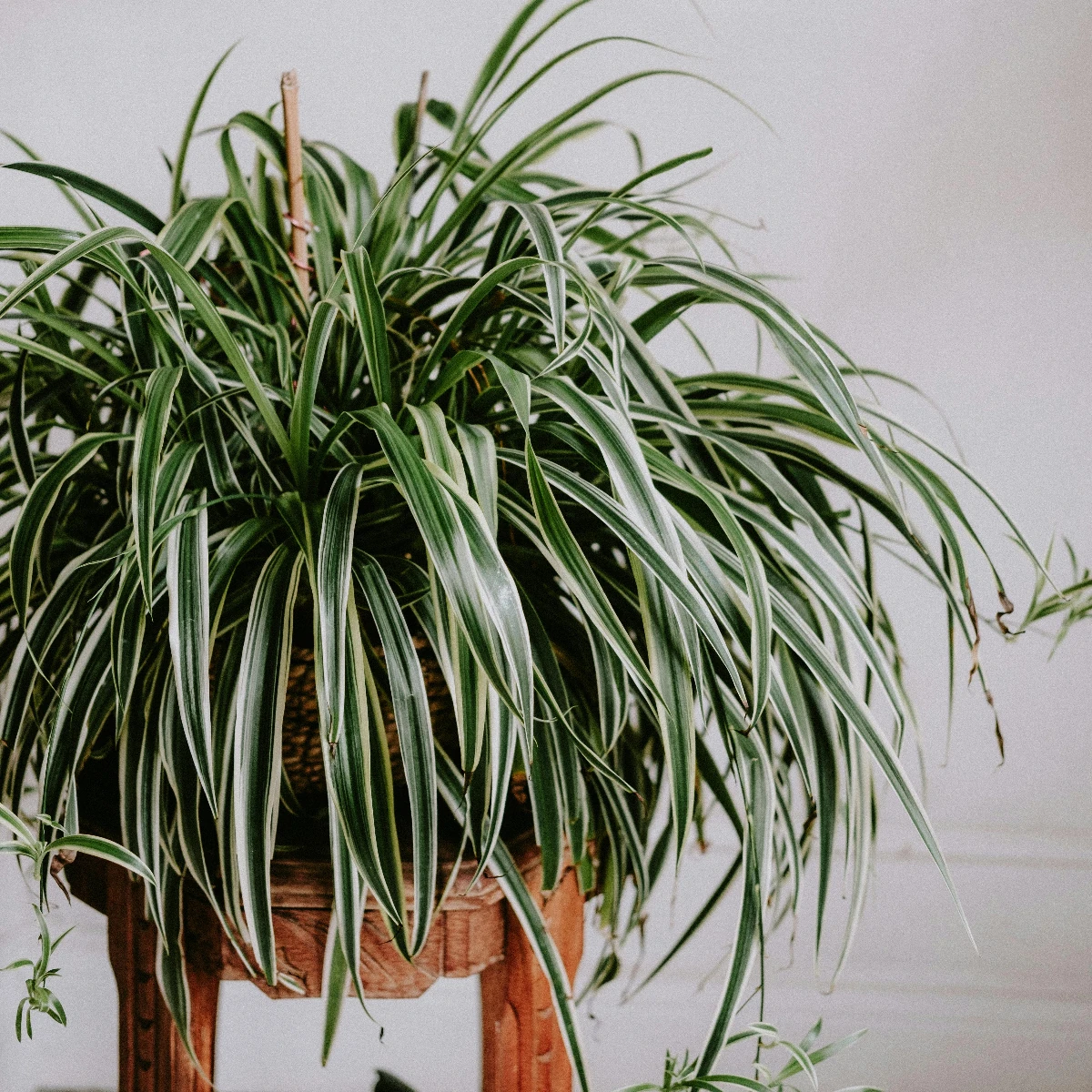
Spider Plants are classic houseplants known for producing adorable baby plantlets that dangle from long arching stems like spiders on a web. They're incredibly resilient, non-toxic to cats and dogs, and perfect for beginners. Few plants are as satisfying to propagate; a single mature spider plant can produce dozens of babies each year that you can root and share.
Quick Care Reference
| Care Aspect | Requirement | Frequency |
|---|---|---|
| Watering | When top 1″ dry, use filtered water | Weekly |
| Light | Bright indirect | 4-6 hours daily |
| Humidity | Average home humidity | No special needs |
| Fertilizing | Balanced liquid, half strength | Monthly (spring-summer) |
| Repotting | When root-bound | Every 1-2 years |
Watering
Water when the top inch of soil is dry. Spider plants have thick, tuberous roots that store water, making them somewhat drought-tolerant; but they're not as forgiving as succulents, so don't neglect them for weeks at a time. Overwatering causes root rot, while underwatering causes brown tips and leaf edges. Consistent, moderate watering is the sweet spot. Water thoroughly until it drains from the bottom, then let the soil dry slightly before watering again. Spider plants are notably sensitive to fluoride and chlorine in tap water, which accumulate in leaf tips and cause persistent browning. Using filtered, distilled, or rainwater makes a noticeable difference in leaf health.
Light Requirements
Spider plants prefer bright, indirect light but adapt to a surprisingly wide range of conditions. In good light, they grow vigorously and produce abundant babies. Variegated varieties (with white or cream stripes) need more light to maintain their coloring; in low light, they gradually revert toward solid green. In very dim conditions, spider plants survive but grow slowly and produce few or no plantlets. Avoid direct sun, especially intense afternoon light, which scorches the leaves and causes bleached or brown patches. An east-facing window or a spot a few feet from a south-facing window is ideal.
Humidity & Temperature
Spider plants tolerate average home humidity (30-50%) without complaint. They're not fussy about humidity at all, making them great for offices and dry rooms. Occasional misting is fine but not necessary. Keep temperatures between 55-80°F (13-27°C). They can handle brief cold spells better than most tropical houseplants; they're actually subtropical, native to South Africa rather than the equatorial tropics. However, prolonged exposure below 50°F causes damage. Spider plants adapt well to fluctuating indoor temperatures, which is one reason they've been popular houseplants since the Victorian era.
Fertilizing
Feed monthly during spring and summer with a balanced liquid fertilizer at half strength. Spider plants aren't heavy feeders, and over-fertilizing is a common cause of brown leaf tips (along with fluoride in water). The salt buildup from excess fertilizer concentrates in the leaf tips and burns them. Flush the soil occasionally with plain water to wash away accumulated salts. No feeding is needed in fall and winter. For a gentle approach, worm castings mixed into the soil during repotting provide slow-release nutrients without the risk of chemical burn.
Propagation
Spider plants are among the easiest houseplants to propagate, thanks to their natural habit of producing baby plantlets on long arching runners. A mature, healthy spider plant can produce dozens of babies in a single growing season. You can also divide the root ball, but plantlet propagation is so easy it's the go-to method for most people.
Plantlet in Water
- Choose a baby plantlet that has small nubs or roots forming at its base.
- Snip it from the runner using clean scissors, leaving a short stem attached.
- Place the base of the plantlet in a small jar of water so the nubs are submerged but leaves stay above.
- Set in bright indirect light and change water every 4-5 days.
- Roots grow quickly; usually within 1-2 weeks. Pot in soil when roots are 1-2 inches long.
Plantlet in Soil (While Attached)
- Place a small pot of moist soil next to the mother plant.
- Gently press a still-attached baby plantlet into the soil surface, pinning it with a bobby pin or bent paperclip.
- Keep the soil lightly moist while the plantlet roots (1-2 weeks).
- Once rooted (gentle tug meets resistance), snip the runner connecting it to the mother plant.
- The baby is now an independent plant. Continue normal care.
Root Division
- Remove the mother plant from its pot.
- Gently separate the thick tuberous roots into sections, each with several leaves.
- Plant each division in its own pot with fresh potting mix.
- Water lightly and keep in bright indirect light for 1-2 weeks while roots re-establish.
Seasonal Care Calendar
Spring
March – May
- Resume weekly watering
- Begin monthly fertilizing at half strength
- Repot if heavily root-bound
- Watch for new runners with baby plantlets
Summer
June – August
- Water when top inch is dry
- Continue monthly fertilizing
- Root baby plantlets for propagation
- Move outdoors to shaded patio if desired
Fall
September – November
- Reduce watering as growth slows
- Stop fertilizing by late fall
- Bring outdoor plants back inside
- Flush soil to remove salt buildup
Winter
December – February
- Water less frequently, every 10-14 days
- No fertilizer needed
- Keep away from cold drafts
- Maximize light exposure in shorter days
Troubleshooting
Brown leaf tips
Why it happens: The most common spider plant complaint. Brown, crispy tips are almost always caused by fluoride in tap water, which concentrates in the leaf tips over time. Over-fertilizing and low humidity are secondary causes. Unfortunately, many municipal water supplies contain enough fluoride to affect spider plants.
What to do: Switch to filtered, distilled, or rainwater; this single change often resolves the problem completely. If you've been over-fertilizing, flush the soil with plain water and reduce to half-strength. Trim brown tips at an angle for cosmetic purposes. Once the cause is addressed, new growth should be tip-burn-free.
Learn more: Why Are My Plant Leaves Turning Brown? → Ask the AI about this →No baby plantlets
Why it happens: Spider plants need to be mature (at least 1-2 years old) and somewhat root-bound before they produce runners and babies. Insufficient light also reduces plantlet production. Over-potting in too large a container redirects energy to root growth rather than reproduction. Some solid-green varieties produce fewer babies than variegated types.
What to do: Be patient with young plants. Move to brighter indirect light. Don't repot into an overly large container; spider plants produce more babies when their roots are slightly crowded. Ensure you're fertilizing during the growing season to provide the nutrients needed for runner production.
Learn more: Why Is My Plant Not Growing? → Ask the AI about this →Pale or washed-out leaves
Why it happens: Leaves losing their vibrant green color or variegation becoming faded usually indicates too much direct sunlight. The intense UV bleaches the chlorophyll, leaving the leaves looking pale, washed out, or scorched. Conversely, variegated varieties losing their white stripes and becoming solid green are getting too little light.
What to do: For bleached/pale leaves from too much sun, move to a spot with bright indirect light (no direct rays). For variegated plants reverting to green, move to brighter conditions. The existing pale leaves won't change back, but new growth should show proper coloring.
Ask the AI about this →Limp, drooping leaves
Why it happens: Spider plant leaves that go limp and lose their arch are typically underwatered. The tuberous roots store some water, but once those reserves are depleted, leaves wilt. Root rot from overwatering can also cause limpness if the damaged roots can't transport water.
What to do: If the soil is dry, water thoroughly and the plant should recover within a day. If the soil is wet and leaves are still limp, check for root rot; unpot and trim any brown, mushy roots. Repot in fresh soil and water sparingly until new growth appears.
Learn more: Why Are My Plant Leaves Drooping? → Ask the AI about this →Pest problems (spider mites)
Why it happens: See our dedicated guide for detailed identification and treatment.
What to do: Read the full guide: How to Treat Spider Mites on Houseplants
Learn more: How to Treat Spider Mites on Houseplants → Ask the AI about this →Not sure what's wrong?
Premium includes AI photo diagnosis, then walks you through the fix and checks back in until it's better.
See Premium →Track your Spider Plant with PlantCareAI
Add your Spider Plant and get a watering schedule tuned to this week's weather. Free for up to 3 plants.
Add your Spider Plant