
String of Pearls Care Guide
Curio rowleyanus (formerly Senecio rowleyanus)
Also known as Senecio rowleyanus, Curio rowleyanus
By Ellen Hermance · PlantCareAI Editorial
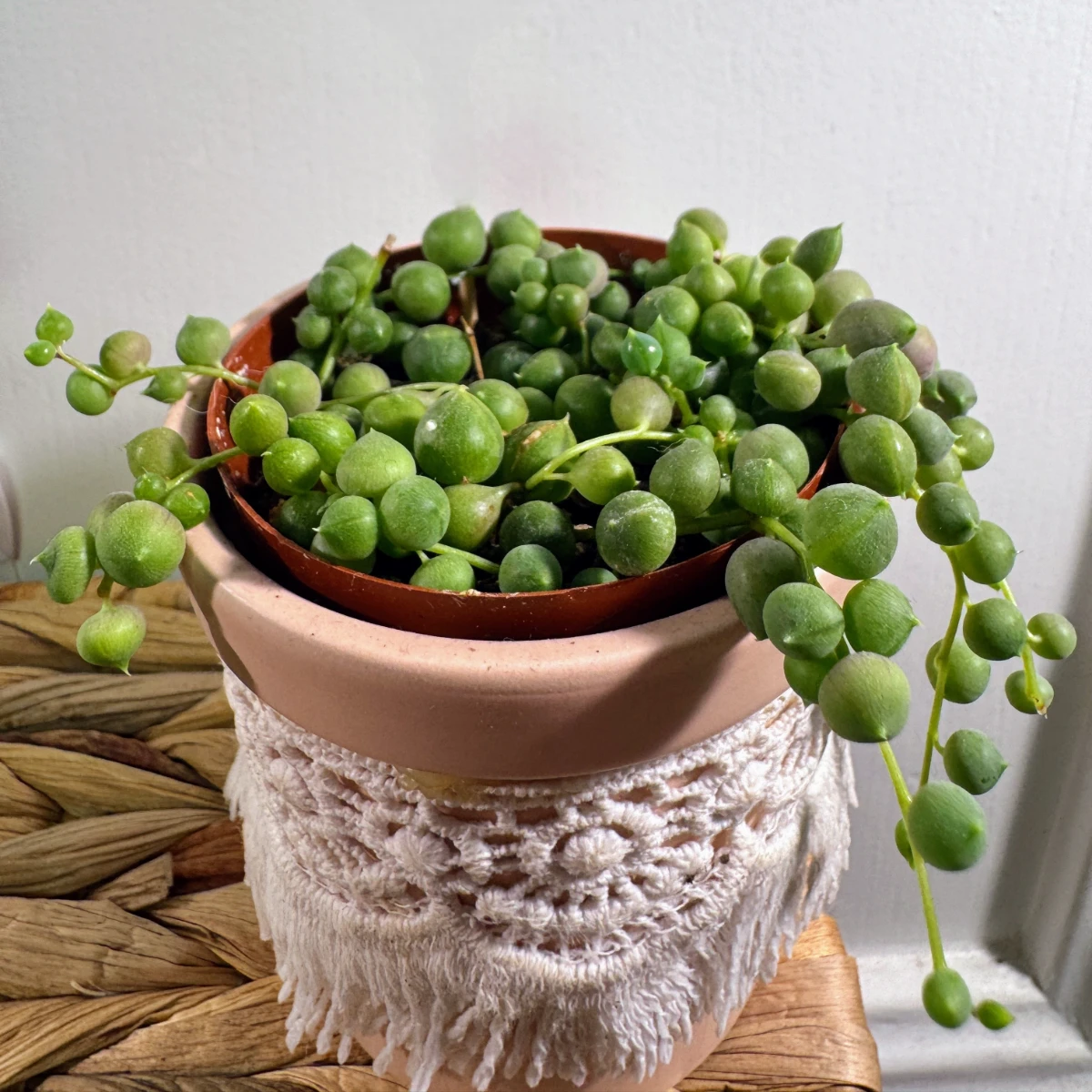
String of Pearls is a striking trailing succulent native to the dry regions of southwest Africa. Its cascading stems of perfectly round, pea-shaped leaves can grow several feet long, making it a dramatic choice for hanging baskets, high shelves, or trailing over the edge of a pot. Each bead-like leaf has a translucent 'window' that lets light penetrate deep into the leaf for photosynthesis; an adaptation to its arid homeland. While it has a reputation as a tricky plant, success comes down to bright light, sparse watering, and well-draining soil.
Quick Care Reference
| Care Aspect | Requirement | Frequency |
|---|---|---|
| Watering | When soil is fully dry (bottom water preferred) | Every 7-10 days (summer), 2-3 weeks (winter) |
| Light | Bright indirect to some direct (morning sun ideal) | 6-8 hours daily |
| Soil | Very gritty, fast-draining mix | Repot every 1-2 years in spring |
| Fertilizing | Quarter-strength balanced liquid | Monthly (spring-fall only) |
| Temperature | 60-80°F (15-27°C) | Keep above 50°F year-round |
Watering
String of Pearls stores water in its spherical leaves, so it needs much less water than most houseplants. Water thoroughly when the soil is completely dry; push your finger about an inch into the soil, and if it feels dry, it's time. In summer, this is typically every 7-10 days. In winter, stretch to every 2-3 weeks. The key sign that your String of Pearls needs water is the pearls themselves: plump, round pearls mean the plant is well-hydrated, while slightly oval or wrinkled pearls indicate it's thirsty. This visual cue is more reliable than any watering schedule. When you water, soak the soil thoroughly until water runs from the drainage holes, then let it drain completely. Never let the pot sit in a saucer of water. Bottom watering works particularly well for String of Pearls; sit the pot in a few inches of water for 10-15 minutes, then remove and let drain. This avoids wetting the crown and stems, which reduces rot risk. Use room-temperature water and avoid getting the pearls themselves wet, especially the dense crown where stems emerge from the soil; moisture trapped there is the primary cause of crown rot.
Light Requirements
String of Pearls needs bright light; 6-8 hours daily is ideal. An east- or west-facing window works perfectly, providing bright light without the intensity of midday summer sun. South-facing windows can work but may need sheer curtain filtering during peak summer months, as intense direct afternoon sun can scorch the pearls, turning them brown and dry. That said, String of Pearls handles more direct light than many indoor plants. Morning sun is ideal: it's bright enough to keep the plant compact and healthy without the scorching intensity of afternoon rays. In too little light, the stems will stretch with large gaps between pearls (etiolation), and the pearls themselves become smaller and paler. The plant may also stop trailing and start growing upward, reaching for light. If you notice any of these signs, move to a brighter spot immediately. In winter, when daylight hours are shorter, supplement with a grow light if your String of Pearls starts stretching. The plant needs consistent brightness year-round, not just in summer.
Humidity & Temperature
String of Pearls prefers low to average humidity; 30-50% is ideal, which is typical of most indoor environments. Unlike tropical houseplants, it does not benefit from misting, pebble trays, or humidifiers. In fact, high humidity (above 60%) is detrimental: it slows soil drying, increases rot risk, and can promote fungal issues on the delicate pearl-like leaves. Good air circulation is far more important than humidity for this plant. A gentle air flow around the trailing stems helps moisture evaporate from the soil surface and crown area, reducing the risk of the rot that kills more String of Pearls than any other factor. Avoid placing the plant in bathrooms or kitchens where humidity spikes regularly. Temperature-wise, String of Pearls prefers 60-80°F (15-27°C) during the growing season. It can tolerate brief dips to 50°F (10°C) but prolonged cold causes the water-filled pearls to burst and turn mushy. Keep away from cold windows in winter and hot radiators year-round.
Fertilizing
String of Pearls is a light feeder. During the growing season (spring through early fall), feed once a month with a balanced liquid fertilizer diluted to quarter strength; this plant is sensitive to over-fertilizing, and a quarter-strength dose is safer than half-strength. A standard houseplant fertilizer (10-10-10 or similar) or a cactus/succulent formula both work well. Apply to moist soil only; never fertilize dry roots. Stop fertilizing completely from November through February. Over-fertilizing causes rapid, weak growth that's more susceptible to rot and pest damage. It can also burn the delicate roots and cause pearl drop (healthy-looking pearls suddenly falling off the stems). If you notice salt buildup on the soil surface (white crusty deposits), flush the soil thoroughly with plain water. For an organic alternative, diluted worm casting tea provides gentle nutrition without burn risk. Newly repotted plants don't need fertilizer for the first 6-8 weeks.
Propagation
String of Pearls is one of the easiest succulents to propagate; stem cuttings root readily and quickly. This is also the best way to rejuvenate a leggy or sparse plant: trim healthy stems and root them to create a fuller pot. Spring and summer are ideal, but cuttings can root any time the plant is actively growing.
Stem Cuttings in Soil
- Cut 4-6 inch healthy stem sections with sharp, clean scissors. Each cutting should have at least 5-6 pearls.
- Remove the pearls from the bottom 1-2 inches of the stem to expose the nodes; this is where roots will emerge.
- Let the cut ends dry for 1-2 days until calloused.
- Lay the cuttings on top of moist, gritty succulent soil with the stripped nodes touching the surface. You can gently press nodes into the soil or use bobby pins to hold them in place.
- Place in bright indirect light. Mist the soil lightly every 2-3 days; keep it barely moist, not wet.
- Roots develop in 2-4 weeks. Once you feel resistance when gently tugging a cutting, it's rooted. Begin normal watering.
Stem Cuttings in Water
- Cut 4-6 inch stem sections and strip pearls from the bottom 1-2 inches.
- Place the stems in a small jar of water with only the stripped nodes submerged; keep pearls above water.
- Place in bright indirect light and change the water every 3-4 days.
- Roots will appear in 1-3 weeks. Once roots are about an inch long, transfer to gritty, slightly moist soil.
- Water lightly for the first two weeks as the plant transitions from water to soil roots.
Coiling Method (for fuller pots)
- Take long stem cuttings (8-12 inches) and coil them on top of moist, gritty soil in a pot.
- Pin the coiled stems to the soil surface with bobby pins or small wire staples at several points along the stem.
- Ensure multiple nodes are in contact with the soil; each node can produce roots.
- Mist lightly every few days and keep in bright indirect light. Roots form at multiple points along the coiled stem.
- After 3-4 weeks, the entire coil will be rooted, creating a much fuller plant than individual cuttings.
Popular Varieties
Curio rowleyanus (Classic)
Also known as: String of Pearls
The original and most popular variety with perfectly round, pea-sized green pearls on thin trailing stems. Each pearl has a small translucent 'window' stripe that allows light to reach the interior for photosynthesis. Can trail 2-3 feet in ideal conditions.
Produces small, white, cinnamon-scented flowers in fall if given enough light.
Curio rowleyanus 'Variegata'
Also known as: Variegated String of Pearls
A striking variegated form with pearls in mixes of green, cream, and pink. The variegation is most vivid in bright light and cool conditions. Grows slightly slower than the standard green form due to reduced chlorophyll in variegated areas.
Reverts to solid green if light is insufficient; prune reverted stems to maintain variegation.
Curio herreanus
Also known as: String of Watermelons, String of Beads
Oval-shaped rather than round beads with purple-striped markings resembling tiny watermelons. Slightly more compact growth than String of Pearls with shorter internodes. Often easier to care for than the classic variety.
More forgiving of watering mistakes than true String of Pearls.
Curio radicans
Also known as: String of Bananas
Banana-shaped (crescent) leaves instead of round pearls, giving a very different look while requiring identical care. Tends to grow faster and more vigorously than String of Pearls, with thicker stems that are more resistant to rot. An excellent alternative for those who struggle with the classic variety.
More drought-tolerant and generally more forgiving than String of Pearls; great for beginners.
Curio citriformis
Also known as: String of Tears, String of Raindrops
Teardrop-shaped leaves with a pointed tip, slightly larger than classic pearls. The leaves have a blue-green tint and a more pronounced translucent window. Grows in a tighter, more compact trailing pattern.
The teardrop shape allows slightly more water storage than round pearls, making it a bit more drought-tolerant.
Seasonal Care Calendar
Spring
March – May
- Resume regular watering as new growth begins
- Begin monthly feeding at quarter strength
- Take stem cuttings to propagate or fill in sparse areas
- Repot if root-bound (only go up one pot size)
Summer
June – August
- Water every 7-10 days when fully dry
- Protect from intense afternoon direct sun (morning sun is fine)
- Continue monthly fertilizing
- Trim leggy or bare stems to encourage branching
Fall
September – November
- Reduce watering as growth slows
- Give last fertilizer dose in early September
- Watch for small white flowers (cinnamon-scented) if light was adequate
- Ensure good air circulation as indoor humidity may rise
Winter
December – February
- Water sparingly; every 2-3 weeks at most
- Stop fertilizing completely
- Provide maximum light (supplement with grow light if stretching)
- Keep away from cold windows and heating vents
Troubleshooting
Shriveling, wrinkled pearls
Why it happens: The pearls shrivel and wrinkle when the plant is running low on stored water. This is the most reliable indicator that it's time to water. Minor wrinkling is easy to fix, but if the entire plant is severely shriveled with dried stems, the roots may have died from being too dry for too long, meaning the plant can no longer absorb water even when offered.
What to do: Water thoroughly using the bottom-watering method; sit the pot in a few inches of water for 15 minutes. Plump pearls should recover within 24-48 hours. If the pearls don't plump back up after watering, check the roots: if they're dried out and brittle, trim dead roots, repot in fresh gritty soil, and water carefully. In severe cases, take healthy stem cuttings and propagate a new plant.
Learn more: How Often Should I Water My Plant? → Ask the AI about this →Mushy, translucent pearls
Why it happens: Mushy, see-through pearls are a sure sign of overwatering. The cells inside the pearls have burst from absorbing too much water. If only a few pearls are affected, the problem is early stage. If entire stems are mushy and the crown (where stems meet the soil) is soft and brown, crown rot has set in; this is the #1 killer of String of Pearls plants.
What to do: Remove all mushy stems immediately; they won't recover and can spread rot. If the crown area is still firm, let the soil dry out completely and reduce watering going forward. If the crown is mushy, the plant is likely lost at that spot. Salvage any healthy stems above the rot, let them callous for 2 days, and propagate in fresh, dry gritty soil. Going forward, bottom water and use a very gritty soil mix.
Learn more: Am I Overwatering My Plant? → Ask the AI about this →Gaps between pearls (etiolation)
Why it happens: When String of Pearls doesn't get enough light, it stretches toward the nearest light source. The stems grow longer with increasingly large gaps between pearls, and the pearls themselves become smaller and paler. The plant loses its characteristic dense, beaded appearance and looks sparse and leggy.
What to do: Move to a much brighter location; an east or west-facing window is ideal. Once stems have stretched, they won't compact back. Trim the leggy portions, let the cuttings callous, and propagate them in a brighter spot to start fresh. The original plant will often branch from where you cut, creating a denser top growth. Supplement with a grow light if natural light is insufficient, especially in winter.
Learn more: Why Is My Plant Not Growing? → Ask the AI about this →Pearls falling off
Why it happens: Pearl drop can result from several causes: overwatering (excess water pressure causes pearls to detach), over-fertilizing (salt buildup damages the connection between pearl and stem), physical handling (the pearl-stem connection is delicate), or severe stress from temperature swings or transplant shock.
What to do: First, rule out overwatering; check that the soil is drying fully between waterings. If you recently fertilized, flush the soil with plain water to remove excess salts. Handle the plant as little as possible; String of Pearls is fragile. Fallen pearls won't reroot, but they indicate the plant is stressed. Address the underlying cause and new growth should be firmly attached.
Learn more: Why Are My Plant Leaves Drooping? → Ask the AI about this →Not sure what's wrong?
Premium includes AI photo diagnosis, then walks you through the fix and checks back in until it's better.
See Premium →Track your String of Pearls with PlantCareAI
Add your String of Pearls and get a watering schedule tuned to this week's weather. Free for up to 3 plants.
Add your String of Pearls