
How Often Should I Water My Plant? (Stop Guessing)
By Ellen Hermance · PlantCareAI Editorial
"Water once a week" is the most common, and most misleading, plant care advice out there. The truth is, watering frequency depends on your specific plant, pot, soil, light, humidity, and even the weather outside. A monstera in a south-facing window in July needs water far more often than a snake plant in a dim corner in December. Here's how to figure out the right rhythm for your plants.
Quick Answer: Most houseplants need water every 1–2 weeks, but the real answer is: check the soil. Stick your finger 1–2 inches in; if it's dry, water thoroughly. Frequency depends on light, humidity, pot type, soil, and season.
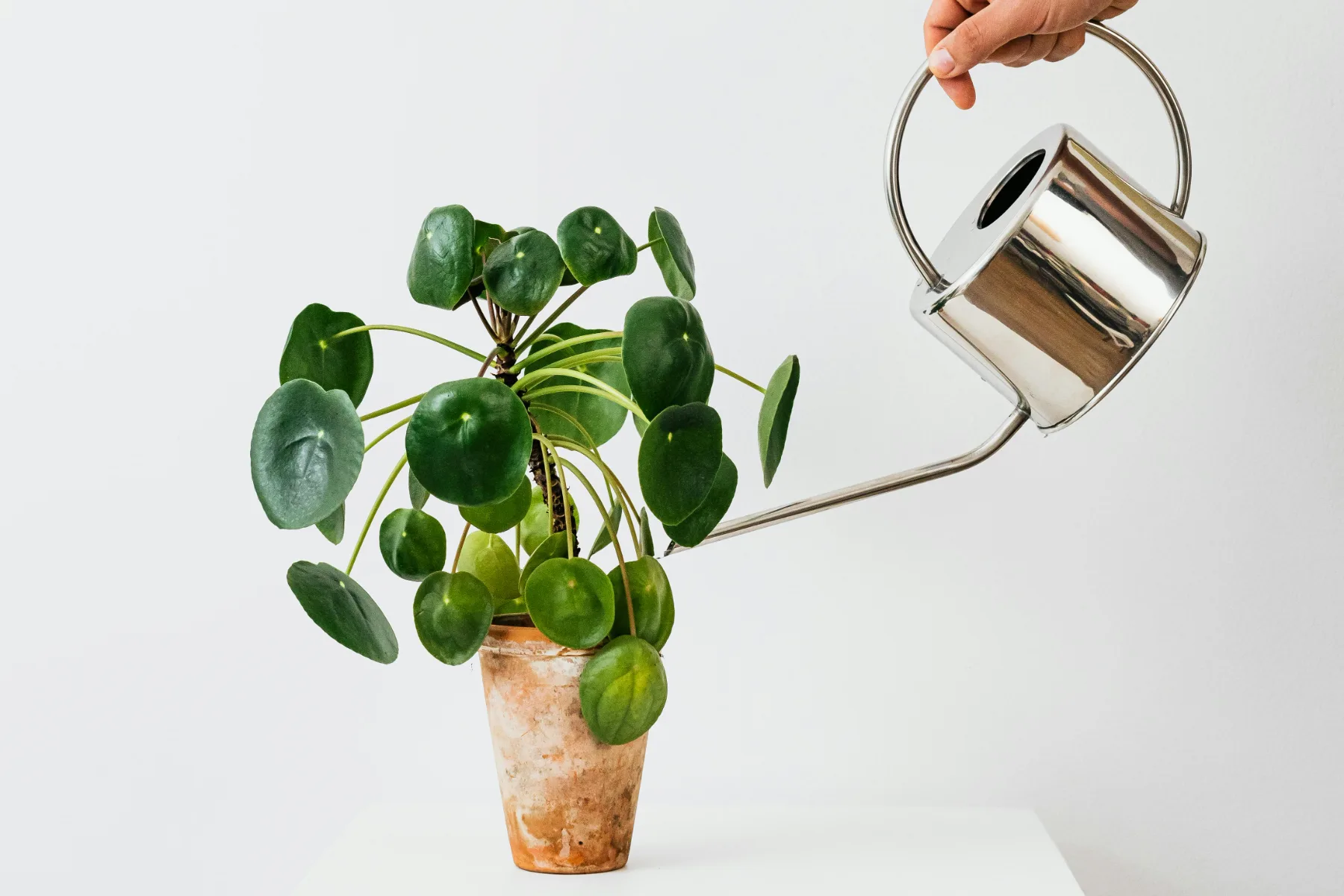
8 Factors That Affect How Often to Water
-
Check the soil, not the calendar
The most reliable watering method: stick your finger 1–2 inches into the soil. Dry? Water thoroughly. Still moist? Wait and check again in a day or two. This simple test accounts for all the variables that a fixed schedule can't; light, temperature, humidity, and season all affect how fast soil dries.
How to fix it: Make the finger test a habit every 2–3 days. For larger or deeper pots where your finger can't reach, use a wooden chopstick; insert it to the bottom and check if it comes out damp.
-
Know your plant's water preferences
Different plants have dramatically different water needs. Succulents and cacti want to dry out completely between waterings. Tropical foliage plants (monstera, pothos, philodendron) like to dry out slightly in the top inch. Ferns and calatheas prefer consistently moist (never soggy) soil.
How to fix it: Research your specific plant's native habitat. Desert plants need drought cycles. Tropical understory plants want regular moisture. Match your watering to the plant's natural environment.
-
Factor in the season
Plants need significantly more water during active growth (spring and summer) and much less during dormancy (fall and winter). During winter, most houseplants can go 50–100% longer between waterings. Continuing a summer watering schedule into winter is one of the most common causes of root rot.
How to fix it: Reduce watering frequency by about half during fall and winter. Let soil dry out more between waterings. Resume more frequent watering in early spring when you see new growth.
-
Consider your light levels
Bright light drives faster photosynthesis, which uses more water. A plant near a sunny south-facing window dries out much faster than an identical plant in a dim north-facing room. More light = more frequent watering. Less light = less frequent watering.
How to fix it: Check soil moisture more often for plants in bright locations. Plants in low light need less water; wait until soil is thoroughly dry before watering.
-
Account for humidity and temperature
Low humidity and warm temperatures cause soil to dry out faster. During winter heating season, indoor air can drop below 30% humidity, dramatically speeding up evaporation. Conversely, cool, humid rooms keep soil moist much longer.
How to fix it: Be prepared to water more often in heated rooms during winter (despite plants needing less water overall). Use a hygrometer to monitor room humidity; anything below 40% speeds up soil drying.
-
Pot material and size matter
Terracotta pots are porous and wick moisture out through their walls, drying soil 2–3x faster than plastic or glazed ceramic. Small pots dry out faster than large ones. A 4-inch terracotta pot may need water every 3–4 days in summer, while a 10-inch plastic pot might go 2+ weeks.
How to fix it: Choose pot material based on your watering style. If you tend to overwater, use terracotta. If you often forget to water, plastic retains moisture longer. Always ensure drainage holes.
-
Soil composition affects drainage
Dense, peat-heavy soils hold water for days. Chunky mixes with perlite, bark, and pumice drain quickly and dry faster. The right soil mix for your plant determines how long moisture stays in the root zone, and therefore how often you need to water.
How to fix it: Amend heavy soil with perlite or pumice for better drainage. Use specialized mixes for cacti/succulents. Repot plants in compacted soil that stays wet for more than a week.
-
Watch for your plant's signals
Many plants give visible clues when they need water. Peace lilies droop dramatically. Pothos leaves curl at the edges. Prayer plants fold their leaves. Succulent leaves wrinkle when thirsty. Learning your plant's specific 'I'm thirsty' signal helps you time watering perfectly.
How to fix it: Observe how your plant looks right before and right after watering. Over time, you'll recognize subtle signs of thirst before the plant shows stress.
Watering Needs by Plant Type
General watering frequency guidelines for common houseplant categories:
| Plant Type | Water When | Typical Frequency | Examples |
|---|---|---|---|
| Succulents & Cacti | Soil completely dry | Every 2–4 weeks | Aloe, jade, echeveria |
| Tropical Foliage | Top 1–2 inches dry | Every 1–2 weeks | Monstera, pothos, philodendron |
| Moisture-Loving | Surface barely dry | Every 4–7 days | Ferns, calathea, peace lily |
| Drought-Tolerant | Top 2–3 inches dry | Every 1–3 weeks | Snake plant, ZZ plant, rubber plant |
| Flowering Plants | Top inch dry | Every 5–10 days | African violet, orchid, anthurium |
Frequently Asked Questions
- Do plants need more water in summer?
- Yes; most houseplants need more frequent watering during spring and summer when they're actively growing, light is stronger, and temperatures are higher.
- Should I water plants on a schedule?
- No; check soil moisture instead. Conditions change with weather, season, and environment, so a fixed schedule often leads to overwatering or underwatering.
- Is it better to underwater or overwater?
- Underwatering is almost always safer. Most plants recover quickly from brief drought but struggle with root rot from chronic overwatering.
- Should I water until it drains from the bottom?
- Yes; thorough bottom-drainage watering ensures the entire root zone is moistened evenly. Shallow watering encourages roots to stay near the surface.
- Can I use a moisture meter instead of the finger test?
- Yes; moisture meters are especially useful for large pots where your finger can't reach the root zone. They're inexpensive and widely available.
The Bottom Line on Watering Frequency
There's no magic number; the best watering 'schedule' is one that responds to your plant's actual needs. Check the soil, consider the season, and learn your plant's thirst signals. With practice, watering becomes intuitive rather than guesswork. When in doubt, it's almost always better to wait an extra day than to water too soon.
Not sure what's wrong?
Premium includes AI photo diagnosis, then walks you through the fix and checks back in until it's better.
See Premium →Get Personalized Plant Care Advice
PlantCareAI uses your location and local weather to give you advice tailored to your exact situation. No signup required to try.
Try the AI Plant Doctor