
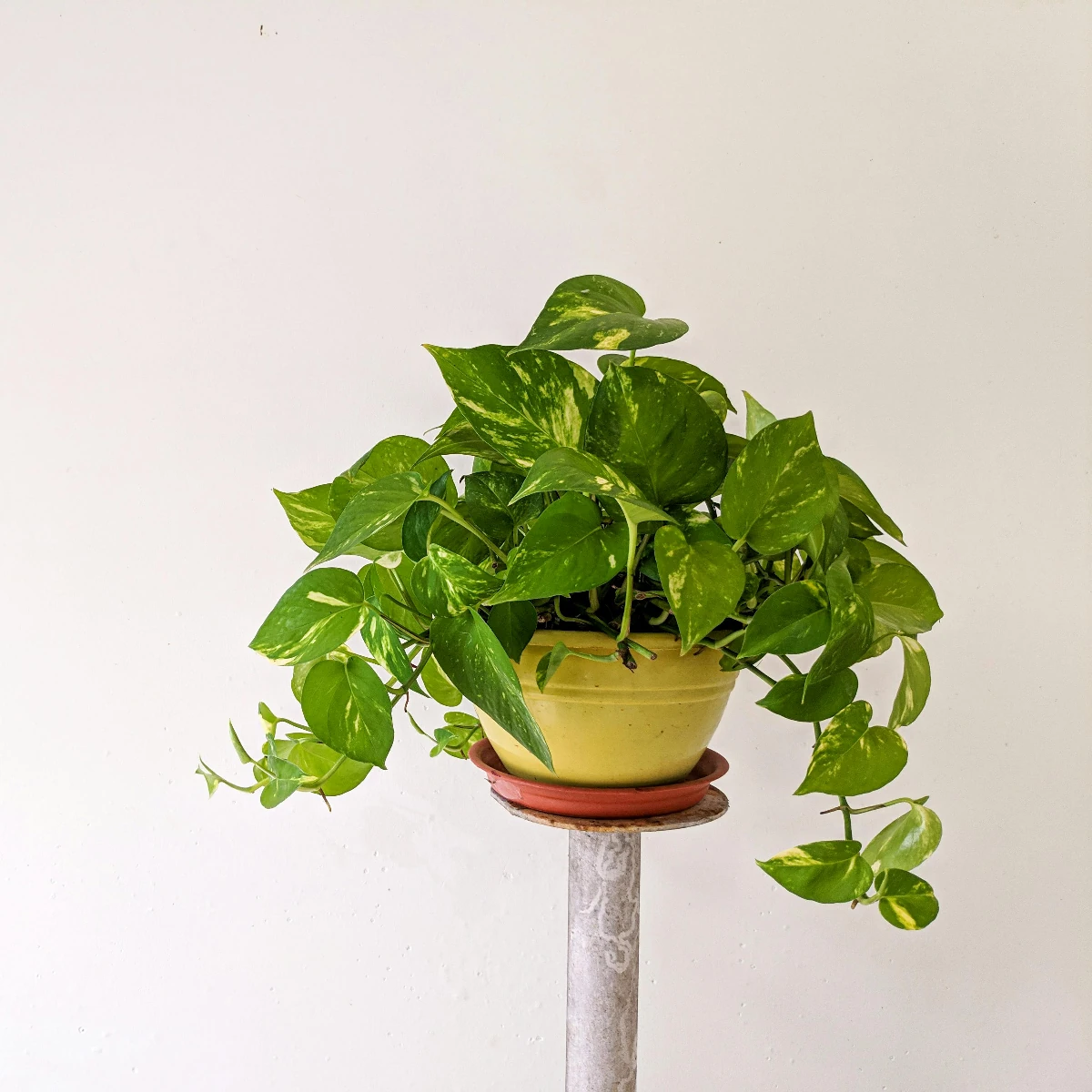
Often called Devil's Ivy for its near-indestructible nature, Pothos is one of the most forgiving houseplants available. Its trailing vines and heart-shaped leaves make it perfect for beginners and experienced plant parents alike. With dozens of stunning varieties and a tolerance for neglect, it's the plant that started many a houseplant obsession.
Quick Care Reference
| Care Aspect | Requirement | Frequency |
|---|---|---|
| Watering | When top 1″ dry | Weekly |
| Light | Low to bright indirect | Adapts to any |
| Humidity | Average home humidity | No misting needed |
| Fertilizing | Balanced liquid, half strength | Monthly (spring-summer) |
| Repotting | When root-bound | Every 1-2 years |
Watering
Water when the top inch of soil is dry; simply push your finger into the soil to check. Pothos is drought-tolerant and would rather be slightly underwatered than overwatered. Drooping leaves that perk up after watering is completely normal; it's the plant's built-in watering reminder. In spring and summer, you'll typically water once a week. In winter, stretch to every 10-14 days as growth slows. Always water thoroughly until it drains from the bottom, then discard excess water from the saucer. Pothos in hanging baskets or small pots may dry out faster and need more frequent watering. If the leaves feel thin and floppy rather than firm and waxy, the plant is thirsty.
Light Requirements
Pothos is incredibly adaptable and survives in a wider range of light conditions than almost any other houseplant. It can handle low light (an office with fluorescent lighting), but it grows noticeably faster and produces larger leaves in bright indirect light. Direct sun will scorch the leaves, causing bleached or brown patches. Variegated varieties like Marble Queen and N'Joy need brighter light to maintain their white patterns; in low light, they'll gradually revert to solid green as the plant prioritizes chlorophyll production. Neon Pothos, on the other hand, keeps its bright chartreuse color in moderate light. If your Pothos is producing small, widely-spaced leaves on long bare stems, it's stretching toward light and would benefit from a brighter spot.
Humidity & Temperature
Pothos tolerates average home humidity (30-50%) remarkably well, making it ideal for offices, kitchens, and even bathrooms. While it appreciates higher humidity and will reward you with larger, glossier leaves, it's not required for healthy growth. This adaptability is one reason Pothos thrives in environments that would stress more tropical plants. Keep temperatures between 60-85°F (15-29°C). Avoid cold drafts from windows and doors, and never expose Pothos to temperatures below 50°F. The plant stops growing below 55°F and can suffer cold damage that shows as blackened, wilted leaves.
Fertilizing
Feed monthly during spring and summer with a balanced liquid fertilizer diluted to half strength. Pothos isn't a heavy feeder, and over-fertilizing is worse than under-fertilizing; it causes brown leaf tips and salt buildup in the soil. No fertilizer is needed in fall and winter when growth naturally slows. If you notice white crusty deposits on the soil surface, flush the pot with plain water several times to wash away accumulated mineral salts. For a low-maintenance approach, slow-release fertilizer granules applied once in spring can replace monthly liquid feeding.
Propagation
Pothos is one of the easiest houseplants to propagate, making it a perfect starter project. Each vine has nodes; small brown bumps opposite each leaf; and that's where new roots will emerge. You can root cuttings in water or soil with near-100% success rates during the growing season.
Water Propagation
- Cut a vine segment with 4-6 inches of stem and at least 2-3 nodes. Cut just below a node.
- Remove the bottom 1-2 leaves so nodes will be submerged.
- Place the cutting in a jar of room-temperature water with nodes below the waterline.
- Set in bright indirect light and change water every 4-5 days.
- Roots appear in 1-2 weeks. Pot in soil once roots are 2-3 inches long.
Soil Propagation
- Take a cutting with at least 2 nodes, removing lower leaves.
- Optionally dip the cut end in rooting hormone.
- Plant directly in moist, well-draining potting mix with nodes buried.
- Keep soil consistently moist (not soggy) for the first 2-3 weeks.
- Tug gently after 3-4 weeks; resistance means roots have formed.
Popular Varieties
Golden Pothos
Also known as: Devil's Ivy
The classic variety with green heart-shaped leaves splashed with golden-yellow variegation. Extremely hardy and fast-growing, it's the most commonly found Pothos and the one most often recommended for beginners.
More golden color in brighter light; reverts to green in low light.
Marble Queen Pothos
Stunning white and green marbled foliage that looks like each leaf was hand-painted. Grows slower than Golden Pothos due to less chlorophyll in the heavily variegated leaves.
Needs good light to maintain variegation; reverts to green in low light.
Neon Pothos
Solid chartreuse-lime leaves that almost seem to glow. No variegation pattern; the entire leaf is a vibrant neon green-yellow. Equally hardy as Golden Pothos but with a completely different aesthetic.
Color stays vibrant even in moderate light, unlike variegated types.
Manjula Pothos
A patented variety with wider, rounder leaves featuring cream, white, silver, and green variegation. Leaves have wavy edges and a more compact growth habit than trailing varieties.
Slower growing but more compact; great for tabletops and shelves.
Seasonal Care Calendar
Spring
March – May
- Resume regular weekly watering
- Begin monthly fertilizing at half strength
- Prune leggy vines to encourage bushier growth
- Take cuttings for propagation
Summer
June – August
- Water when top inch of soil dries
- Continue monthly fertilizing
- Check for mealybugs and spider mites
- Train vines or trim to desired shape
Fall
September – November
- Reduce watering as growth slows
- Stop fertilizing by late fall
- Move away from cold windows
- Check for pests before heating season
Winter
December – February
- Water every 10-14 days
- No fertilizer needed
- Keep away from heating vents and cold drafts
- Wipe leaves to maximize light absorption
Troubleshooting
Yellow leaves
Why it happens: The most common cause is overwatering. When roots sit in consistently wet soil, they suffocate and begin to rot, sending stress signals that turn leaves yellow. Underwatering can also cause yellowing, but the leaves will feel thin and papery rather than soft and mushy. Natural aging of the oldest leaves (closest to the soil) is normal.
What to do: Let the soil dry out between waterings; the top inch should feel dry before you water again. Ensure your pot has drainage holes. If multiple leaves are yellowing at once, check the roots for rot (mushy, brown roots). Trim affected roots and repot in fresh soil. Remove individual yellow leaves, as they won't recover.
Learn more: Why Are My Plant Leaves Turning Yellow? → Ask the AI about this →Brown, crispy leaf tips
Why it happens: Brown tips on Pothos are typically caused by underwatering, low humidity, or mineral buildup from tap water. Fluoride and chlorine in municipal water can accumulate in leaf tips over time. Over-fertilizing also causes salt burns that appear as brown edges.
What to do: Water more consistently, ensuring you soak thoroughly each time. Switch to filtered or distilled water if you suspect mineral sensitivity. Flush the soil monthly with plain water to clear salt buildup. Cut off brown tips with clean scissors for a neater appearance; they won't turn green again.
Learn more: Why Are My Plant Leaves Turning Brown? → Ask the AI about this →Loss of variegation
Why it happens: Variegated Pothos varieties (Marble Queen, Manjula, N'Joy) lose their white or cream patterns when they don't get enough light. The plant produces more chlorophyll (green pigment) to compensate for low light, gradually replacing the variegated portions.
What to do: Move the plant to a brighter location with consistent indirect light. Prune any fully green stems, as they'll dominate and outgrow the variegated sections. The new growth that emerges in better light should show improved variegation. Avoid direct sun, which burns the white portions faster than green.
Ask the AI about this →Leggy, sparse vines
Why it happens: Long vines with widely-spaced small leaves indicate insufficient light. The plant is stretching toward the nearest light source, investing energy in stem length rather than leaf size. This is called etiolation and is especially common in dim offices or far from windows.
What to do: Move your Pothos to a brighter location. Prune the leggy vines back to a node near the soil line; each cut point will branch into two new growing tips, creating a fuller plant. Use the pruned vine segments as cuttings to propagate new plants.
Learn more: Why Is My Plant Not Growing? → Ask the AI about this →Mushy stems and root rot
Why it happens: Root rot is caused by overwatering or poor drainage. When soil stays perpetually wet, fungal pathogens attack the roots and stem base. You may notice a mushy texture at the soil line, a foul smell from the pot, or stems that detach easily when tugged.
What to do: Unpot the plant and trim all mushy, brown roots with clean scissors. Let the remaining healthy roots dry for an hour. Repot in fresh, well-draining soil in a pot with drainage holes. Water sparingly until the plant shows new growth. Take healthy vine cuttings as insurance in case the mother plant doesn't recover.
Learn more: How to Treat Root Rot → Ask the AI about this →Propagation problems
Why it happens: See our dedicated guide for detailed identification and treatment.
What to do: Read the full guide: How to Propagate Houseplants
Learn more: How to Propagate Houseplants → Ask the AI about this →Not sure what's wrong?
Premium includes AI photo diagnosis, then walks you through the fix and checks back in until it's better.
See Premium →Track your Pothos with PlantCareAI
Add your Pothos and get a watering schedule tuned to this week's weather. Free for up to 3 plants.
Add your Pothos