
Snake Plant Care Guide
Dracaena trifasciata
Also known as Mother-in-Law's Tongue, Sansevieria, Viper's Bowstring Hemp
By Ellen Hermance · PlantCareAI Editorial
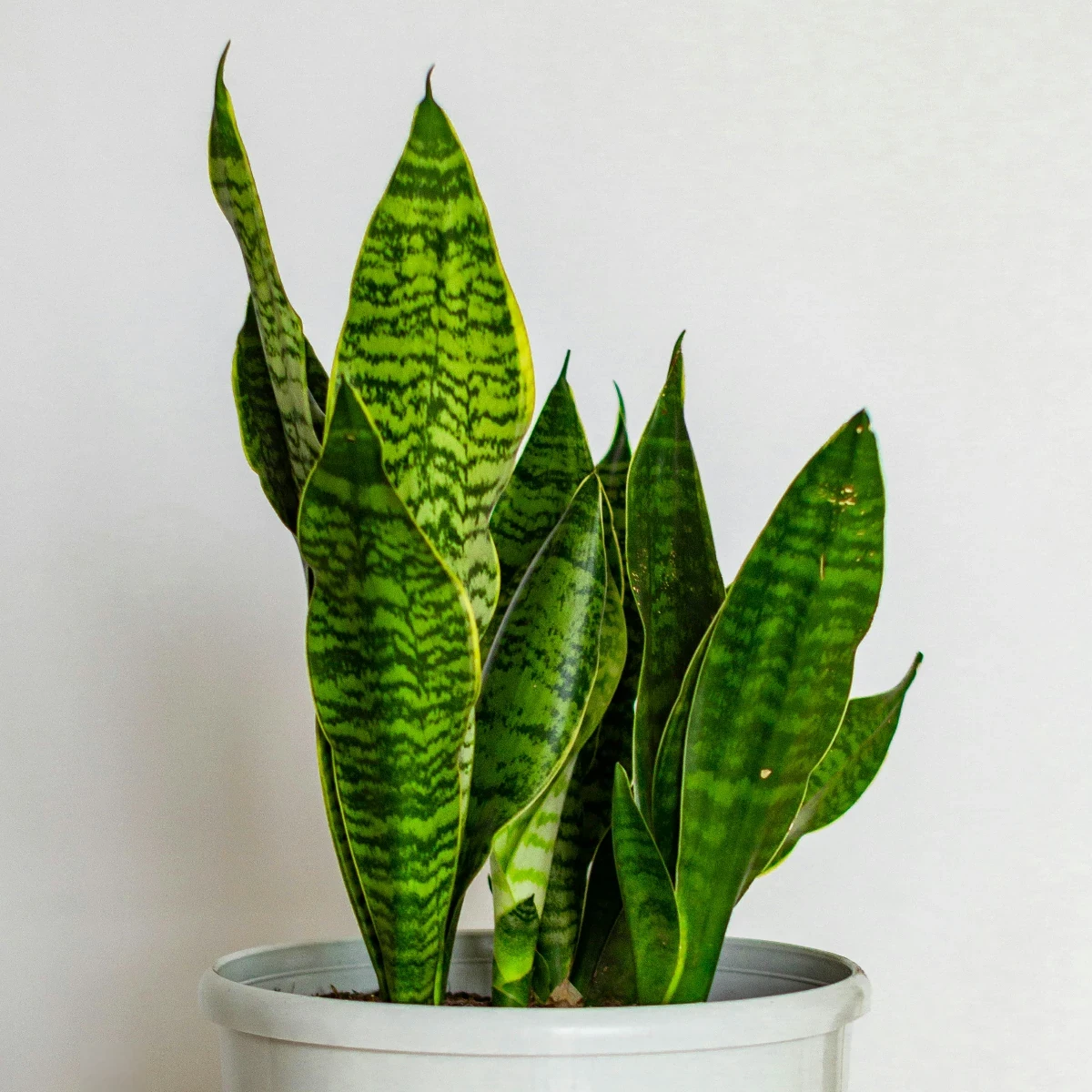
Snake Plants are nearly indestructible. Their architectural, upright leaves add bold structure to any space while requiring minimal care. Recently reclassified from Sansevieria to Dracaena, these succulents are among the hardiest houseplants you can own; perfect for beginners, frequent travelers, or anyone who wants greenery without the fuss.
Quick Care Reference
| Care Aspect | Requirement | Frequency |
|---|---|---|
| Watering | When soil completely dry | Every 2-3 weeks (summer), monthly (winter) |
| Light | Low to bright indirect | Adapts to any |
| Humidity | Low; no extra needed | No misting needed |
| Fertilizing | Diluted balanced fertilizer | 2-3 times per growing season |
| Repotting | When root-bound | Every 2-3 years |
Watering
Snake plants are succulents that store water in their thick, fleshy leaves, so they need far less water than most houseplants. Water only when the soil is completely dry; push your finger all the way down to check, not just the surface. In summer, this typically means every 2-3 weeks. In winter, once a month or even less is sufficient. Overwatering is the number one killer of snake plants. When in doubt, wait another week. Always water thoroughly until it runs from the drainage holes, then discard any standing water. Never let a snake plant sit in a saucer of water. Use a pot with drainage; terra cotta is ideal because it wicks moisture away from roots. If the leaves feel soft and mushy near the base, you've been watering too often.
Light Requirements
Snake plants tolerate a wider range of light conditions than almost any other houseplant; from a dim corner office to a bright windowsill. They'll grow fastest in bright indirect light, producing taller leaves more quickly, but they're perfectly content in low light where other plants would struggle. Avoid intense, direct afternoon sun, which can bleach and scorch the leaves, leaving pale or brown marks. Variegated varieties like Laurentii and Moonshine maintain their distinctive coloring better in brighter light; in very low light, they may gradually lose contrast. If you have a dark room that needs a plant, this is your best choice; snake plants can survive on fluorescent office lighting alone.
Humidity & Temperature
Snake plants thrive in dry conditions and actively dislike high humidity. They're perfect for air-conditioned offices, dry climates, and heated winter rooms; environments that stress most tropical houseplants. No misting, no pebble trays, no humidifiers needed. Keep temperatures between 55-85°F (13-29°C). They're more cold-tolerant than most tropicals and can handle brief dips to 50°F, but prolonged cold exposure below that causes damage. Keep them away from frosted windows in winter. One of their unique traits is converting CO2 to oxygen at night (via CAM photosynthesis), making them popular bedroom plants.
Fertilizing
Snake plants are very light feeders and grow slowly even with perfect care. Fertilize just 2-3 times total during the growing season (spring through summer) with a balanced liquid fertilizer diluted to half strength. Over-fertilizing does more harm than good; it can cause brown tips and chemical burn to the roots. Skip feeding entirely in fall and winter when the plant is essentially dormant. If you forget to fertilize altogether, your snake plant won't complain; many thrive for years without any supplemental feeding. For an even simpler approach, mix a small amount of worm castings into the soil during spring repotting.
Propagation
Snake plants can be propagated by leaf cuttings or division. Division is faster and preserves variegation, while leaf cuttings take longer but let you create many new plants from a single leaf. Note that leaf cuttings of variegated varieties (like Laurentii) may lose their yellow edges; division is the only way to guarantee variegation in the offspring.
Division
- Remove the plant from its pot and shake off loose soil.
- Identify natural clusters of leaves connected by underground rhizomes.
- Use a clean, sharp knife to separate rhizome clusters, ensuring each section has at least 2-3 leaves and roots.
- Let the cut surfaces dry for 24 hours to callous over.
- Plant each division in fresh cactus/succulent mix and water lightly after one week.
Leaf Cuttings in Water
- Cut a healthy leaf at the base using a clean, sharp knife.
- Cut the leaf into 3-4 inch segments, marking which end is 'down' (the end that was closer to the soil).
- Place segments right-side-up in a jar with 1 inch of water covering the bottom cut.
- Change water weekly and keep in bright indirect light.
- Roots and tiny new shoots appear in 4-8 weeks. Pot in soil when roots are 2 inches long.
Leaf Cuttings in Soil
- Cut a healthy leaf into 3-4 inch segments, noting orientation.
- Let cut ends callous for 1-2 days.
- Insert the bottom end 1 inch deep into moist cactus mix.
- Water sparingly; just enough to keep soil barely moist. Overwatering rots the cutting.
- New pups emerge from the base of the cutting in 6-12 weeks.
Popular Varieties
Sansevieria Laurentii
Also known as: Gold-Edged Snake Plant
The most iconic variety with tall, sword-shaped leaves edged in bright yellow-gold. Can reach 3-4 feet tall indoors. The yellow margin makes it one of the most decorative snake plants available.
Yellow edges are brightest in good light. Propagate by division only to preserve variegation.
Sansevieria Moonshine
Also known as: Moonlight Snake Plant
Pale silvery-green leaves with a subtle ethereal glow. Broad, paddle-shaped leaves are shorter and wider than Laurentii. The cool-toned color adds a modern, minimalist aesthetic to any space.
Color fades to darker green in low light. Relatively compact; great for desktops.
Sansevieria Cylindrica
Also known as: African Spear Plant
Completely different from flat-leaved varieties, Cylindrica has round, spear-like leaves that grow in a fan pattern. Often sold braided. A unique architectural statement that doesn't look like a typical snake plant.
Even more drought-tolerant than flat varieties. Unravel braided forms for healthier growth.
Seasonal Care Calendar
Spring
March – May
- Resume watering every 2-3 weeks
- Apply first fertilizer dose
- Repot if roots are pushing out of the pot
- Divide overcrowded clumps for propagation
Summer
June – August
- Water every 2-3 weeks when dry
- Apply second fertilizer dose
- Move away from intense direct sun
- Take leaf cuttings for propagation
Fall
September – November
- Reduce watering to monthly
- Apply final fertilizer dose in early fall
- Move away from cold windows
- Wipe leaves to remove dust
Winter
December – February
- Water monthly or less; let soil stay dry
- No fertilizer needed
- Keep away from frost and cold drafts
- Enjoy its air-purifying benefits in the bedroom
Troubleshooting
Mushy, soft leaves
Why it happens: Almost always overwatering or root rot. Snake plant leaves store water, and when the roots sit in wet soil, they rot and can no longer regulate moisture. The rot travels up into the leaves, making them soft and mushy at the base. Cold temperatures combined with wet soil accelerate the problem.
What to do: Stop watering immediately and let the soil dry completely. If only a few leaves are affected, remove them at the soil line. If the base is mushy, unpot the plant, trim all rotten roots, and repot in fresh cactus mix. In severe cases, cut healthy leaf sections above the rot and propagate them as new plants.
Learn more: Am I Overwatering My Plant? → Ask the AI about this →Wrinkled or curling leaves
Why it happens: While rare for a succulent, snake plants can become dehydrated if neglected for very long periods (months without water) or if kept in extremely dry, hot conditions. The thick leaves wrinkle and curl inward as they use up stored water reserves.
What to do: Water thoroughly and let it drain. The leaves should plump back up within a day or two. Going forward, establish a regular check; even if it's just once a month. If the soil has become hydrophobic (water runs straight through), soak the entire pot in a basin of water for 15-20 minutes.
Learn more: Why Are My Plant Leaves Curling? → Ask the AI about this →Brown leaf tips
Why it happens: Brown tips can result from several factors: overwatering that damages root tips, fluoride or chloramine in tap water that accumulates in leaf edges, cold damage from exposure to temperatures below 50°F, or physical damage from being bumped or moved.
What to do: Switch to filtered or distilled water if you suspect chemical sensitivity. Ensure the plant isn't sitting near a cold window or AC vent. Trim off brown tips with clean scissors at a slight angle to mimic the natural leaf shape. The browning won't spread once the cause is addressed.
Learn more: Why Are My Plant Leaves Turning Brown? → Ask the AI about this →Leaves falling over or splitting at base
Why it happens: Leaves toppling outward usually means root rot has weakened the base, the plant is top-heavy and root-bound, or the pot is too lightweight for tall varieties. Physical damage from pets or being knocked can also cause leaves to fold at the base.
What to do: Check for root rot first; if the base is mushy, trim rot and repot. For top-heavy plants, repot into a wider, heavier container (terra cotta is ideal). Stake leaning leaves temporarily while roots re-establish. For very tall varieties like Laurentii, a heavy ceramic pot provides better ballast.
Ask the AI about this →Very slow or no growth
Why it happens: Snake plants are naturally slow growers, producing only 2-4 new leaves per year even in ideal conditions. However, no growth at all can indicate too little light, temperatures that are too cool, a root-bound plant, or dormancy during winter months.
What to do: Move to a brighter location if it's in deep shade. Ensure temperatures are above 60°F during the growing season. Check if roots have filled the pot entirely; if so, repot to the next size up in spring. In winter, no growth is normal and expected.
Learn more: Why Is My Plant Not Growing? → Ask the AI about this →Propagation by division or leaf cuttings
Why it happens: See our dedicated guide for detailed identification and treatment.
What to do: Read the full guide: How to Propagate Houseplants
Learn more: How to Propagate Houseplants → Ask the AI about this →Not sure what's wrong?
Premium includes AI photo diagnosis, then walks you through the fix and checks back in until it's better.
See Premium →Track your Snake Plant with PlantCareAI
Add your Snake Plant and get a watering schedule tuned to this week's weather. Free for up to 3 plants.
Add your Snake Plant