
Succulents Care Guide
Various genera (Echeveria, Sempervivum, Sedum, Haworthia, etc.)
Also known as Aeonium, Aeonium arboreum, Aptenia, Echeveria, Sempervivum, Sedum, Haworthia
By Ellen Hermance · PlantCareAI Editorial
Succulents are drought-tolerant plants with thick, fleshy leaves that store water. Found on every continent except Antarctica, they range from tiny rosettes to towering columns. Their low-maintenance reputation makes them favorites for beginners, but understanding their specific needs; especially around watering and light; is the key to keeping them thriving rather than just surviving.
Quick Care Reference
| Care Aspect | Requirement | Frequency |
|---|---|---|
| Watering | Soak when fully dry | Every 7-14 days (summer), 3-4 weeks (winter) |
| Light | Bright direct or indirect | 6+ hours daily |
| Soil | Fast-draining gritty mix | Repot every 1-2 years |
| Fertilizing | Diluted balanced liquid | Monthly (spring-fall only) |
| Temperature | 60-80°F (15-27°C) | Keep above 50°F in winter |
Watering
The most critical rule with succulents is to water deeply but infrequently. When the soil is completely dry; not just the surface, but all the way through; soak the pot thoroughly until water runs from the drainage holes. Then let the soil dry out entirely before watering again. In summer, this typically means every 7-10 days for indoor succulents. In winter, most succulents go semi-dormant and need water only every 3-4 weeks. Never mist succulents or water lightly on the surface; this encourages shallow roots and leaf rot. The soak-and-dry method mimics their natural desert habitat where rare rainstorms are followed by long dry periods. Always use pots with drainage holes. Standing water is the fastest way to kill a succulent. If you're unsure whether to water, wait another few days; succulents handle drought far better than excess moisture. Watch for signs: wrinkled or slightly soft leaves mean it's time to water, while translucent, mushy, or yellowing leaves mean you've overwatered.
Light Requirements
Most succulents need at least 6 hours of bright light daily. South- or west-facing windows are ideal for indoor growing. Many species; especially Echeveria, Sedum, and Sempervivum; can handle direct sunlight and even prefer it for developing their best colors. Succulents that don't get enough light will etiolate: they stretch toward the light source, producing elongated stems and widely spaced, pale leaves. This is the most common problem indoor growers face. If your succulents are stretching, move them closer to a window or supplement with a full-spectrum grow light for 12-14 hours daily. Some genera like Haworthia and Gasteria are exceptions; they evolved as understory plants and prefer bright indirect light. Direct sun can actually burn their leaves, causing white or brown patches. When moving any succulent to brighter conditions, acclimate it gradually over 1-2 weeks to prevent sunburn. Morning sun is gentler than afternoon sun, which can scorch even sun-loving species during peak summer heat.
Humidity & Temperature
Succulents thrive in low humidity (30-40%) and actually struggle in humid environments. High humidity slows evaporation from the soil, keeping roots wet longer and increasing the risk of rot. It can also promote fungal infections on leaves and stems. Average indoor humidity in heated or air-conditioned homes is usually perfect for succulents. Avoid placing them in bathrooms, kitchens, or other high-humidity rooms unless ventilation is excellent. Good air circulation is important; stagnant, humid air around the base of rosette-type succulents can cause the lower leaves to rot. If you live in a humid climate, use a grittier soil mix (more perlite and pumice) to ensure faster drying, and consider adding a small fan near your collection. Temperature-wise, most succulents prefer 60-80°F (15-27°C) during the growing season. Many can tolerate brief cold snaps down to 40°F (4°C), and some hardy species like Sempervivum survive well below freezing. However, most common indoor succulents are not frost-hardy and should be kept above 50°F (10°C) in winter.
Fertilizing
Succulents are light feeders and can survive without fertilizer, but a little nutrition during the growing season promotes healthier growth and more vibrant colors. Use a balanced liquid fertilizer (such as 10-10-10 or a cactus-specific formula) diluted to quarter or half strength. Apply once a month from spring through early fall, always to moist soil; never fertilize dry roots. Stop fertilizing entirely in winter when most succulents are dormant or growing very slowly. Over-fertilizing is worse than under-fertilizing: it causes leggy, weak growth, can burn roots, and may leave unsightly salt deposits on the soil surface. If you see white crusty buildup, flush the soil thoroughly with plain water. For a more natural approach, worm castings mixed into the potting soil provide slow-release nutrition without the risk of burning. Some growers also use diluted fish emulsion or seaweed extract. Newly repotted succulents don't need fertilizer for the first 4-6 weeks, as fresh soil provides sufficient nutrients.
Propagation
Succulents are among the easiest plants to propagate. Many species can grow entirely new plants from a single leaf, making them incredibly rewarding for beginners. The best time to propagate is spring and early summer when succulents are actively growing. Success rates are highest with healthy, plump parent leaves; avoid using dried, damaged, or diseased material.
Leaf Propagation
- Gently twist a healthy, plump leaf from the stem with a clean wiggling motion; the entire base of the leaf must come off cleanly.
- Lay the leaves on a tray of dry, gritty succulent soil. Do not bury them or water yet.
- Place in bright indirect light and mist very lightly every 3-4 days once tiny roots appear (usually 1-2 weeks).
- After 4-6 weeks, small rosettes will sprout from the base of the leaf. Begin light watering when the baby plant has visible roots.
- Once the mother leaf shrivels and dries up completely, gently separate the new plant and pot it in its own container.
Stem Cuttings
- Use clean, sharp scissors to cut a stem 3-4 inches below a rosette head.
- Remove the lower 1-2 inches of leaves from the stem to expose nodes.
- Let the cutting dry for 2-5 days until the cut end forms a dry callous; this prevents rot.
- Place the calloused cutting upright in dry, gritty succulent soil. Do not water for the first week.
- After one week, begin light watering. Roots typically develop within 2-4 weeks. Gentle tug resistance means roots have formed.
Offsets (Pups)
- Wait until offsets are at least one-third the size of the mother plant and have their own root system.
- Gently separate the offset from the mother plant; twist or cut the connecting stolon with a clean blade.
- Let the offset dry for 1-2 days if the separation wound is large.
- Plant in its own pot with fresh, dry succulent soil. Wait 3-5 days before the first watering.
Popular Varieties
Echeveria
Also known as: Mexican Hens and Chicks
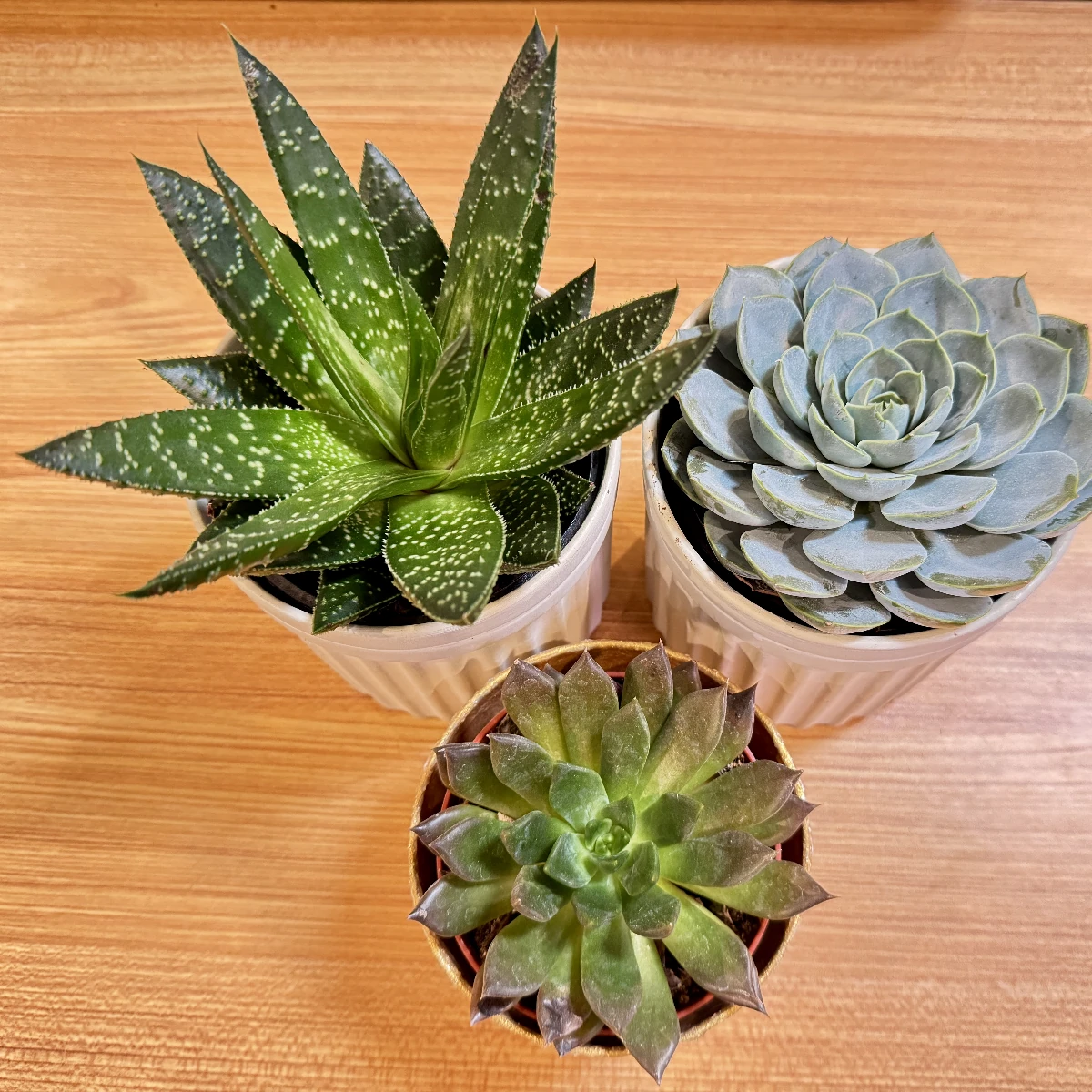
The classic rosette succulent available in hundreds of varieties from dusty blue to deep purple. Echeverias produce stunning symmetrical rosettes and can bloom with tall flower stalks in spring. They're the most popular genus for indoor collections and arrangements.
Develops best colors (stress coloring) with bright light and cool nighttime temperatures.
Haworthia
Also known as: Zebra Plant (H. fasciata)
Small, compact succulents with thick leaves often marked with white bands or translucent 'windows' at the tips. Haworthias stay small (2-5 inches) and are one of the few succulent genera that prefer indirect light, making them ideal for less sunny spots.
One of the best succulents for offices and north-facing windows.
Sempervivum
Also known as: Hens and Chicks, Houseleeks
Extremely cold-hardy rosette succulents that can survive temperatures well below freezing. They multiply rapidly by producing clusters of offsets ('chicks') around the mother plant ('hen'). The mother rosette dies after flowering (monocarpic) but leaves behind numerous offspring.
Hardy to -30°F; one of the few succulents that thrive outdoors year-round in cold climates.
Sedum
Also known as: Stonecrop
A huge genus with over 400 species ranging from ground-covering creepers to upright bushy plants. Sedums are incredibly tough, drought-tolerant, and often used in green roofs and rock gardens. Many species change color with the seasons, turning red or bronze in cool weather.
Trailing varieties like Sedum morganianum (Burro's Tail) are stunning in hanging baskets.
Crassula ovata
Also known as: Jade Plant, Money Plant
A tree-like succulent with thick, glossy oval leaves and woody stems that can grow several feet tall over decades. Jade plants are long-lived; some specimens are over 100 years old. They're considered symbols of good luck and prosperity in many cultures.
Can be shaped into bonsai forms with pruning. Develops a reddish leaf edge in bright light.
Seasonal Care Calendar
Spring
March – May
- Resume regular watering as growth accelerates
- Begin monthly fertilizing at quarter strength
- Repot any root-bound plants in fresh gritty mix
- Start leaf and stem cutting propagation
- Gradually increase light exposure for overwintered plants
Summer
June – August
- Water every 7-10 days when soil is fully dry
- Watch for sunburn if moving plants outdoors
- Check for mealybugs in leaf rosettes and stem joints
- Continue monthly fertilizing
- Ensure good air circulation to prevent fungal issues
Fall
September – November
- Reduce watering frequency as growth slows
- Give last fertilizer dose in early September
- Bring outdoor succulents inside before first frost
- Enjoy stress coloring as temperatures drop and days shorten
Winter
December – February
- Water sparingly; every 3-4 weeks at most
- Stop fertilizing completely
- Provide maximum available light (supplement with grow lights if needed)
- Keep away from cold drafts and heating vents
Troubleshooting
Stretching and etiolation
Why it happens: The most common succulent problem. When succulents don't get enough light, they grow tall and leggy, stretching toward the nearest light source. Leaves become widely spaced along an elongated stem, and the overall shape loses its compact rosette form. The new growth is often paler and weaker than normal.
What to do: Move to a brighter location; ideally a south-facing window or under grow lights for 12-14 hours daily. An etiolated succulent won't compact back to its original shape, but new growth will be normal. You can behead the plant (cut the top rosette off), let it callous for a few days, and replant it. The stump will often produce new compact offsets.
Learn more: Why Is My Plant Not Growing? → Ask the AI about this →Soft, mushy, or translucent leaves
Why it happens: Overwatering is the cause in nearly all cases. When succulent roots sit in wet soil for too long, they rot and can no longer absorb water properly. The leaves become swollen, translucent, and mushy as cells burst from excess water. Eventually the stem may turn black and soft as rot spreads upward.
What to do: Stop watering immediately and let the soil dry completely. Remove any mushy or translucent leaves. If the stem is still firm, the plant will likely recover. If the stem is soft or black, cut above the rot to a healthy section, let it callous for 3-5 days, and replant in completely dry soil. Switch to the soak-and-dry method going forward.
Learn more: Am I Overwatering My Plant? → Ask the AI about this →Leaves turning yellow
Why it happens: Yellow leaves on succulents usually indicate overwatering, though it can also signal nutrient deficiency in long-neglected plants. Overwatered yellow leaves feel soft and swollen, while nutrient-deficient yellow leaves feel firm but lack their normal color. Some lower leaf yellowing is normal as succulents reabsorb old leaves.
What to do: Check soil moisture; if wet, reduce watering frequency. If the soil has been dry and the plant hasn't been fertilized in over a year, try a diluted feeding. If only the very lowest leaves are yellowing, this is natural reabsorption and nothing to worry about. Remove any fully dried or dead leaves to keep the plant tidy.
Learn more: Why Are My Plant Leaves Turning Yellow? → Ask the AI about this →White cottony spots (mealybugs)
Why it happens: Mealybugs are the most common succulent pest. They appear as white, cottony clusters in leaf axils, under leaves, and along stems. They feed on plant sap, weakening the plant and producing sticky honeydew that can attract mold. They spread quickly between plants in close proximity.
What to do: Isolate the affected plant immediately. Dab individual mealybugs with a cotton swab dipped in 70% rubbing alcohol; this kills them on contact. For larger infestations, spray the entire plant with a mix of rubbing alcohol, water, and a drop of dish soap. Repeat every 5-7 days for 3-4 weeks to catch newly hatched bugs. Check nearby plants for signs of spread.
Ask the AI about this →Root rot
Why it happens: Root rot develops when succulents sit in wet soil for extended periods, especially in pots without drainage, soil that retains too much moisture, or cool conditions where evaporation is slow. The roots turn brown or black and mushy instead of white and firm. By the time above-ground symptoms appear (yellowing, mushiness), significant root damage has already occurred.
What to do: Unpot the plant and remove all soil. Cut away any brown, black, or mushy roots with sterile scissors. Let the plant sit bare-root in a dry, shaded spot for 2-3 days so cuts can callous. Repot in completely dry, gritty succulent mix and wait a full week before the first light watering. Going forward, use pots with drainage holes and a fast-draining soil mix.
Learn more: How to Treat Root Rot → Ask the AI about this →Leaf propagation problems
Why it happens: See our dedicated guide for detailed identification and treatment.
What to do: Read the full guide: How to Propagate Houseplants
Learn more: How to Propagate Houseplants → Ask the AI about this →Not sure what's wrong?
Premium includes AI photo diagnosis, then walks you through the fix and checks back in until it's better.
See Premium →Track your Succulents with PlantCareAI
Add your Succulents and get a watering schedule tuned to this week's weather. Free for up to 3 plants.
Add your Succulents