
ZZ Plant Care Guide
Zamioculcas zamiifolia
Also known as Zanzibar Gem, Eternity Plant
By Ellen Hermance · PlantCareAI Editorial
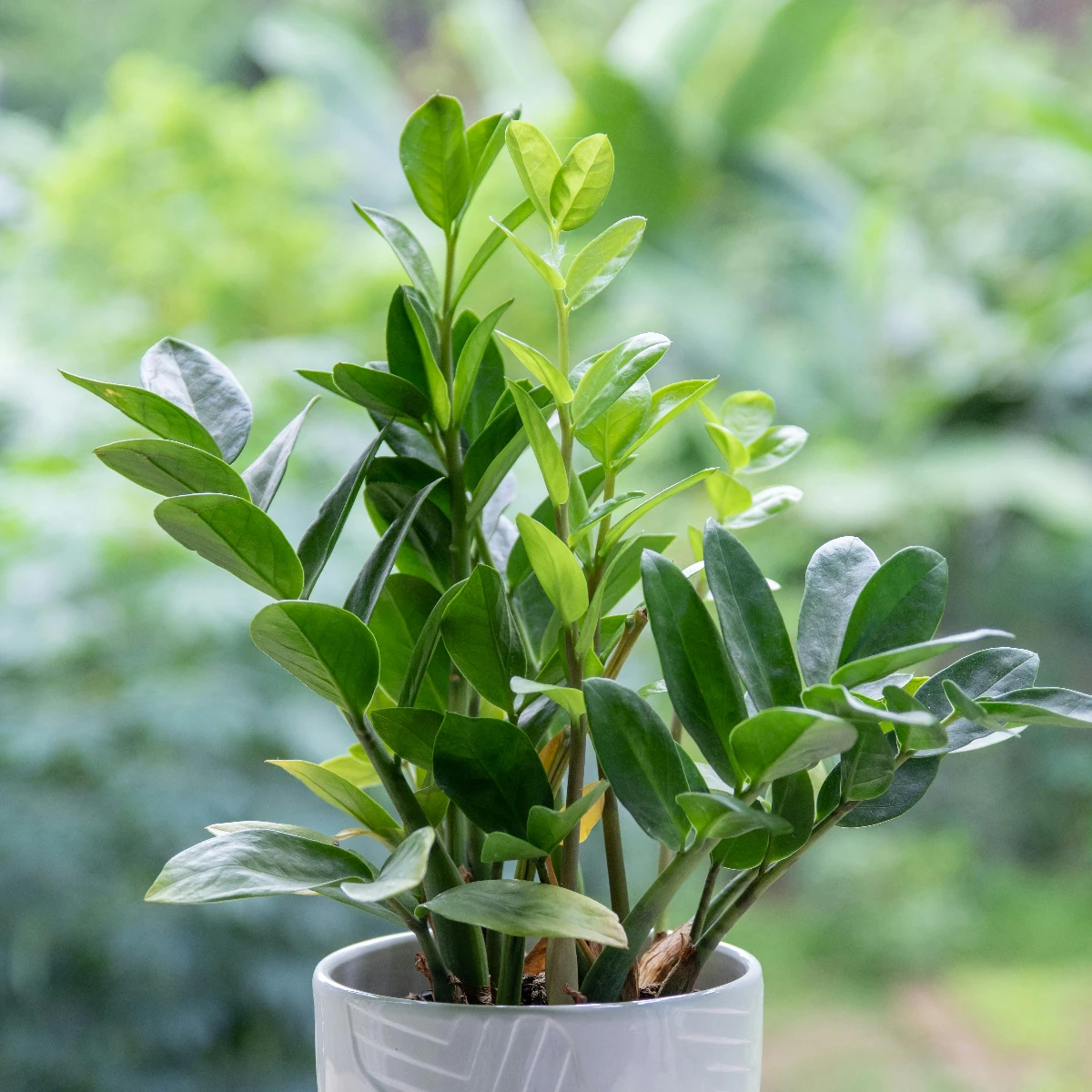
The ZZ Plant is virtually indestructible, with waxy, dark green leaves that stay glossy even through weeks of neglect. Native to eastern Africa, it stores water in thick underground rhizomes that allow it to survive drought conditions other houseplants couldn't handle. Perfect for forgetful waterers, dim offices, and anyone who wants a polished look with zero fuss.
Quick Care Reference
| Care Aspect | Requirement | Frequency |
|---|---|---|
| Watering | When soil completely dry | Every 2-3 weeks (summer), monthly (winter) |
| Light | Low to bright indirect | Adapts to any |
| Humidity | Low; no extra needed | No misting needed |
| Fertilizing | Diluted balanced fertilizer | 2-3 times per growing season |
| Repotting | When root-bound | Every 2-3 years |
Watering
ZZ Plants store water in their thick, potato-like rhizomes and fleshy stems, making them among the most drought-tolerant houseplants you can own. Water only when the soil is completely dry; push your finger all the way down. In summer, this is typically every 2-3 weeks; in winter, once a month or even less. Overwatering is the only reliable way to kill a ZZ Plant. When the soil stays wet, the rhizomes rot, and the damage is often fatal. When in doubt, skip the watering. Always use a pot with drainage holes and discard any standing water. Terra cotta pots are a good match because they wick excess moisture. When you do water, soak thoroughly and let it drain completely.
Light Requirements
ZZ Plants thrive in virtually any light condition from a dim, windowless office to a bright living room. They're one of the very few houseplants that can survive on fluorescent lighting alone, which is why they're so popular in commercial spaces. They'll grow faster in brighter conditions but remain healthy and attractive in low light for years. Avoid direct sunlight, which can scorch the waxy leaves and cause brown, bleached patches. The Raven ZZ (near-black variety) develops its deepest color in brighter light; in very low light, new growth stays green longer before darkening.
Humidity & Temperature
ZZ Plants actively prefer dry conditions and need no extra humidity whatsoever. No misting, no pebble trays, no grouping with other plants. They're perfectly content in air-conditioned offices, heated winter rooms, and dry climates; environments that stress most tropical houseplants. Keep temperatures between 60-85°F (15-29°C). While they look tropical, they're more tolerant of cool temperatures than you'd expect, handling brief dips to 50°F without complaint. However, prolonged cold below that or any frost will damage the rhizomes.
Fertilizing
Feed just 2-3 times total during the entire growing season (spring through summer) with a balanced liquid fertilizer diluted to half strength. ZZ Plants are extremely light feeders and grow slowly regardless of nutrition. Over-fertilizing does more harm than good; it can cause salt buildup and chemical burn to the rhizomes. Many ZZ Plant owners skip fertilizing entirely and their plants do just fine, especially if repotted every few years in fresh soil. If you see white salt deposits on the soil surface, flush with plain water.
Propagation
ZZ Plants can be propagated by stem cuttings, individual leaf cuttings, or rhizome division. Fair warning: ZZ propagation requires serious patience. Leaf and stem cuttings need months to form the underground rhizome that stores water and supports the plant. Division is faster but requires a mature plant with multiple stems.
Stem Cutting in Water
- Cut a healthy stem at the base of the plant.
- Place the cut end in a jar of water, submerging 2-3 inches of stem.
- Set in bright indirect light and change water weekly.
- Small rhizome nodules form at the base in 2-4 months.
- Pot in well-draining cactus mix once the rhizome is marble-sized. Water sparingly.
Leaf Cutting
- Gently pull or cut a healthy leaf from a stem, including the leaf base.
- Let the cut end callous for a few hours.
- Insert the base 1/2 inch into moist cactus/succulent mix.
- Keep in bright indirect light and water sparingly; the leaf stores enough moisture.
- A tiny rhizome and new shoot emerge in 3-9 months. This is the slowest but most scalable method.
Rhizome Division
- Remove the plant from its pot.
- Identify separate rhizome clusters with their attached stems.
- Use a clean knife to divide, ensuring each section has at least one rhizome and stem.
- Let cut surfaces dry for 24 hours.
- Pot each division in cactus mix and wait 1-2 weeks before watering.
Popular Varieties
ZZ Plant (Standard)
Also known as: Zanzibar Gem
The classic variety with glossy, deep green leaves arranged in neat herringbone patterns along upright stems. Can reach 2-3 feet tall indoors. New growth emerges as bright green and darkens with maturity.
The toughest variety; thrives even in near-darkness.
Raven ZZ
Also known as: ZZ Raven
A striking variety with leaves that emerge bright green and gradually turn near-black over several weeks. Creates a dramatic, almost gothic aesthetic. Same easy care as the standard ZZ but slightly slower growing.
Brighter light produces deeper black coloring. New leaves are always bright green initially.
Seasonal Care Calendar
Spring
March – May
- Resume watering every 2-3 weeks
- Apply first fertilizer dose
- Repot if rhizomes are pushing out of the pot
- Take stem or leaf cuttings for propagation
Summer
June – August
- Water every 2-3 weeks when completely dry
- Apply second fertilizer dose
- Watch for new stems emerging (exciting!)
- Wipe leaves to maintain shine
Fall
September – November
- Reduce watering to monthly
- Apply final fertilizer dose in early fall
- Move away from cold windows
- Check for mealybugs in leaf joints
Winter
December – February
- Water monthly or less; err on dry side
- No fertilizer needed
- Keep away from frost and cold drafts
- Wipe leaves to maximize light absorption
Troubleshooting
Yellow leaves
Why it happens: Almost always overwatering. ZZ Plants store so much water in their rhizomes that they rarely need watering, and sitting in wet soil quickly leads to rhizome rot. The first sign is yellowing leaves, starting with the lower or inner stems. Less commonly, yellowing can signal a root-bound plant or natural aging of the oldest stems.
What to do: Stop watering immediately and let the soil dry out completely. If the soil has been wet for days, consider repotting in dry cactus mix. Check the rhizomes; they should be firm and white/tan. If they're mushy or brown, trim off the rotten portions, let the cuts callous for a day, and repot. Going forward, water less frequently.
Learn more: Why Are My Plant Leaves Turning Yellow? → Ask the AI about this →Mushy stems at the base
Why it happens: Stems that go soft and mushy near the soil line indicate advanced rhizome rot from overwatering. By the time stems are visibly mushy, the underground rhizome has likely been rotting for weeks. This is the most serious ZZ Plant problem and can be fatal if not caught.
What to do: Act quickly. Remove the plant from its pot and cut away all mushy rhizomes and stems. If there are any firm, healthy rhizomes remaining, let them dry for 2-3 days, then repot in fresh, dry cactus mix. Don't water for 2 weeks. If all rhizomes are rotten, take healthy stem cuttings from the top portions and propagate in water as a last resort.
Learn more: How to Treat Root Rot → Ask the AI about this →Leaning or falling stems
Why it happens: ZZ stems that lean or fall outward can be normal; older, outer stems naturally arch as they mature and get heavy with leaves. However, if stems that were previously upright start to lean suddenly, it may indicate overwatering (weakened rhizomes) or a root-bound plant whose rhizomes are pushing stems sideways.
What to do: If the stems are firm and healthy, leaning is cosmetic. Rotate the pot so stems lean toward light. For top-heavy stems, you can stake them temporarily. If stems feel soft at the base, check for rot. If the plant is crowded, repot to a slightly larger container or divide the rhizomes.
Ask the AI about this →Very slow or no new growth
Why it happens: ZZ Plants are naturally among the slowest-growing houseplants. They may only produce 1-3 new stems per year, and these emerge in unpredictable bursts rather than continuous growth. No growth at all can mean the plant is dormant (winter), in too little light, or has damaged rhizomes limiting energy production.
What to do: If the plant looks healthy with firm, glossy leaves, slow growth is perfectly normal; just be patient. For truly stalled plants, try moving to a brighter spot and ensuring the rhizomes are healthy. New stems emerge as tightly coiled shoots that unfurl over days, so check the soil line for emerging growth.
Learn more: Why Is My Plant Not Growing? → Ask the AI about this →Not sure what's wrong?
Premium includes AI photo diagnosis, then walks you through the fix and checks back in until it's better.
See Premium →Track your ZZ Plant with PlantCareAI
Add your ZZ Plant and get a watering schedule tuned to this week's weather. Free for up to 3 plants.
Add your ZZ Plant