
Best Plants for Your Home Office: Low Maintenance, Low Distraction
By Ellen Hermance · PlantCareAI Editorial
Home offices often have specific challenges: inconsistent natural light depending on which way the room faces, long periods without attention, and a need for plants that look professional rather than chaotic. The best home office plants are compact or neatly structured, low-maintenance, and capable of thriving on a weekly care routine. Here are the top picks.
Quick Answer: The best home office plants are the ZZ plant, snake plant, and pothos: all three tolerate low light, go two or three weeks between waterings, and stay tidy on a desk. If your office has a window, a peace lily adds flowers and tells you clearly when it is thirsty, and a few succulents on the sill ask for almost nothing. Choose by the room's real light level and by how many days at a time you are away, not by the size of the desk.
Best Plants for a Home Office
-
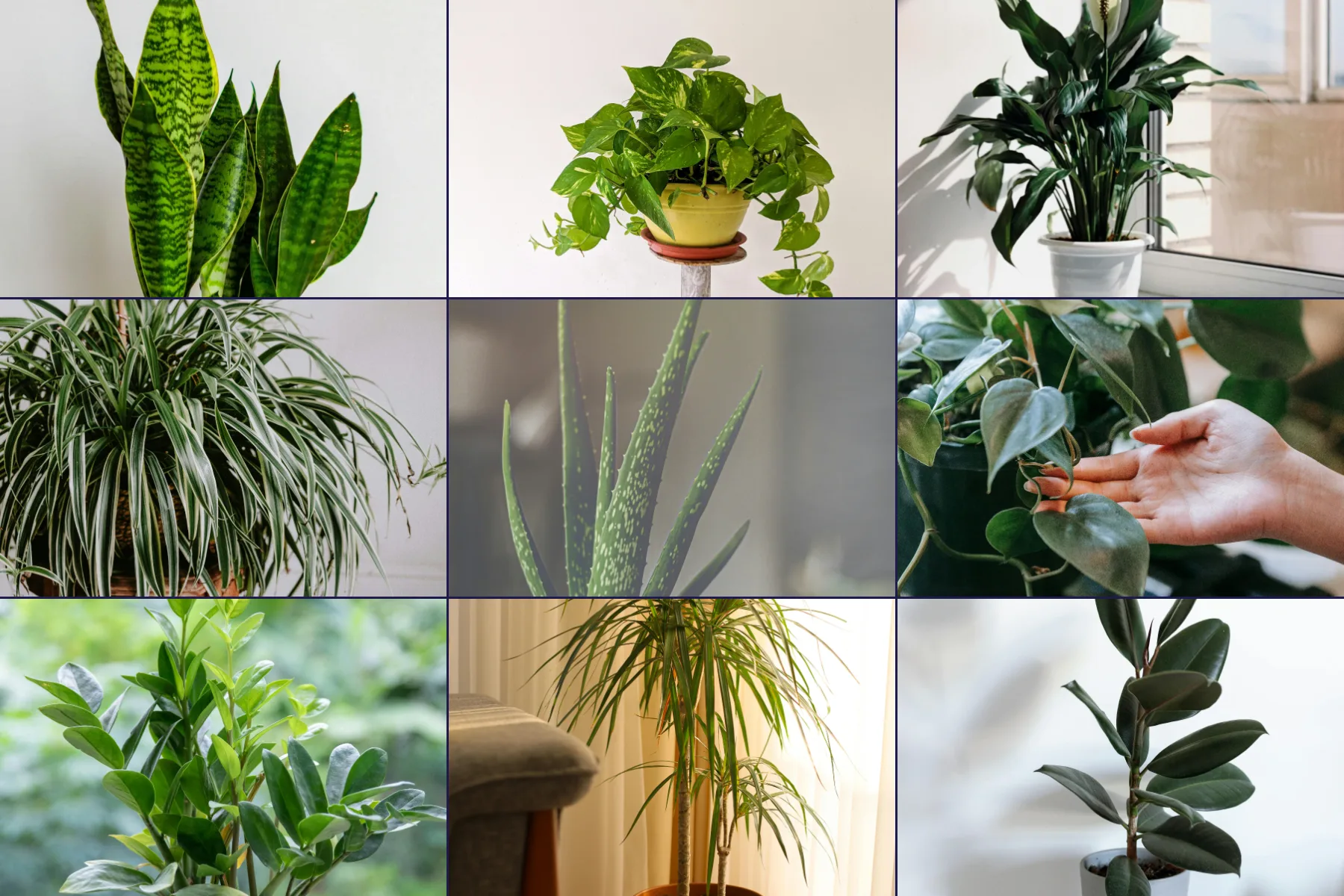
ZZ Plant (Zamioculcas zamiifolia)
The ZZ plant is the ideal desk plant for busy people. It stores water in its thick rhizomes and tolerates neglect, low light, and inconsistent watering with virtually no complaint. Its glossy, dark green leaves look professionally tidy and it rarely drops leaves or shows stress visibly.
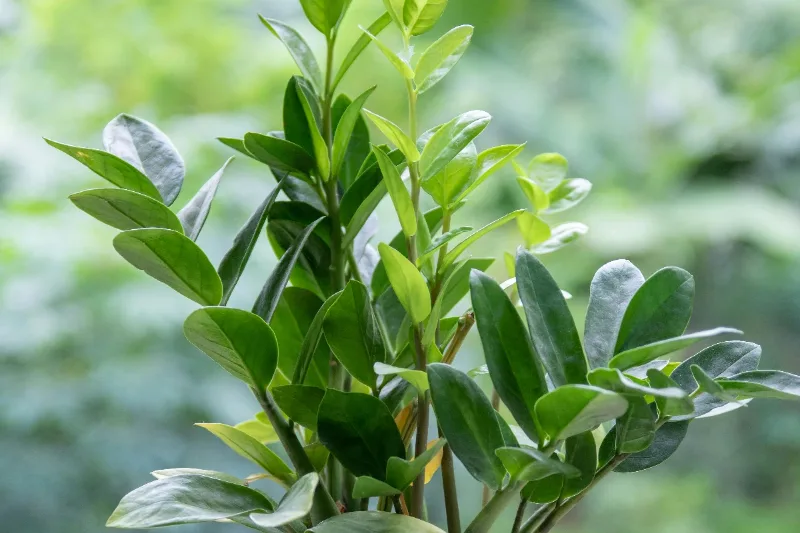
The ZZ plant thrives on neglect and looks polished year-round. Photo: Thanh Do on Pexels How to grow it: Water only when the soil is completely dry, typically every 2-4 weeks. Place in any light from low to bright indirect. Wipe leaves occasionally with a damp cloth to keep them shiny.
-
Snake Plant (Sansevieria)
Snake plants are architectural and unfussy, two qualities ideal for a work environment. Their upright, structured form takes up little horizontal space, making them suitable for desk corners, shelves, or a spot on the floor beside a bookcase. They tolerate the variable light of a home office window without fuss.
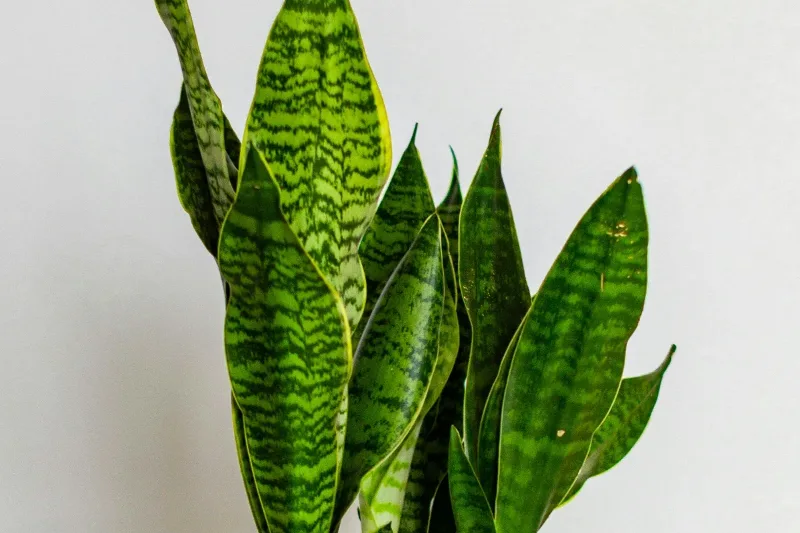
Snake plants grow upright, saving desk footprint. Photo: Jardin De Neko on Pexels How to grow it: Water every 2-4 weeks in spring/summer, every 4-6 weeks in winter. The most common mistake is overwatering; if in doubt, wait another week.
-
Pothos
A trailing pothos on a high shelf creates a lush, green backdrop for video calls without requiring much attention. It grows quickly in most light conditions and signals clearly when it needs water by showing slightly drooping leaves. Trim long vines to keep it tidy on camera.
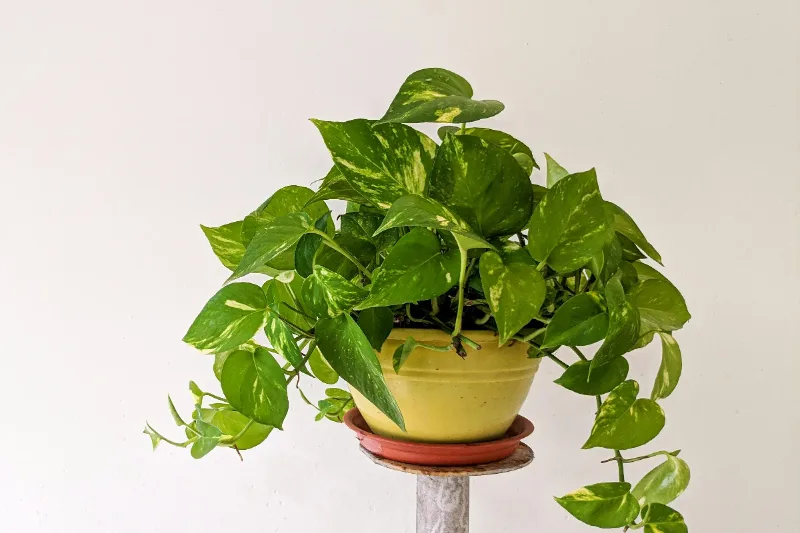
Pothos adds a lush feel without requiring attention. Photo: Nithin Nath on Pexels How to grow it: Water when the top 2 inches of soil feel dry. Trim vines to the length you want and place trimmings in water to propagate new plants. Golden pothos is the most tolerant of office lighting conditions.
-
Peace Lily
Peace lilies are one of the few flowering plants that thrive in the medium-low light common to home offices. The white flowers add a clean, calming visual element. It is one of the species from NASA's clean air study, though that testing was done in sealed chambers and the effect does not carry over to an ordinary room. It wilts visibly when dry, giving a clear watering cue.
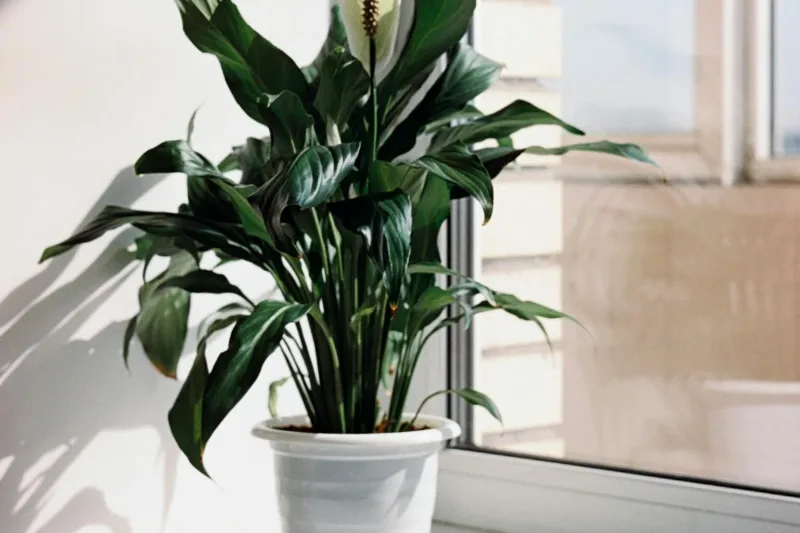
Peace lilies tolerate low light and signal thirst by drooping slightly. Photo: Elena Golovchenko on Pexels How to grow it: Water when leaves just begin to droop or when the top 2 inches of soil are dry. Keep out of direct sun. Peace lilies are mildly toxic to cats and dogs if chewed, which is worth knowing if a pet keeps you company while you work.
-
Small Succulents and Cacti
A small collection of succulents on a windowsill is nearly zero-maintenance and adds a tidy, organized visual element to a desk area. They need little space, virtually no watering in winter, and will survive a two-week work trip without a plant sitter.
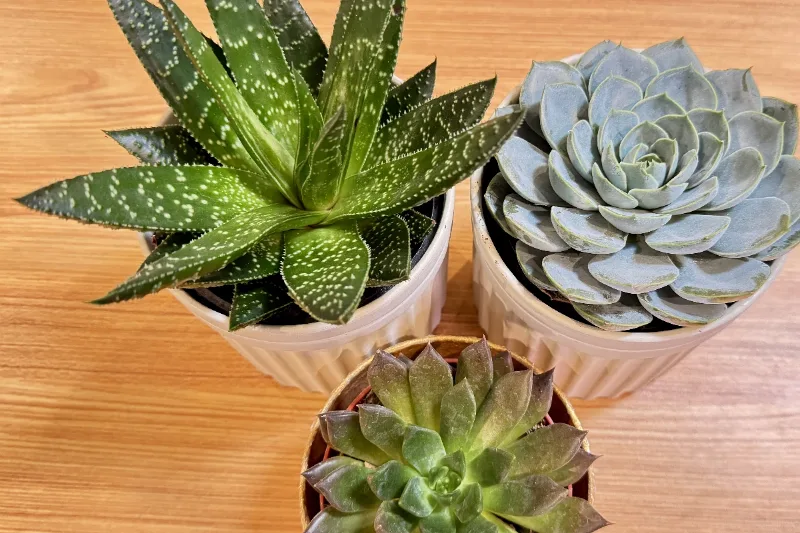
A row of succulents adds color and needs water only every few weeks. Photo: Ellen Hermance How to grow it: Place on the sunniest windowsill available. Water only when soil is completely dry; for most small succulents, this means every 2-3 weeks in summer and once a month or less in winter. Use a fast-draining cactus mix.
-
Rubber Plant (Ficus elastica)
A rubber plant in the corner of a home office adds a bold, modern look. Its large, glossy dark green or burgundy leaves are visually striking without being distracting, and it grows slowly enough to stay in proportion with a room for years. It prefers bright indirect light but tolerates medium light.
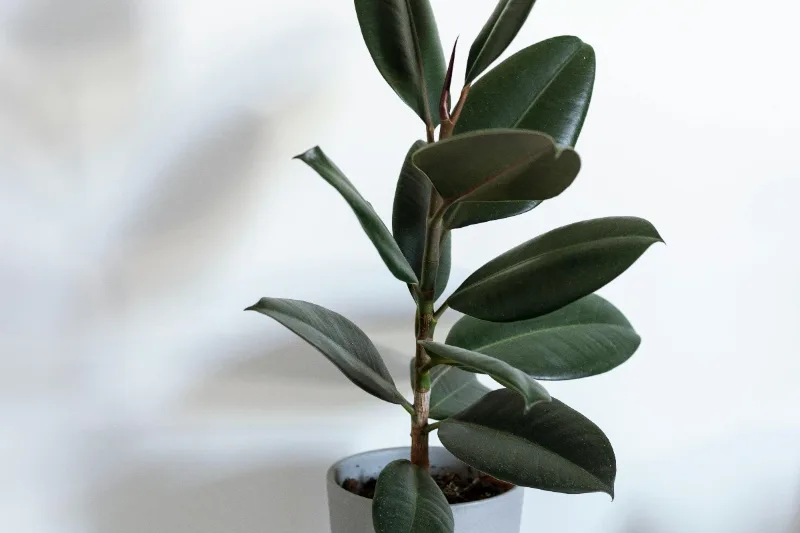
A rubber plant makes a bold statement with minimal upkeep. Photo: Justyna Grochowska on Pexels How to grow it: Water when the top 2 inches of soil feel dry. Avoid moving frequently once it has found a good spot; it dislikes sudden changes. Wipe large leaves regularly with a damp cloth.
Home office plants compared
Pet safety follows the ASPCA toxicity listings, which carries more weight when you work from home and a cat or dog is in the room all day.
| Plant | Minimum light | How often to water | Pet-safe? |
|---|---|---|---|
| ZZ plant | Low light | Every 2 to 4 weeks | ❌ Toxic |
| Snake plant | Low light | Every 2 to 4 weeks | ❌ Toxic |
| Pothos | Low light | When 2 inches are dry | ❌ Toxic |
| Peace lily | Medium to low | When the leaves droop slightly | ❌ Toxic |
| Succulents | Direct sun | Every 2 to 3 weeks | ⚠️ Varies by species |
| Rubber plant | Bright indirect | When 2 inches are dry | ❌ Toxic |
Frequently Asked Questions
- Which plant survives an office with no window?
- The ZZ plant and the snake plant hold out longest, but it is worth being straight about this: nothing lives on zero light. A windowless room needs the overhead light on through your working day, or better, a desk lamp with a grow bulb for a few hours. With that, both last for years. With nothing, either one fades over a few months.
- What is the lowest-maintenance office plant?
- The ZZ plant. It stores water in thick rhizomes under the soil, so it wants watering every 2 to 4 weeks and does not mind if you run late. It needs no humidity, drops nothing on the desk, and looks the same when you get back from a trip. If you want one plant and no ongoing thought, that is the one.
- Do office plants actually help you focus?
- Studies on plants in workspaces report real but modest effects on perceived stress and sustained attention. What does not hold up is the claim that they clean the air of a room: the NASA study behind that idea used sealed chambers, and reproducing it in an ordinary office would take dozens of plants per person. Keep them because you would rather work near them.
- Which plant looks good on video calls?
- A pothos or philodendron on a high shelf slightly to one side of the camera reads best: greenery without blocking you. Avoid putting the plant directly behind your head, where on camera it appears to sprout from your skull, and avoid backing it onto a bright window, which throws your face into shadow.
- What do I do with my plants when I travel for work?
- For trips up to three weeks, the ZZ plant, snake plant, and succulents need nothing: water thoroughly the day before you go and move them slightly further from the window so they use less. Pothos and peace lily manage one to two weeks. If you travel often, that difference alone should decide which plants live in the office.
- Can I keep plants if my office has air conditioning?
- Yes, as long as none of them sits in the direct airflow. The problem is not the cold but the drying: you will see brown tips first on the peace lily and the pothos, which are the most sensitive here, and winter heating does the same thing. Move the pot a foot and a half out of the draft and it stops. The ZZ plant, snake plant, and succulents never notice.
The Bottom Line on Home Office Plants
A home office plant should be low-maintenance enough to ignore during busy stretches and resilient enough to recover if you forget it for a week. The ZZ plant, snake plant, and pothos all fit that profile. If you have a bright window, a compact citrus tree or herb pot adds utility to your workspace. Pick one and start there.
Get Personalized Plant Care Advice
PlantCareAI uses your location and local weather to give you advice tailored to your exact situation. No signup required to try.
Try the AI Plant Doctor