
Best Trailing Houseplants for Shelves, Hanging Baskets, and Ledges
By Ellen Hermance · PlantCareAI Editorial
Trailing plants add a layer of movement and depth that upright plants simply cannot match. A single cascading pothos or string of pearls on a high shelf transforms the feel of a room without occupying any floor space. Here are the best trailing houseplants organized by care difficulty, plus what makes each one worth growing.
Quick Answer: The best trailing houseplants to start with are pothos and heartleaf philodendron: both tolerate low light and irregular watering. Tradescantia is the pick if you want fast growth and color, and string of hearts, string of pearls, and burro's tail are worth it if you have bright indirect light and can water sparingly. Choose by the light that reaches the spot you are hanging it in. Most trailing plants that fail do so from too little light at the top of a shelf or from overwatering, not from the pot.
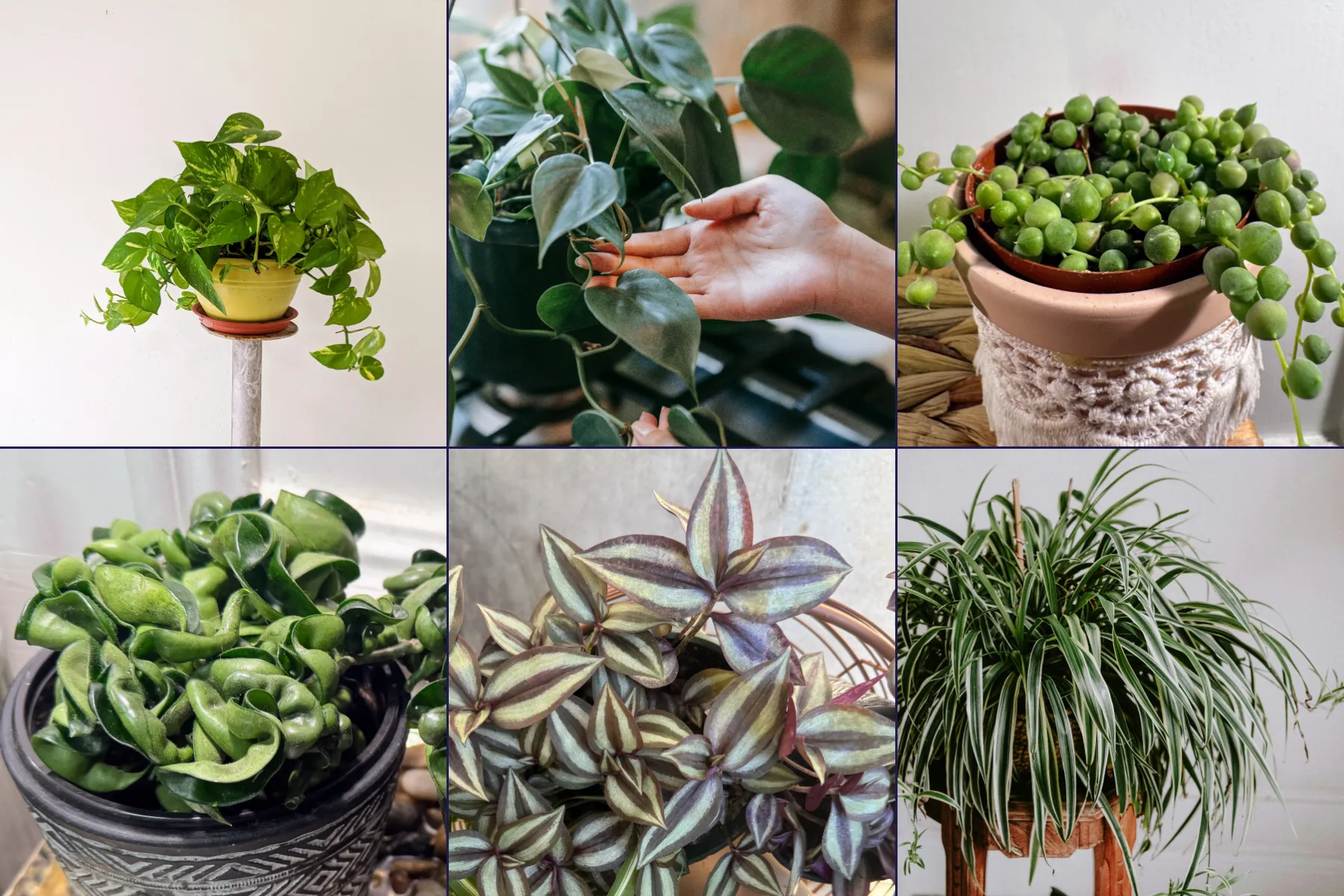
Best Trailing and Hanging Houseplants
-
Pothos (Epipremnum aureum)
Pothos is the undisputed champion of trailing houseplants for beginners. It tolerates low light, irregular watering, and a wide range of temperatures. Long vines can reach 10 feet or more and look stunning trailing from a high shelf. The golden variety is the most forgiving; marble queen and neon varieties need slightly more light to keep their variegation.
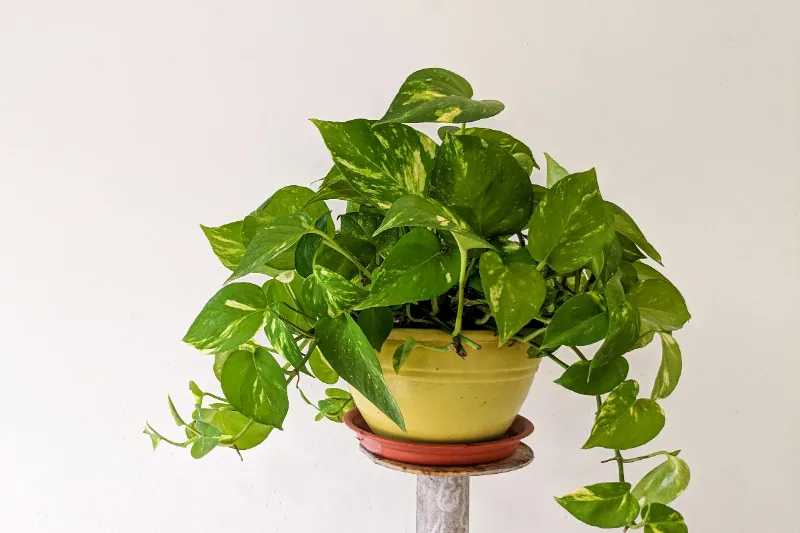
Pothos is the most forgiving trailing plant for any light level. Photo: Nithin Nath on Pexels How to grow it: Place in any light from low to bright indirect. Water when the top 2 inches of soil feel dry. Trim long vines occasionally to encourage bushier growth lower down.
-
String of Pearls (Senecio rowleyanus)
String of pearls is one of the most distinctive trailing succulents, with round bead-like leaves strung along delicate stems. It prefers bright indirect to some direct morning light and very infrequent watering. Overwatering is the most common reason they fail; the pearl-shaped leaves store water and rot quickly in soggy soil.
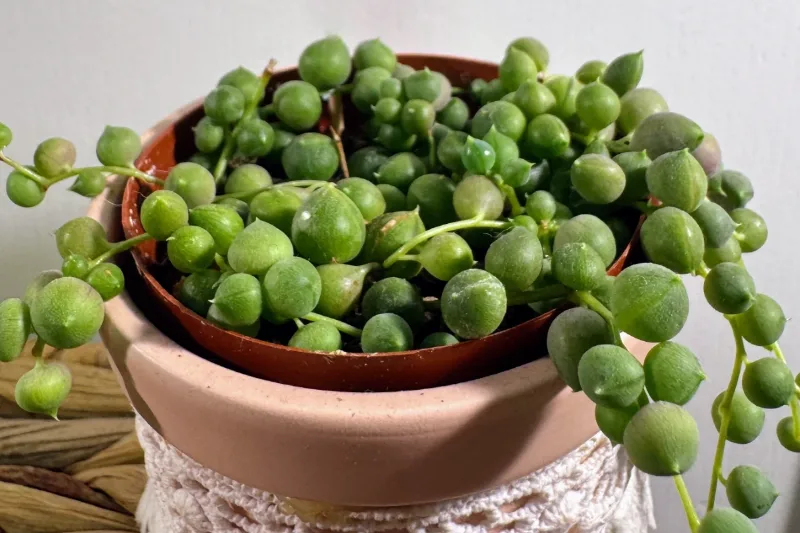
String of pearls thrives in bright light with careful watering. Photo: Ellen Hermance How to grow it: Place in bright indirect light. Water only when the soil is completely dry, typically every 2-3 weeks in summer and once a month or less in winter. Use a fast-draining cactus or succulent mix.
-
String of Hearts (Ceropegia woodii)
String of hearts produces delicate heart-shaped leaves on long, thread-like vines. It is easier to grow than string of pearls and tolerates slightly lower light. The leaves are deep green with silver marbling on top and purple underneath. It grows relatively quickly and can trail 3-4 feet.
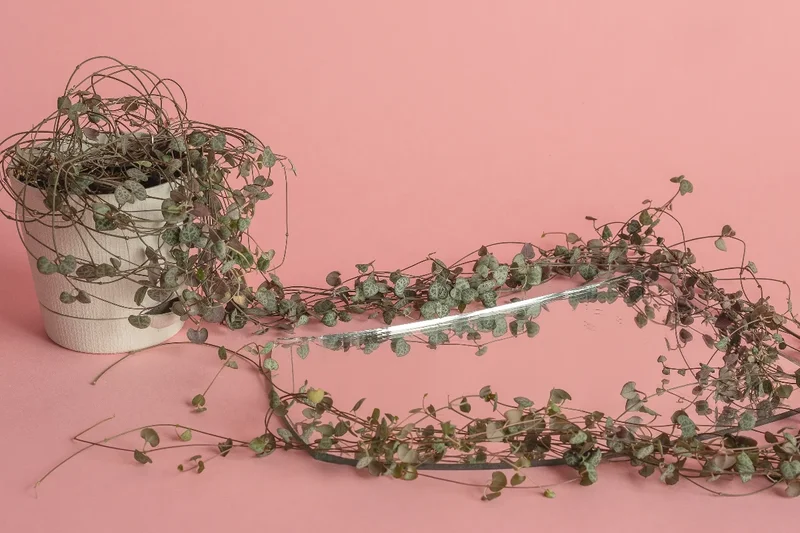
String of Hearts trails elegantly but needs careful watering to avoid rot. Photo: Marina Leonova on Pexels How to grow it: Provide bright indirect light for best color and fastest growth. Water when the top inch of soil is dry. Repot infrequently; it blooms and grows better when slightly pot-bound.
-
Heartleaf Philodendron (Philodendron hederaceum)
The heartleaf philodendron is as easy as pothos but with a more refined, velvet-textured leaf. It grows quickly, cascades beautifully from shelves and hanging planters, and tolerates medium to low light. Unlike some philodendrons, it rarely has pest problems and is nearly impossible to kill with neglect.
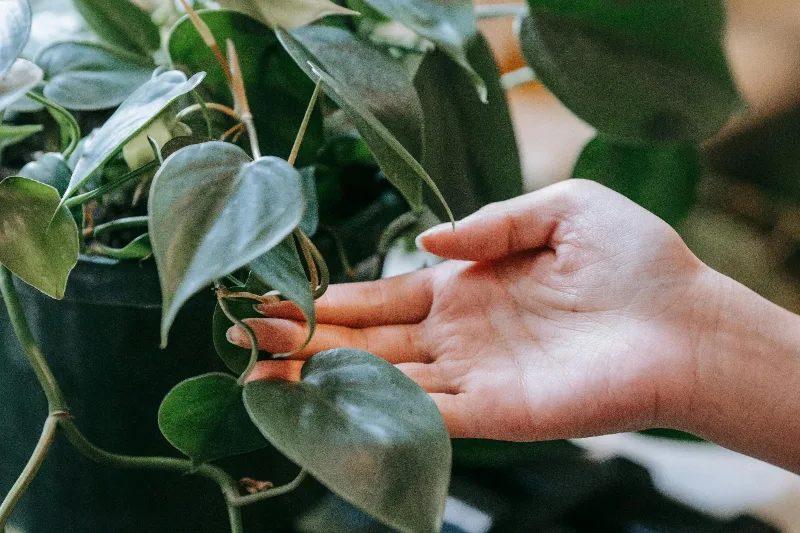
Heartleaf philodendron grows quickly and handles indirect light well. Photo: Sasha Kim on Pexels How to grow it: Grow in medium to bright indirect light. Water when the top 2 inches of soil are dry. Wipe leaves occasionally to keep them glossy and improve light absorption.
-
Tradescantia (Tradescantia zebrina)
Tradescantia (also called spiderwort or inch plant) is a fast-growing trailing plant with striking purple and silver striped leaves. It thrives in bright indirect light and grows so quickly that you can propagate it by snipping stems and placing them in water. The boldly colored foliage makes it a standout in any collection.
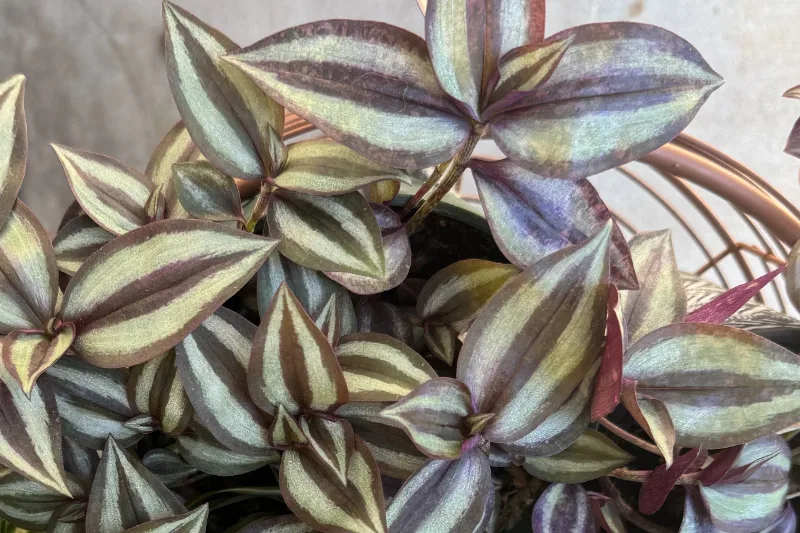
Tradescantia grows fast and produces striking purple foliage. Photo: Ellen Hermance How to grow it: Place in bright indirect light; the color fades noticeably in low light. Water when the top inch of soil feels dry. Pinch back leggy stems to keep growth compact and colorful.
-
Burro's Tail (Sedum morganianum)
Burro's tail is a trailing succulent with plump, blue-green teardrop leaves that overlap along thick drooping stems. It is striking in a hanging planter where the long tails (up to 4 feet over several years) can hang freely. It is best grown in a spot where it will not be brushed against, as the leaves detach easily.
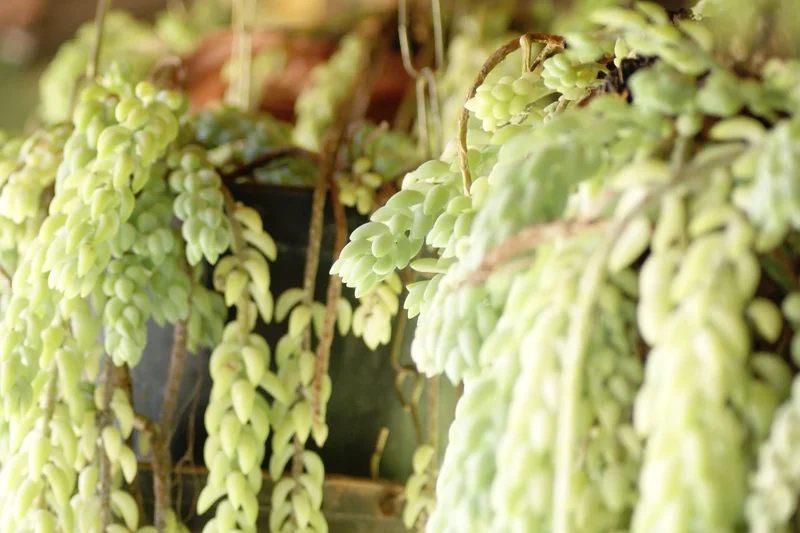
Burro's Tail looks stunning in a hanging pot but drops leaves easily when touched. Photo: Rodrigo Chaves on Pexels How to grow it: Needs bright indirect light with some direct morning sun. Water sparingly, only when the soil is completely dry. Avoid moving frequently once established, as jostling causes leaf drop.
Trailing houseplants compared
Pet safety follows the ASPCA toxicity listings, which is worth checking in this category: a dangling vine is exactly what a cat goes after.
| Plant | Light it needs | How often to water | Pet-safe? |
|---|---|---|---|
| Pothos | Low to bright indirect | When 2 inches are dry | ❌ Toxic |
| Heartleaf philodendron | Medium to bright indirect | When 2 inches are dry | ❌ Toxic |
| Tradescantia | Bright indirect | When the top inch is dry | ❌ Toxic |
| String of hearts | Bright indirect | Every 2 weeks | ✅ Safe |
| String of pearls | Bright indirect with some sun | Every 2 to 3 weeks | ❌ Toxic |
| Burro's tail | Bright indirect with morning sun | Every 2 to 3 weeks | ✅ Safe |
Frequently Asked Questions
- Which trailing houseplant is the easiest?
- Pothos, without much competition. It handles anything from low light to bright indirect, forgives a missed watering, and tells you clearly when it is thirsty. If it is your first trailing plant and you are not sure what light the spot gets, start there and use how it does to pick the next one.
- Why is my trailing plant bare at the top?
- Because there is not enough light near the pot. The vines grow toward the light and leave the crown behind, so you end up with bare stem at the top and leaves only at the ends. Cut the longest vines just below a node and plant those cuttings back into the same pot: they fill the top in within a few weeks. Moving the plant somewhere brighter stops it happening again.
- How often should I water a hanging plant?
- More often than you would expect. A hanging pot gets airflow on every side and warm air collects near the ceiling, so the soil dries faster than it would on the floor. Check with a finger rather than a calendar, and take the pot down to water it: watering in place usually leaves the top wet and the bottom of the root ball dry.
- Which trailing plants are safe for cats and dogs?
- From this list, string of hearts and burro's tail are non-toxic per the ASPCA. Pothos, philodendron, tradescantia, and string of pearls are toxic if eaten. This matters more with trailing plants than with others: hanging vines move, and to a cat that is an invitation. Hanging them high helps less than people think.
- How long until a trailing plant looks long?
- A pothos or philodendron in good light adds roughly 12 to 18 inches a year, so a proper cascade takes about two seasons. Tradescantia is the fastest on this list and can manage it in one. String of pearls and burro's tail are considerably slower, which is part of why they are sold already grown and cost more.
- Can I propagate the cuttings I trim off?
- Yes, and it is the best reason to prune. Pothos, philodendron, and tradescantia root in a glass of water in one to two weeks: cut a piece with two or three nodes and submerge the nodes, not the leaves. String of pearls and burro's tail prefer to root straight into cactus mix, laid on the surface and barely watered.
The Bottom Line on Trailing Plants
Trailing plants are one of the fastest ways to make a space feel lush. Pothos and heartleaf philodendron are the most forgiving starting points, string of pearls and string of hearts reward attentive care, and tradescantia fills in quickly with almost no effort. Choose based on your light level first, aesthetics second.
Get Personalized Plant Care Advice
PlantCareAI uses your location and local weather to give you advice tailored to your exact situation. No signup required to try.
Try the AI Plant Doctor