
Large Indoor Plants That Make a Statement in Any Room
By Ellen Hermance · PlantCareAI Editorial
Large houseplants do something small ones cannot: they change the scale and feel of a room entirely. A single well-placed fiddle-leaf fig or bird of paradise creates the kind of visual impact that no collection of smaller plants can match. The key is choosing a species suited to your light conditions and committing to consistent care; large plants in decline are harder to recover than small ones.
Quick Answer: The best large indoor plants are monstera deliciosa and bird of paradise if you have bright indirect light, and dracaena or kentia palm if the room is darker. The fiddle-leaf fig is only worth it if you can give it a lot of light and leave it in one place. Measure your ceiling clearance before buying: most reach 6 to 10 feet indoors, and a plant that hits the ceiling stops looking good. Since they are sold already grown, the real decision is how much light reaches the corner it will live in.
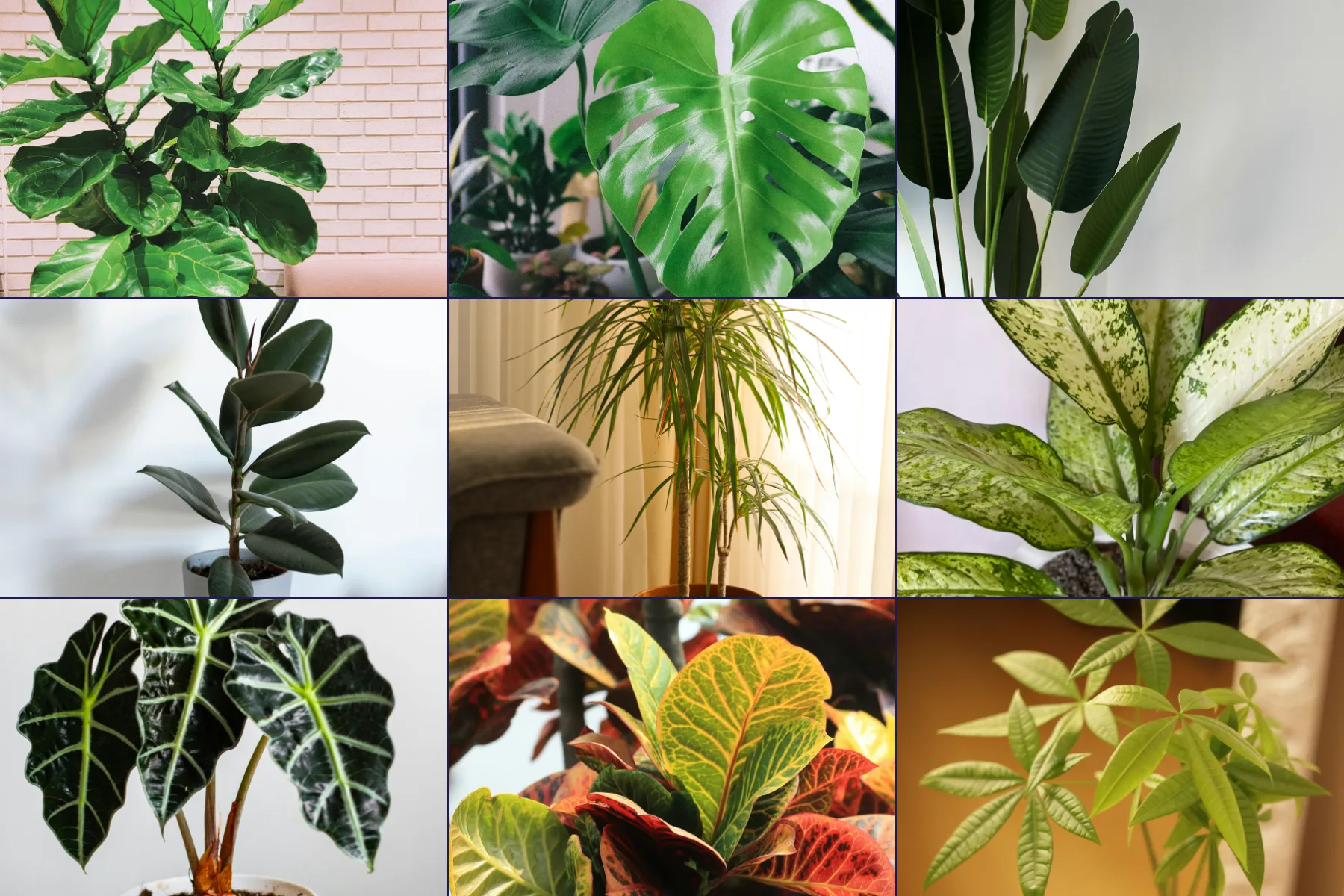
Best Large Indoor Plants
-
Fiddle-Leaf Fig (Ficus lyrata)
The fiddle-leaf fig is one of the most sought-after large indoor plants, with large, violin-shaped leaves that can reach 18 inches long on a plant that grows 6 feet tall or more indoors. It is also among the most demanding; it needs bright indirect light, consistent watering, and dislikes being moved once settled.
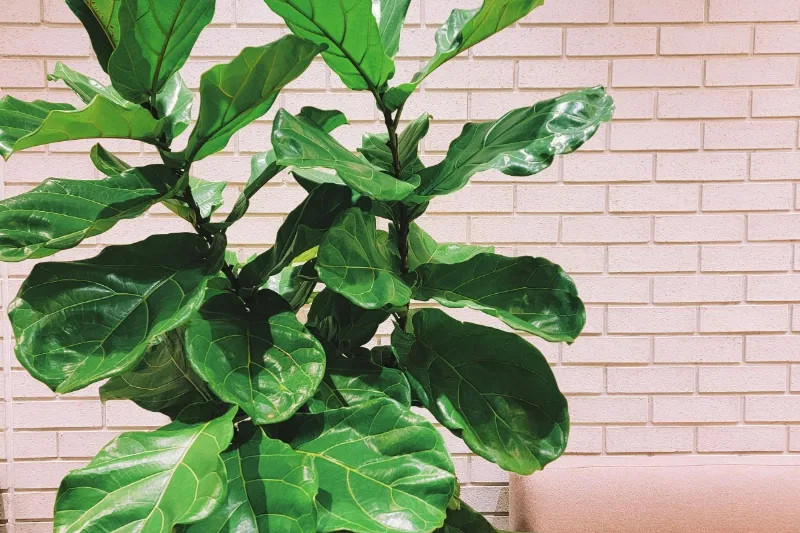
The fiddle-leaf fig is the most striking indoor tree when its needs are met. Photo: Em Hopper on Pexels How to grow it: Place in your brightest spot away from direct harsh sun. Water when the top 2 inches of soil are dry; never let it sit in water. Once you find a spot it likes, do not move it. Dust the large leaves regularly.
-
Bird of Paradise (Strelitzia reginae)
The bird of paradise is an ideal large plant for bright rooms. It grows slowly to 4-6 feet indoors, needs little pruning, and is far more forgiving than the fiddle-leaf fig. In very bright conditions it eventually flowers, producing large orange and blue blooms that resemble a tropical bird. Split leaves are normal and occur with age and air movement.
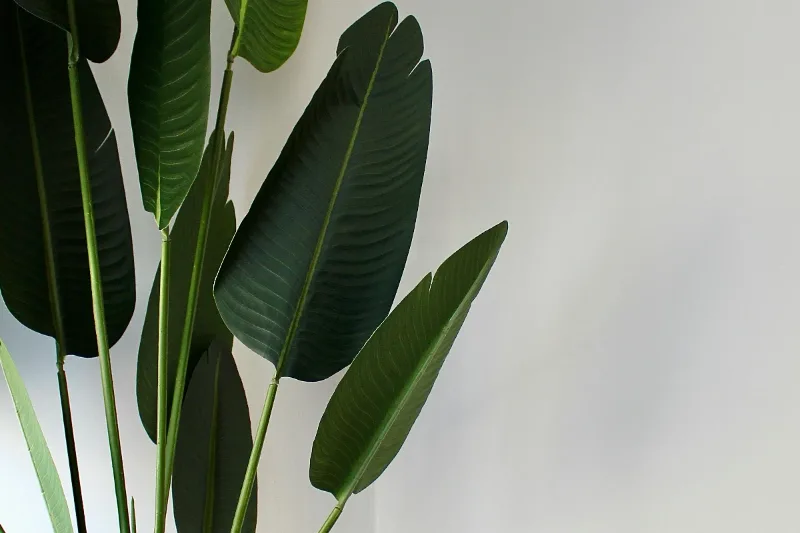
Bird of paradise grows dramatically tall in a bright sunny spot. Photo: Natalie Dupin on Pexels How to grow it: Provide the brightest indirect light possible; a south or west-facing window is ideal. Water thoroughly and allow the top 2 inches to dry between waterings. Fertilize monthly in spring and summer for fastest growth.
-
Monstera deliciosa
Monstera is among the most dramatic large-leaf plants available and one of the easiest to grow. It adapts to lower light than most large plants (though it grows faster and produces more fenestrated leaves in bright indirect light), and its care is forgiving of minor neglect. Older plants can spread to 6 feet wide with leaves reaching 2 feet across.
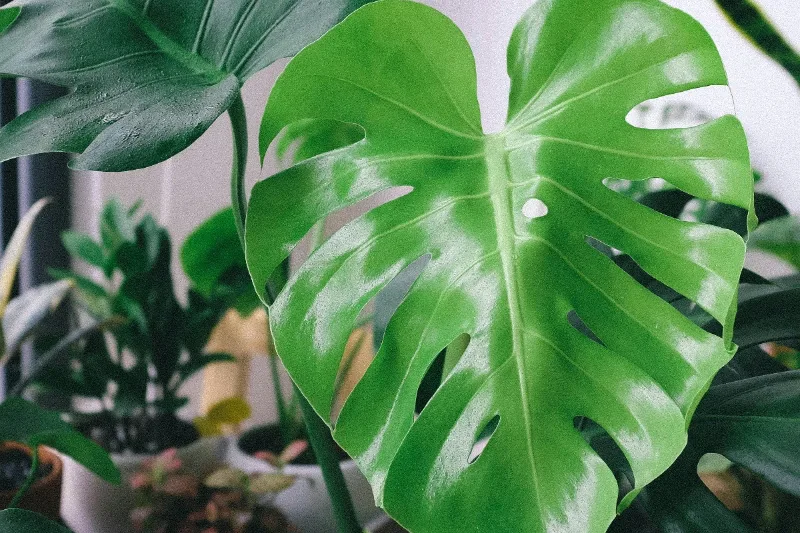
Monstera grows into an impressive specimen in bright indirect light. Photo: Huy Phan on Pexels How to grow it: Provide bright indirect light for best results. Install a large moss pole to support climbing and encourage larger leaves. Water when the top 2-3 inches of soil are dry. Fertilize monthly during the growing season.
-
Dracaena
Dracaenas are among the most low-maintenance large indoor plants. They grow slowly, tolerate low to medium light, and need little water compared to most other large tropical plants. The corn plant variety (Dracaena fragrans) has wide, arching leaves with yellow edges and can reach 6 feet tall indoors.
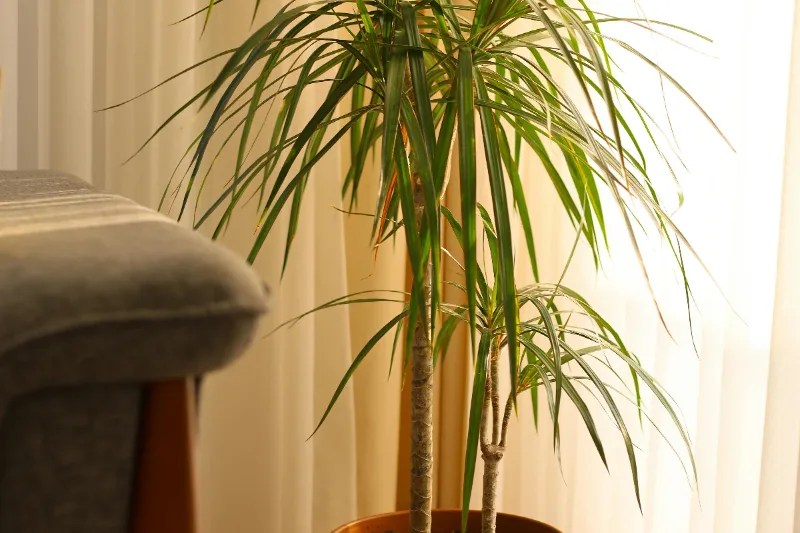
Dracaena reaches ceiling height and tolerates low light. Photo: Beyzanur on Pexels How to grow it: Water when the top half of the soil is dry, roughly every 2-3 weeks. Use filtered or distilled water, as dracaenas are sensitive to fluoride in tap water. Remove lower leaves as they yellow naturally with age.
-
Rubber Plant (Ficus elastica)
The rubber plant grows slowly to a bold, upright 6-10 feet indoors over several years. Its large, glossy dark green or burgundy leaves make it one of the most architecturally striking houseplants. It is more tolerant of lower light than the fiddle-leaf fig and far easier to care for.
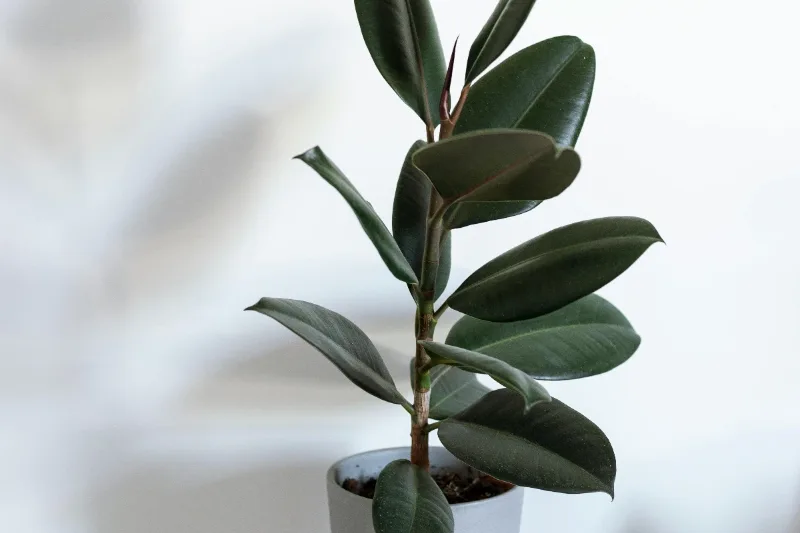
Rubber plants grow tall with minimal fuss and bold foliage. Photo: Justyna Grochowska on Pexels How to grow it: Water when the top 2 inches of soil are dry. Wipe large leaves monthly to keep them glossy and photosynthetically efficient. Stake if needed for the first year until the trunk thickens. Avoid cold drafts.
-
Kentia Palm (Howea forsteriana)
The Kentia palm is one of the most elegant large houseplants and one of the most tolerant of low light among palms. It grows slowly but eventually reaches 10 feet indoors, with graceful arching fronds. It is suited to large rooms, hotel lobbies, and bright hallways.
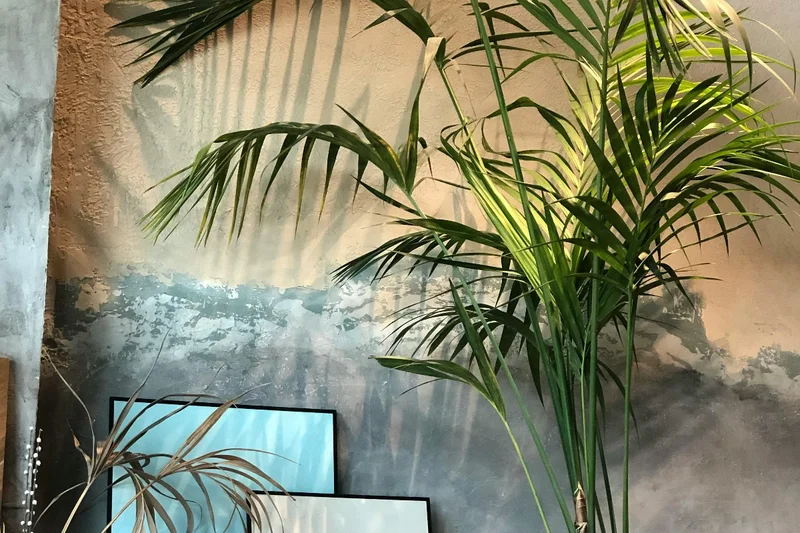
The Kentia Palm tolerates low light and dry air better than most large palms. Photo: Sude Akpınar on Pexels How to grow it: Place in bright indirect light for best growth, but tolerates medium light. Water when the top 2 inches of soil are dry. Do not repot more often than needed; Kentia palms prefer being slightly pot-bound. Use filtered water to avoid tip browning.
Large indoor plants compared
Heights are what these reach inside a house, not in their native range. Pet safety follows the ASPCA toxicity listings.
| Plant | Height indoors | Minimum light | Pet-safe? |
|---|---|---|---|
| Fiddle-leaf fig | 6 to 10 feet | Very bright indirect | ❌ Toxic |
| Bird of paradise | 4 to 6 feet | Bright indirect | ❌ Toxic |
| Monstera deliciosa | 6 feet tall and wide | Medium indirect | ❌ Toxic |
| Dracaena | 6 to 10 feet | Low to medium | ❌ Toxic |
| Rubber plant | 6 to 10 feet | Bright indirect | ❌ Toxic |
| Kentia palm | Up to 10 feet | Medium | ✅ Safe |
Frequently Asked Questions
- Which large indoor plant handles low light?
- The kentia palm and the dracaena are the best of this list for a corner with medium or poor light, and a cast iron plant tolerates even less though it never gets as tall. All three grow more slowly in those conditions, which is the upside: they stay close to the size you bought for years rather than taking over the room.
- How long does it take to grow a large plant from a small one?
- Years, which is why almost nobody does it. A fiddle-leaf fig from a small nursery plant takes three to five years to reach five feet, and a kentia palm considerably longer. The large plants you see in stores were grown in greenhouses under conditions a house cannot reproduce. Buying one already grown is the norm, and it is what you are paying for.
- How do I water a large plant without making a mess?
- Water until it runs out of the drainage holes, then empty the saucer after 20 minutes, because a big pot sitting in water rots roots faster than it dries. If moving it is not realistic, work out roughly a fifth of the pot's volume in water and pour it slowly across the whole surface rather than in one spot.
- How often does a large plant need repotting?
- Every two to three years, or when roots come out of the drainage holes and water runs straight through without soaking in. Past a certain pot size repotting stops being practical, and the alternative is top dressing: scrape off the top two inches of soil once a year and replace it with fresh mix. The plant gets most of the same benefit and you do not have to move 80 pounds.
- Why is my large plant dropping its lower leaves?
- Losing the occasional old leaf at the base is normal for anything growing upward. It is a problem when several go at once: on a fiddle-leaf fig or rubber plant that is nearly always a change of position, a cold draft, or irregular watering. With the fiddle-leaf fig in particular it is worth repeating, since it is the species that takes being moved the worst once it has settled.
- Which large plants are safe for cats and dogs?
- The kentia palm, areca palm, and parlor palm are all non-toxic per the ASPCA and all reach a decent size. Nearly every other large option is toxic, including monstera, fiddle-leaf fig, dracaena, rubber plant, and bird of paradise, so with pets in the house the practical answer in this category is a palm.
The Bottom Line on Large Indoor Plants
Large indoor plants make the biggest visual impact per dollar of any decor purchase. The fiddle-leaf fig is the showiest but least forgiving; the bird of paradise and monstera give you similar drama with more resilience. If you want something nearly unkillable at scale, a tall dracaena or rubber plant is the answer. Match the plant to your ceiling height and light source before buying.
Get Personalized Plant Care Advice
PlantCareAI uses your location and local weather to give you advice tailored to your exact situation. No signup required to try.
Try the AI Plant Doctor