
12 Best Houseplants for Small Apartments (and How to Fit Them In)
By Ellen Hermance · PlantCareAI Editorial
In a small apartment the limit on plants is surface area, not light and not skill. The plants that work are the ones that grow upward instead of outward, trail from a shelf you already own, or stay under a foot for their whole lives. Below are 12 that fit, with the mature size and space each one actually needs, followed by how to arrange them so a full collection still looks deliberate.
Quick Answer: The best houseplants for small apartments stay compact or grow vertically: snake plant (2 to 4 ft tall, narrow footprint), pothos (trails from a shelf, no surface used), ZZ plant (upright, survives dark corners), Chinese money plant (12 inches, tabletop), peperomia (stays under a foot), and air plants (no pot at all). For a one-window apartment, put one upright plant on the floor in the dim corner and two or three trailing plants on shelves above eye height. Choosing by mature size rather than the size on the shelf at the store is what keeps a small space from filling up.
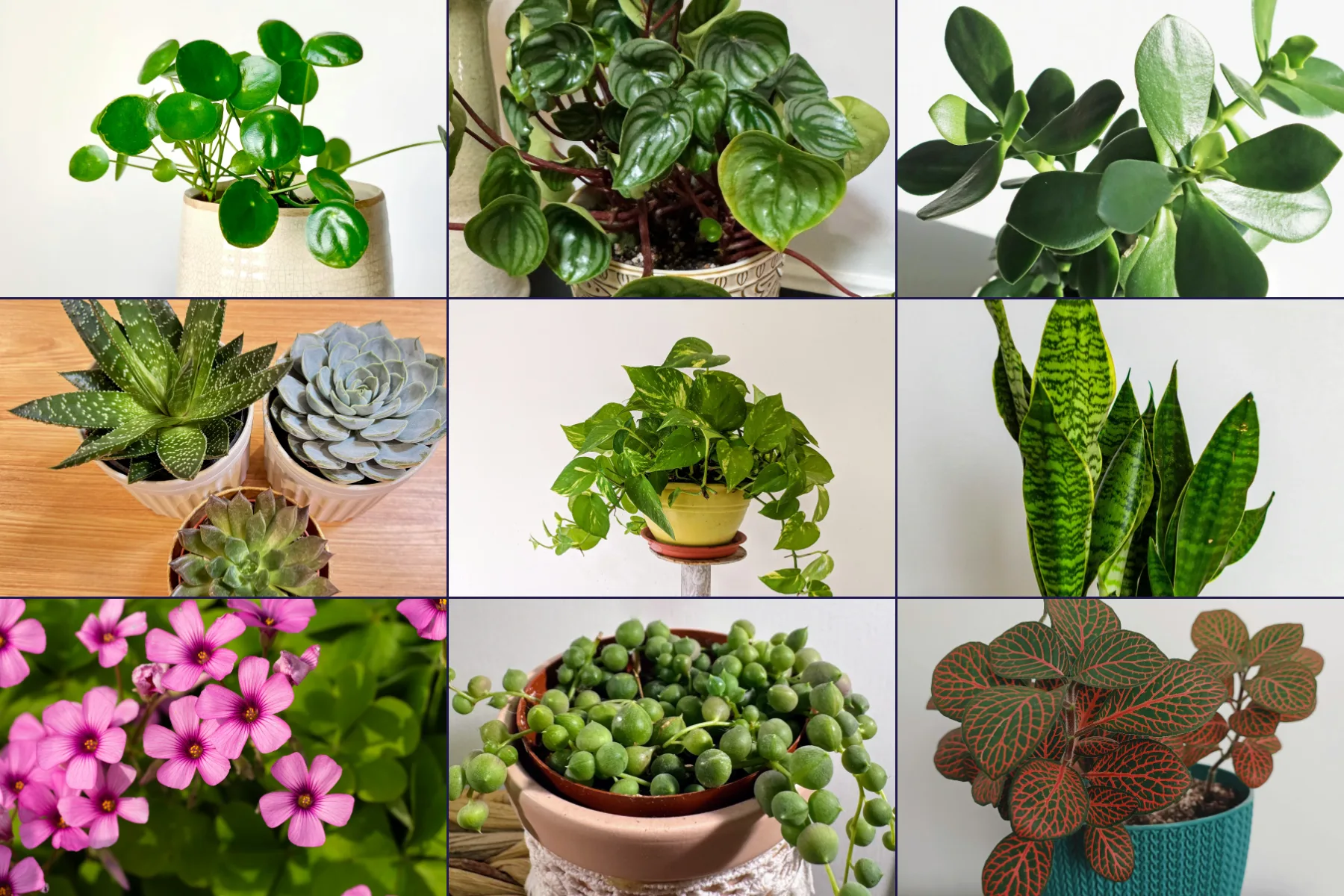
The 12 Best Houseplants for Small Apartments
-
Snake Plant (Dracaena trifasciata)
Grows straight up rather than out, so a mature plant takes about the same floor space as its pot. It reaches 2 to 4 feet tall in a 6-inch pot and stays there for years. It tolerates low light and irregular watering better than almost anything else sold as a houseplant, which matters in an apartment with one window and a busy tenant. The upright leaves read as a vertical line in a room, drawing the eye up and making a low ceiling feel higher.
How to grow it: Put it anywhere from a dim hallway to a bright window and water every 3 to 4 weeks, less in winter. Choose a heavy pot barely wider than the root ball. A tall plant in a light pot tips over in a narrow walkway.
-
Pothos (Epipremnum aureum)
The most forgiving trailing plant available, and trailing is what small apartments need: a pothos on top of a bookcase uses no surface area at all and still fills a corner of the room with green. Vines reach 6 to 10 feet indoors and can be cut back to any length without harming the plant. It grows in anything from a bright window to a north-facing room, and cuttings root in a glass of water, so one plant becomes several at no cost.
How to grow it: Set it on the highest shelf you have and let the vines fall. Water when the top 2 inches of soil are dry. Trim any vine that reaches the floor and root the cutting in water to start a second plant.
-
ZZ Plant (Zamioculcas zamiifolia)
Upright, glossy, and close to indestructible. It grows 2 to 3 feet tall with a narrow footprint, and its thick rhizomes store enough water to survive a month of neglect. This is the best plant on the list for a genuinely dark corner: it holds its color in rooms where a pothos would go leggy and a succulent would collapse. Slow growth is an advantage here, because it will not outgrow the spot you gave it.
How to grow it: Place it in low to medium indirect light and water every 3 to 4 weeks, letting the soil dry completely. Do not water more if growth seems slow. Slow is normal, and wet soil is the one thing that reliably kills it.
-
Chinese Money Plant (Pilea peperomioides)
A tabletop plant that stays a tabletop plant, topping out around 12 inches across. The round leaves on thin stems give it an airy look that does not crowd a small surface the way a broad-leaved plant does. It produces offsets at the base that can be separated and potted, so a single plant slowly supplies gifts rather than demanding more of your own shelf space.
How to grow it: Give it bright indirect light and rotate the pot a quarter turn each week, or it will lean hard toward the window. Water when the top inch is dry. Twist off the offsets once they reach 3 inches and pot them separately.
-
Peperomia (Peperomia spp.)
A large genus in which nearly every species stays under 12 inches, which makes it hard to pick a bad one for a small apartment. The thick leaves hold water, so it tolerates the irregular watering that comes with a busy schedule. Watermelon peperomia, ripple peperomia, and baby rubber plant all fit a windowsill, and none of them will ever need a floor pot.
How to grow it: Bright indirect light and a 4-inch pot are enough for its whole life. Water when the soil is dry to the touch and empty the saucer afterward. Peperomia roots rot faster than the firm leaves suggest.
-
Hoya (Hoya carnosa)
A slow-growing trailing plant with waxy leaves that tolerates both being ignored and being root-bound, two useful traits when shelf space is fixed. It trails or climbs depending on what you give it, so it can hang from a bracket or wind around a small trellis in the same pot for years. Mature plants produce clusters of scented flowers, which almost nothing else on this list does indoors.
How to grow it: Give it bright indirect light and let the soil dry fully between waterings. Leave it in a small pot. Hoyas flower more reliably when the roots are crowded, so repotting for size works against you.
-
String of Hearts (Ceropegia woodii)
The finest-textured trailing plant here. The strands are thin enough to hang in front of a window without blocking meaningful light, which is the usual objection to hanging plants in a one-window apartment. It trails 3 to 6 feet from a 4-inch pot, so the visual payoff is large next to the space it actually occupies.
How to grow it: Hang it in bright light, including some direct sun, and water only when the leaves feel less firm. It grows from a tuber and stores water, so underwatering is far safer than overwatering.
-
Heartleaf Philodendron (Philodendron hederaceum)
Similar to pothos in habit but with softer leaves and slightly better tolerance for low light, which makes it the trailing plant for the wall away from the window. Vines reach 4 to 8 feet and respond well to being cut back hard, so it can be held at whatever length the shelf allows.
How to grow it: Place it in low to medium indirect light and water when the top 2 inches are dry. Pinch the growing tips to keep it full, rather than letting a few long bare vines take over.
-
Spider Plant (Chlorophytum comosum)
Built for a hanging basket, which is the cheapest way to add plants to a small apartment without giving up a surface. It reaches about 12 to 18 inches across and sends out arching stems with plantlets on the ends, adding volume in the air rather than on the floor. It is also non-toxic to cats and dogs, which narrows the list considerably in a small home where a pet cannot simply be shut out of one room.
How to grow it: Hang it in bright indirect light and water when the top inch dries. Brown tips usually mean tap water minerals rather than a care mistake. If it bothers you, switch to filtered water.
-
Cast Iron Plant (Aspidistra elatior)
The answer to a corner that gets almost no light. It grows 2 to 3 feet tall in a narrow clump and survives conditions that kill most floor plants: deep shade, drafts, and long gaps between waterings. Growth is very slow, so it stays the size you bought it for a long time, which in a small apartment is a feature rather than a disappointment.
How to grow it: Put it in the darkest corner you want filled and water every 2 to 3 weeks. Wipe the broad leaves every month or two. In low light, dust costs the plant more than it would in a bright room.
-
Air Plant (Tillandsia spp.)
Needs no pot and no soil, so it occupies space nothing else can use: a wall mount, a shelf edge, a hook, the rim of a glass. That makes it the only plant here that adds greenery without consuming any horizontal surface at all. Most species stay under 8 inches and weigh little enough that renter-safe adhesive hooks hold them.
How to grow it: Soak it in water for 20 to 30 minutes every 1 to 2 weeks, shake off the excess, and set it somewhere with airflow so it dries within 4 hours. Bright indirect light. Water left sitting in the center is what kills them, not dryness.
-
Jade Plant (Crassula ovata)
A windowsill succulent that grows into a small tree shape over years, giving a sense of maturity that most small plants cannot. It stays under 2 feet for a long time in a small pot and tolerates the dry air of a heated apartment. The thick trunk and leaves store water, so it forgives a forgotten week.
How to grow it: Give it the sunniest windowsill you have, ideally with a few hours of direct sun, and water deeply but only when the soil is completely dry. Use a heavy pot. A top-heavy jade in a plastic pot falls over.
How to Fit More Plants Into a Small Apartment
-
Install a 3-tier plant stand or a tension-mounted window shelf in your best-lit window. This holds 10 to 15 small pots in the floor space of a single large one, and tension shelves need no drilling.
-
Put trailing plants on the highest shelf you have. A pothos, philodendron, or string of hearts falls 3 to 6 feet from a bookcase top and uses no surface area at all.
-
Hang the lightweight plants. Air plants and spider plants weigh little enough for renter-safe adhesive hooks rated at 4 to 6 pounds. Choose fiberglass or woven planters rather than ceramic.
-
Give the darkest corner one upright floor plant. A cast iron plant, ZZ plant, or tall snake plant fills a corner that would otherwise stay empty, and none of them need a window.
-
Keep a 4-inch herb pot on the kitchen windowsill. Basil, mint, chives, or parsley earn their surface twice, as greenery and as food.
-
Arrange by light need, not by looks. Put the most light-hungry plants on the sunniest shelf and work back from there, then rotate each pot a quarter turn weekly so nothing leans.
Small-Apartment Plant Comparison
Mature size decides whether a plant fits, not the size it is sold at. Pet safety follows ASPCA toxicity classifications.
| Plant | Mature Size | Space It Uses | Light | Pet Safe? |
|---|---|---|---|---|
| Snake Plant | 2-4 ft tall | Floor, narrow | Any light | ❌ Toxic |
| Pothos | 6-10 ft vines | Shelf top, trails | Any light | ❌ Toxic |
| ZZ Plant | 2-3 ft tall | Floor, narrow | Low to medium | ❌ Toxic |
| Chinese Money Plant | 12 in across | Tabletop | Bright indirect | ✅ Safe |
| Peperomia | Under 12 in | Windowsill | Bright indirect | ✅ Safe |
| Hoya | 3-6 ft vines | Hanging or trellis | Bright indirect | ✅ Safe |
| String of Hearts | 3-6 ft strands | Hanging, very thin | Bright, some direct | ✅ Safe |
| Heartleaf Philodendron | 4-8 ft vines | Shelf top, trails | Low to medium | ❌ Toxic |
| Spider Plant | 12-18 in across | Hanging basket | Bright indirect | ✅ Safe |
| Cast Iron Plant | 2-3 ft tall | Floor, narrow clump | Deep shade OK | ✅ Safe |
| Air Plant | Under 8 in | No pot, wall or hook | Bright indirect | ✅ Safe |
| Jade Plant | Under 2 ft | Windowsill | Direct sun | ❌ Toxic |
Frequently Asked Questions
- What is the best plant for a small apartment?
- The snake plant, for most apartments. It grows upward rather than outward, so a mature 3-foot plant still takes only the floor space of its pot; it survives low light and a missed month of watering, and it does not drop leaves. If your only free space is a shelf rather than the floor, choose a pothos instead and let it trail.
- How many houseplants can fit in a small apartment?
- More than most people expect, because the limit is surface area rather than room volume. A single 3-tier plant stand in a window holds 10 to 15 small pots in the footprint of one floor pot, and hanging or trailing plants use no surface at all. A 400-square-foot studio can comfortably hold 15 to 20 plants if most of them are on shelves, hooks, or the tops of furniture.
- Which small-apartment plants are safe for cats and dogs?
- From this list: Chinese money plant, peperomia, hoya, string of hearts, spider plant, cast iron plant, and air plants are all non-toxic per ASPCA classifications. Snake plant, pothos, ZZ plant, heartleaf philodendron, and jade plant are toxic if eaten. In a small home a pet cannot simply be kept out of one room, so it is worth choosing from the safe group rather than relying on placement.
- What plants work in an apartment with no direct sunlight?
- ZZ plant and cast iron plant handle genuinely dark corners. Pothos, heartleaf philodendron, and snake plant do well in indirect light from a north-facing window. Skip jade plant, string of hearts, and most succulents, which need direct sun and will stretch and go pale without it.
- Are small pots better for small apartments?
- Yes, and not only for space. A plant in a snug pot grows more slowly and stays the size you have room for, and several plants on this list, hoya in particular, flower better when the roots are crowded. Repot only when the plant is genuinely root-bound, not on a schedule.
- How do you display plants in a small apartment without clutter?
- Group them instead of spreading them. A curated cluster on one shelf at window height reads as intentional, while the same plants scattered across every surface read as clutter and are harder to water. Use vertical space first: shelf tops, wall brackets, and hanging hooks add plants without costing you any usable surface.
The Bottom Line for Small Apartments
Pick by mature size and by the kind of space you have free. One upright plant (snake, ZZ, or cast iron) handles the floor corner, two or three trailing plants (pothos, philodendron, string of hearts) handle the shelf tops, and anything small enough for a 4-inch pot fills the windowsill. That combination gives a small apartment a full collection while leaving every usable surface clear, which is what separates a curated group from clutter.
Get Personalized Plant Care Advice
PlantCareAI uses your location and local weather to give you advice tailored to your exact situation. No signup required to try.
Try the AI Plant Doctor