
Chinese Money Plant Care Guide
Pilea peperomioides
Also known as Pilea, UFO Plant, Pancake Plant, Missionary Plant
By Ellen Hermance · PlantCareAI Editorial
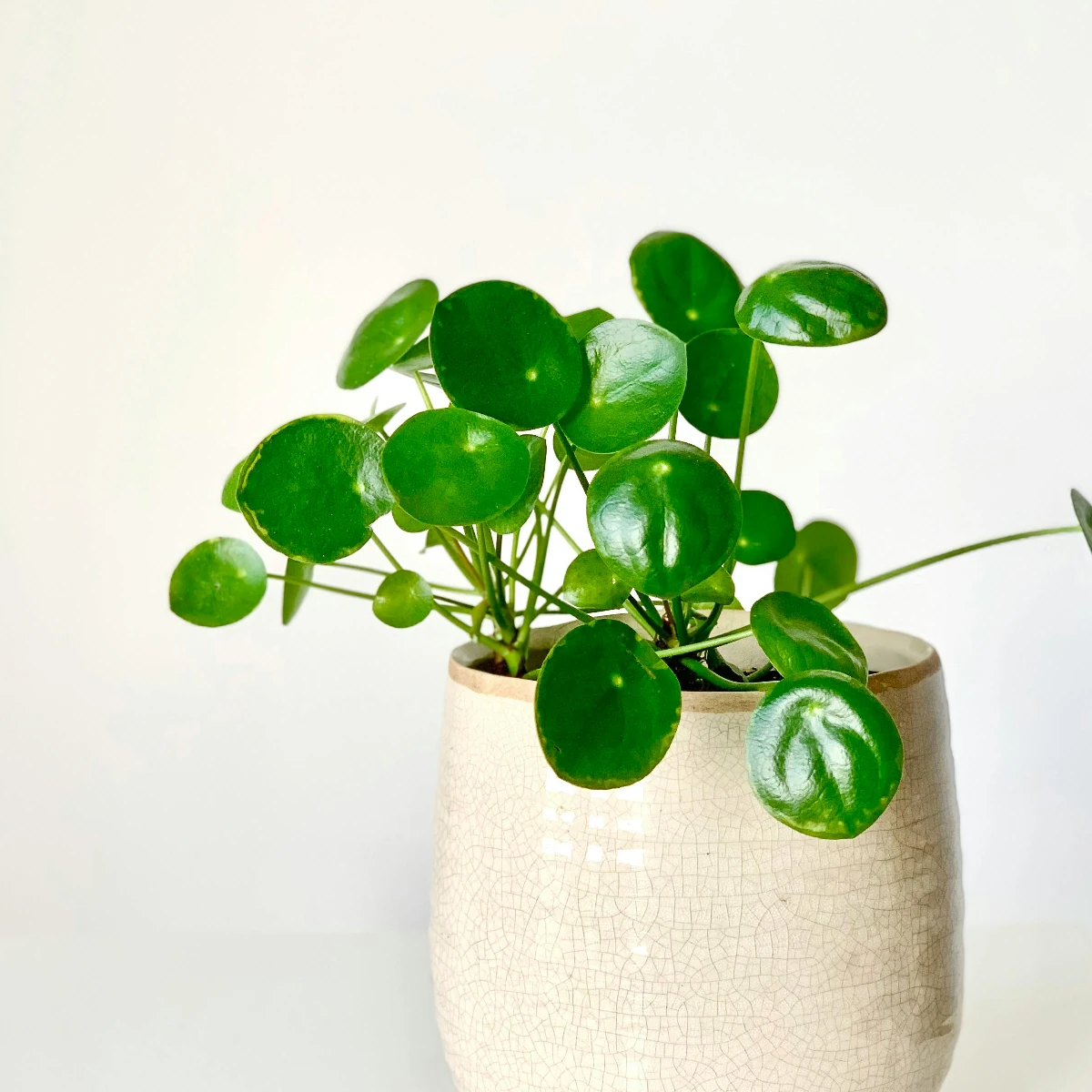
The Chinese Money Plant has become one of the most sought-after houseplants thanks to its distinctive round, coin-shaped leaves on delicate stems. Originally from Yunnan province in southern China, it was spread through European plant communities by cuttings long before it became commercially available. Pilea peperomioides is a generous producer of baby plants (pups), making it easy to share; which earned it the nickname 'friendship plant.'
Quick Care Reference
| Care Aspect | Requirement | Frequency |
|---|---|---|
| Watering | When top inch of soil is dry | Every 7-10 days (summer), 10-14 days (winter) |
| Light | Bright indirect, no direct afternoon sun | Rotate quarter-turn every few days |
| Humidity | 40-60% (average household) | Monitor in winter heating season |
| Fertilizing | Half-strength balanced liquid | Every 2-4 weeks (spring-fall) |
| Repotting | Well-draining potting mix with perlite | Every 1-2 years in spring |
| Pup removal | When pups are 2-3 inches tall with own roots | As needed (spring-summer best) |
Watering
Pilea peperomioides likes consistent moisture but absolutely cannot tolerate soggy soil. Water when the top inch of soil has dried out; typically every 7-10 days in spring and summer, extending to every 10-14 days in fall and winter. Pour water evenly across the soil surface until it begins to drain from the bottom, then empty any saucer after 15-20 minutes. Never let the pot sit in standing water. Pilea's round leaves are good communicators: when the leaves start to droop slightly or feel less firm than usual, the plant is asking for water. If leaves curl inward (cupping), that's a more urgent sign of thirst. On the other end, yellowing lower leaves often indicate overwatering; cut back and let the soil dry more between sessions. Pilea's root system is relatively compact, so it doesn't need as much water as larger, deeper-rooted plants. In winter, reduce watering frequency as growth slows and the plant uses less moisture. Always use room-temperature water; cold water can shock the roots and cause leaf drop.
Light Requirements
Bright indirect light is ideal for Pilea peperomioides; think of the bright, filtered light on a forest floor in its native Yunnan habitat. An east-facing window provides the perfect gentle morning light. A few feet back from a south or west-facing window also works well, as long as direct afternoon sun doesn't hit the leaves. Direct, intense sun will scorch Pilea leaves, leaving brown, dry patches that won't heal. On the other hand, too little light causes the characteristic 'UFO plant' shape to become leggy and sparse; stems stretch and leaves become widely spaced as the plant reaches for light. In good light, the leaves grow flat and pancake-round, creating the iconic look. One of Pilea's most distinctive behaviors is its strong phototropism; it leans aggressively toward the light source. Rotate the pot a quarter turn every few days to maintain a symmetrical, upright plant. Without rotation, it will quickly become one-sided. If you notice the petioles (leaf stalks) getting long and the leaves hanging downward rather than standing outright, the plant needs more light. Pilea tolerates moderate light but won't produce as many pups or grow as vigorously in dimmer conditions.
Humidity & Temperature
Pilea peperomioides is adaptable to average household humidity (40-60%) and doesn't demand the high humidity that many tropical plants need. It originates from a mountainous region of China with moderate humidity, so it's more forgiving than rainforest species. That said, it will struggle in very dry conditions below 30%, which can occur during winter heating season. In low humidity, leaf edges may brown slightly and new growth can emerge smaller than normal. A humidity tray or grouping with other plants provides sufficient moisture for most homes. Avoid misting Pilea directly; water sitting on the round, flat leaves can cause spots or encourage fungal issues. Temperature-wise, Pilea does well in normal home temperatures of 60-75°F (15-24°C). It's not as cold-sensitive as many tropicals and can tolerate brief dips to 50°F (10°C), but prolonged cold causes leaf drop. Keep away from cold drafts and heating vents. Sudden temperature swings can cause lower leaves to yellow and drop; once they've adjusted to a stable location, they prefer to stay there.
Fertilizing
Pilea peperomioides is a moderate feeder that benefits from regular nutrition during the growing season without being demanding about it. Use a balanced liquid fertilizer (10-10-10 or 20-20-20) diluted to half strength every 2-4 weeks from spring through early fall. Always apply to moist soil; fertilizing dry roots risks burn. Pilea doesn't need specialized fertilizer; a standard all-purpose houseplant formula works perfectly. During winter, stop fertilizing entirely or reduce to once every 6-8 weeks at quarter strength if the plant is still showing slow growth near a bright window. Signs of over-fertilizing include brown leaf tips, leaf edge browning, and white salt crust on the soil surface; flush the soil thoroughly with plain water if you see these signs. Under-fertilized Pilea will produce smaller, paler leaves and fewer pups. If you prefer a low-maintenance approach, slow-release granules applied once in spring can carry the plant through most of the growing season. New plantlets (pups) that you've recently separated from the mother plant should not be fertilized for the first month while they establish their independent root systems.
Propagation
Pilea peperomioides is one of the most generous houseplants when it comes to propagation; it produces baby plants (pups or offsets) from its root system almost continuously during the growing season. These pups emerge from the soil near the base of the mother plant and develop their own root systems while still connected. This prolific pupping habit is how Pilea spread through European households for decades before it was commercially available; people simply shared pups with friends, earning it the name 'friendship plant' or 'pass-it-along plant.'
Soil Pup Separation (Most Common)
- Wait until the pup is 2-3 inches tall with at least 3-4 leaves of its own
- Gently remove the mother plant from its pot and locate where the pup connects to the main root system
- Using a clean, sharp knife, cut the pup's stem about 1 inch below the soil line, keeping as many roots attached as possible
- Plant the pup in a small pot (3-4 inch) with well-draining soil mix, burying the stem to just below the lowest leaves
- Water lightly and place in bright indirect light; avoid direct sun while the pup establishes
Stem Pup (Plantlet on Trunk)
- Pilea sometimes produces pups directly from the trunk/stem rather than from the soil; these are stem pups
- Wait until the stem pup has several leaves and ideally some small aerial roots visible
- Cut the pup cleanly from the trunk with a sterile blade, keeping a small piece of the trunk bark if possible
- Place the cutting in water until roots develop (1-2 inches long, typically 2-3 weeks), then pot in soil
- Alternatively, plant directly in moist soil mix and keep humidity high with a clear plastic bag for 2-3 weeks
Stem Cutting (Top Cut for Leggy Plants)
- If your Pilea has become tall and leggy with a bare lower trunk, you can cut the top off to create a new compact plant
- Using a sterile blade, cut the stem 2-3 inches below the lowest leaf, leaving at least 2-3 leaf nodes on the remaining stump
- Place the top cutting in water until roots develop (2-4 weeks), then pot in soil
- The remaining stump will typically produce 2-3 new growth points, creating a bushier mother plant
- This is the most dramatic propagation method but also the most effective way to rejuvenate a leggy specimen
Popular Varieties
Pilea peperomioides (Standard)
Also known as: Chinese Money Plant, UFO Plant, Pancake Plant
The classic form with flat, round, dark green leaves on long petioles radiating from a central stem. The most widely available and easiest to grow.
The most prolific pup producer. A healthy plant can generate 5-10 pups per year.
Pilea peperomioides 'Sugar'
Also known as: Variegated Chinese Money Plant
A variegated sport with white or cream speckled patches on the leaves. Patterns vary from leaf to leaf, making each plant unique. Slower growing than the standard form.
Variegation can revert to all-green in low light. Remove all-green pups to maintain variegation in the colony.
Pilea peperomioides 'Mojito'
A striking variegated cultivar with irregular splashes and streaks of cream, white, and various green shades. Highly sought-after and more expensive than the standard form.
Needs consistent bright light to maintain variegation intensity. Each leaf has a unique pattern.
Pilea 'Dark Mystery'
Also known as: Black Chinese Money Plant
A cultivar with unusually dark, almost blackish-green leaves that create a dramatic appearance. The dark coloration becomes more intense in bright light.
Develops the darkest coloration with bright indirect light. In lower light, leaves revert to standard green.
Seasonal Care Calendar
Spring
March – May
- Resume regular fertilizing at half strength every 2-4 weeks
- Repot if root-bound; go up one pot size with fresh well-draining mix
- Separate pups that are 2-3 inches tall and pot them individually
- Prune any leggy or damaged stems to encourage bushier growth
- Begin rotating more frequently as light intensity increases
Summer
June – August
- Water more frequently as growth accelerates and soil dries faster
- Continue fertilizing every 2-4 weeks at half strength
- Protect from direct afternoon sun; leaf scorch is common in summer
- Separate pups regularly; the plant produces them most actively now
- Watch for pests, especially spider mites in dry conditions
Fall
September – November
- Gradually reduce watering as growth slows
- Stop fertilizing by mid-October or reduce to monthly
- Move closer to brightest window as days shorten
- Last chance to separate pups before winter dormancy
- Check for pests before heating season begins
Winter
December – February
- Water less frequently; every 10-14 days typically
- Stop fertilizing or feed at quarter strength monthly if still growing
- Monitor humidity; heating can dry air below comfortable levels
- Rotate regularly; Pilea leans strongly in low winter light
- Avoid cold drafts from windows and exterior doors
Troubleshooting
Curling leaves (cupping inward)
Why it happens: Pilea leaves that curl inward like a taco are almost always dehydrated. This happens when the soil gets too dry between waterings, the root system is compromised, or the plant is in a very warm or drafty location that increases water loss. Severe root-boundedness can also cause curling because the compressed root ball can't absorb water efficiently even when the soil is moist.
What to do: Water the plant thoroughly; most Pileas uncurl within a few hours of a good drink. If the soil has pulled away from the pot edges (hydrophobic dry soil), bottom-water by placing the pot in a dish of water for 20-30 minutes to rehydrate the soil evenly. If curling persists after watering, check the roots; the plant may need repotting into a slightly larger container.
Learn more: Why Are My Plant Leaves Curling? → Ask the AI about this →Yellowing lower leaves
Why it happens: The most common cause of yellow lower leaves on Pilea is overwatering. When roots sit in consistently wet soil, they can't absorb oxygen, leading to root stress and the plant dropping its oldest leaves first. Less commonly, yellowing lower leaves can be natural aging; Pilea sheds its oldest bottom leaves periodically as it grows taller, which is normal if it happens one leaf at a time with new growth at the top.
What to do: Check soil moisture; if the soil is soggy or hasn't dried within a week of watering, you're watering too often. Let the soil dry out and extend the interval between waterings. Ensure the pot has drainage holes and the soil mix is well-draining. If only one leaf at the very bottom yellows every few weeks while the plant produces healthy new leaves at the top, that's normal aging and nothing to worry about.
Learn more: Why Are My Plant Leaves Turning Yellow? → Ask the AI about this →Leggy, stretched growth with sparse leaves
Why it happens: Leggy Pilea is caused by insufficient light. The plant stretches its stem toward the nearest light source, producing leaves that are more widely spaced and often smaller than normal. The trunk becomes long and bare as lower leaves drop, and new growth appears only at the very top. This is especially common in winter or when the plant is placed more than a few feet from a window.
What to do: Move to a brighter location; an east-facing window or a spot within 2-3 feet of a south-facing window is ideal. Once a stem has stretched, it won't compact back. You can either embrace the 'palm tree' look or do a top cutting: cut the stem a few inches below the leaf cluster, root the top in water, and pot it up for a fresh compact plant. The remaining stump will produce new growth points.
Learn more: Why Is My Plant Not Growing? → Ask the AI about this →Brown spots or patches on leaves
Why it happens: Brown spots on Pilea leaves can come from several sources: sunburn from direct sun exposure (crispy, dry brown patches usually on the side facing the window), cold damage from drafts or cold windowpanes (dark, soft, water-soaked spots), or fungal/bacterial infection (spreading brown spots with yellow halos, often caused by water sitting on leaves). Fertilizer burn can also cause brown leaf tips and edges.
What to do: Identify the pattern: if spots are only on the sun-facing side, move the plant out of direct sun. If spots are soft and dark, check for cold drafts. If spots have yellow halos or are spreading, remove affected leaves with sterile scissors and improve air circulation. Avoid getting water on leaves when watering. If leaf tips are brown, you may be over-fertilizing; flush soil with plain water.
Learn more: Why Are My Plant Leaves Turning Brown? → Ask the AI about this →Drooping leaves and petioles
Why it happens: When Pilea leaves droop downward rather than holding themselves horizontally or slightly upward, the plant is usually thirsty. Pilea communicates water needs clearly through leaf position; well-hydrated leaves stand upright or horizontal, while dehydrated leaves hang downward on their petioles. Less commonly, drooping can result from overwatering if roots are damaged, or from sudden temperature changes.
What to do: Check the soil: if dry, water thoroughly and the plant should perk up within a few hours. If the soil is moist and the plant is still drooping, the roots may be compromised; unpot and inspect for rot. Trim any mushy roots, repot in fresh well-draining mix, and reduce watering frequency. If the drooping coincided with moving the plant or a temperature change, give it a few days to acclimate.
Learn more: Why Are My Plant Leaves Drooping? → Ask the AI about this →Not sure what's wrong?
Premium includes AI photo diagnosis, then walks you through the fix and checks back in until it's better.
See Premium →Track your Chinese Money Plant with PlantCareAI
Add your Chinese Money Plant and get a watering schedule tuned to this week's weather. Free for up to 3 plants.
Add your Chinese Money Plant