
Plant Pest Guide: Identify & Eliminate Common Houseplant Pests
By Ellen Hermance · PlantCareAI Editorial
Plant pests are one of the most common reasons houseplants decline. Most infestations start small — a few spots, some webbing, a handful of tiny flies — and escalate quickly once established. The key to effective pest control is early identification: different pests need different treatments, and the wrong approach wastes time while the population grows. This guide covers the most common houseplant pests, how to identify each one, and links to detailed treatment guides for each.
Quick Answer: The most common houseplant pests are spider mites (fine webbing, stippled leaves), mealybugs (white cottony clusters in joints), fungus gnats (tiny flies near soil), aphids (clusters on new growth), and scale (brown bumps on stems). Identify the pest first; treatment differs significantly. Most infestations respond to insecticidal soap or neem oil with consistent weekly applications.
How to Identify Your Pest
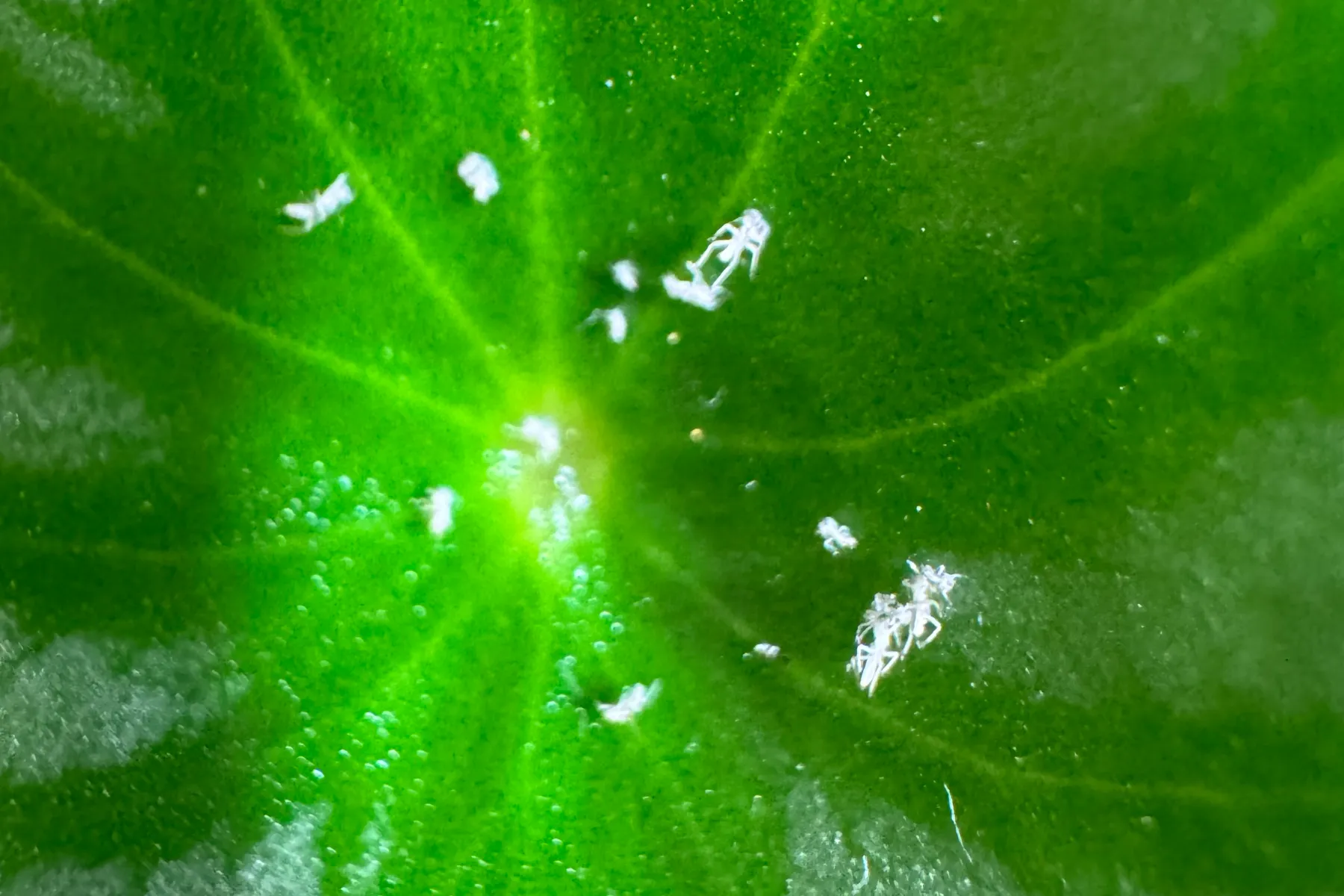
Before treating, confirm what you're dealing with. Spider mites leave fine webbing on leaf undersides and cause pale stippling. Mealybugs leave white, fluffy wax in stem joints. Fungus gnats are tiny dark flies that hover near the soil surface when you water. Aphids are soft-bodied clusters (green, black, or white) on new growth and buds. Scale insects look like small brown or tan bumps stuck to stems and leaf midribs. Thrips cause silvery streaking on leaves and leave black frass dots.
Spider Mites
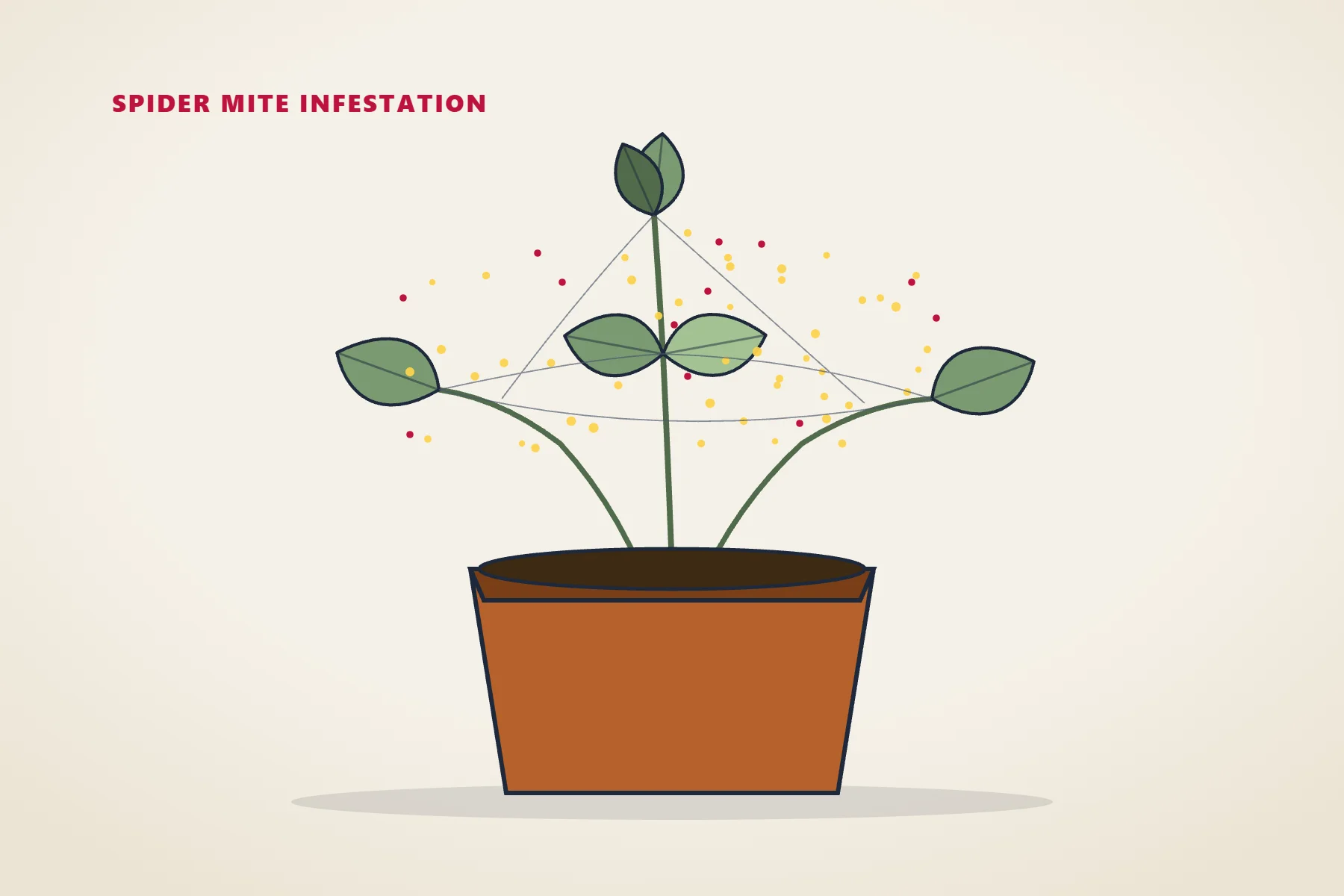
Spider mites are arachnids, not insects; they're about 0.5mm, nearly invisible to the naked eye. They thrive in hot, dry conditions and reproduce explosively. Signs: fine webbing on leaf undersides, pale stippled speckling, leaves that look dusty or bronze. Most susceptible plants: calathea, fiddle leaf fig, rose, palms. Treatment: increase humidity, shower the plant to dislodge mites, apply neem oil or insecticidal soap every 5–7 days, or release predatory mites (Phytoseiidae) for biological control.
Mealybugs
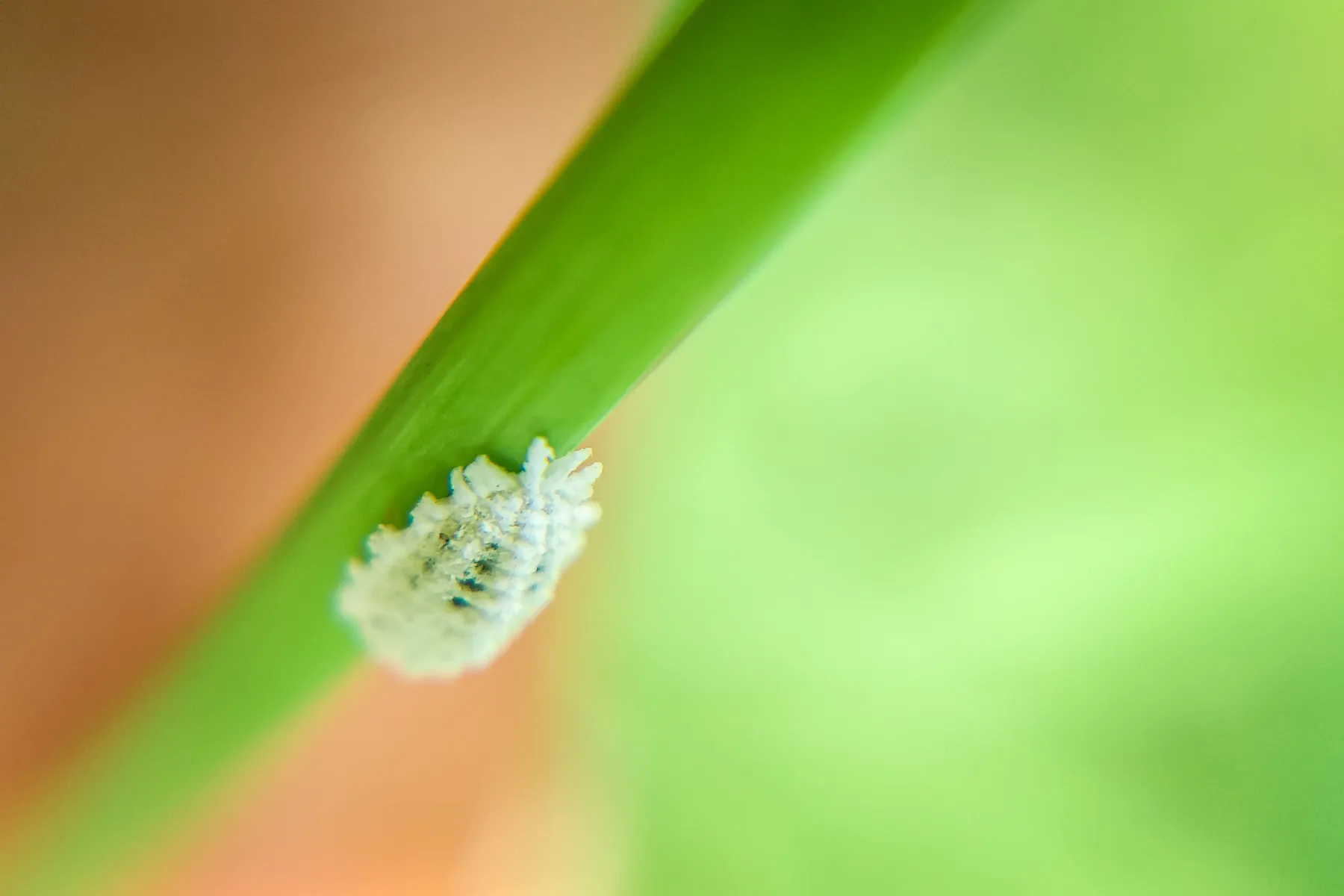
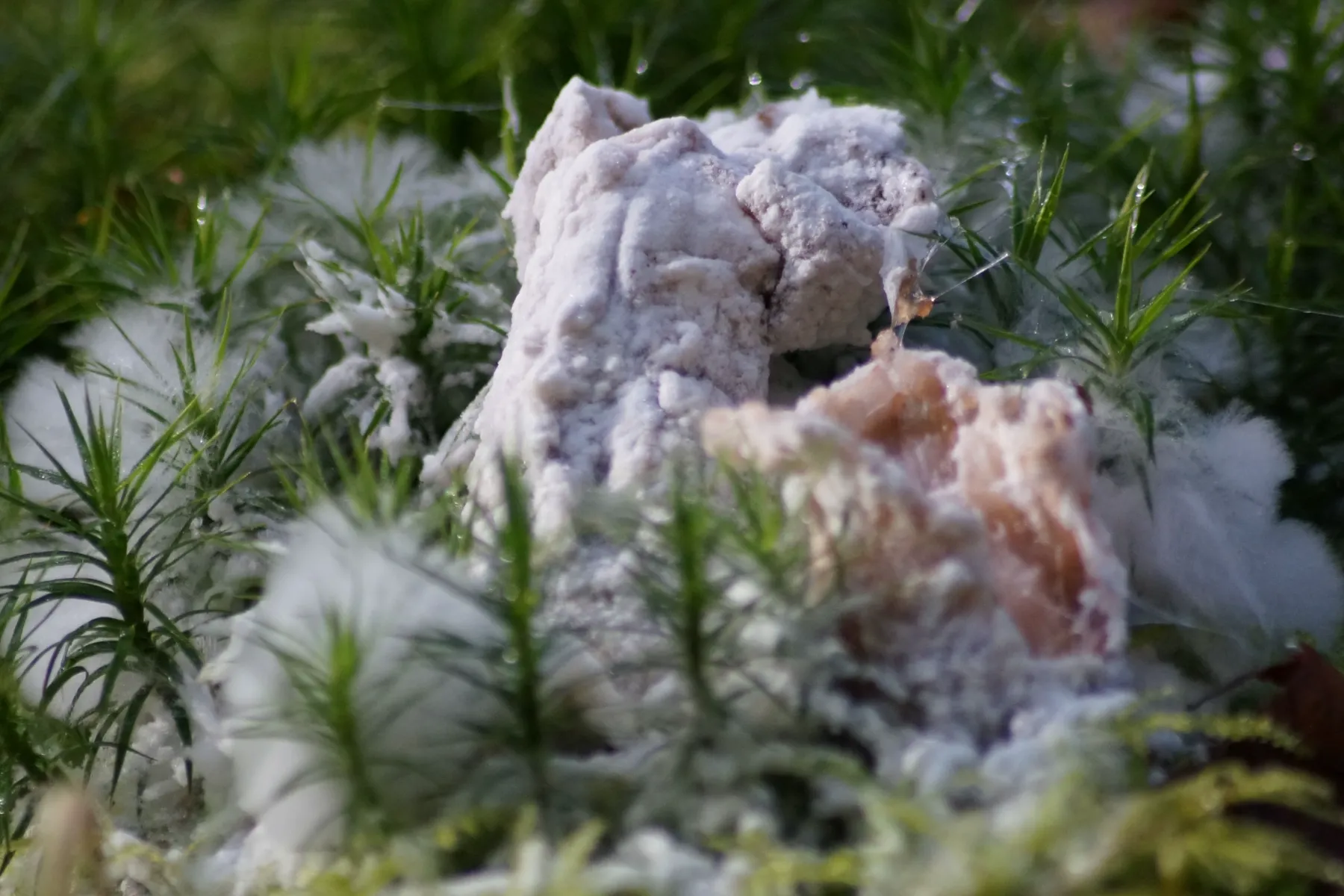
Mealybugs are soft-bodied insects covered in white waxy filaments, giving them a cottony appearance. They hide in leaf axils, stem joints, and root zones, sucking sap and secreting sticky honeydew that leads to sooty mold. They spread quickly between plants and are brought in most often on new purchases. Treatment: wipe with alcohol-dipped cotton swabs, spray with insecticidal soap or neem oil weekly for 4–6 weeks. Isolate affected plants immediately.
Fungus Gnats
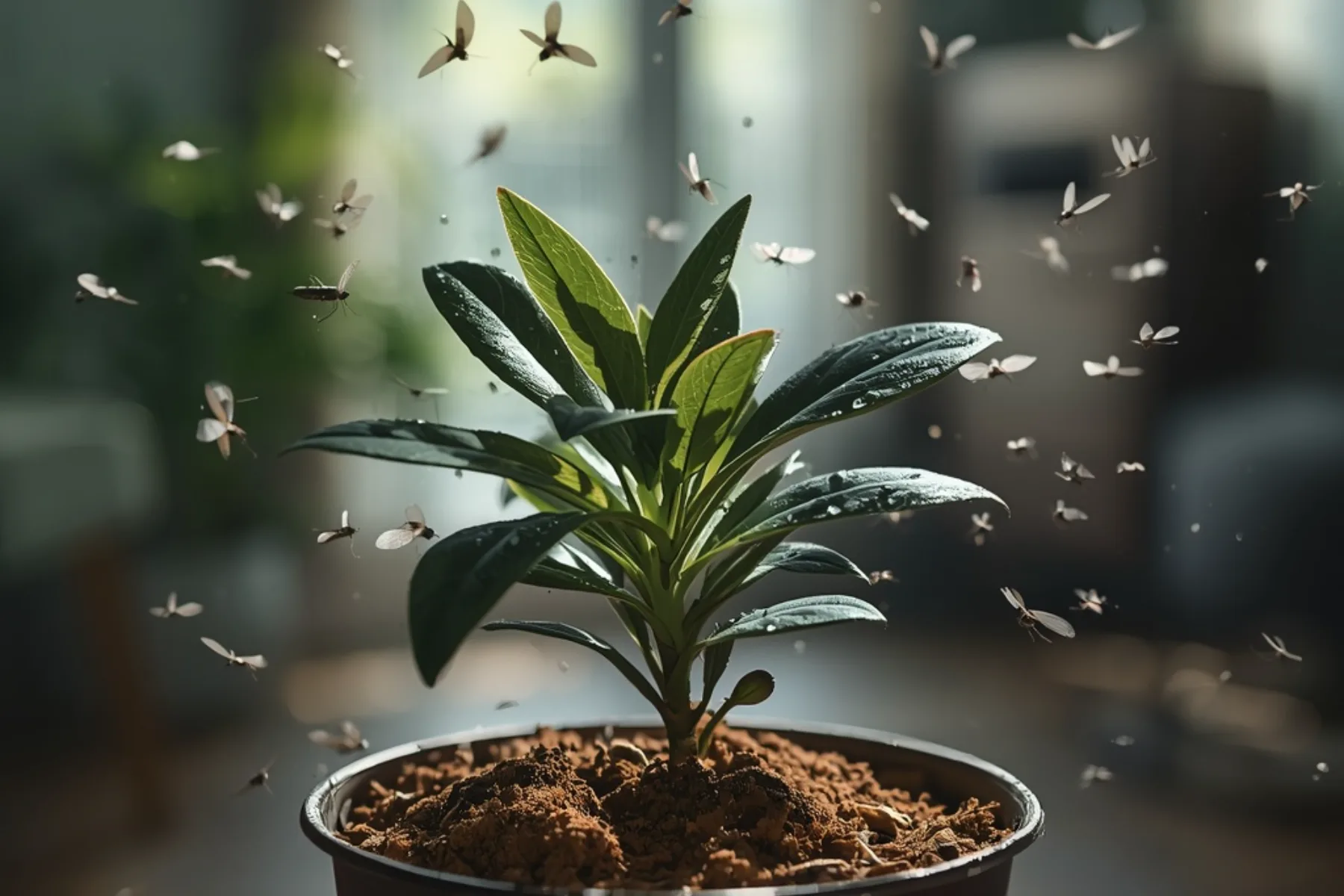
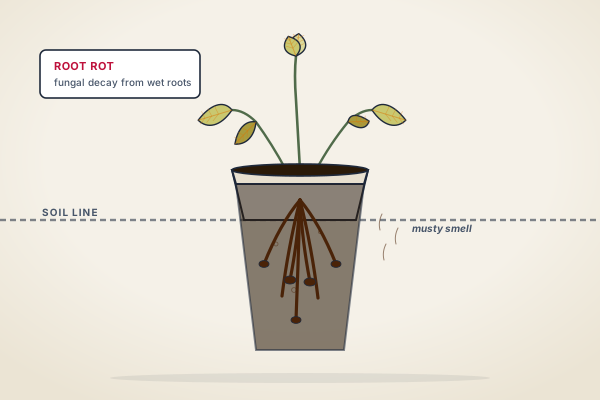
Fungus gnats are small dark flies whose adults are harmless but whose larvae live in moist soil and feed on organic matter and young roots. They signal overwatering. Signs: tiny flies that appear when you water or disturb the soil, larvae visible in very wet soil. Treatment: let soil dry deeply between waterings, use yellow sticky traps for adults, apply hydrogen peroxide soil drench (1 part 3% H2O2 to 4 parts water) to kill larvae, or use beneficial nematodes (Steinernema feltiae).
Aphids
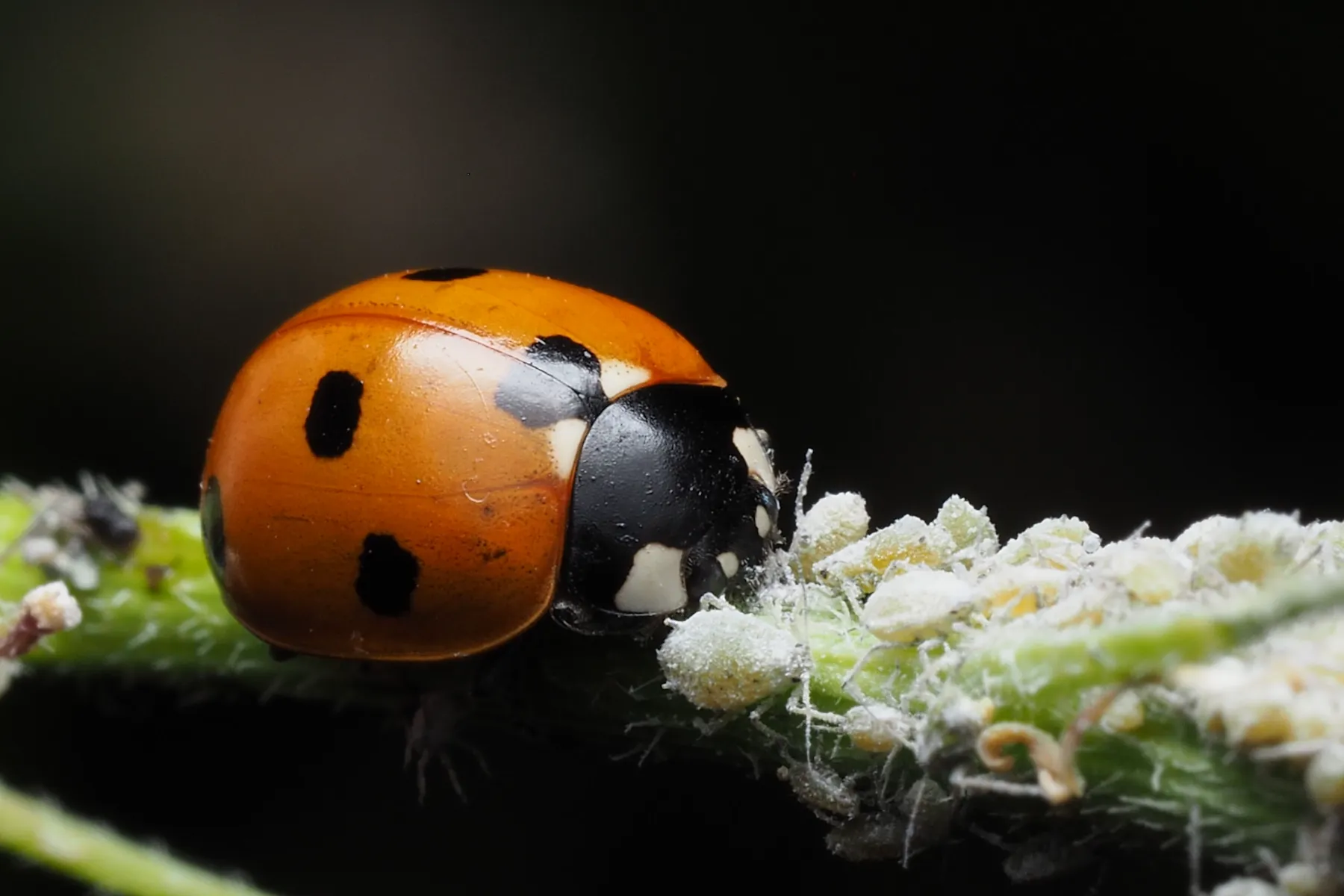
Aphids are soft-bodied, pear-shaped insects that cluster on new growth, buds, and stem tips, sucking sap. They reproduce rapidly and can colonize a plant in days. They come in many colors — green, black, white, orange — and are usually visible to the naked eye. They produce honeydew, attracting ants and promoting sooty mold. Treatment: blast off with water, apply insecticidal soap, introduce lacewing larvae or ladybugs outdoors.
Using Beneficial Insects
Biological pest control, introducing natural predators, is one of the most effective organic strategies for persistent infestations. Predatory mites eliminate spider mites. Lacewing larvae eat aphids, thrips, and mealybug crawlers. Beneficial nematodes kill fungus gnat larvae in soil. Parasitic wasps target whitefly and aphids in enclosed spaces. For houseplants, predatory mites and lacewing larvae are the most practical options since they don't fly away indoors.
Not sure what's wrong?
Premium includes AI photo diagnosis, then walks you through the fix and checks back in until it's better.
See Premium →Deep Dive Articles
Explore these detailed guides for specific topics covered in this guide:
Related Guides
Get Personalized Plant Care Advice
PlantCareAI uses your location and local weather to give you advice tailored to your exact situation. No signup required to try.
Get AI help identifying and treating your plant's pest →