
Green Beans Care Guide
Phaseolus vulgaris
Also known as String Beans, Snap Beans
By Ellen Hermance · PlantCareAI Editorial
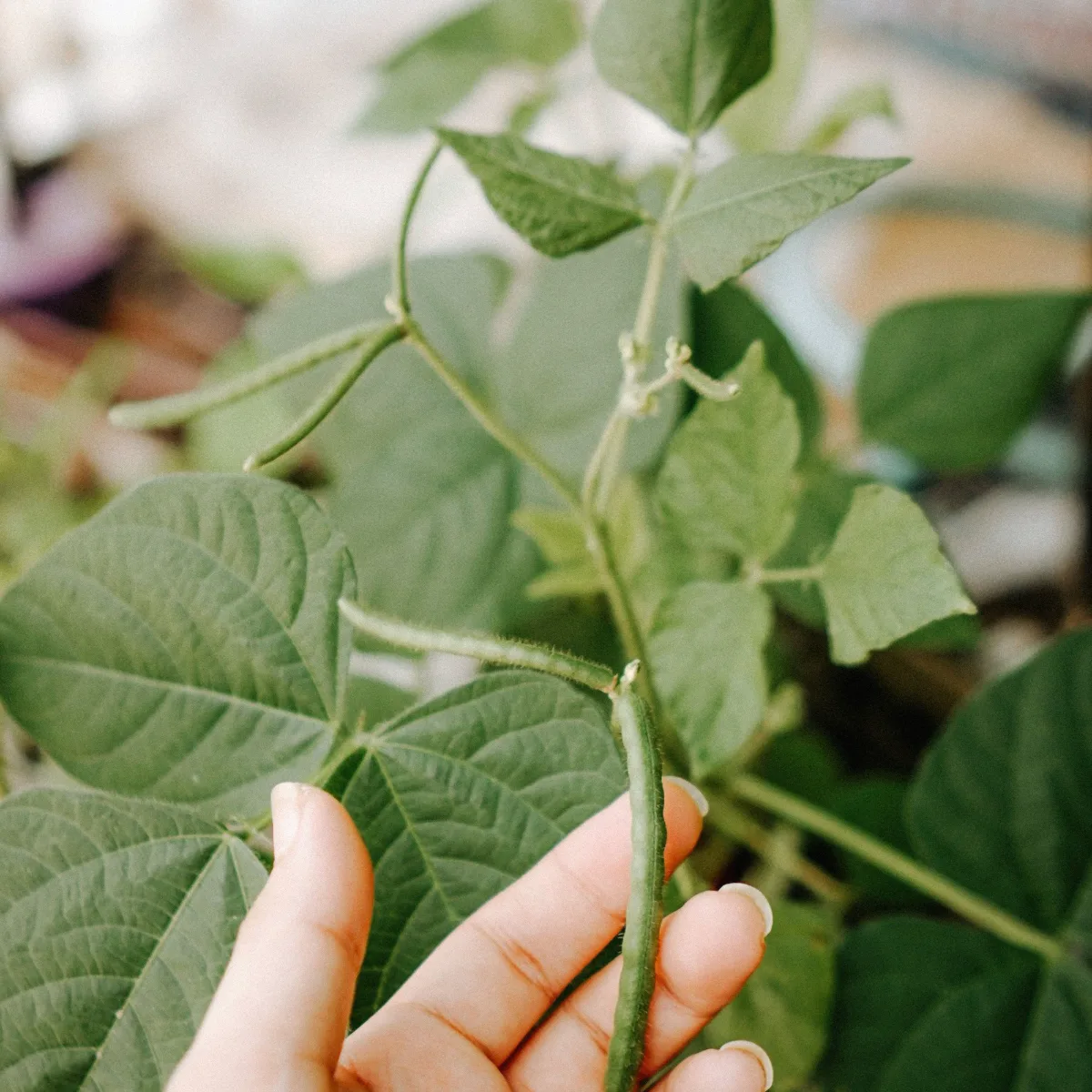
Green beans are one of the easiest and most productive vegetables to grow from seed. They are sown straight into warm soil, need little fertilizer because they make much of their own nitrogen, and start bearing in about two months. Bush beans give a big crop over a few weeks; pole beans climb and keep producing for much longer. The two rules that matter most are waiting for warm soil and picking often.
Quick Care Reference
| Care Aspect | Requirement | Frequency |
|---|---|---|
| Watering | About 1 inch (2.5 cm) a week | Every 3-4 days in summer; steady through flowering |
| Light | Full sun, 6-8 hours | Pole supports on the north side |
| Sowing | Soil at 60°F (16°C) or warmer | 1 inch (2.5 cm) deep, after the last frost |
| Harvest | Pick young pods | Every 2-3 days at peak |
| Fertilizer | Little or none | Compost at sowing |
Watering
Beans need about 1 inch (2.5 cm) of water a week, more in hot weather. In the ground that usually means a deep watering every 3 to 4 days in summer. Steady moisture matters most once they flower: a dry spell during flowering makes the blossoms drop and the pods come in short and curled. Water at the base in the morning, and mulch once the plants are a few inches tall. Avoid soaking the seed after sowing; cold, waterlogged soil rots it before it sprouts.
Light Requirements
Beans want full sun, 6 to 8 hours, for the heaviest crop. They tolerate a little afternoon shade in hot climates, but yield drops noticeably in real shade. Pole beans cast shade of their own, so put their supports on the north side of the bed where they will not block lower crops.
Humidity & Temperature
Beans are a warm-season crop. Sow only once the soil reaches at least 60°F (16°C), usually 1 to 2 weeks after the last frost; seed sown into cold, wet soil rots. They grow best between 65 and 85°F (18 to 29°C). Long stretches above about 90°F (32°C) make the flowers drop, and production resumes when it cools. Frost kills them. Wet foliage in humid weather spreads rust and bacterial blight.
Fertilizing
Beans need little fertilizer. Bacteria in nodules on their roots take nitrogen from the air, so extra nitrogen mostly grows leaves at the expense of pods. Work compost into the bed before sowing; in poor soil, a light low-nitrogen fertilizer at sowing is plenty.
Propagation
Beans are grown from seed sown directly in the garden. They germinate quickly in warm soil and do not need starting indoors.
Direct sowing
- Wait until the soil is at least 60°F (16°C)
- Sow seed 1 inch (2.5 cm) deep, 2 to 4 inches (5 to 10 cm) apart for bush beans
- Sow pole beans 4 to 6 inches (10 to 15 cm) apart at the base of their supports
- Seedlings appear in 7 to 10 days; water lightly until they do
Saving seed
- Choose open-pollinated varieties; beans mostly self-pollinate and come true
- Leave some pods on healthy plants until they turn dry and papery
- Shell the beans and dry them indoors for another 1 to 2 weeks
- Store cool, dry and sealed; they keep for several years
Popular Varieties
Bush beans
Compact plants 1 to 2 feet (30 to 60 cm) tall that need no support. They bear in about 50 to 55 days, mostly over a few weeks.
Pole beans
Climbing vines that need a trellis or poles 6 feet (1.8 m) or taller. Slower to start, about 60 to 70 days, but they keep producing for much longer.
Yellow wax beans
Butter-yellow pods grown exactly like green beans, and easy to spot among the leaves at picking time.
Seasonal Care Calendar
Spring
Mar – May
- Prepare beds with compost. Put up poles or trellises for pole beans.
- Sow after the last frost once the soil is 60°F (16°C).
- Thin crowded seedlings and mulch once plants are a few inches tall.
Summer
Jun – Aug
- Water steadily, especially during flowering. Pick every 2 to 3 days.
- Sow more bush beans every 2 to 3 weeks until midsummer.
- Check leaves for beetles and rust; stay out of the patch when it is wet.
Fall
Sep – Nov
- Keep picking until the plants slow down.
- Harvest everything before the first frost.
- Cut plants at the soil line and leave the roots to break down in the bed.
Winter
Dec – Feb
- Order seed, including rust-resistant varieties if rust has been a problem.
- Plan to grow beans where they did not grow last year.
- Nothing to sow outdoors until the soil warms.
Troubleshooting
Plenty of flowers but few beans
Why it happens: Heat above about 90°F (32°C), drought during flowering, or too much nitrogen
What to do: Water deeply and steadily through flowering, and skip high-nitrogen fertilizer. In a heat wave, wait; pods set again when temperatures ease.
Ask the AI about this →Leaves eaten into lace, with yellow spiny larvae underneath
Why it happens: Mexican bean beetle, a ladybug-like beetle that is copper with black spots
What to do: Hand-pick adults, larvae and the yellow egg clusters on leaf undersides. Pull and throw away badly infested plants after harvest so the beetles do not overwinter in the debris.
Learn more: Plant Pest Identification Guide → Ask the AI about this →Rusty orange-brown pustules on the leaves
Why it happens: Bean rust, a fungal disease spread by wind and favored by long periods of wet leaves
What to do: Remove affected leaves, water at the base, and space plants for airflow. Clear all debris in fall and grow resistant varieties next season.
Ask the AI about this →Seeds rotted or seedlings never came up
Why it happens: Sowing into cold, wet soil
What to do: Resow once the soil has warmed to 60°F (16°C). Do not soak seed or overwater before it sprouts.
Ask the AI about this →Leaves yellowing across the whole plant
Why it happens: Waterlogged soil, or the natural end of a bush bean planting
What to do: Check drainage and let the soil dry slightly between waterings. If the plant has been producing for weeks, it is simply finishing; a fresh sowing replaces it.
Learn more: Why Are My Plant Leaves Turning Yellow? → Ask the AI about this →Not sure what's wrong?
Premium includes AI photo diagnosis, then walks you through the fix and checks back in until it's better.
See Premium →Track your Green Beans with PlantCareAI
Add your Green Beans and get a watering schedule tuned to this week's weather. Free for up to 3 plants.
Add your Green Beans