
Zucchini and Summer Squash Care Guide
Cucurbita pepo
Also known as Summer Squash, Courgette, Yellow Squash
By Ellen Hermance · PlantCareAI Editorial
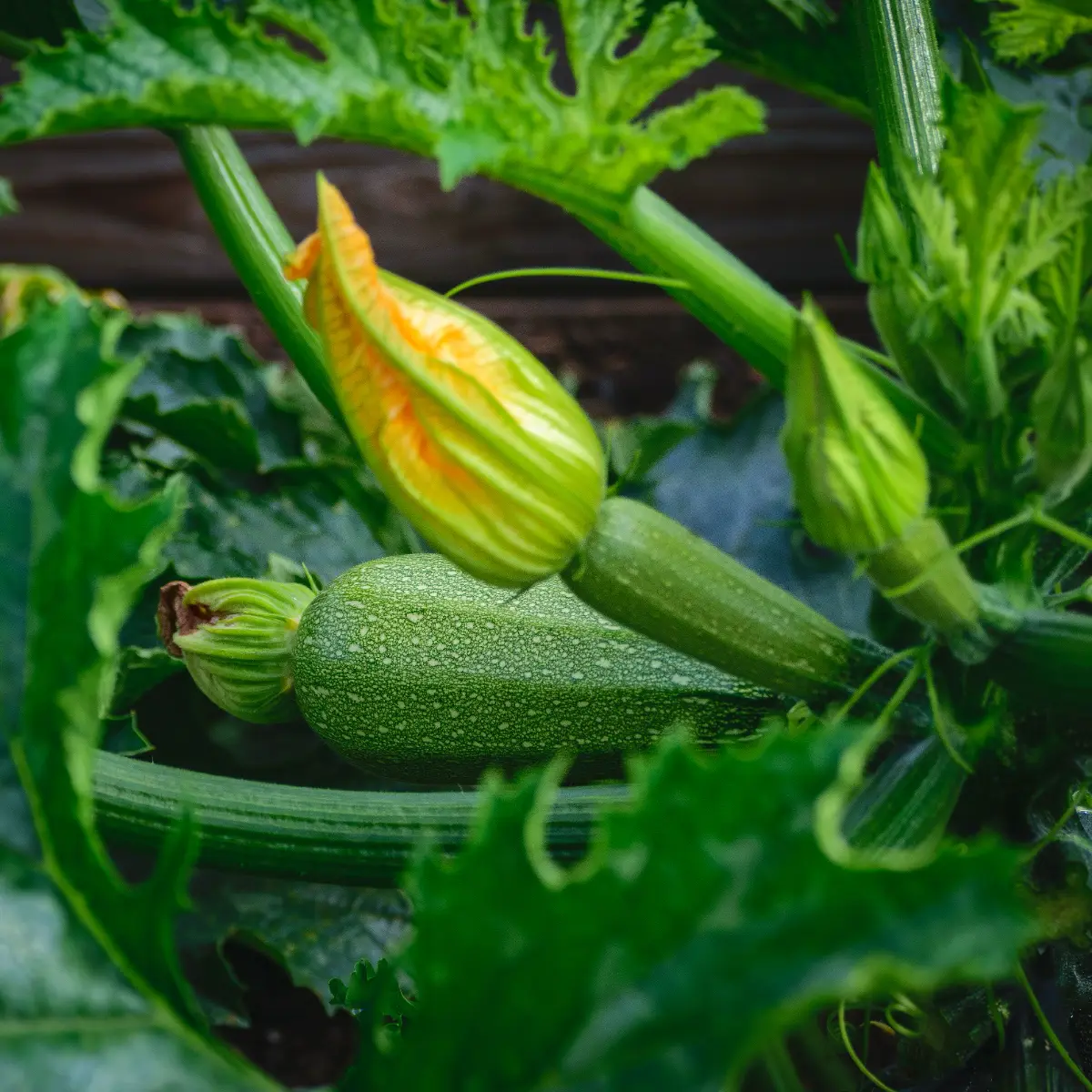
Zucchini and the other summer squashes are famously productive: one or two healthy plants feed a household, and a fruit missed for three days becomes a club. They need warm soil, full sun, room to spread, steady water and bees. The things that end a squash season early are mostly insects rather than weather, so knowing what squash vine borers and squash bugs look like is as important as watering. Pick small and often, and the plants keep going until the borers, mildew or frost catch up.
Quick Care Reference
| Care Aspect | Requirement | Frequency |
|---|---|---|
| Watering | 1-2 inches (2.5-5 cm) a week | Every 2-3 days in summer |
| Light | Full sun, 6-8 hours | Room to spread for airflow |
| Spacing | 3-4 feet (90-120 cm) apart | Bush types; vining types need more |
| Harvest | 6-8 inches (15-20 cm) long | Daily to every other day |
| Pest checks | Stem base and leaf undersides | Weekly from early summer |
Watering
Squash plants have big leaves and lose a lot of water, so they need about 1 to 2 inches (2.5 to 5 cm) a week, often a deep soak every 2 to 3 days in summer. Water at the base, in the morning, and keep the leaves dry to slow powdery mildew. Mulch around the plant to hold moisture steady. Leaves often wilt in the afternoon heat and perk up by evening; that is normal. A plant that is still wilted the next morning in moist soil has a problem below the leaves, often a vine borer.
Light Requirements
Squash wants full sun, at least 6 to 8 hours, for good flowering and fruit. Bush varieties spread 3 to 4 feet (90 to 120 cm) across, so give them space where their leaves will not shade smaller crops. Sun and airflow together also keep powdery mildew in check.
Humidity & Temperature
Summer squash is a warm-season crop. Sow outdoors once the soil reaches at least 60°F (16°C), ideally 70°F (21°C), usually 1 to 2 weeks after the last frost. It grows best between 70 and 85°F (21 to 29°C). Frost kills it. Humid weather brings powdery mildew from midsummer on, which is often what finally ends the season.
Fertilizing
Work plenty of compost into the planting spot. Feed with a balanced fertilizer when the plants start to spread and again when they flower, every 3 to 4 weeks. Too much nitrogen gives huge leaves and fewer squash.
Propagation
Summer squash is grown from seed. It grows fast, so sowing directly in warm soil is usually better than starting indoors.
Direct sowing
- Wait for soil of at least 60°F (16°C)
- Sow 2 or 3 seeds 1 inch (2.5 cm) deep in each spot
- Seedlings appear in 5 to 10 days
- Thin to the strongest seedling once true leaves form
Starting indoors
- Sow 3 to 4 weeks before planting out, in individual pots
- Plant out without disturbing the roots once nights are warm
- Harden off over a week before planting
Popular Varieties
Green zucchini
The familiar dark green summer squash. Most varieties are bushy and compact; pick at 6 to 8 inches (15 to 20 cm).
Yellow summer squash
Straightneck and crookneck types with bright yellow skin, grown and picked the same way as zucchini.
Pattypan squash
Flattened, scallop-edged fruit in green, white or yellow. Best picked small, about 3 inches (8 cm) across.
Seasonal Care Calendar
Spring
Mar – May
- Prepare a sunny, roomy spot with plenty of compost.
- Sow once the soil is 60°F (16°C), usually after the last frost.
- Cover young plants with row cover against insects, and remove it when flowers open.
Summer
Jun – Aug
- Water deeply and mulch. Pick every day or two.
- Check stem bases for borer damage and leaf undersides for squash bug eggs weekly.
- Sow a second planting in early summer to replace plants lost to borers.
Fall
Sep – Nov
- Keep picking until mildew or cold slows the plants.
- Harvest everything before the first frost.
- Pull plants and throw away those with borers, squash bugs or mildew; do not compost them.
Winter
Dec – Feb
- Plan to grow squash away from where squash, cucumbers or melons grew last year.
- Order seed, including mildew-resistant varieties.
- Nothing to sow outdoors yet in most of the country.
Troubleshooting
Plant wilts suddenly and stays wilted, with holes and sawdust-like debris at the stem base
Why it happens: Squash vine borer larvae tunneling inside the stem, common east of the Rocky Mountains
What to do: Slit the stem lengthwise with a knife, remove the white larva, and bury the damaged section in moist soil so it can root again. Prevent it with row cover until flowering, then uncover so bees can reach the flowers, or with a second planting in early summer.
Learn more: Why Are My Plant Leaves Drooping? → Ask the AI about this →Gray-brown bugs on leaves and stems, with yellow patches that turn brown
Why it happens: Squash bugs sucking sap; their bronze eggs sit in clusters on leaf undersides
What to do: Crush egg clusters and hand-pick nymphs and adults every few days. A board on the soil overnight collects adults to remove in the morning. Clear plant debris in fall.
Learn more: Plant Pest Identification Guide → Ask the AI about this →White powdery patches on the leaves
Why it happens: Powdery mildew, almost certain from midsummer on in humid regions
What to do: Remove the worst leaves and keep plants spaced for airflow. Late in the season it is usually not worth fighting. Grow resistant varieties next year.
Learn more: Powdery Mildew on Houseplants → Ask the AI about this →Angular yellow patches boxed in by the leaf veins, with gray-purple fuzz underneath
Why it happens: Downy mildew, which arrives on the wind in humid weather and can collapse plants within weeks
What to do: There is no cure once it spreads. Remove badly affected leaves, water at the base, and keep plants spaced for airflow. Pull and throw away plants that are collapsing, and grow resistant varieties next season.
Ask the AI about this →Small squash shrivel and rot at the tip
Why it happens: Poor pollination, or only male flowers so far
What to do: Give it time if the plant is young. Plant flowers nearby for bees and avoid insecticides during flowering. You can move pollen from a male flower to a female flower with a small brush.
Ask the AI about this →Dark, sunken rot at the blossom end of the fruit
Why it happens: Blossom-end rot from uneven watering
What to do: Remove affected fruit and water deeply and evenly; mulch to hold moisture steady.
Learn more: How Often Should I Water My Plant? → Ask the AI about this →Not sure what's wrong?
Premium includes AI photo diagnosis, then walks you through the fix and checks back in until it's better.
See Premium →Track your Zucchini and Summer Squash with PlantCareAI
Add your Zucchini and Summer Squash and get a watering schedule tuned to this week's weather. Free for up to 3 plants.
Add your Zucchini and Summer Squash