
Common Indoor Plants to Help Restore Your Focus
By Ellen Hermance · PlantCareAI Editorial
Your ability to concentrate is a limited resource. Modern work — spreadsheets, emails, video calls — drains it through relentless "directed attention," and once it's gone, you feel scattered, irritable, and unable to focus no matter how hard you try. The good news: Attention Restoration Theory (ART), developed by environmental psychologists Rachel and Stephen Kaplan, shows that exposure to natural elements, especially plants, genuinely restores this exhausted attention. The right houseplants don't just look nice on a shelf. They engage your brain in a gentle, effortless way that allows your tired prefrontal cortex to recover. Here's how to choose and use them strategically.
Quick Answer: For focus restoration, choose plants with fractal patterns (Boston Fern, succulents), calming movement (Calathea), or trailing growth (Pothos, Philodendron). Add a small Rosemary pot for scent-based alertness. Place at eye level where you naturally glance during work. Even one plant makes a measurable difference.
How Plants Restore Your Focus
When you stare at a screen for hours, your prefrontal cortex — the part of the brain responsible for directed attention, decision-making, and willpower — becomes fatigued. This is why you make more errors, feel irritable, and struggle to concentrate in the afternoon. Plants help through what ART researchers call "soft fascination": effortless, involuntary attention triggered by natural patterns. Unlike a video or conversation (which demand your directed attention), a fern's swaying frond or a calathea's intricate leaf markings engage your eye without requiring mental effort. This gives your directed-attention system time to recover, restoring your capacity to concentrate. The 4 stages of restoration move from clearing mental clutter, through fatigue recovery and soft fascination, to reflective restoration; plants naturally facilitate the third stage, which unlocks the fourth.
The Fractal Focus: Ferns and Succulents
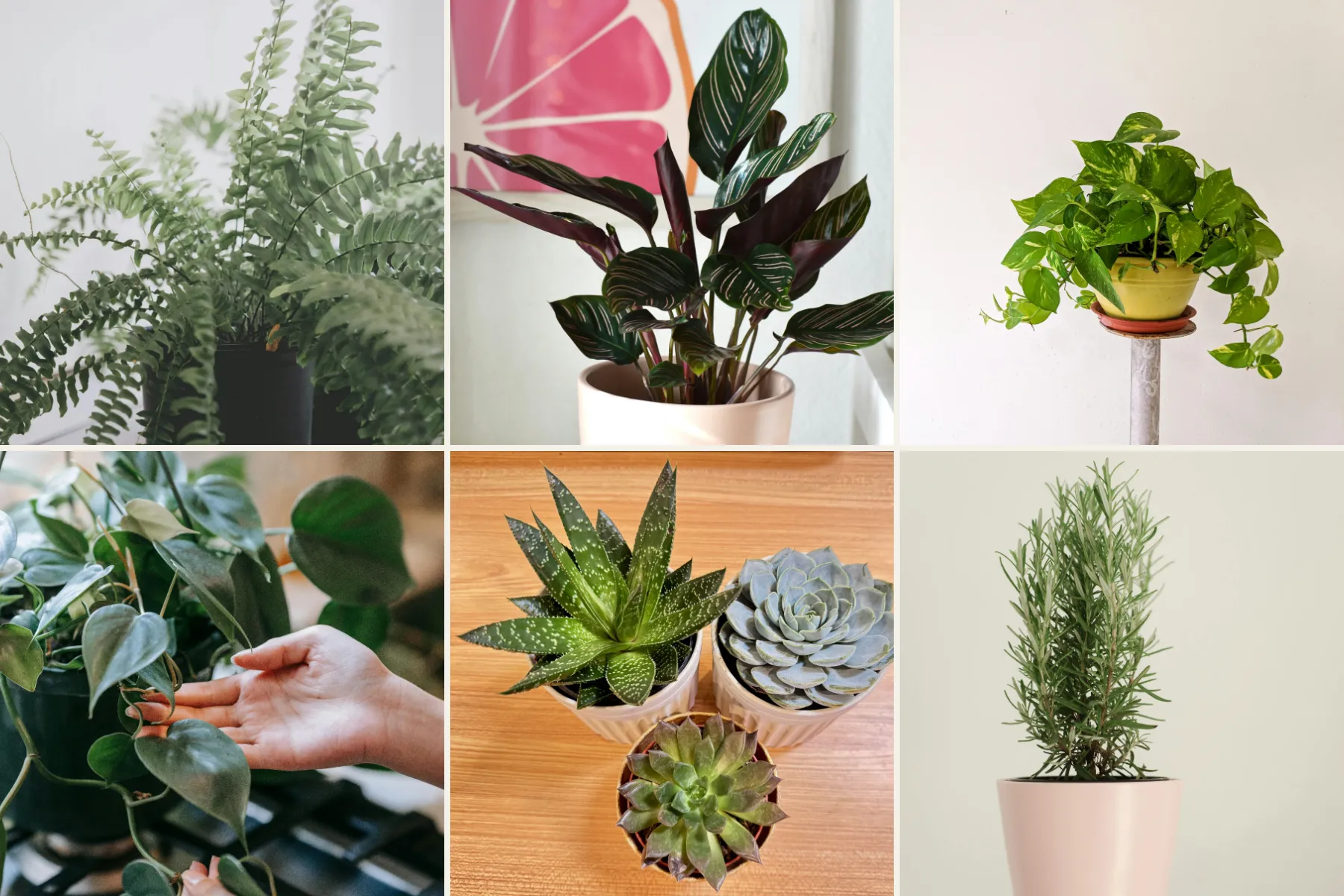
Plants with high natural symmetry and repeating geometric patterns are the most effective at engaging soft fascination. Fractal geometry, patterns that repeat at every scale, appears throughout nature and is uniquely calming to the human visual system, possibly because our brains evolved to process it effortlessly. Boston Ferns are the classic example: their arching fronds are covered in pinnate leaflets that repeat the same branching pattern at smaller and smaller scales. Looking at a fern frond from across the room or up close provides the same gentle visual engagement. Echeveria and other rosette succulents achieve the same effect through the Fibonacci spiral — the mathematical sequence visible in their tightly arranged, perfectly geometrical leaves. Both work as desk or shelf plants that provide a natural focal point for your eyes to rest on during mental breaks.
The Soothing Movement: Calathea (Prayer Plants)
Calatheas belong to the prayer plant family and display nyctinasty; their leaves fold upward at night and open again in the morning, a daily cycle driven by light. This slow, living movement acts as a grounding signal for the nervous system, providing a subtle reminder that time is passing and the world is working as it should. Beyond their movement, Calathea leaves look hand-painted: intricate stripes, spots, and feathered markings in deep greens, cream, and burgundy reward close inspection without demanding it. Unlike a bright screen, the visual complexity of a calathea leaf engages your gaze in a way that feels restful rather than stimulating. They thrive in the medium indirect light of most offices and work-from-home setups.
The Green Waterfall: Trailing Vines
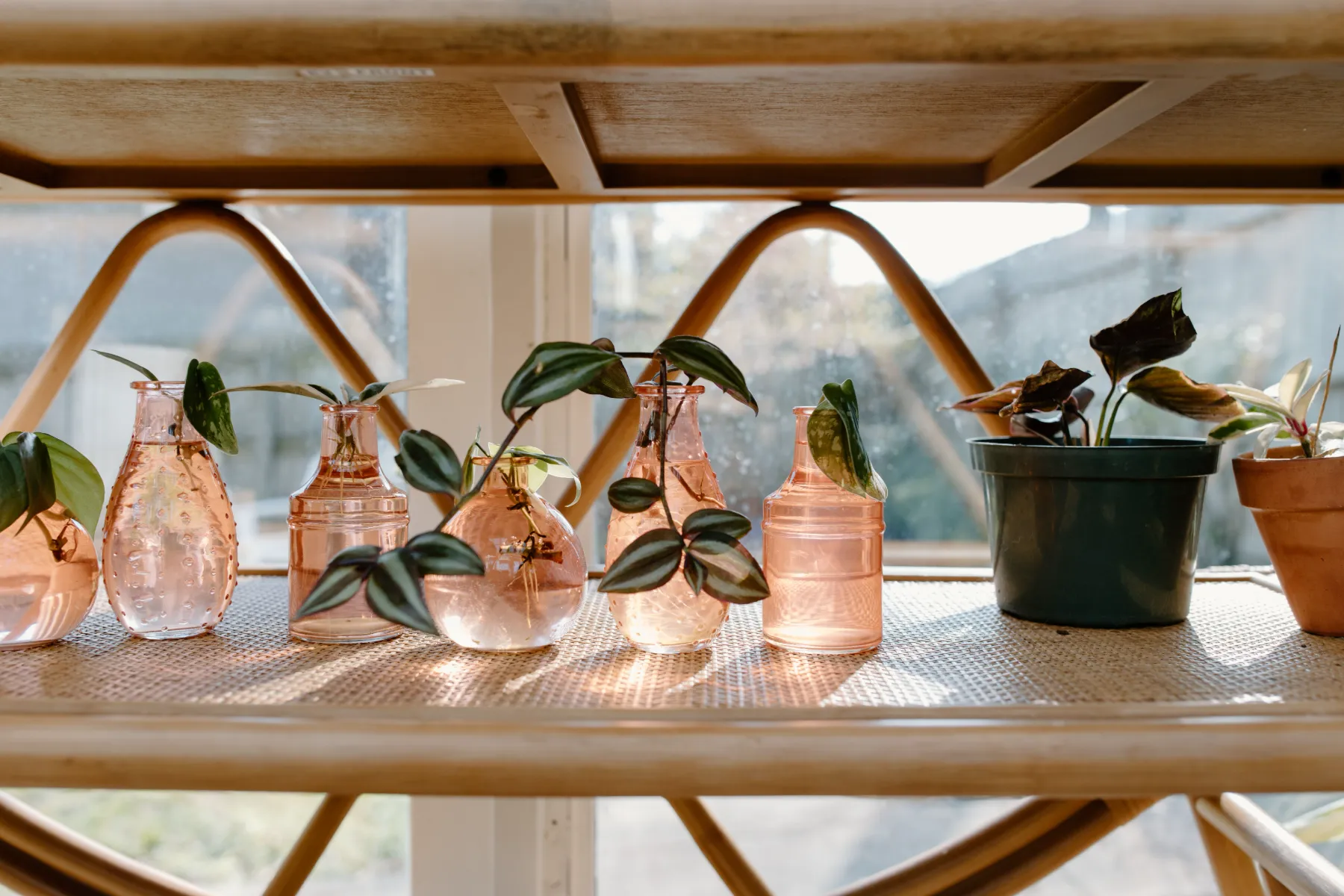
Hanging or trailing Golden Pothos and Philodendron over shelves, windowsills, or the edge of a desk creates an immersive, lush environment that softens harsh architectural edges and the hard lines of office equipment. This visual buffering, replacing sharp corners and cables with flowing green, reduces low-level visual stress. Both plants are also celebrated for being exceptionally low-maintenance: they thrive on near-neglect, tolerating irregular watering, imperfect light, and general inattention. This matters psychologically. A struggling, stressed plant creates background anxiety; a thriving, easy plant reinforces a sense of calm competence. The golden rule: choose plants that make you feel like a capable plant parent, not guilty ones.
The Sensory Grounder: Rosemary
Rosemary is the outlier in this group, a Mediterranean herb rather than a tropical foliage plant, but its inclusion is scientifically backed. Studies by psychologists at Northumbria University found that ambient exposure to rosemary essential oil aroma was associated with improved speed and accuracy on cognitive tests, particularly tasks requiring sustained attention and working memory. A small pot on your desk edge allows brief, voluntary scent-based grounding during repetitive tasks. A quick pinch of a sprig releases the aromatic oils. Unlike essential oil diffusers, a living rosemary plant provides the scent subtly and intermittently, which research suggests may be more effective than continuous exposure for maintaining alertness without sensory adaptation.
Building Your Focus Corner
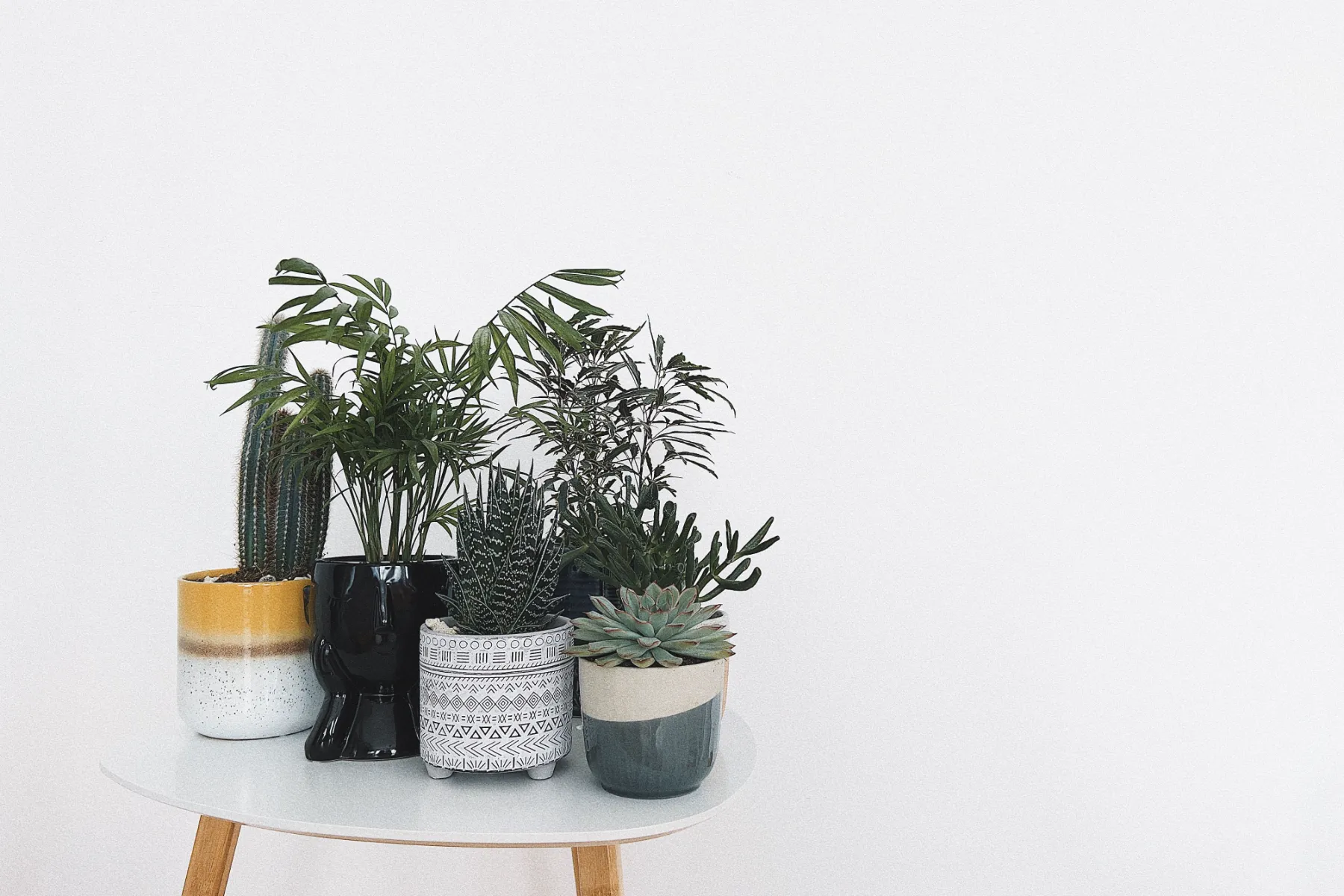
You don't need all six plants to benefit; even one well-chosen plant makes a measurable difference in perceived stress and attention restoration. The most effective setup layers different engagement types: a fractal plant (fern or succulent) at eye level for visual rest, a trailing vine above and to the side to soften the space, and a small rosemary pot within reach for scent. Keep plants where you'll naturally glance at them during work, not behind you or out of your sightline. The daily maintenance routine (checking moisture, turning pots for even growth, harvesting a rosemary sprig) also provides a brief, grounding physical break from screen time. Start simple: even a single pothos in a well-lit corner begins the restoration process.
Featured Plant Guides
Complete care guides for every plant mentioned in this article:
Deep Dive Articles
Explore these detailed guides for specific topics covered in this guide:

Related Guides
Get Personalized Plant Care Advice
PlantCareAI uses your location and local weather to give you advice tailored to your exact situation. No signup required to try.
Get personalized advice for your focus plants →