
Christmas Cactus Care Guide
Schlumbergera
Also known as Thanksgiving Cactus, Holiday Cactus, Crab Cactus, Zygocactus
By Ellen Hermance · PlantCareAI Editorial
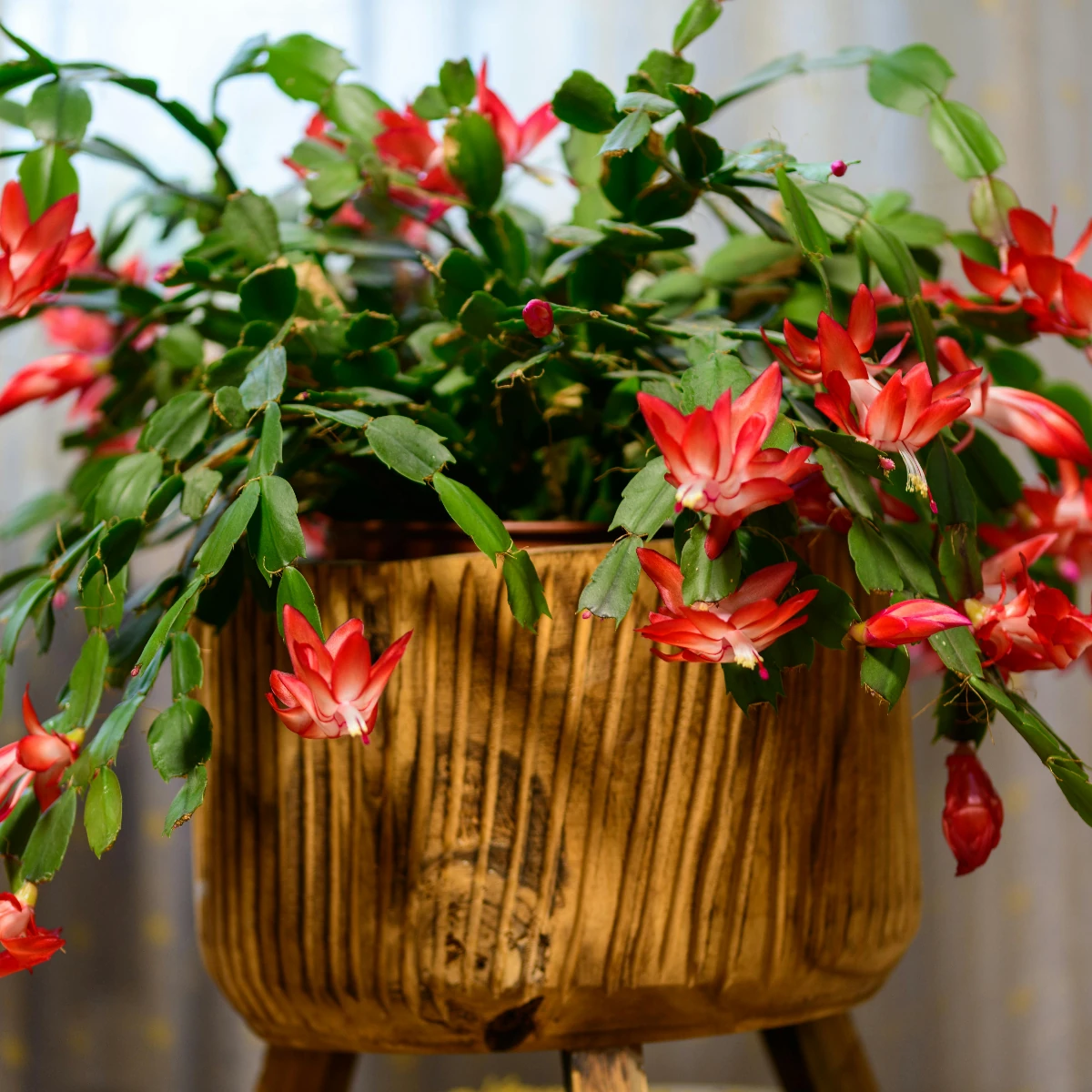
Christmas Cactus is a popular holiday plant that produces cascading tubular flowers in red, pink, white, orange, or purple, typically in late November and December. Unlike desert cacti, it is a forest epiphyte from the Brazilian rainforest and prefers consistent moisture, humidity, and bright indirect light. With minimal care it lives for decades, growing larger and more floriferous each year. The secret to reliable blooming is a period of cool nights and long darkness in fall.
Quick Care Reference
| Care Aspect | Requirement | Frequency |
|---|---|---|
| Watering | Top inch dry | Every 7-14 days (reduce after flowering) |
| Light | Bright indirect | 14 hrs darkness in Oct for blooming |
| Humidity | 50-60% | Pebble tray in dry climates |
| Fertilizer | Half-strength balanced or cactus | Monthly spring through August |
| Repotting | Well-draining mix with some organic matter | Every 2-3 years after flowering |
Watering
Water when the top inch of soil is dry, typically every 7 to 14 days in spring and summer. This is more frequent than desert cacti; let the soil get partially but not completely dry. After flowering, reduce watering for 4 to 6 weeks to allow the plant to rest. Resume normal watering in spring. During the bloom-triggering period in fall, water sparingly but do not let the segments shrivel. Always use a pot with drainage holes.
Light Requirements
Christmas Cactus prefers bright indirect light year-round. An east- or west-facing window is ideal. It can tolerate some gentle morning direct sun. In fall, when you are trying to trigger blooming, the plant needs 14 hours of complete darkness each night; move it to a dark room or cover it with a box. Once buds set, return it to its normal bright position but do not change the light direction or it may drop its buds.
Humidity & Temperature
Christmas Cactus prefers moderate to high humidity (50 to 60%), reflecting its tropical rainforest origins. In dry indoor conditions, a pebble tray with water placed under the pot provides passive humidity. Keep temperatures between 60 and 70°F (15 to 21°C) during the growing season. For bud initiation in fall, cooler nighttime temperatures of 50 to 55°F (10 to 13°C) combined with long nights trigger blooming.
Fertilizing
Feed monthly from spring through early fall with a balanced liquid fertilizer or a cactus fertilizer diluted to half strength. Stop fertilizing in mid-fall (September) to prepare for the bloom-triggering period. Resume fertilizing in late winter or early spring after the plant's rest period.
Propagation
Christmas Cactus propagates easily from stem sections. Each cutting quickly roots in water or moist soil.
Stem cuttings in soil
- Twist off a section of 2 to 3 stem segments at a joint
- Allow the cut end to dry and callous for 24 hours
- Plant 1 segment deep in moist cactus mix
- Keep in bright indirect light and water sparingly until roots form (3 to 4 weeks)
- Resume normal care once the cutting shows new growth
Stem cuttings in water
- Twist off a 2 to 3 segment cutting and let it callous for 24 hours
- Place the cut end in a small glass of water in bright indirect light
- Change water every 3 to 4 days
- Roots appear in 3 to 4 weeks; pot in cactus mix once roots reach 1 inch
- Water sparingly for the first few weeks to encourage root development
Popular Varieties
Schlumbergera truncata
Thanksgiving Cactus; blooms slightly earlier (November) with pointed stem segments and more upright flowers.
Schlumbergera x buckleyi
True Christmas Cactus with rounded stem segments and drooping flowers; blooms in December.
Schlumbergera gaertneri
Easter Cactus; blooms in spring with star-shaped flowers and requires a different dormancy schedule.
Seasonal Care Calendar
Spring
Mar – May
- Resume regular watering and monthly fertilizing after winter rest.
- Active growth period. Water when top inch is dry. Feed monthly.
- Continue regular care. Take stem cuttings for propagation if desired.
Summer
Jun – Aug
- Continue monthly fertilizing and regular watering. Bright indirect light.
- Water regularly. Keep out of intense direct afternoon sun.
- Stop fertilizing by end of August to prepare for bloom initiation.
Fall
Sep – Nov
- Begin bloom initiation: 14 hours of darkness and cool nights (50-55°F / 10-13°C) nightly. Reduce watering.
- Continue darkness treatment for 6 weeks. Once buds appear, return to bright light and stop the treatment.
- Buds should be visible. Do not move the plant. Resume normal watering carefully.
Winter
Dec – Feb
- Peak bloom. Keep in bright indirect light. Water carefully; do not move the plant.
- After flowers fade, reduce watering and withhold fertilizer for 4 to 6 weeks of rest.
- Rest period. Minimal watering. Move to a slightly cooler spot if possible.
Troubleshooting
Flower buds dropping before opening
Why it happens: Plant was moved, temperature change, or draft
What to do: Do not move or rotate the plant once buds are set. Keep away from drafts and sudden temperature changes.
Ask the AI about this →Limp or shriveled segments
Why it happens: Underwatering or root rot
What to do: Check soil; if dry, water thoroughly. If soggy, let dry completely and check roots for rot.
Learn more: Am I Overwatering My Plant → Ask the AI about this →Plant not blooming
Why it happens: Insufficient darkness or too-warm nights in fall
What to do: Provide 14 hours of complete darkness and nighttime temperatures of 50 to 55°F (10 to 13°C) for 6 consecutive weeks starting in early October.
Ask the AI about this →Yellow or pale segments
Why it happens: Too much direct sun or overwatering
What to do: Move to bright indirect light and reduce watering. Yellowing from sun exposure will not reverse but new growth will be healthy.
Learn more: Why Are My Plant Leaves Turning Yellow → Ask the AI about this →Not sure what's wrong?
Premium includes AI photo diagnosis, then walks you through the fix and checks back in until it's better.
See Premium →Track your Christmas Cactus with PlantCareAI
Add your Christmas Cactus and get a watering schedule tuned to this week's weather. Free for up to 3 plants.
Add your Christmas Cactus