
Plants for Longevity: What Blue Zone Gardens Grow
By Ellen Hermance · PlantCareAI Editorial
In the world's longest-lived communities, from Okinawa to Sardinia to Costa Rica's Nicoya Peninsula, longevity researchers keep finding a similar pattern, though the underlying population data is debated: people grow a meaningful share of what they eat, and what they grow tends to be nutrient-dense, polyphenol-rich, and tied to daily habit rather than special occasion. None of these plants are exotic or hard to find. Here is what to grow if you want your own garden to look a little more like theirs.
Quick Answer: Blue Zone gardens share five crops: purple sweet potato, rosemary, sage, dandelion greens, and the Three Sisters planting of corn, beans, and squash. None are exotic or hard to grow. What sets them apart is not the plant but that the people eating them grew them.
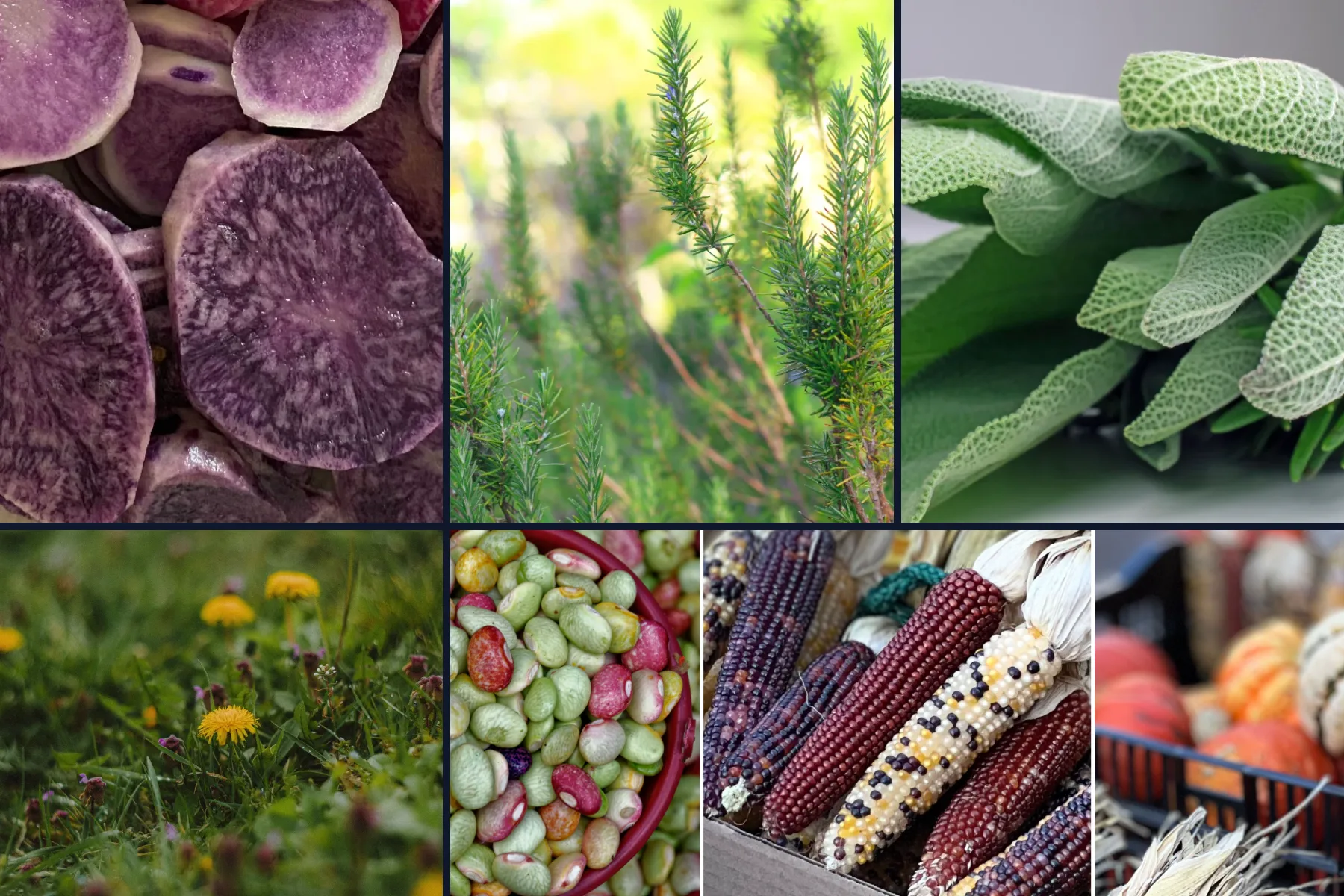
5 Plants Blue Zone Gardens Have in Common
-
Purple Sweet Potato (Ipomoea batatas)
In Okinawa, the purple-fleshed sweet potato called beni imo historically supplied more than half of the traditional diet's calories. Its deep violet color comes from anthocyanins, plant pigments with some of the strongest antioxidant activity measured in produce, ahead of grape skin, red cabbage, and elderberry in several comparisons. It's a vigorous, easy-to-grow vine that tolerates poor soil and needs very little attention once established.
How to fix it: Grow in full sun in loose, well-draining soil; heavy clay produces misshapen roots. Plant slips (rooted vine cuttings) after the last frost, spacing them 12 inches apart, and let vines sprawl or trail over a container edge. Harvest 90-120 days after planting, once the vines begin to yellow.
-
Rosemary (Salvia rosmarinus)
Ikarian households brew daily herbal teas from rosemary grown within walking distance of home; rosemary tea is a traditional remedy there for blood pressure. Rosemary is also one of the easiest Mediterranean herbs to keep alive indoors or out, since it actively prefers to be left alone: too much water kills it faster than too little.
How to fix it: Give it at least 6 hours of direct sun and let the soil dry out almost completely between waterings. Use a fast-draining potting mix (add perlite or sand if needed). For the full growing, pruning, and propagation guide, see our dedicated Rosemary Care Guide below.
-
Sage (Salvia officinalis)
Sage is the other staple of Ikarian herbal tea, traditionally used there to help with inflammation. Like rosemary, it's a hardy Mediterranean perennial that thrives on neglect: overwatering and rich soil are the two most common ways gardeners kill it. Established plants come back year after year in most climates and can be harvested continuously through the growing season.
How to fix it: Plant in full sun with sharp drainage; a raised bed, rock garden, or unglazed terracotta pot all work well. Water only when the top 2 inches of soil are dry, and skip fertilizer entirely; sage grown in lean soil has a stronger flavor and aroma than sage grown in rich soil.
-
Dandelion (Taraxacum officinale)
Ikaria's diet includes over a hundred varieties of wild greens, and dandelion is one of the most common; the whole plant is edible, and Ikarians traditionally use the leaves in salads and the root in tea as a mild diuretic and liver support. Most gardeners spend money trying to remove dandelions from their lawn; growing them deliberately for the kitchen, in a contained bed, flips that relationship.
How to fix it: Sow seeds directly in average garden soil in full sun to partial shade; dandelions aren't picky. Harvest young leaves continuously for the mildest, least bitter flavor, and dig the taproot in fall for drying and tea. Keep it contained (a raised bed or large pot) so it doesn't naturalize into your lawn.
-
The Three Sisters: Beans, Corn, and Squash
On Costa Rica's Nicoya Peninsula, centenarians still tend backyard plots of corn, beans, and squash grown together, a combination indigenous Mesoamerican farmers called the Three Sisters. The pairing isn't just tradition; it's a self-sustaining system. Corn gives beans a stalk to climb, beans fix nitrogen in the soil that feeds the corn and squash, and squash's broad leaves shade the ground to suppress weeds and retain moisture. Nutritionally, corn and beans together form a complete protein that neither provides alone.
How to fix it: Plant corn first in a block (not a single row, so wind pollinates it); once it's ankle-high, plant pole beans at its base and squash or pumpkin around the perimeter. All three want full sun and consistent water. This trio is a summer crop for garden beds or large containers, not a houseplant substitute.
Watch: Why Some Cultures Age Beautifully
The Elloquist video that sent you here, on the research connecting Blue Zone gardens to longer, healthier lives.
By Elloquist · Watch on YouTube
What this video covers
- A 2025 Lothian Birth Cohort study that tracked gardeners from age 79 to 90 found frequent gardeners had a 22% lower mortality risk and longer telomeres, the biological markers of cellular aging.
- All five Blue Zones share a pattern of growing plants, not only eating them. The plant-heavy diets matter, but so does the daily act of tending a garden.
- For Okinawan centenarians who garden every morning, the garden is ikigai, the reason to get up. The Ohsaki Study links a sense of ikigai to lower mortality.
- The plant chemistry is specific: anthocyanins in Okinawan purple sweet potato, polyphenols in Sardinian Cannonau wine, and antioxidants in the wild herbs Ikarians brew into daily tea.
- The video engages directly with the criticism of the Blue Zones concept, including Saul Newman's work on errors in supercentenarian age records, which won the 2024 Ig Nobel Prize in Demography.
Chapters
- 0:00 Three Places Where People Live Past 90
- 0:30 What the Blue Zones Have in Common
- 1:00 The Pattern: Okinawa, Sardinia, Ikaria, and Nicoya
- 2:03 The Science: Gardening, Telomeres, and a 22% Lower Death Risk
- 3:49 The Chemistry: Purple Sweet Potato, Cannonau, and Wild Herbs
- 5:42 The Case Against Blue Zones
- 7:36 The Take-Home: What Holds Up Regardless
- 8:20 A Pot of Herbs on the Windowsill
Read the full transcript
0:00 Three Places Where People Live Past 90
There is a Greek island where one in three people live past ninety. There is a Japanese island where the oldest women on Earth tend their gardens every morning. And there is a peninsula in Costa Rica where farmers in their hundreds still grow and harvest their own food, from seeds their grandparents taught them to plant. Something is happening in these places. Something to do with soil, and seeds, and a particular quality of time.
0:30 What the Blue Zones Have in Common
Researchers called these places Blue Zones. Five corners of the world where people don’t just live longer, they live better, deep into old age. For decades, scientists have been trying to work out why. The short answer involves something you might not expect.
It involves plants. Not just eating them. Growing them. Living alongside them. Knowing them the way your grandmother might have.
1:00 The Pattern: Okinawa, Sardinia, Ikaria, and Nicoya
Start in Okinawa, Japan, where almost every centenarian grows a garden. In a culture with no word for retirement, the garden is not a hobby. It is ikigai: the reason you get out of bed in the morning. In Sardinia, shepherds carry homegrown beans and local wine on their daily five-mile walks.
In Ikaria, Greece, an island with more than a hundred kinds of wild greens, people brew daily teas from herbs they forage themselves. Rosemary for blood pressure. Sage for inflammation. Dandelion for the liver.
All of it growing within walking distance of home. And on Costa Rica’s Nicoya Peninsula, centenarians tend backyard gardens growing the same three crops their ancestors grew: corn, beans, and squash. The combination is so nutritionally complete that the indigenous peoples of Mesoamerica called them the Three Sisters. So why does this matter, biologically?
2:03 The Science: Gardening, Telomeres, and a 22% Lower Death Risk
Researchers decided to find out. What they found is remarkable. In 2025, a study in Scotland tracked nearly 500 people from age seventy-nine to ninety. It is one of the longest aging studies ever run.
Frequent gardeners had a 22 percent lower risk of dying than people who never gardened. And that is not the striking part. The striking part is what showed up at the cellular level. The gardeners had longer telomeres.
Here is what that means. Telomeres are the protective caps at the ends of your chromosomes. Think of the plastic tip on a shoelace. Every time your cells divide, and every time your body is under stress, those caps get a little shorter.
Shorter telomeres mean faster biological aging. They are linked to higher rates of dementia, heart disease, and cancer. So the gardeners in this study were not just living longer. At the cellular level, they were younger.
And it is not one study. A Swedish study of 4,000 adults found that people who did light daily activity, gardening, walking, yard work, had a 30 percent lower risk of dying from any cause. An Australian study found regular gardeners had a 36 percent lower risk of dementia. A study of Taiwanese adults over fifty found daily home gardening cut mortality risk by 18 percent.
And the Scottish gardeners have been followed even further, all the way through 2025. Of the roughly 475 people who started, nearly all have died. The few still alive are 103 years old.
3:49 The Chemistry: Purple Sweet Potato, Cannonau, and Wild Herbs
But there is another layer here. It is not only the act of gardening. It is what these cultures grow, and eat. In Okinawa, the purple sweet potato, called beni imo, once provided more than half of the average person’s calories.
It gets that deep violet color from anthocyanins, and those anthocyanins are extraordinary. Studies suggest they have stronger antioxidant activity than grape skin, red cabbage, elderberry, or purple corn. They appear to push back on several of what researchers call the hallmarks of aging: genomic instability, stem cell exhaustion, chronic inflammation. In Sardinia, the local Grenache wine, Cannonau, carries two to three times the polyphenols of most red wines.
A 2012 study using chromatography confirmed the unusual density. Sardinians drink it in moderation, with food, with friends. And in Ikaria, those daily herbal teas are not just tradition. Wild rosemary and sage act as mild diuretics that help regulate blood pressure, and as antioxidants that help hold down inflammation.
The pattern is not a coincidence. These cultures landed on plant foods that are chemically protective. The polyphenols, flavonoids, and anthocyanins in their diets lower oxidative stress and inflammation, the same processes that shorten your telomeres. There is one more layer, and it is newer.
It may not be only what they grow, but how. Crops raised in healthier, more biodiverse soil, the small-scale, low-input way these cultures have always farmed, test higher in the very polyphenols and antioxidants we are talking about. The garden itself may be part of the chemistry.
5:42 The Case Against Blue Zones
Now, I want to be straight with you about something, because this is Elloquist, and that means looking at the science honestly, even when it complicates the story. The Blue Zones idea has drawn real criticism. A researcher at University College London, Saul Newman, has argued that some of the reported centenarian numbers are inflated: the result of poor record-keeping, fraud, and pension payments that keep flowing to people who have died. In Japan, a 2010 audit found 230,000 officially listed centenarians who were missing or dead.
Costa Rica and Greece showed similar gaps in the records. The researchers who built the Blue Zones concept have defended their work. They say they cross-checked civil records going back to the 1880s in Sardinia, and found no missing centenarians in the part of Okinawa they studied. The field is still divided, and Newman’s paper has not cleared peer review.
And here is the part that surprised me most. Even the people who built the concept now say the original places are changing. Newer generations in Nicoya and Okinawa are not living as long as the ones before them. And Dan Buettner, the National Geographic explorer who identified the Blue Zones and popularized the whole idea, now says most of the original zones are waning.
But this is what matters. The biology does not need the centenarian count to be exact, and it does not need these particular places to stay exceptional forever. The Scottish study has nothing to do with the Blue Zones. The Swedish study is independent.
The Australian dementia research is independent. The habits underneath, plant-rich diets, daily gentle movement, a sense of purpose, real social connection, hold up on evidence that has nothing to do with how many hundred-year-olds live in Okinawa.
7:36 The Take-Home: What Holds Up Regardless
Here is what stays with me. These are not secret societies with access to some longevity potion. They are ordinary people, in ordinary places, doing what humans have done for thousands of years. They grow things.
They tend things. They eat what they grow. They move because life asks them to. They know their neighbors.
They have somewhere to be in the morning. The purple sweet potato in Okinawa is not exotic. It is a root vegetable that someone planted, tended, harvested, and cooked. The Sardinian garden is not a wellness trend.
It is a family tradition. Ikigai is not a productivity framework. It is the old, simple experience of having something worth waking up for.
8:20 A Pot of Herbs on the Windowsill
The science is telling us something part of us already knew. Living close to plants, growing them, eating them, tending them the way you would tend anything alive, because they are alive, may not be a footnote to a long life. It may be the point. You do not need to move to Okinawa.
You need a pot of herbs on the windowsill. You need a reason to step outside in the morning. You need something growing. If this made you curious, there's more where this came from.
The world is more alive than we remember. I'm Elloquist. And I'll see you in the next one.
Watch next:What Your Houseplants Are Actually Doing to Your Brain on the soil bacterium that acts on the same brain chemistry as antidepressants.
Frequently Asked Questions
- Does eating these plants make you live longer?
- Not provably. The research linking these diets to longer lives is associational, built from population studies rather than controlled trials. What is better established is narrower: regular low-intensity activity like gardening, and a diet rich in polyphenols, are each independently linked to lower mortality risk.
- Can I grow these outside a Blue Zone?
- Yes. All five are ordinary crops. Rosemary and sage grow in pots in almost any temperate climate, purple sweet potato needs a warm 90 to 120 day season, and corn, beans, and squash are a summer planting anywhere with full sun.
- Which one should I plant first?
- Rosemary. It tolerates neglect better than almost any herb, lives for years in a pot with sharp drainage, and the most common way to kill it is watering too often. If you have never grown anything edible, it is the most forgiving place to start.
- Do I need a garden for this?
- Not for all of it. Rosemary, sage, and dandelion do well in pots on a balcony or a sunny windowsill. Purple sweet potato and the Three Sisters do want ground space or large containers, because they are seasonal crops rather than houseplants.
- Are the Blue Zones themselves reliable?
- They are disputed. Researchers including Saul Newman have challenged the age records underpinning several of these regions, and that criticism is unresolved. The plants on this page stand on their own merits as nutrient-dense, low-maintenance crops regardless of how that debate settles.
The Bottom Line on Longevity and Gardening
None of this is a guarantee; the research linking gardening and plant-rich diets to longer, healthier lives is associational, built from population studies rather than controlled trials, and the underlying demographic claims about Blue Zones themselves are debated among researchers. What's better established is narrower and still meaningful: regular low-intensity activity like gardening and a diet rich in polyphenols and antioxidants are both independently linked to lower mortality risk and slower biological aging. You don't need a Greek island. You need a pot of rosemary and a reason to check on it every morning.
Get Personalized Plant Care Advice
PlantCareAI uses your location and local weather to give you advice tailored to your exact situation. No signup required to try.
Try the AI Plant Doctor