
Basil Care Guide
Ocimum basilicum
Also known as Sweet Basil
By Ellen Hermance · PlantCareAI Editorial
Basil is the herb most people grow first, and the one most likely to collapse on them the moment the weather turns. It is a tender annual that loves heat, hates cold, and can blacken after a single night below 50°F (10°C). Given full sun, steady water and regular pinching, one plant keeps a kitchen supplied all summer. Left to flower, it turns more bitter and soon slows down. Most of growing it well is knowing which of those two things is happening.
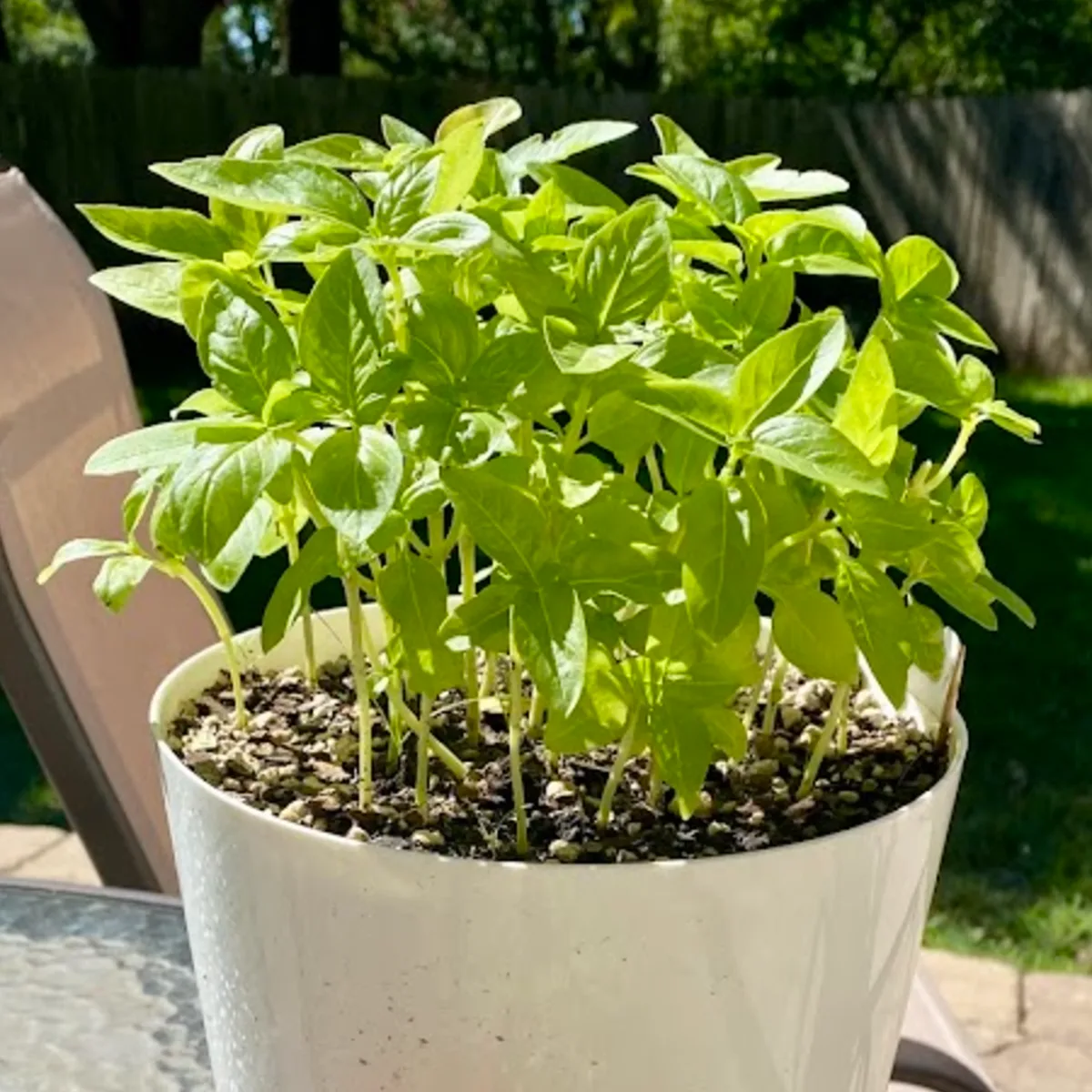
Quick Care Reference
| Care Aspect | Requirement | Frequency |
|---|---|---|
| Watering | Evenly moist, never soggy | Every 2-3 days in the ground; daily for containers in heat |
| Light | Full sun, 6-8 hours | More sun means more flavor |
| Temperature | Nights above 50°F (10°C) | Plant out late, harvest before the first cold night |
| Pinching | Remove flower spikes | Weekly through summer |
| Fertilizer | Light, balanced | Every 4 weeks in the ground, 2-3 weeks in pots |
Watering
Keep the soil evenly moist but never waterlogged. In the ground that usually means a good soak every 2 to 3 days in summer, about 1 inch (2.5 cm) a week; in a container on a hot patio it can mean every day. Basil tells you when it is dry by wilting hard, and it usually recovers within an hour of water, but repeated wilting makes it bolt sooner and turns the leaves tough. Water at the base in the morning and keep the leaves dry. That matters more for basil than for most herbs, because wet foliage overnight is exactly what downy mildew needs.
Light Requirements
Basil wants 6 to 8 hours of direct sun and grows noticeably faster and more fragrant with more of it. In less light it grows tall and leggy with smaller, milder leaves. In the hottest climates a little afternoon shade keeps it from wilting every day, but it is far more often short of sun than long on it. On a windowsill indoors it rarely gets enough, which is why supermarket pots fade so quickly at home.
Humidity & Temperature
Temperature is what decides basil's fate. It grows best between 70 and 90°F (21 to 32°C) and stalls below 60°F (16°C). Below 50°F (10°C) the leaves darken and blacken, and near 32°F (0°C) the whole plant dies. Do not plant out until nights hold above 50°F (10°C), and harvest everything before the first cold night of fall rather than after. Average outdoor humidity is fine; high humidity with leaves that stay wet invites downy mildew, so spacing and airflow matter.
Fertilizing
Basil needs less feeding than most people give it. Work compost into the soil at planting, then a light balanced or slightly nitrogen-leaning feed every 4 weeks is plenty in the ground, every 2 to 3 weeks in a container. Heavy feeding mostly grows soft, watery leaf, and sun does more for flavor than fertilizer does.
Propagation
Basil grows easily from seed and roots from cuttings faster than almost any other herb, which makes it simple to keep a supply going all season.
From seed
- Sow indoors 4 to 6 weeks before your last frost, or outdoors once the soil is warm
- Cover seed with 1/4 inch (6 mm) of soil
- Keep at 70°F (21°C) or warmer; seed germinates in 5 to 10 days
- Thin seedlings to 12 to 18 inches (30 to 45 cm) apart
Stem cuttings in water
- From a healthy plant, cut a 4 inch (10 cm) stem just below a leaf pair, before it flowers
- Strip the lower leaves and stand it in a glass of water
- Roots appear in 7 to 14 days; change the water every few days
- Pot up once roots reach about 2 inches (5 cm)
Popular Varieties
Genovese basil
The classic large-leaved sweet basil for pesto and tomatoes. The most flavorful, and the most susceptible to downy mildew.
Downy-mildew-resistant basil
Varieties bred specifically to resist downy mildew, with Genovese-style flavor. Worth growing anywhere the disease has appeared before.
Thai basil
Smaller leaves, purple stems and a sweet anise flavor. Tolerates heat well.
Seasonal Care Calendar
Spring
Mar – May
- Sow indoors 4 to 6 weeks before the last frost, or buy young plants.
- Harden off over a week. Wait for warm nights rather than planting early.
- Plant out once nights hold above 50°F (10°C). Pinch the tips once plants have three sets of leaves.
Summer
Jun – Aug
- Harvest often from the top. Pinch out every flower spike you see.
- Water deeply and keep the leaves dry. Check the undersides weekly for downy mildew.
- Take cuttings from healthy plants midsummer for a fresh late crop or a windowsill pot.
Fall
Sep – Nov
- Watch the forecast; basil does not survive the first frost.
- Harvest everything before nights drop below 50°F (10°C). Freeze it or make pesto.
- Pull spent plants. Bin any that had downy mildew rather than composting them.
Winter
Dec – Feb
- Grow a pot indoors in your sunniest window; expect slower, smaller growth.
- Order seed, including a downy-mildew-resistant variety if it has been a problem.
- Start seed indoors toward the end of this window.
Troubleshooting
Yellow patches between the veins, with gray-purple fuzz underneath
Why it happens: Basil downy mildew, the most destructive basil disease, spread by wind and favored by wet leaves
What to do: There is no cure once it is established. Remove and bin affected plants promptly so it does not spread to the rest. Next season, water at the base, space plants for airflow, and grow a variety bred for resistance.
Ask the AI about this →Leaves turning black or dark brown after a cool night
Why it happens: Cold damage from temperatures below 50°F (10°C)
What to do: Damaged leaves will not recover; trim them off. Move pots somewhere warmer or cover in-ground plants on cold nights. In fall this usually means it is time to harvest everything.
Ask the AI about this →Flower spikes forming and leaves turning small and bitter
Why it happens: Bolting, brought on by heat, long days, drought stress or simply age
What to do: Pinch the spikes off back to the first full pair of leaves, and keep doing it weekly. Consistent watering delays it. An old plant that keeps bolting is near the end of its useful life; start a replacement from a cutting.
Ask the AI about this →Plant wilts and does not recover after watering, stems streaked brown
Why it happens: Fusarium wilt, a soilborne disease specific to basil
What to do: The plant will not recover. Remove it with its roots and bin it, and do not grow basil in that soil or reuse that potting mix for several years.
Learn more: Why Are My Plant Leaves Drooping → Ask the AI about this →Lower leaves yellowing evenly, no spots
Why it happens: Overwatering or waterlogged soil, or hunger in a container
What to do: Check the soil before watering again and make sure the pot drains. If the soil is fine, a light feed usually corrects it within a couple of weeks.
Learn more: Why Are My Plant Leaves Turning Yellow → Ask the AI about this →Not sure what's wrong?
Premium includes AI photo diagnosis, then walks you through the fix and checks back in until it's better.
See Premium →Track your Basil with PlantCareAI
Add your Basil and get a watering schedule tuned to this week's weather. Free for up to 3 plants.
Add your Basil