
Sweet Pepper Care Guide
Capsicum annuum
Also known as Bell Pepper, Capsicum
By Ellen Hermance · PlantCareAI Editorial
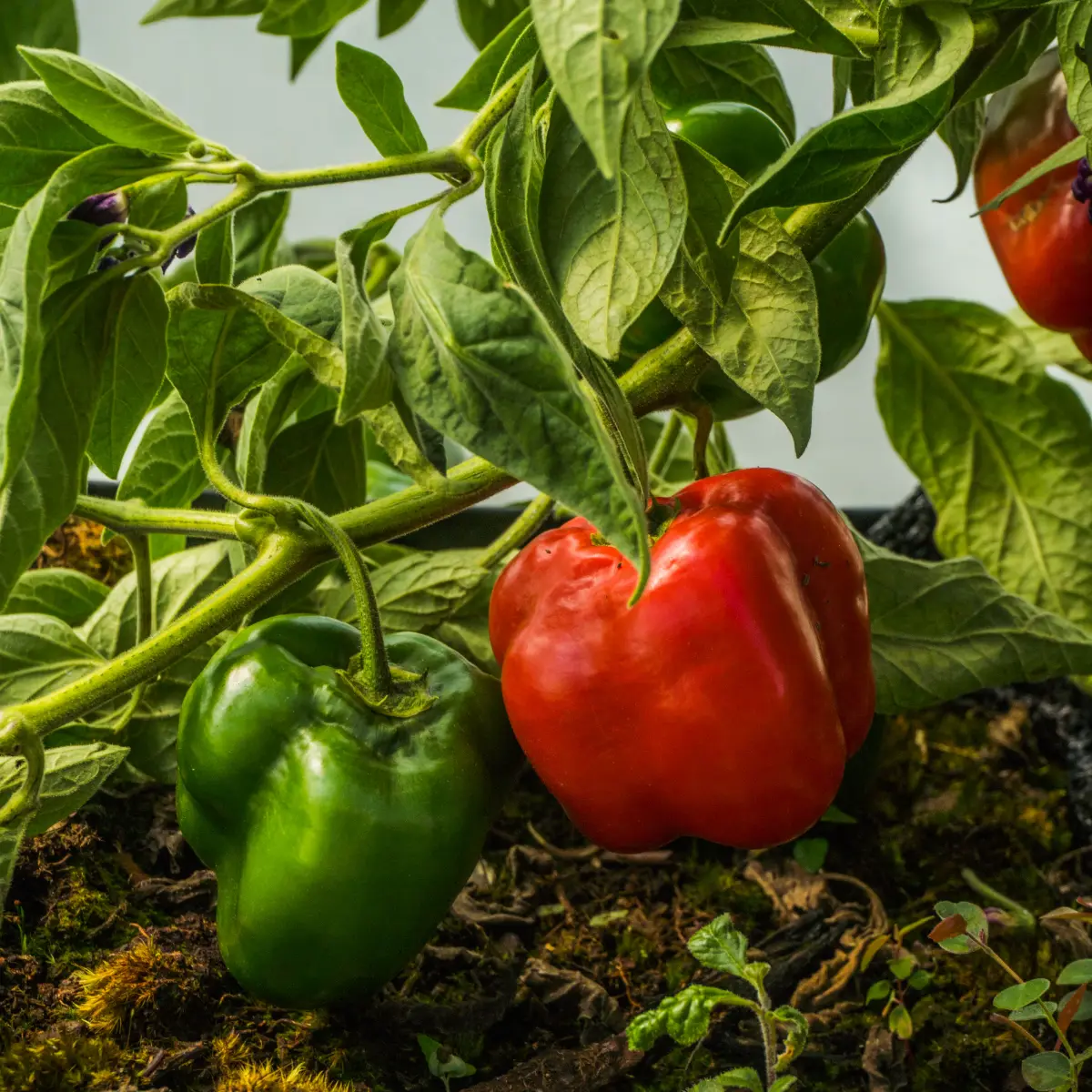
Sweet peppers are slower and fussier than tomatoes, and more rewarding once you know why. They need real heat to grow, but drop their flowers when nights turn cool or days turn scorching, so most of the season's crop sets in a window between the two. Water them evenly to avoid blossom-end rot, give them full sun, and be patient: a green pepper is simply an unripe one, and leaving it on the plant for a few more weeks turns it red, yellow or orange and noticeably sweeter.
Quick Care Reference
| Care Aspect | Requirement | Frequency |
|---|---|---|
| Watering | Evenly moist, 1-2 inches (2.5-5 cm) a week | Every 2-4 days in the ground; daily for containers in heat |
| Light | Full sun, 6-8 hours | Keep leaf cover over the fruit |
| Temperature | Nights above 55°F (13°C) | Flowers drop below that or above 90°F (32°C) |
| Support | Short stake or cage | Add when the first fruit sets |
| Fertilizer | Moderate, balanced | At planting and at first fruit set |
Watering
Peppers want soil that stays evenly moist, about 1 to 2 inches (2.5 to 5 cm) of water a week. In the ground that usually means a deep soak every 2 to 4 days in summer; in a container in full sun it can mean every day. Evenness matters more than quantity: soil that swings between dry and soaked interrupts calcium reaching the fruit, which shows up as blossom-end rot. Water at the base and mulch 2 to 3 inches (5 to 8 cm) deep once the soil has warmed. Peppers have shallow roots, so a dry week shows quickly.
Light Requirements
Peppers need full sun, at least 6 to 8 hours, to flower and fruit well. A full canopy of leaves matters too: fruit exposed to hard afternoon sun gets sunscald, pale papery patches that later rot. Plants grown close together shade each other's fruit, which is one reason peppers do well in blocks rather than single rows. In the hottest climates, light afternoon shade during midsummer heat waves helps fruit set.
Humidity & Temperature
Temperature is what decides when peppers produce. Do not plant out until nights hold above 55°F (13°C) and the soil has warmed to about 65°F (18°C); peppers set back by cold can sit stunted for weeks. They grow best between 70 and 85°F (21 to 29°C). Flowers tend to drop without setting fruit when nights fall below about 55°F (13°C) or days stay above about 90°F (32°C), which is why many plants stall in midsummer and set a second flush as the weather eases. Frost kills them.
Fertilizing
Work compost into the bed before planting. Peppers need moderate feeding: a balanced fertilizer at planting, then a side-dressing when the first fruits set. Too much nitrogen gives a big leafy plant with few peppers. Container plants need feeding every 2 to 3 weeks, because frequent watering flushes nutrients out of the pot.
Propagation
Peppers are grown from seed, started indoors well before the last frost because they germinate and grow slowly.
From seed indoors
- Sow 8 to 10 weeks before your last frost date, 1/4 inch (6 mm) deep
- Keep the mix at 80°F (27°C); a heat mat helps, and seed takes 7 to 14 days
- Grow seedlings under strong light so they stay compact
- Harden off over a week and plant out once nights are warm
Saving seed
- Use open-pollinated varieties, not hybrids
- Let a fruit ripen fully to its final color on the plant
- Scrape out the seeds and dry them on a plate for 1 to 2 weeks before storing
- Grow sweet and hot peppers apart if saving seed; they cross, which changes the seed but not this year's fruit
Popular Varieties
Bell peppers
The blocky, thick-walled peppers sold in stores. Slowest to ripen to full color, so in short seasons choose one bred to ripen early.
Italian frying peppers
Long, tapered, thin-walled peppers with sweet flavor. Usually ripen faster and set more fruit than bells.
Mini sweet peppers
Small snacking peppers produced in large numbers. A good choice for containers and for gardens with short summers.
Seasonal Care Calendar
Spring
Mar – May
- Start seed indoors 8 to 10 weeks before the last frost.
- Harden off seedlings over a week once the weather warms.
- Plant out after nights hold above 55°F (13°C). Mulch once the soil is warm.
Summer
Jun – Aug
- Water deeply and evenly. Stake plants as fruit sets.
- Expect flower drop in heat waves; the plant sets again as it cools.
- Harvest green, or leave fruit on to color up. Cut, do not pull.
Fall
Sep – Nov
- Fall is often the most productive stretch. Keep watering and picking.
- Harvest everything before the first frost, including green fruit.
- Pull plants and clear debris; throw away any with leaf spot.
Winter
Dec – Feb
- Order seed, including varieties bred for short seasons in cooler regions.
- Plan beds away from where peppers, tomatoes or eggplant grew last year.
- Start seed indoors toward the end of this window in warm regions.
Troubleshooting
Dark, sunken, leathery patch at the bottom of the fruit
Why it happens: Blossom-end rot, caused by uneven watering that disrupts calcium reaching the fruit; the soil usually has enough calcium
What to do: Remove affected fruit. Water deeply and evenly and mulch to hold moisture steady; later fruit usually comes in clean. Adding calcium rarely helps unless a soil test shows a real shortage.
Learn more: How Often Should I Water My Plant? → Ask the AI about this →Flowers fall off without making peppers
Why it happens: Temperature stress: nights below about 55°F (13°C) or days above about 90°F (32°C), or drought
What to do: Keep watering evenly and wait; plants set fruit again when the weather moves back into range. Light afternoon shade helps in a long heat wave. Too much nitrogen makes it worse.
Ask the AI about this →Pale, papery or bleached patches on the side of the fruit
Why it happens: Sunscald, from fruit exposed to direct afternoon sun
What to do: Cut out the damaged part if it is still firm. Keep the leaf canopy intact, avoid pruning leaves, and use shade cloth in extreme heat.
Ask the AI about this →Small dark spots on the leaves that turn brown, and leaves dropping
Why it happens: Bacterial leaf spot, spread by splashing water and favored by warm, wet weather
What to do: Remove spotted leaves, water at the base, and avoid working among wet plants. Do not save seed from affected plants. Rotate beds and choose resistant varieties next season.
Learn more: Why Are My Plant Leaves Turning Brown? → Ask the AI about this →Leaves curling, with clusters of small insects underneath
Why it happens: Aphids feeding on the soft growth
What to do: Knock them off with a strong spray of water and check every few days. Lady beetles and lacewings usually catch up with them; avoid broad insecticides that kill those predators.
Learn more: Why Are My Plant Leaves Curling? → Ask the AI about this →Not sure what's wrong?
Premium includes AI photo diagnosis, then walks you through the fix and checks back in until it's better.
See Premium →Track your Sweet Pepper with PlantCareAI
Add your Sweet Pepper and get a watering schedule tuned to this week's weather. Free for up to 3 plants.
Add your Sweet Pepper