
Marigolds are among the easiest flowers to grow from seed: they sprout in days, bloom within two months, and keep flowering in heat that stops many other annuals. They want full sun, soil that drains, and less water and fertilizer than most people give them. Deadhead them and they flower until frost. They are also a good companion in the vegetable garden, mainly because they bring in pollinators and pest-eating insects.
Quick Care Reference
| Care Aspect | Requirement | Frequency |
|---|---|---|
| Watering | When the top inch (2.5 cm) is dry | Every 3-5 days in the ground in summer |
| Light | Full sun, 6-8 hours | Part shade means fewer flowers |
| Deadheading | Remove faded flowers | Weekly |
| Spacing | 8-12 inches (20-30 cm) for French types | 18 inches (45 cm) for tall African types |
| Fertilizer | Light | Half-strength every 3-4 weeks in pots |
Watering
Marigolds tolerate dry spells once established and do not like soggy soil. Water deeply when the top inch (2.5 cm) of soil is dry, often every 3 to 5 days in summer in the ground and every day or two in small containers in heat. Water at the base: wet flowers and leaves invite gray mold and mildew, and the large double flowers hold water and rot. Seedlings and new transplants need more regular water until they root in.
Light Requirements
Marigolds need full sun, at least 6 hours, to flower heavily. In part shade they grow leggy and bloom sparsely, and wet foliage stays wet longer. They handle intense summer sun and reflected heat from walls and paving well.
Humidity & Temperature
Marigolds are frost-tender annuals. Plant them out after the last frost, once nights stay above about 50°F (10°C). They thrive in heat and keep flowering through summer; in the hottest regions large African types may pause in midsummer and pick up again in fall. Frost ends them. In humid, rainy weather, airflow matters, because botrytis gray mold can rot the dense flower heads.
Fertilizing
Marigolds need little fertilizer. In rich soil or with regular feeding they grow lots of leaves and fewer flowers. A little compost at planting is enough in the ground. In containers, a half-strength balanced feed every 3 to 4 weeks keeps them blooming.
Propagation
Marigolds are grown from seed, either sown directly or started indoors for earlier flowers.
Direct sowing
- Sow after the last frost, once the soil is warm
- Cover the seed with about 1/4 inch (6 mm) of soil
- Seed germinates in 4 to 7 days
- Thin to the spacing for your variety
Saving seed
- Leave a few flowers on the plant until the heads are dry and brown
- Pull the slender black seeds from the dried head
- Dry them for a week and store cool and dry
- Seed from hybrids may not match the parent plant
Popular Varieties
French marigolds
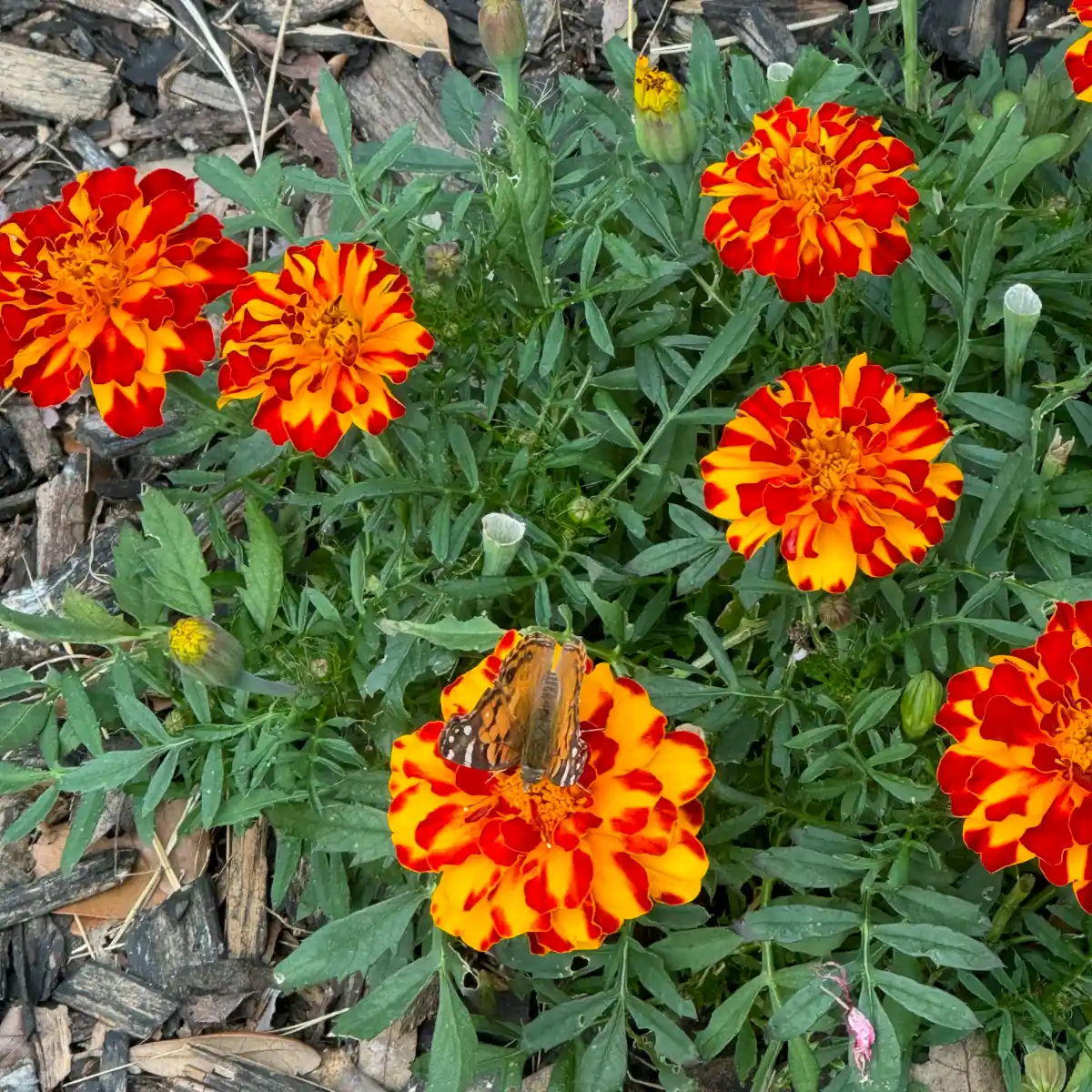
Tagetes patula. Compact, 6 to 12 inches (15 to 30 cm) tall, with small single or double flowers, often bicolored red and gold.
African marigolds
Tagetes erecta. Tall plants with large pompom flowers in yellow and orange, up to 3 feet (90 cm). Slower to bloom from seed.
Signet marigolds
Tagetes tenuifolia. Lacy foliage, a mound of small single flowers, and a citrus scent; the flowers are edible.
Seasonal Care Calendar
Spring
Mar – May
- Start seed indoors 6 to 8 weeks before the last frost, or wait and sow directly.
- Plant out after the last frost, once nights are mild.
- Pinch young plants once for bushier growth.
Summer
Jun – Aug
- Deadhead weekly. Water at the base during dry spells.
- Watch for spider mites in hot, dry weather.
- Cut flowers for vases; it encourages more.
Fall
Sep – Nov
- Plants often flower heavily as the weather cools.
- Save seed from dried flower heads.
- Pull plants after frost.
Winter
Dec – Feb
- Order seed. Plan marigolds near vegetables to draw in pollinators.
- Start seed indoors toward the end of this window in warm regions.
- Nothing to do outdoors in most of the country.
Troubleshooting
Gray fuzzy mold on flowers, and heads rotting
Why it happens: Botrytis gray mold, in wet, humid weather or with overhead watering
What to do: Remove and throw away affected flowers. Water at the base, deadhead promptly, and space plants for airflow.
Ask the AI about this →Speckled, dull leaves with fine webbing
Why it happens: Spider mites, common on marigolds in hot, dry weather
What to do: Spray the plants with water, including leaf undersides, every few days. Badly infested plants are often best pulled.
Learn more: How to Treat Spider Mites → Ask the AI about this →Seedlings collapse at the soil line
Why it happens: Damping off, a fungal disease of seedlings in cold, wet soil
What to do: Sow in warm soil, do not overwater seedlings, and give indoor seedlings airflow. Resow; marigolds are quick.
Ask the AI about this →Lots of leaves and few flowers
Why it happens: Too much fertilizer, too little sun, or no deadheading
What to do: Stop feeding, move containers into full sun, and deadhead regularly.
Learn more: Why Is My Plant Not Growing? → Ask the AI about this →Ragged holes in young plants
Why it happens: Slugs and snails, mainly on seedlings
What to do: Hand-pick in the evening and use traps or iron phosphate bait. Established plants are rarely bothered.
Learn more: Plant Pest Identification Guide → Ask the AI about this →Not sure what's wrong?
Premium includes AI photo diagnosis, then walks you through the fix and checks back in until it's better.
See Premium →Track your Marigold with PlantCareAI
Add your Marigold and get a watering schedule tuned to this week's weather. Free for up to 3 plants.
Add your Marigold