
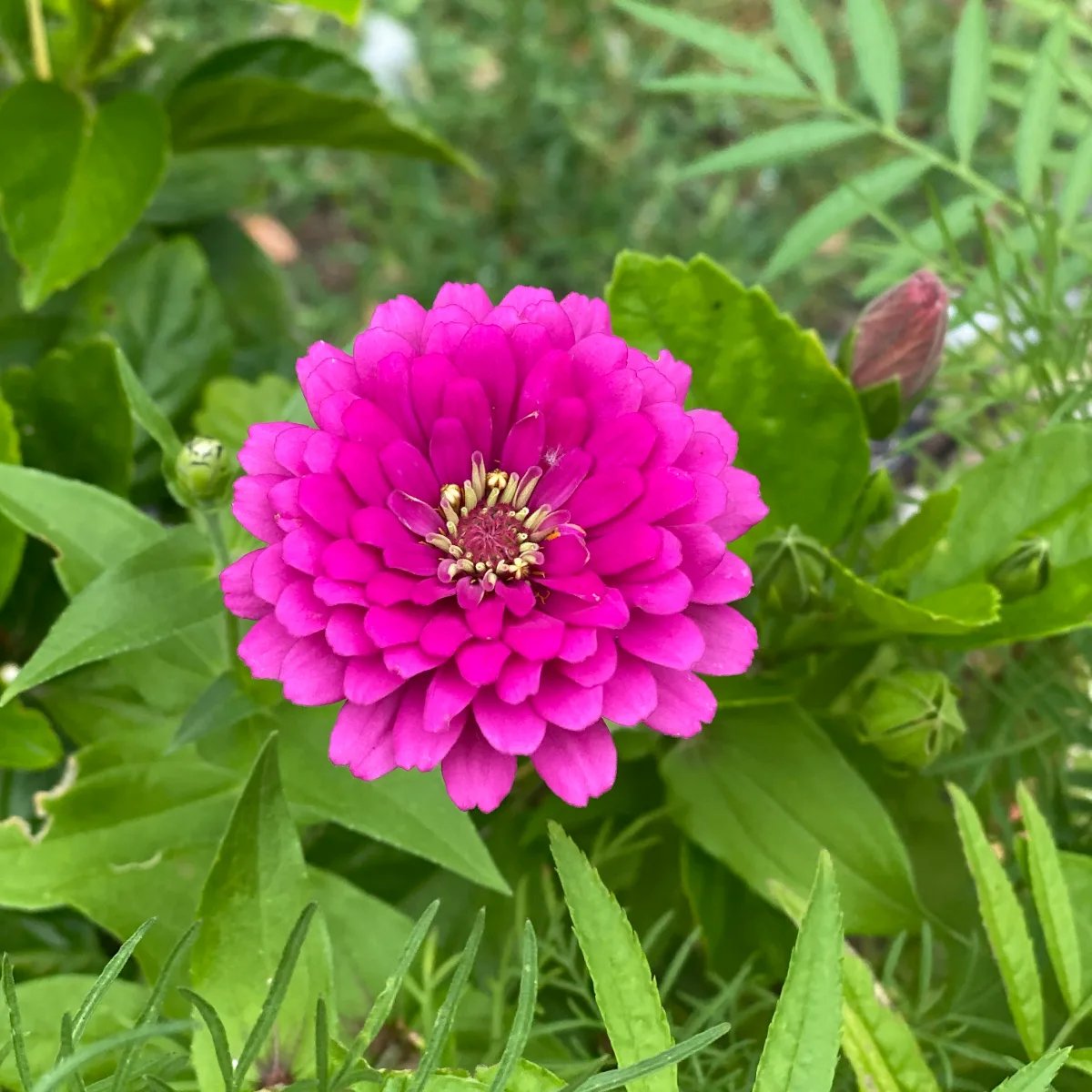
Zinnias are the easiest cut flower to grow from seed and one of the most rewarding. Sow them in warm soil and they bloom in about two months, then keep producing all summer: the more you cut, the more they flower. They love heat and full sun and are a favorite of butterflies. Their one weak point is powdery mildew, which is why watering at the base, giving them space, and choosing resistant varieties matter.
Quick Care Reference
| Care Aspect | Requirement | Frequency |
|---|---|---|
| Watering | Deeply, at the base | Every 3-5 days in summer |
| Light | Full sun, 6-8 hours | All-day sun is best |
| Spacing | 9-18 inches (23-45 cm) | Wider in humid climates for airflow |
| Cutting | Cut stems deeply | Every few days at peak |
| Fertilizer | Modest, balanced | At establishment and when cutting starts |
Watering
Zinnias tolerate dry spells once established but bloom best with regular water. Water deeply at the base when the top inch (2.5 cm) of soil is dry, usually every 3 to 5 days in summer in the ground, more often in containers. Keep water off the leaves where you can: wet foliage is what spreads powdery mildew and leaf spot. Morning watering lets any splashed leaves dry quickly.
Light Requirements
Zinnias need full sun, 6 hours or more, and do best with all-day sun. In shade they grow tall and weak, flower less, and mildew more. Plant them where air moves freely.
Humidity & Temperature
Zinnias are heat-loving annuals. Sow or plant out only after the last frost, once the soil has warmed to at least 60°F (16°C), ideally 70°F (21°C); in cold soil seed rots and seedlings stall. They flower through the hottest weather. Humid summers with cool nights bring powdery mildew, especially in late summer. Frost kills them.
Fertilizing
Zinnias need modest feeding. Work compost into the bed before sowing. A balanced fertilizer once plants are established and again when cutting begins is enough in most soils. Too much nitrogen gives tall, leafy plants with fewer flowers.
Propagation
Zinnias are grown from seed and germinate fast in warm soil. Sowing directly is usually better than transplanting.
Direct sowing
- Sow after the last frost once the soil is at least 60°F (16°C), ideally 70°F (21°C)
- Sow 1/4 inch (6 mm) deep
- Seed germinates in 3 to 7 days
- Thin to the spacing on the packet; sow again 3 to 4 weeks later for a longer season
Saving seed
- Leave some flowers on the plant until they are brown and dry
- Pull the heads apart and collect the arrowhead-shaped seeds
- Dry them for a week and store cool and dry
- Seed from hybrid varieties may not match the parent
Popular Varieties
Tall cutting zinnias
Zinnia elegans types 3 to 4 feet (90 to 120 cm) tall with long stems and large dahlia-like flowers. The classic for bouquets.
Compact disease-resistant zinnias
Hybrid zinnias with smaller flowers on bushy plants about 12 to 18 inches (30 to 45 cm) tall, bred to resist mildew and leaf spot.
Narrowleaf zinnia
Zinnia angustifolia, a low, spreading plant with small daisy flowers. Very heat and drought tolerant and rarely mildews.
Seasonal Care Calendar
Spring
Mar – May
- Prepare a sunny bed with compost.
- Sow after the last frost in warm soil.
- Pinch seedlings once they have three or four sets of leaves.
Summer
Jun – Aug
- Cut flowers often. Water at the base.
- Stake tall varieties before they flop.
- Sow a second batch in early summer to replace mildewed plants later.
Fall
Sep – Nov
- Keep cutting until frost. Expect some mildew late in the season.
- Save seed from dried flower heads.
- Pull plants after frost and throw away mildewed foliage.
Winter
Dec – Feb
- Order seed, including mildew-resistant varieties.
- Plan a cutting bed in full sun with good airflow.
- Nothing to do outdoors until spring.
Troubleshooting
White powdery coating on the leaves
Why it happens: Powdery mildew, common in late summer with humid days and cool nights
What to do: Remove the worst leaves, keep water off the foliage, and thin for airflow. Grow resistant varieties and sow a second batch in early summer to replace older plants.
Learn more: Powdery Mildew on Houseplants → Ask the AI about this →Brown spots with reddish edges on the leaves
Why it happens: Leaf spot diseases, spread by splashing water
What to do: Remove spotted leaves, water at the base, and avoid working among wet plants. Clear debris in fall.
Learn more: Why Are My Plant Leaves Turning Brown? → Ask the AI about this →Leaves and flowers skeletonized by shiny green beetles
Why it happens: Japanese beetles, which feed in groups in early summer
What to do: Knock them into a bucket of soapy water in the morning, when they are sluggish. Avoid beetle traps, which tend to draw in more beetles than they catch.
Learn more: Plant Pest Identification Guide → Ask the AI about this →Seedlings collapse at the soil line
Why it happens: Damping off, in cold, wet soil
What to do: Wait for warm soil, at least 60°F (16°C), before sowing, and do not overwater seedlings.
Ask the AI about this →Not sure what's wrong?
Premium includes AI photo diagnosis, then walks you through the fix and checks back in until it's better.
See Premium →Track your Zinnia with PlantCareAI
Add your Zinnia and get a watering schedule tuned to this week's weather. Free for up to 3 plants.
Add your Zinnia