
Coneflower Care Guide
Echinacea purpurea
Also known as Echinacea, Purple Coneflower
By Ellen Hermance · PlantCareAI Editorial
Purple coneflower is a native prairie perennial, and that explains nearly everything about growing it: full sun, lean soil that drains, and very little water once it is established. It blooms for weeks in midsummer, draws bees and butterflies, and if you leave the seed heads standing, goldfinches pick them over in fall. The straight species is long-lived and tough; many of the newer brightly colored hybrids are prettier and shorter-lived.
Quick Care Reference
| Care Aspect | Requirement | Frequency |
|---|---|---|
| Watering | Deep, infrequent | Every 7-10 days the first season; rarely after |
| Light | Full sun, 6-8 hours | Flops in shade |
| Soil | Average to lean, well drained | No rich soil or heavy feeding |
| Deadheading | Optional | Leave late seed heads for birds |
| Dividing | Split crowded clumps | Every 4-5 years in spring, if needed |
Watering
Water new plants deeply every 7 to 10 days through their first growing season, more often in a hot, dry spell, so the roots establish. After that, coneflowers are drought tolerant and usually need water only in a long drought, about every 2 weeks. Overwatering and heavy, wet soil are bigger risks than drought: they rot the crown, especially in winter.
Light Requirements
Coneflowers need full sun, 6 hours or more, for sturdy stems and plenty of flowers. They tolerate light afternoon shade in the hottest regions, but in real shade they lean, flop and bloom poorly.
Humidity & Temperature
Purple coneflower is a hardy perennial that survives cold winters across most of the US and thrives in summer heat. It dies back to the ground in winter and regrows in late spring, often later than people expect, so mark where it is. Wet winter soil is a bigger threat than cold. Average humidity is fine, though crowded plants in humid summers can get powdery mildew.
Fertilizing
Coneflowers rarely need fertilizer. Rich soil and feeding produce soft, floppy stems and fewer flowers. A thin layer of compost in spring is plenty, and only on poor soil.
Propagation
The straight species grows readily from seed and often self-sows. Named hybrids do not come true from seed and are propagated by division.
From seed
- Sow outdoors in fall, or give seed 4 weeks of cold, moist storage in the refrigerator before sowing in spring
- Cover lightly with about 1/8 inch (3 mm) of soil
- Seed germinates in 2 to 3 weeks in warm conditions
- Plants usually flower in their second year
Division
- In spring, as new growth appears, dig up a crowded clump
- Cut it into sections, each with healthy roots and several shoots
- Replant at the same depth and water well
- Water regularly through the first summer
Popular Varieties
Purple coneflower
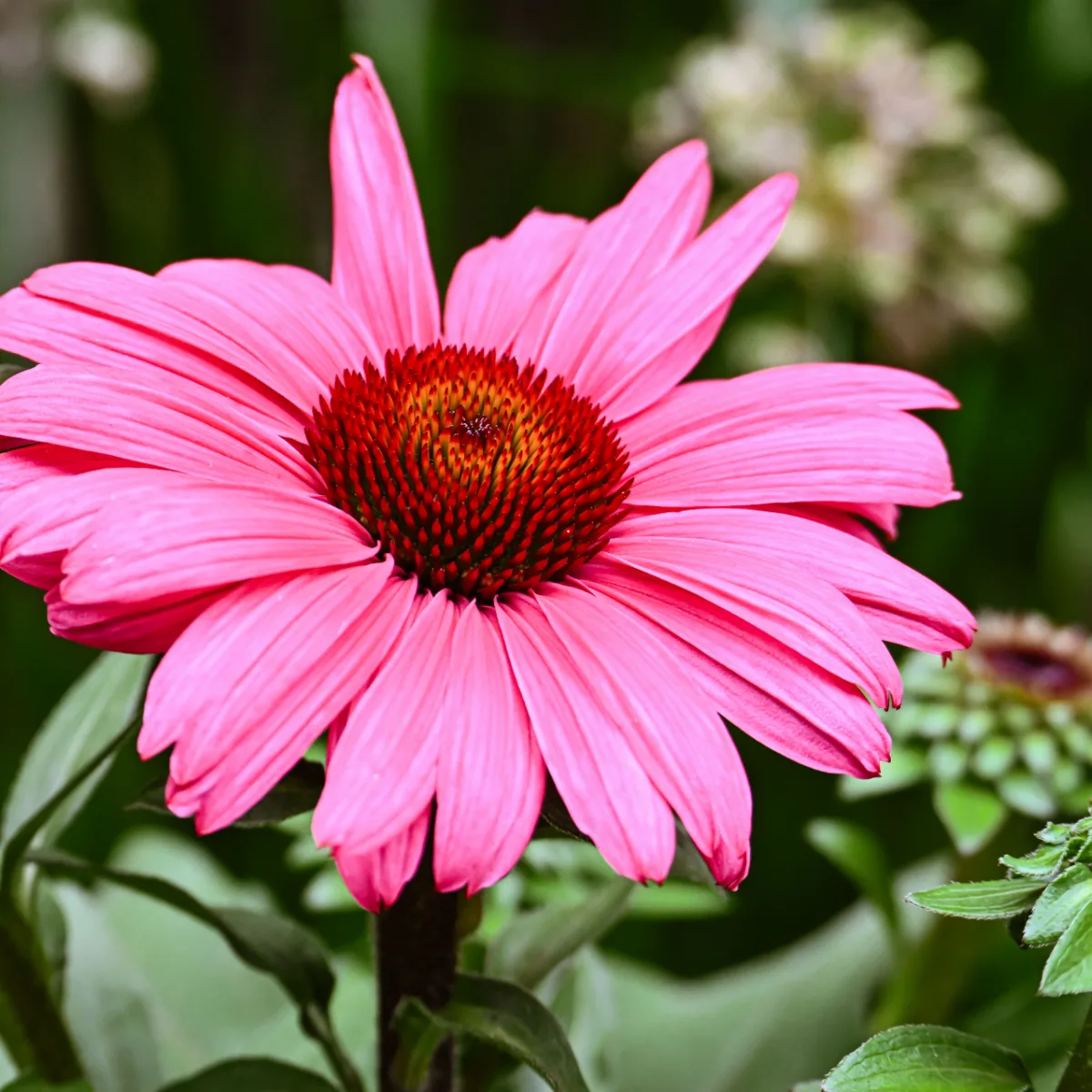
The species, with rosy purple petals around an orange-brown cone. The longest-lived and most reliable.
White coneflower
White-petaled selections of the same species, grown the same way.
Hybrid coneflowers
Echinacea hybrids in orange, red, yellow and double forms. Striking, but often shorter-lived than the species, especially in heavy soil.
Seasonal Care Calendar
Spring
Mar – May
- Cut last year's stems to the ground before new growth appears.
- Plant or divide as new shoots emerge.
- Water new plantings regularly.
Summer
Jun – Aug
- Plants bloom from early to late summer.
- Deadhead early flowers for more blooms if you like.
- Water only in long dry spells once established.
Fall
Sep – Nov
- Leave late seed heads standing for birds and winter interest.
- Sow seed outdoors.
- Do not mulch heavily over the crown.
Winter
Dec – Feb
- Plants are dormant. Seed heads feed birds.
- Avoid piling snow or wet mulch on the crowns.
- Plan where new plants will go in full sun.
Troubleshooting
Flowers grow green, tufted or misshapen
Why it happens: Aster yellows, a disease spread by leafhoppers that cannot be cured
What to do: Dig out the whole plant and throw it away rather than composting it, so it does not spread to other plants.
Ask the AI about this →Plant rots at the base or fails to return in spring
Why it happens: Crown rot from wet, heavy soil, especially over winter
What to do: Replant in a sunnier, better-drained spot or a raised bed, and stop mulching against the crown.
Learn more: How to Treat Root Rot → Ask the AI about this →White powdery patches on the leaves
Why it happens: Powdery mildew in crowded, humid conditions
What to do: Thin crowded clumps and give plants space and sun. It is mostly cosmetic late in the season.
Learn more: Powdery Mildew on Houseplants → Ask the AI about this →Stems lean and flop
Why it happens: Too much shade, rich soil or too much fertilizer
What to do: Move the plant into full sun and stop feeding. Newer hybrids are often weaker-stemmed than the species.
Learn more: Why Is My Plant Not Growing? → Ask the AI about this →Leaves chewed to lace by shiny green beetles
Why it happens: Japanese beetles
What to do: Knock beetles into soapy water in the morning. Plants recover once the summer feeding period ends.
Learn more: Plant Pest Identification Guide → Ask the AI about this →Not sure what's wrong?
Premium includes AI photo diagnosis, then walks you through the fix and checks back in until it's better.
See Premium →Track your Coneflower with PlantCareAI
Add your Coneflower and get a watering schedule tuned to this week's weather. Free for up to 3 plants.
Add your Coneflower