
Roses have a reputation for being demanding, and some are. Modern shrub roses are not: planted in full sun with good drainage, watered deeply, and pruned once a year, they bloom in flushes from late spring to frost with little fuss. Most rose trouble is disease, black spot above all, and the best defense is choosing a disease-resistant variety, keeping the leaves dry and clearing fallen leaves.
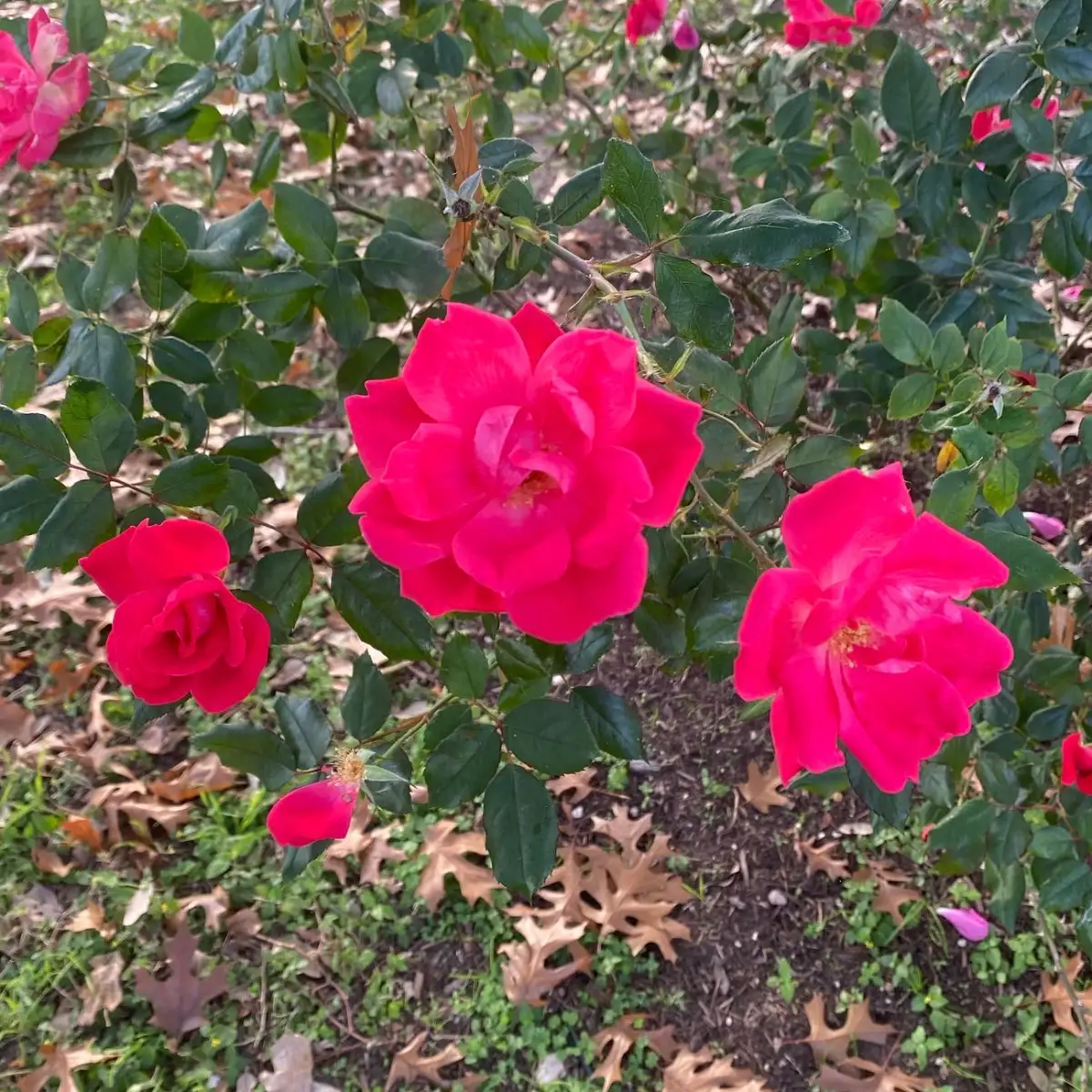
Quick Care Reference
| Care Aspect | Requirement | Frequency |
|---|---|---|
| Watering | Deep soak, 1-2 inches (2.5-5 cm) a week | Every 3-7 days in summer |
| Light | Full sun, 6-8 hours | Morning sun dries the leaves |
| Pruning | Repeat bloomers late winter; once-bloomers after flowering | Once a year, plus deadheading |
| Fertilizer | Balanced or rose fertilizer | Spring and after each flush; stop before fall |
| Leaf cleanup | Remove fallen, spotted leaves | Through the season and in fall |
Watering
Roses do best with deep, infrequent watering, about 1 to 2 inches (2.5 to 5 cm) a week. Newly planted roses need water every 2 to 3 days for the first few weeks. Established roses usually need a deep soak every 3 to 7 days in summer, depending on heat and soil. Water at the base in the morning and keep the leaves dry, because wet leaves are what spreads black spot. Mulch 2 to 3 inches (5 to 8 cm) deep, kept off the canes.
Light Requirements
Roses need full sun, at least 6 hours, for the most flowers and the least disease. Morning sun is especially valuable because it dries dew off the leaves early. In very hot climates a little afternoon shade helps flowers last. Shaded roses bloom less and get more black spot and mildew.
Humidity & Temperature
Most garden roses are hardy across the US, though hardiness varies a lot by type; choose roses rated for your zone. Many slow down in midsummer heat above about 90°F (32°C) and bloom again as it cools. In cold regions, mound soil or mulch over the base after the ground freezes, and plant grafted roses with the graft a little below the soil. Humid weather favors black spot and mildew.
Fertilizing
Feed as growth begins in spring with a balanced or rose fertilizer, and again after each flush of flowers for repeat bloomers. Stop feeding about 6 to 8 weeks before your first frost so new growth can harden before winter. Compost spread around the base each spring improves the soil.
Propagation
Roses can be grown from cuttings, which gives plants on their own roots. Many modern roses are patented, and propagating those for sale is not allowed.
Softwood cuttings
- In late spring or early summer, cut a 6 to 8 inch (15 to 20 cm) stem that has just flowered
- Remove the flower and lower leaves, keeping two or three leaves at the top
- Dip the cut end in rooting hormone and insert it in moist, gritty mix
- Keep humid and in bright, indirect light; roots form in 4 to 8 weeks
Hardwood cuttings
- In late fall, cut pencil-thick stems about 8 to 10 inches (20 to 25 cm) long
- Insert two-thirds of their length in a sheltered bed or deep pot
- Leave them over winter; many root by the next summer
- Transplant once they show strong new growth
Popular Varieties
Shrub roses
Disease-resistant landscape roses that bloom in repeated flushes with little pruning. The easiest roses to grow.
Hybrid tea roses
Single large, high-centered flowers on long stems, the classic cut rose. Usually need more care and are more disease-prone.
Climbing roses
Long canes trained on a fence, arch or wall. Some bloom once a year and some repeat; check before pruning.
Seasonal Care Calendar
Spring
Mar – May
- Prune repeat bloomers as the buds swell. Remove dead and crossing canes.
- Feed as new growth starts and refresh the mulch.
- Plant new roses once the ground can be worked.
Summer
Jun – Aug
- Water deeply. Deadhead repeat bloomers.
- Prune once-blooming roses after flowering.
- Watch for black spot and Japanese beetles; remove spotted leaves.
Fall
Sep – Nov
- Stop feeding about 6 to 8 weeks before the first frost.
- Stop deadheading late in the season so plants can set hips and harden off.
- Clean up fallen leaves. Mound mulch over the base after the ground freezes in cold regions.
Winter
Dec – Feb
- Plants are dormant.
- Check winter protection after storms.
- Order new roses, choosing disease-resistant varieties for your zone.
Troubleshooting
Black spots with fringed edges on the leaves, which then yellow and drop
Why it happens: Black spot, a fungal disease spread by splashing water and favored by wet leaves
What to do: Remove spotted leaves and rake up fallen ones. Water at the base in the morning and prune for airflow. Fungicide only prevents new infection; resistant varieties are the long-term fix.
Learn more: Why Are My Plant Leaves Turning Yellow? → Ask the AI about this →White powdery coating on leaves and buds
Why it happens: Powdery mildew, favored by warm days, cool nights and crowded growth
What to do: Prune for airflow and remove affected growth. Choose resistant varieties.
Learn more: Powdery Mildew on Houseplants → Ask the AI about this →Leaves and flowers eaten by shiny green beetles
Why it happens: Japanese beetles, in early to midsummer
What to do: Knock beetles into soapy water in the morning. Avoid beetle traps, which draw more beetles to the garden.
Learn more: Plant Pest Identification Guide → Ask the AI about this →Flower buds or petals with brown streaks, and buds that fail to open
Why it happens: Thrips feeding inside the buds, especially on pale flowers
What to do: Remove and throw away damaged buds and flowers. Keep plants well watered; thrips are worst in hot, dry weather.
Learn more: How to Get Rid of Thrips → Ask the AI about this →Speckled, dull leaves with fine webbing
Why it happens: Spider mites, in hot, dry weather
What to do: Spray leaf undersides with water every few days. Avoid broad insecticides, which kill the mites' predators.
Learn more: How to Treat Spider Mites → Ask the AI about this →Red, distorted shoots, clusters of thin stems and an excess of thorns
Why it happens: Rose rosette disease, spread by a tiny mite and incurable
What to do: Remove the whole plant, including the roots, and throw it away. Do not replant a rose in that spot right away.
Ask the AI about this →Not sure what's wrong?
Premium includes AI photo diagnosis, then walks you through the fix and checks back in until it's better.
See Premium →Track your Rose with PlantCareAI
Add your Rose and get a watering schedule tuned to this week's weather. Free for up to 3 plants.
Add your Rose