
Hydrangea Care Guide
Hydrangea spp.
Also known as Hortensia
By Ellen Hermance · PlantCareAI Editorial
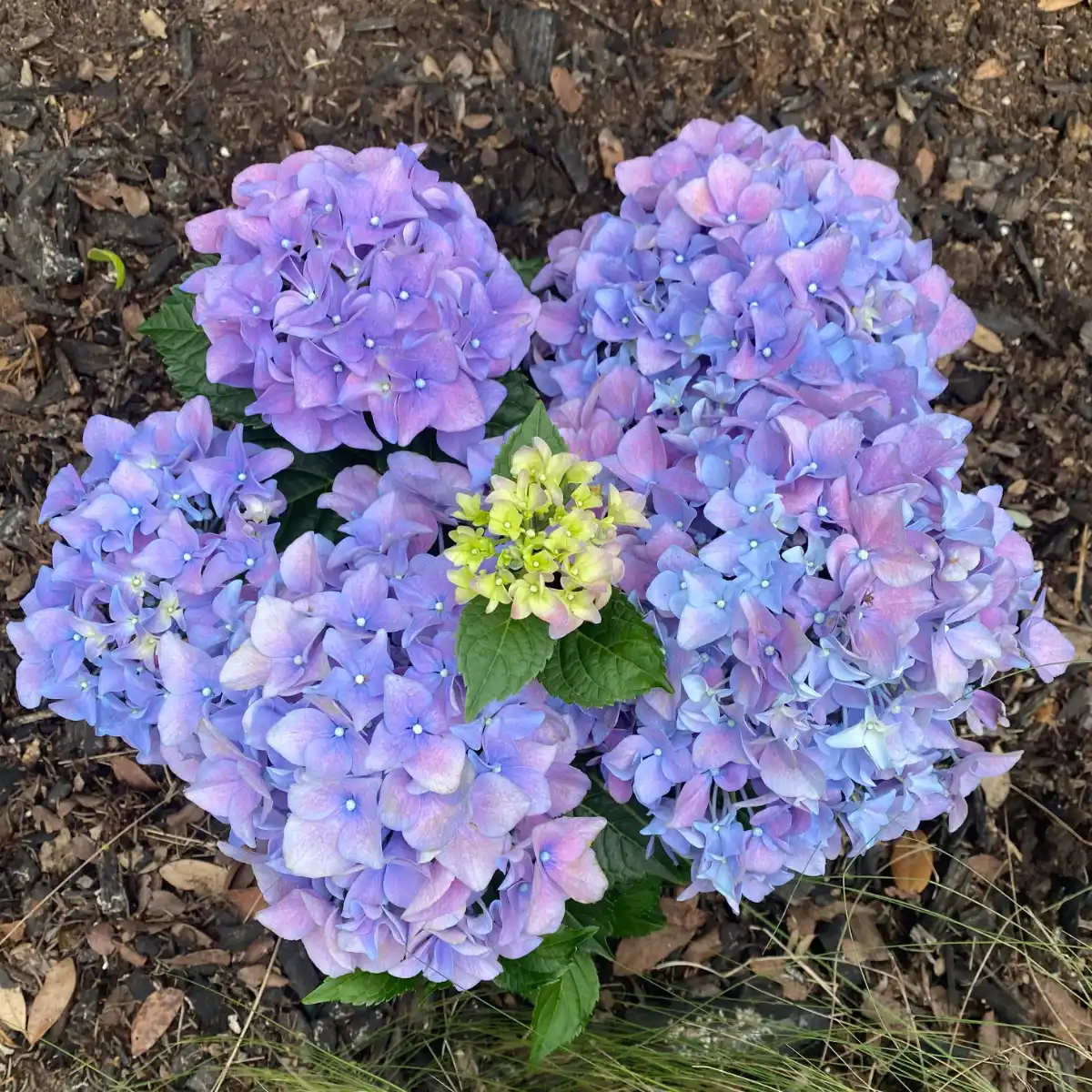
Hydrangeas are thirsty, generous shrubs, and the single most important thing to know about yours is which kind it is. Bigleaf and oakleaf hydrangeas flower on last year's stems, so pruning them in fall or spring cuts off this summer's flowers. Panicle and smooth hydrangeas flower on new growth and can be cut back hard in late winter. Get that right, give them steady water and the right amount of sun, and they bloom for months. On bigleaf types, soil acidity also decides whether the flowers are blue or pink.
Quick Care Reference
| Care Aspect | Requirement | Frequency |
|---|---|---|
| Watering | Deep, 1 inch (2.5 cm) a week or more | Every 2-4 days in summer |
| Light | Morning sun, afternoon shade | Panicle types take full sun |
| Pruning, bigleaf and oakleaf | Old wood: prune lightly after flowering | By midsummer; in fall and spring, only dead tips |
| Pruning, panicle and smooth | New wood: cut back in late winter | Before growth starts |
| Fertilizer | Light, balanced | Once in spring |
Watering
Hydrangeas need more water than most shrubs: about 1 inch (2.5 cm) a week, often a deep soak every 2 to 4 days in summer heat, and more for young plants and containers. Water at the base, in the morning, and mulch 2 to 3 inches (5 to 8 cm) deep to keep the roots cool. Bigleaf hydrangeas often wilt dramatically on hot afternoons even in moist soil and recover by evening, so check the soil before watering again; watering every time they droop can waterlog the roots.
Light Requirements
Bigleaf, oakleaf and smooth hydrangeas do best with morning sun and afternoon shade, especially in the South; in full afternoon sun the leaves scorch and the flowers fade fast. Panicle hydrangeas are the exception and flower best in full sun, 6 or more hours. In deep shade, all types bloom less.
Humidity & Temperature
Hardiness varies by type. Panicle and smooth hydrangeas are very cold hardy and bloom reliably even after harsh winters, because they flower on new growth. Bigleaf hydrangeas are hardy as plants in much of the country, but their flower buds, formed on last year's stems, can be killed by hard winters or late spring frosts, which is the most common reason they fail to bloom in colder regions. Summer heat with dry soil scorches the leaves.
Fertilizing
Feed lightly in spring with a balanced slow-release fertilizer, and spread compost around the base. Too much nitrogen gives big leaves and fewer flowers. To keep bigleaf flowers blue, avoid high-phosphorus fertilizers, which make aluminum in the soil less available.
Propagation
Hydrangeas root readily from cuttings and by layering. Many named varieties are patented, which rules out propagating them for sale but not for your own garden.
Softwood cuttings
- In late spring or early summer, cut a 4 to 6 inch (10 to 15 cm) shoot without flowers
- Remove the lower leaves and cut the remaining large leaves in half
- Insert in moist potting mix and keep humid and shaded
- Roots form in 2 to 4 weeks; keep it growing in a pot until fall or next spring
Layering
- In spring, bend a low branch to the ground
- Scrape a little bark from the underside where it touches the soil and pin it down
- Cover with soil and keep it moist
- Cut it free once it has rooted, usually by the next spring
Popular Varieties
Bigleaf hydrangea
Hydrangea macrophylla, the mophead and lacecap hydrangeas. Blooms on old wood, and flower color follows soil pH. Reblooming varieties also flower on new growth.
Panicle hydrangea
Hydrangea paniculata, with cone-shaped white flowers that often age to pink. Blooms on new wood, takes full sun, and is the hardiest type.
Smooth hydrangea
Hydrangea arborescens, with round white flower heads. A native shrub that blooms on new wood and can be cut back hard each winter.
Oakleaf hydrangea
Hydrangea quercifolia, a native with oak-shaped leaves, white flower cones and red fall color. Blooms on old wood.
Seasonal Care Calendar
Spring
Mar – May
- Cut panicle and smooth hydrangeas back before growth starts.
- On bigleaf types, remove only dead stem tips above the first healthy buds.
- Feed lightly and mulch. Cover bigleaf plants if a hard late frost threatens buds.
Summer
Jun – Aug
- Water deeply, especially in heat. Mulch to keep roots cool.
- Prune bigleaf and oakleaf types right after flowering, if at all.
- Cut flowers for drying once they turn papery.
Fall
Sep – Nov
- Do not prune bigleaf or oakleaf types; next year's buds are already formed.
- Leave dried flower heads on for winter interest if you like.
- Plant new hydrangeas while the soil is warm.
Winter
Dec – Feb
- Plants are dormant. In cold regions, a burlap wrap can protect bigleaf flower buds.
- Test soil pH if you want to shift bigleaf flower color.
- Prune panicle and smooth types at the end of winter.
Troubleshooting
Healthy leaves but no flowers
Why it happens: Pruning an old-wood type in fall or spring, winter or late frost killing the flower buds, too much shade, or too much nitrogen
What to do: Find out which type you have. Stop pruning bigleaf and oakleaf types except right after flowering, protect buds from late frost, and cut back on fertilizer. Reblooming bigleaf varieties also flower on new wood.
Learn more: Why Is My Plant Not Growing? → Ask the AI about this →Wilting every hot afternoon
Why it happens: Heat stress in large leaves, often with plenty of water in the soil
What to do: Check the soil first. If it is moist, the plant will recover by evening. If it is dry, water deeply and mulch. Plants that wilt daily may need more afternoon shade.
Learn more: Why Are My Plant Leaves Drooping? → Ask the AI about this →Brown, crispy leaf edges or patches
Why it happens: Leaf scorch from afternoon sun, drought or hot wind
What to do: Water deeply and consistently, mulch, and give the plant more afternoon shade.
Learn more: Why Are My Plant Leaves Turning Brown? → Ask the AI about this →Yellow leaves with green veins
Why it happens: Iron chlorosis, usually from alkaline soil
What to do: Test the soil pH. Acidify the soil and use a fertilizer with chelated iron.
Learn more: Why Are My Plant Leaves Turning Yellow? → Ask the AI about this →Flowers pink when you wanted blue, or the reverse
Why it happens: Soil pH, on bigleaf and mountain hydrangeas only
What to do: For blue, lower the pH with soil sulfur or aluminum sulfate; for pink, raise it with garden lime. Change takes a season or more. White varieties do not change color.
Ask the AI about this →Not sure what's wrong?
Premium includes AI photo diagnosis, then walks you through the fix and checks back in until it's better.
See Premium →Track your Hydrangea with PlantCareAI
Add your Hydrangea and get a watering schedule tuned to this week's weather. Free for up to 3 plants.
Add your Hydrangea