
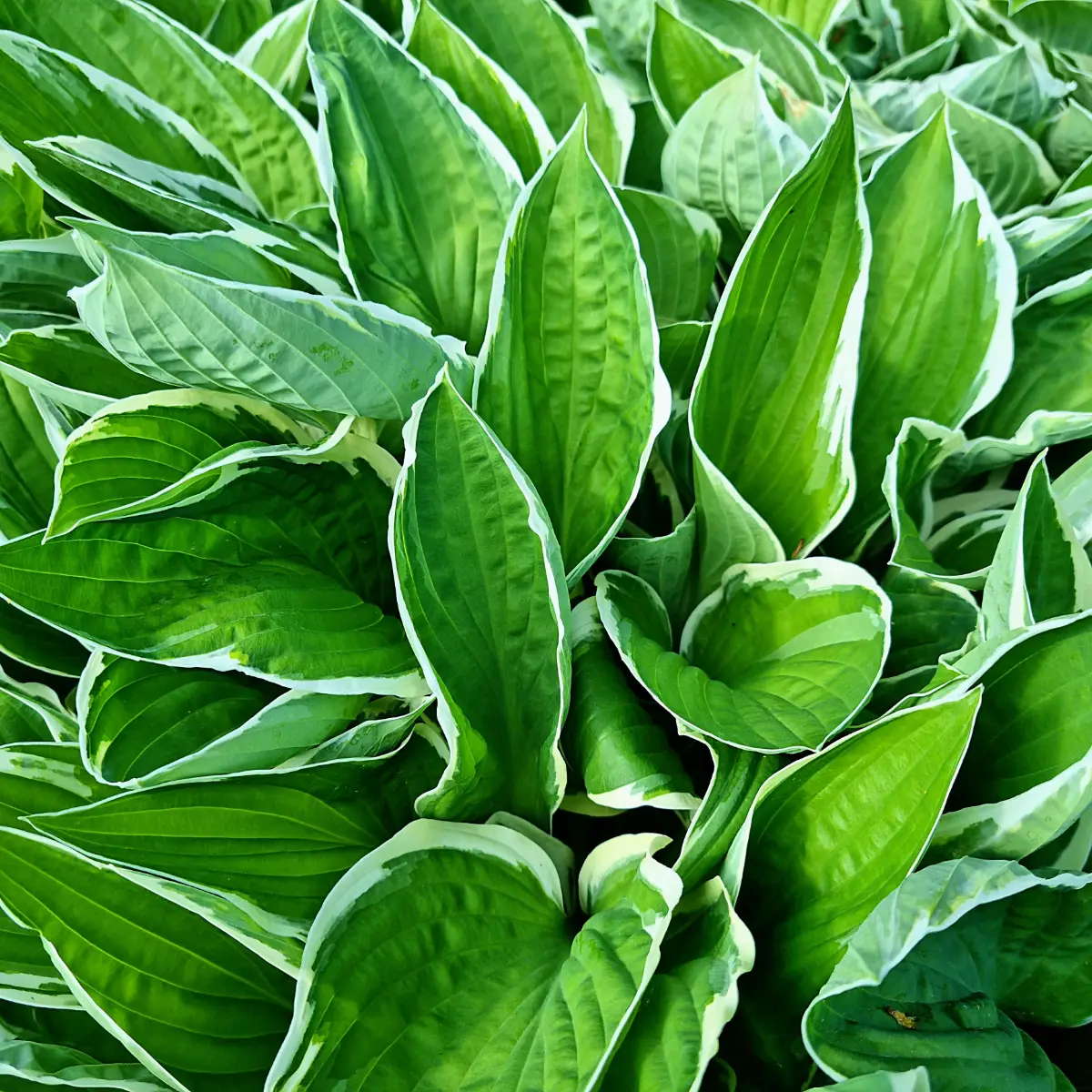
Hostas are the backbone of the shade garden: long-lived perennials grown for their leaves, in every shade from blue-green to gold, and in sizes from a few inches to several feet across. Given shade, steady moisture and rich soil, a clump gets bigger and better for decades. Their real enemies are slugs and deer, which can reduce a plant to stems overnight. Hostas need a cold winter to rest and are toxic to cats and dogs.
Quick Care Reference
| Care Aspect | Requirement | Frequency |
|---|---|---|
| Watering | Evenly moist, 1 inch (2.5 cm) a week | Every 4-7 days in summer |
| Light | Part to full shade | Morning sun for gold types |
| Soil | Rich, moist, well drained | Compost every spring |
| Slug control | Traps, bait or hand-picking | From spring emergence |
| Dividing | Split with a spade or knife | Every 4-5 years, or to make more plants |
Watering
Hostas like soil that stays evenly moist, about 1 inch (2.5 cm) of water a week. In summer that usually means a deep watering every 4 to 7 days if it does not rain, more often for plants under thirsty trees or in containers. Water at the base in the morning. Drought shows up as brown, crisp leaf edges, and the damage stays for the rest of the season. A layer of mulch keeps the roots cool and moist.
Light Requirements
Most hostas grow best in part shade, with morning sun and afternoon shade or dappled light under trees. Blue hostas keep their color best in more shade, because sun melts the waxy coating that makes them blue. Gold and yellow hostas color up best with a few hours of morning sun. Few hostas tolerate full afternoon sun, especially in hot regions.
Humidity & Temperature
Hostas are very cold hardy and need winter cold: most need several weeks below about 40°F (4°C) to rest properly, which is why they struggle in the warmest southern regions. They emerge in spring and are easily damaged by late frosts, which leave ragged, browned leaves; the plant recovers. Summer heat with dry soil causes leaf scorch.
Fertilizing
Hostas grow best in rich soil with plenty of organic matter. Spread compost around the clump each spring, and add a balanced slow-release fertilizer as the shoots emerge if the soil is poor. Avoid feeding after midsummer, which pushes soft late growth.
Propagation
Hostas are propagated by division, which is easy and gives full-size plants quickly. Seed does not come true for named varieties.
Division
- In early spring as the shoots poke up, or in late summer, dig up the clump
- Cut it into sections with a sharp knife or spade, each with several shoots and roots
- Replant at the same depth in soil enriched with compost
- Water well and keep moist for the first few weeks
Popular Varieties
Blue hostas
Blue-green leaves from a waxy coating. Best in shade, which preserves the color; often thick-leaved and slug resistant.
Gold hostas
Yellow to chartreuse leaves that brighten dark corners. Most color up best with some morning sun.
Miniature hostas
Tiny clumps a few inches across, for containers, rock gardens and the front of shady borders.
Seasonal Care Calendar
Spring
Mar – May
- Clear old leaves as shoots appear. Start slug control right away.
- Divide or move clumps as the shoots emerge.
- Spread compost and mulch around the clumps.
Summer
Jun – Aug
- Water every 4 to 7 days in dry weather.
- Cut off flower stalks after blooming if you grow hostas for their leaves.
- Watch for scorch on plants getting afternoon sun.
Fall
Sep – Nov
- Divide in late summer or early fall if you missed spring.
- Remove leaves after they collapse with frost, which removes slug eggs.
- Keep watering in dry spells until the ground freezes.
Winter
Dec – Feb
- Plants are dormant and need the cold.
- Mulch container hostas or move them to a sheltered spot.
- Plan shade plantings and order new varieties.
Troubleshooting
Ragged holes in the leaves and slime trails
Why it happens: Slugs and snails, feeding at night
What to do: Hand-pick in the evening, use beer traps or iron phosphate bait, and start early in spring. Thick-leaved hostas resist slugs better.
Learn more: Plant Pest Identification Guide → Ask the AI about this →Leaves eaten down to the stems overnight
Why it happens: Deer, which treat hostas as a favorite food
What to do: Use fencing or a repellent sprayed regularly and after rain. In heavy deer areas, grow hostas close to the house or in containers.
Ask the AI about this →Brown, crispy leaf edges
Why it happens: Leaf scorch from too much sun or dry soil
What to do: Water more consistently, mulch, and move the plant to more shade in spring or fall.
Learn more: Why Are My Plant Leaves Turning Brown? → Ask the AI about this →Mottled, puckered leaves or color that bleeds along the veins
Why it happens: Hosta virus X, spread on tools and hands when cutting or dividing
What to do: Dig up and throw away the whole plant. Clean tools after working on it, and never divide a plant with these symptoms.
Ask the AI about this →Leaves yellowing and collapsing at the base in summer
Why it happens: Petiole or crown rot, favored by heat and wet, mulch-smothered crowns
What to do: Remove affected stems, pull mulch back from the crown, and improve drainage. Throw away badly affected plants.
Learn more: How to Treat Root Rot → Ask the AI about this →Not sure what's wrong?
Premium includes AI photo diagnosis, then walks you through the fix and checks back in until it's better.
See Premium →Track your Hosta with PlantCareAI
Add your Hosta and get a watering schedule tuned to this week's weather. Free for up to 3 plants.
Add your Hosta