
Tulips are planted in fall and flower in spring, and almost everything about growing them follows from that: the bulbs need a long winter chill, well-drained soil, and to be left alone to store energy after they bloom. Many garden hybrids flower brilliantly in their first spring and less each year after, so many gardeners treat them as annuals and replant. Squirrels and deer like them as much as people do, and the whole plant, especially the bulb, is toxic to cats and dogs.
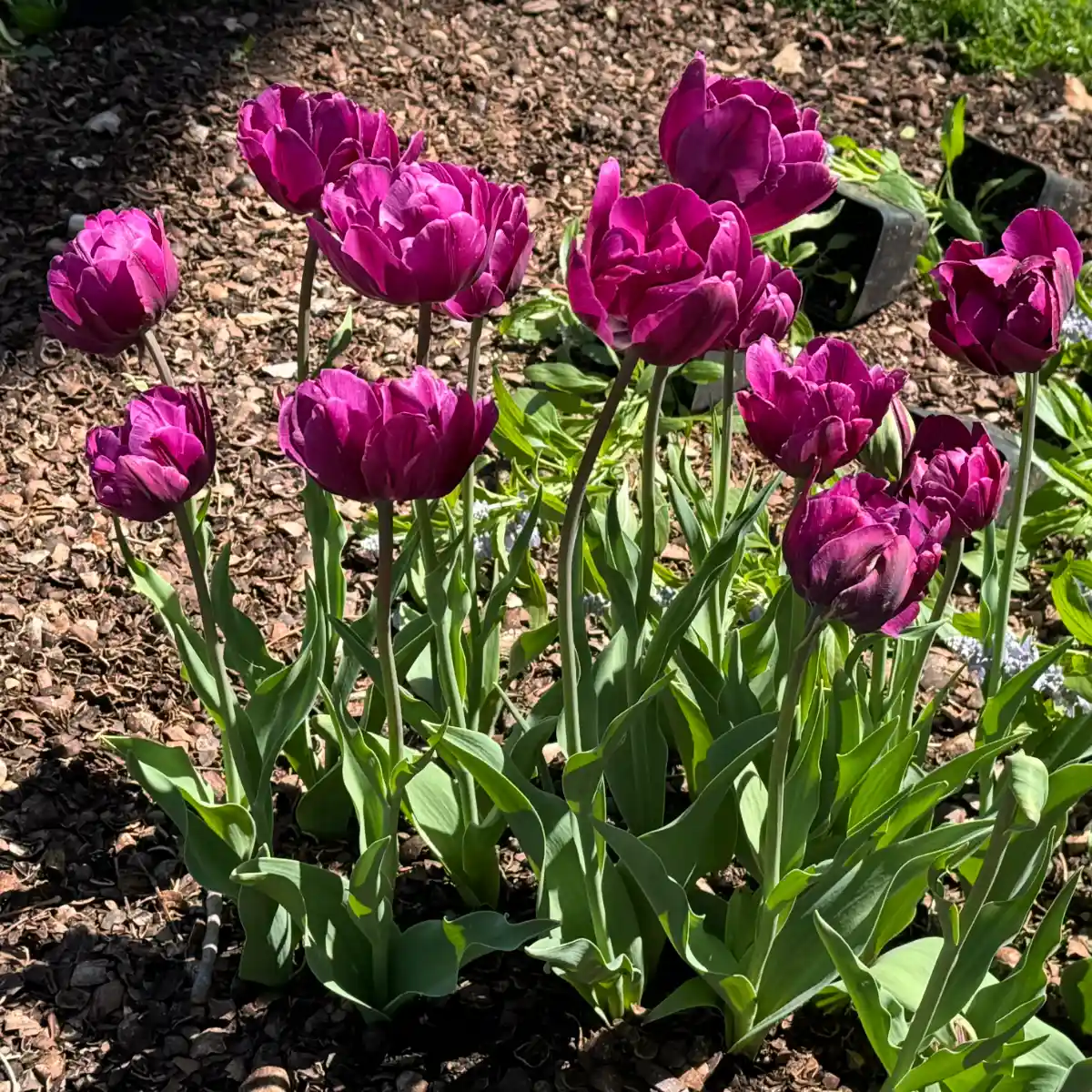
Quick Care Reference
| Care Aspect | Requirement | Frequency |
|---|---|---|
| Planting | 6-8 inches (15-20 cm) deep, pointed end up | Fall, when soil is below 60°F (16°C) |
| Watering | About 1 inch (2.5 cm) a week in growth | Every 7-10 days in spring if dry; none in summer |
| Light | Full sun, 6 or more hours | In spring while growing |
| After flowering | Deadhead, keep foliage | Until leaves yellow, about 6 weeks |
| Chilling | 12-16 weeks below about 45°F (7°C) | Pre-chill bulbs in warm regions |
Watering
Water bulbs well once after planting in fall to settle the soil and start root growth. In spring, while they are growing and flowering, they need about 1 inch (2.5 cm) of water a week, so water every 7 to 10 days only if rain falls short. Once the foliage yellows, stop: tulips are dormant through summer and rot in soil that stays wet. This is why they do poorly in beds watered for summer annuals.
Light Requirements
Tulips need full sun, 6 hours or more, while they are growing in spring. Under deciduous trees they often get enough before the trees leaf out. In warm regions, light afternoon shade makes the flowers last longer.
Humidity & Temperature
Tulips need a long cold period to flower: about 12 to 16 weeks with soil below roughly 45°F (7°C). That happens naturally in most of the US. In the warmest regions, buy pre-chilled bulbs or chill them in the refrigerator for 12 to 16 weeks, away from fruit, which gives off a gas that damages the flower buds. Plant in fall when the soil has cooled below about 60°F (16°C), roughly 6 weeks before the ground freezes. Wet summer soil rots dormant bulbs.
Fertilizing
Mix a bulb fertilizer or a balanced slow-release fertilizer into the soil at planting. For tulips you hope will return, feed again lightly as the shoots emerge in spring. Fertilizer cannot make up for a short chill or foliage cut too early.
Propagation
Tulips multiply by small offset bulbs that form around the main bulb. Growing tulips from seed takes several years to reach flowering size.
Offset bulbs
- After the foliage has died back in early summer, dig up the clump
- Separate the small offset bulbs from the main bulb
- Store them dry and cool until fall, then replant
- Small offsets may take a year or two to flower
Popular Varieties
Darwin hybrid tulips
Large flowers on tall, strong stems. Among the most likely garden tulips to return for several years.
Double tulips
Peony-like flowers packed with petals, in early and late blooming forms. Heavy heads can bend in rain.
Species tulips
Small wild tulips that naturalize and spread in sunny, well-drained spots. The most perennial tulips.
Seasonal Care Calendar
Spring
Mar – May
- Shoots emerge. Feed lightly and water if spring is dry.
- Enjoy the flowers; deadhead as they fade.
- Leave the foliage until it yellows. Mark clumps before they disappear.
Summer
Jun – Aug
- Bulbs are dormant. Keep the soil on the dry side.
- Dig and divide crowded clumps once the foliage has died.
- Order bulbs for fall planting.
Fall
Sep – Nov
- Plant bulbs when the soil cools below 60°F (16°C), about 6 weeks before it freezes.
- Water after planting and mulch.
- Protect new plantings from squirrels with chicken wire.
Winter
Dec – Feb
- Bulbs are chilling in the ground; nothing to do.
- In warm regions, chill bulbs in the refrigerator and plant in midwinter.
- Force a pot of pre-chilled bulbs indoors for early flowers.
Troubleshooting
Leaves but no flowers
Why it happens: Small bulbs, not enough winter chill, foliage cut too early last year, or a hybrid declining with age
What to do: Leave foliage until it yellows, feed in spring, and plant new bulbs every few years. Darwin hybrids and species tulips return most reliably.
Learn more: Why Is My Plant Not Growing? → Ask the AI about this →Bulbs dug up or missing, or flowers bitten off
Why it happens: Squirrels and voles digging bulbs, or deer eating foliage and flowers
What to do: Plant under chicken wire or in wire cages, and use repellents in spring. In deer country, plant daffodils instead, which deer and rodents avoid.
Ask the AI about this →Twisted, spotted leaves and gray mold on leaves and flowers
Why it happens: Tulip fire, a fungal disease spread in cool, wet springs
What to do: Remove and throw away affected plants and bulbs. Do not plant tulips in that spot for at least 3 years, and inspect new bulbs before planting.
Ask the AI about this →Bulbs soft and rotten when dug
Why it happens: Waterlogged soil, especially in summer while dormant
What to do: Discard rotten bulbs. Plant in well-drained soil or raised beds, and do not irrigate tulip beds in summer.
Learn more: How to Treat Root Rot → Ask the AI about this →Leaves yellowing a few weeks after flowering
Why it happens: Normal dormancy
What to do: Leave the leaves until they are yellow and limp, then remove them. Do not tie or braid them.
Learn more: Why Are My Plant Leaves Turning Yellow? → Ask the AI about this →Not sure what's wrong?
Premium includes AI photo diagnosis, then walks you through the fix and checks back in until it's better.
See Premium →Track your Tulip with PlantCareAI
Add your Tulip and get a watering schedule tuned to this week's weather. Free for up to 3 plants.
Add your Tulip