
Daffodil Care Guide
Narcissus spp.
Also known as Narcissus, Jonquil
By Ellen Hermance · PlantCareAI Editorial
Daffodils are the most reliable spring bulb there is. Planted once in fall, they come back and multiply for decades, and deer, squirrels and voles leave them alone because every part of the plant is toxic. They need sun while growing, soil that drains, and their leaves left in place for about six weeks after flowering. Clumps that stop flowering after many years usually just need dividing.
Quick Care Reference
| Care Aspect | Requirement | Frequency |
|---|---|---|
| Planting | About 6 inches (15 cm) deep, pointed end up | Fall |
| Watering | About 1 inch (2.5 cm) a week in growth | Every 7-10 days in spring if dry; none in summer |
| Light | Full sun to part shade | Sun while leaves are green |
| After flowering | Deadhead, keep foliage | Until leaves yellow, about 6 weeks |
| Dividing | Lift and separate crowded clumps | Every 3-5 years, or when flowering drops |
Watering
Water well after planting in fall to start root growth. In spring, daffodils use about 1 inch (2.5 cm) of water a week while growing and flowering, so water every 7 to 10 days only if rain is short. Once the foliage yellows they are dormant, and they prefer the soil on the dry side through summer. Constantly wet soil rots the bulbs.
Light Requirements
Daffodils grow best in full sun but flower well in part shade, including under deciduous trees, because they bloom before the canopy fills in. Clumps that get less sun each year as trees grow gradually flower less.
Humidity & Temperature
Most daffodils need a winter chill and are hardy across most of the US. In the warmest regions, choose types that need less cold, such as tazetta and jonquil daffodils. Plant bulbs in fall, from about when nights turn cool until a few weeks before the ground freezes. Flowers and buds tolerate late frost and snow better than most spring flowers.
Fertilizing
Mix bulb fertilizer or a balanced slow-release fertilizer into the soil at planting, and give established clumps a light feed as the shoots emerge. Avoid high-nitrogen fertilizer, which gives lots of leaves and fewer flowers.
Propagation
Daffodils multiply on their own by forming offset bulbs, and dividing a crowded clump is the easy way to spread them.
Division
- Once the foliage has yellowed in late spring or early summer, dig up the clump with a fork
- Gently pull the bulbs apart, keeping any that are firm
- Replant right away at about 6 inches (15 cm) deep, or store dry and replant in fall
- Small offsets may take a year or two to reach flowering size
Popular Varieties
Trumpet daffodils
The classic large daffodil, with a long central trumpet as long as the petals. Usually yellow or white.
Double daffodils
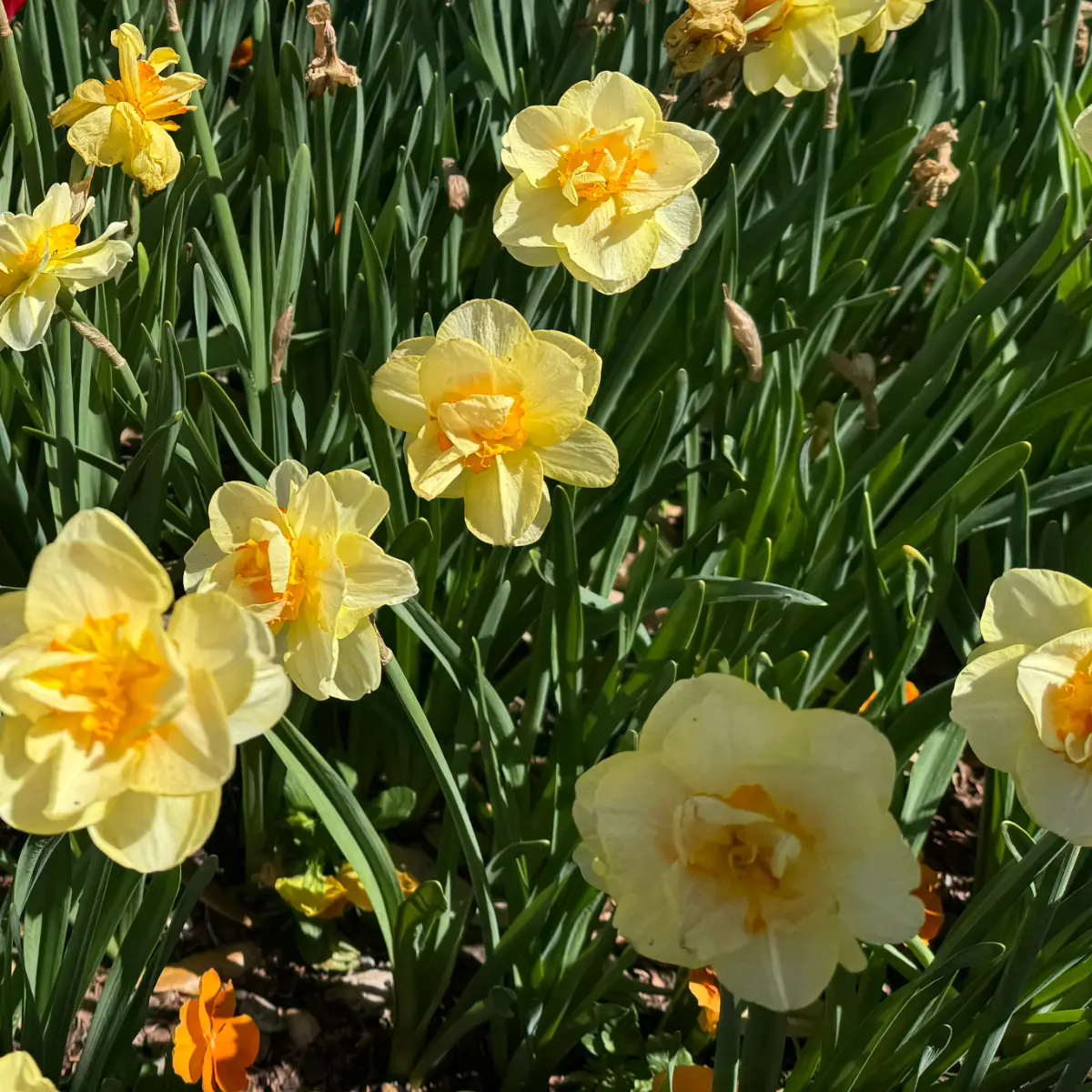
Flowers with extra petals in place of, or around, the trumpet. Heavy heads can bend in rain.
Jonquil and tazetta daffodils
Clusters of small, very fragrant flowers on each stem. Need less winter cold, so they suit the South.
Seasonal Care Calendar
Spring
Mar – May
- Shoots and flowers appear. Feed lightly as they emerge.
- Deadhead faded flowers.
- Leave foliage until it yellows, about 6 weeks after flowering.
Summer
Jun – Aug
- Bulbs are dormant. Keep the soil on the dry side.
- Dig and divide crowded clumps once the foliage dies back.
- Order bulbs for fall planting.
Fall
Sep – Nov
- Plant bulbs in fall, a few weeks before the ground freezes.
- Water after planting and mulch lightly.
- Replant divisions stored over summer.
Winter
Dec – Feb
- Bulbs are chilling in the ground.
- Shoots may appear in mild spells; they tolerate cold.
- Plan new plantings under trees or along the edges of lawns.
Troubleshooting
Leaves but no flowers
Why it happens: Crowded clumps, foliage removed too early last year, increasing shade, or too much nitrogen
What to do: Divide crowded clumps after the foliage dies back and replant with more space. Leave the leaves to yellow naturally and stop high-nitrogen feeding.
Learn more: Why Is My Plant Not Growing? → Ask the AI about this →Bulbs soft or rotting
Why it happens: Basal rot or waterlogged soil, worst in warm, wet summers
What to do: Discard soft bulbs. Plant in well-drained soil and do not water daffodil beds in summer.
Learn more: How to Treat Root Rot → Ask the AI about this →Bulbs hollow and soft, with a large grub inside
Why it happens: Narcissus bulb fly larvae
What to do: Discard affected bulbs. Firm the soil over the bulbs after the foliage dies to make it harder for the flies to lay eggs.
Learn more: Plant Pest Identification Guide → Ask the AI about this →Leaves yellowing a few weeks after flowering
Why it happens: Normal dormancy
What to do: Leave the leaves until they are yellow and limp, then remove them.
Learn more: Why Are My Plant Leaves Turning Yellow? → Ask the AI about this →Not sure what's wrong?
Premium includes AI photo diagnosis, then walks you through the fix and checks back in until it's better.
See Premium →Track your Daffodil with PlantCareAI
Add your Daffodil and get a watering schedule tuned to this week's weather. Free for up to 3 plants.
Add your Daffodil