
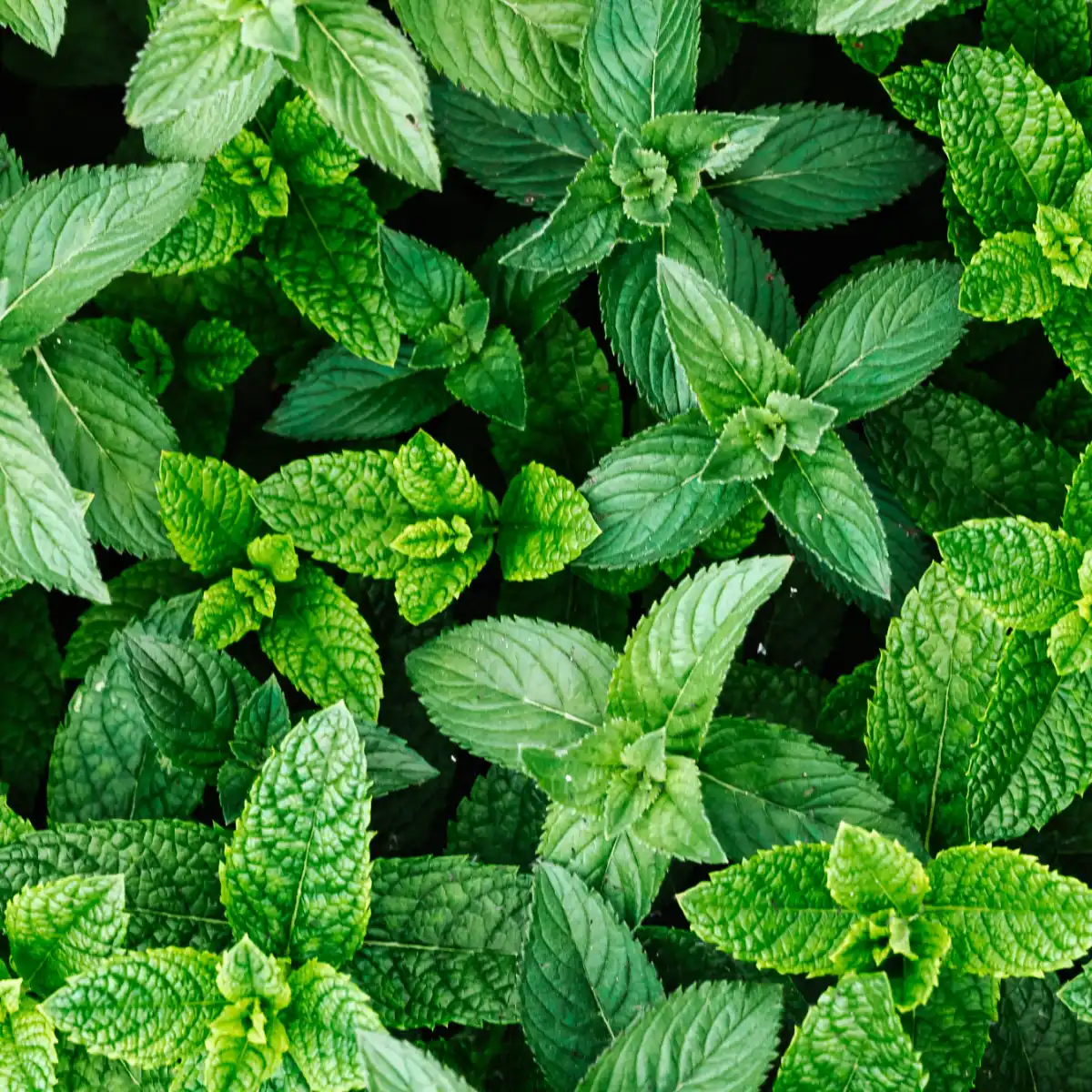
Mint is the one herb that is hard to kill and hard to contain. It is a hardy perennial that comes back every spring in most of the US, grows in sun or part shade, and spreads by underground runners that will take over a bed within a season or two. Grow it in a pot, keep it moist, cut it often, and it supplies leaves from spring to frost. Most mint problems are the plant doing too well rather than too badly.
Quick Care Reference
| Care Aspect | Requirement | Frequency |
|---|---|---|
| Watering | Consistently moist | Every 2-4 days in pots in summer; less in the ground |
| Light | Full sun to part shade | Afternoon shade in hot climates |
| Containment | Pot or sunken barrier | Check for escaped runners each spring |
| Cutting back | Cut stems hard | When flowering starts, and midsummer |
| Dividing | Split and repot | Every 1-2 years in containers |
Watering
Mint likes consistently moist soil and is one of the few herbs that does not mind being a little damp. In a container in summer, water when the top inch (2.5 cm) is dry, which is often every 2 to 4 days and daily in a small pot in full sun. In the ground it needs less, roughly 1 inch (2.5 cm) of water a week. It wilts when dry and recovers quickly, but repeated drought makes the leaves small and tough. Water at the base to keep the leaves dry, which helps against rust.
Light Requirements
Mint grows in anything from full sun to part shade, and tolerates more shade than most herbs. About 4 to 6 hours of sun gives the best flavor. In hot climates it does better with afternoon shade, and in deep shade it grows leggy and mild. Indoors it needs your brightest window to stay compact.
Humidity & Temperature
Mint is a cool-tolerant perennial. Most garden mints survive winters well below freezing; the tops die back after hard frost and new shoots appear in spring. It grows fastest between 65 and 75°F (18 to 24°C) and slows in intense heat. Mint in containers is less cold-hardy than mint in the ground, because the roots freeze harder, so move pots against a wall or into an unheated garage for winter in cold regions. Crowded, humid plants are prone to rust and powdery mildew.
Fertilizing
Mint needs very little feeding. A light balanced fertilizer in spring is enough in the ground; container mint benefits from a half-strength feed every 4 to 6 weeks in summer. Overfeeding gives lush, weak growth with less flavor and more disease.
Propagation
Mint roots from cuttings faster than almost any plant, and every piece of runner with a node can become a new plant.
Stem cuttings in water
- Cut a 4 to 6 inch (10 to 15 cm) stem from a healthy plant
- Strip the lower leaves and stand it in a glass of water
- Roots usually appear within 1 to 2 weeks
- Pot up once the roots are 1 to 2 inches (2.5 to 5 cm) long
Division
- In spring, lift the plant or slide it out of its pot
- Cut the root mass into pieces, each with shoots and roots
- Discard the woody center and replant the vigorous outer pieces
- Water well and keep moist while they settle
Popular Varieties
Spearmint
The classic garden mint, Mentha spicata, with a sweet, mild flavor. The usual choice for cooking, tea and drinks.
Peppermint
Stronger and sharper, with more menthol. A hybrid that rarely sets viable seed, so it is grown from cuttings.
Chocolate mint
A peppermint selection with darker stems and a hint of cocoa scent. Grown the same way as peppermint.
Seasonal Care Calendar
Spring
Mar – May
- New shoots appear. Check for runners escaping containers or barriers.
- Divide and repot crowded container plants.
- Give a light feed as growth starts.
Summer
Jun – Aug
- Harvest often, cutting just above a pair of leaves.
- Cut the whole plant back by half when it starts to flower.
- Water containers often; check leaf undersides for rust.
Fall
Sep – Nov
- Take a last big harvest to dry or freeze.
- Cut stems to the ground after frost blackens them.
- Move pots to a sheltered spot in cold regions.
Winter
Dec – Feb
- Plants are dormant outdoors. Water pots occasionally so they do not dry out completely.
- A pot on a bright windowsill gives a small winter harvest.
- Order plants or plan new containers for spring.
Troubleshooting
Orange or rusty spots on the undersides of the leaves
Why it happens: Mint rust, a fungal disease favored by crowding and wet leaves
What to do: Remove and throw away affected stems. Thin the plant for airflow and water at the base. If it keeps returning, cut the plant to the ground in fall and throw the debris away, or start over with a healthy plant in fresh mix.
Ask the AI about this →Leggy stems with small leaves and flower spikes
Why it happens: Flowering, too little light, or a plant that has not been cut back
What to do: Cut every stem back by half or more. Regrowth is bushier and better flavored. Move pots to more light.
Learn more: Why Is My Plant Not Growing? → Ask the AI about this →Fine webbing and pale speckled leaves
Why it happens: Spider mites, most common on mint indoors or in hot, dry weather
What to do: Rinse the plant thoroughly, including leaf undersides, and repeat every few days. Cut back heavily infested stems; new growth comes quickly.
Learn more: How to Treat Spider Mites → Ask the AI about this →Lower leaves yellowing in a pot
Why it happens: Waterlogged soil, a root-bound pot, or hunger
What to do: Make sure the pot drains. If roots fill the pot, divide and repot in fresh mix. Otherwise give a light feed.
Learn more: Why Are My Plant Leaves Turning Yellow? → Ask the AI about this →Mint appearing all over the bed
Why it happens: Underground runners escaping the planting area
What to do: Dig out runners as soon as you see them, following each one back to its source. Keep future plantings in pots or behind a barrier that sits above the soil line.
Ask the AI about this →Not sure what's wrong?
Premium includes AI photo diagnosis, then walks you through the fix and checks back in until it's better.
See Premium →Track your Mint with PlantCareAI
Add your Mint and get a watering schedule tuned to this week's weather. Free for up to 3 plants.
Add your Mint